Sports
Nation’s ‘Wembley’ in perpetual darkness?


- /home/u249204778/domains/spectator.com.gh/public_html/wp-content/plugins/mvp-social-buttons/mvp-social-buttons.php on line 27
https://spectator.com.gh/wp-content/uploads/2023/08/Prof-Peter-Twumasi-NSA-Director-General-1.jpg&description=Nation’s ‘Wembley’ in perpetual darkness?', 'pinterestShare', 'width=750,height=350'); return false;" title="Pin This Post">
- Share
- Tweet /home/u249204778/domains/spectator.com.gh/public_html/wp-content/plugins/mvp-social-buttons/mvp-social-buttons.php on line 72
https://spectator.com.gh/wp-content/uploads/2023/08/Prof-Peter-Twumasi-NSA-Director-General-1.jpg&description=Nation’s ‘Wembley’ in perpetual darkness?', 'pinterestShare', 'width=750,height=350'); return false;" title="Pin This Post">
Prof Peter Twumasi – NSA Director-General
Wednesday, August 23, was exactly a month when electricity supply to the nation’s pre¬mier sports facility, the Accra Sports Stadium, was cut by the Electricity Company of Ghana (ECG).
It was about the third time the incident had oc¬curred in a year at such an important facility often lik¬ened to the iconic Wembley Stadium in England and the reason for that is apparent.
This, clearly, does not augur well for a nation that demands respect as a sports nation.
In March 2022, the ECG embarked on a similar ex¬ercise that left the National Sports Authority (NSA), man¬agers of the nation’s sports facilities, in hot water; having to cough a whopping amount of GHȻ508,000 as debt owed the company.
The leader of the Task Force explained that power would only be restored af¬ter 50 per cent of the debt was settled.
In a few days’ time, power was restored though doubts hovered over whether the NSA, which operates as an agency under the Ministry of Youth and Sports (MoYS), actually made the settlement.
Eight months later, the pessimists were, perhaps, vindicated when another ECG ‘delegation’ visited the Stadium to disconnect power again; this time quoting a debt of GHȻ390,000.
Attempts to convince the ECG staff to re¬scind the decision failed after the NSA offered to pay only GHȻ30,000.
Nine months on, the power nightmare has visited the NSA again, witness¬ing, perhaps, the longest pow¬er outage on the state-owned facility – a month.
Although, the exact amount is yet to be made public, snippets of informa¬tion indicates that it is an accumulation of previous debts owed and now running over GHȻ500,000.
And for a country that wants to be credited as a sports loving nation, producing some of the finest ath¬letes across boxing, football, table ten¬nis, tennis, athletics, taekwon¬do among others, the story or state of the Accra Sports Stadium leaves a sour taste in the mouth.
Clearly, it calls into ques¬tion the nation’s readiness to actually develop sports to the level where it begins to yield the desired dividends.
Within this period of ‘Ac¬cra Sports Stadium Dumsor’ administrative work of the several federations with offices located in the stadium have grinded to a halt.
Restaurant owners as well as other operatives within the facility have been affect¬ed.
But of greater concern to every lover of sports is the negative impact the outage has had on athletes that use the facility at night.
Badminton, table tennis, taekwondo, judo practi¬tioners and other users are now forced to close before dark¬ness sets in because the power from the stand-in generator is way above the capacity required.
Maybe, it was in this wisdom that members of the badmin¬ton fraternity decided to hire smaller generators to power lights to train in the evenings but with directives from the authorities to put a stop to it, they would be forced to re-adjust their times.
What this mean is that players’ training schedules have been truncated for a month, a situation that will definitely take a toll on preparations with the 2023 Africa Games and other qual¬ifiers lurking.
Certainly, money may be the huge factor to have occasioned this development and the earlier government through the MoYS steps in, the better it will be for Ghana.
With the Africa Games just about seven months to go, athletes at the ‘final stretch’ in terms of prepa¬ration, must be given the needed push in their quest to win laurels.
As usual, the MoYS would be singing the usual ‘no mon¬ey’ refrain but the entire Ac¬cra Sports Stadium plunging into total darkness is certain¬ly not a story anyone would want to tell about a country that hopes to raise new Abedi Peles, Anthony Yeboahs, Azu¬mah Nelsons, Frank Oforis, Ike Quarteys and other great sports personalities.
By Andrew Nortey


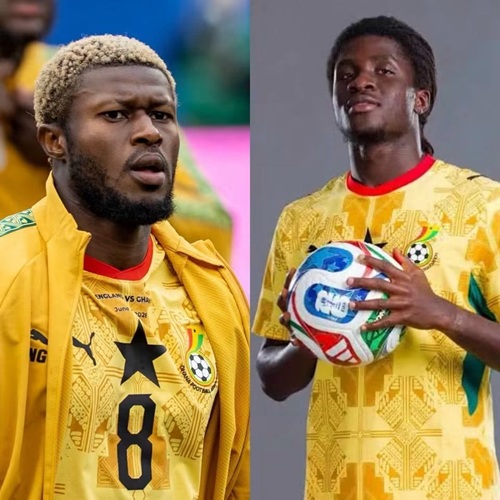
There is a particular type of heartbreak that only eleven grown men chasing a leather sphere can inflict upon a nation. It is a unique Ghanaian tragedy, seasoned with broken promises and served hot under the scorching morning sun. As I sat over my bowl of hausa koko and koose this morning, contemplating the state of our union, my mind drifted—as it unfortunately often does—to the entity we still fondly, if erroneously, refer to as the Black Stars.
Oh, for the days of Stephen Appiah! A time when the jersey meant blood, sweat, and actual victories, rather than Instagram reels, designer headphones, and hefty appearance fees.
Let us be completely honest with ourselves. We have reached a point where watching the national team has become a hazardous threat to public health. The blood pressures of regular, tax-paying Ghanaians are spiking faster than the inflation rate, all because we are pampering a crop of boys and suit-wearing officials who treat national assignments like an all-expenses-paid beach holiday.
And who is footing the bill? The government, of course. Or rather, you and I, through the benevolent, heavily depleted coffers of the state.
Now, the football purists and the high priests of the Ghana Football Association (GFA) will quickly scream, “FIFA sanctions! Government interference!” the moment anyone suggests a cleanup. But let us lower our voices and speak common sense. Nobody is talking about dissolving the FA. No one wants to barge into their shiny offices and seize their laptops.
We simply need to remind them of a basic law of property: the Black Stars do not belong to the GFA. The GFA does not own the emotions of thirty-plus million Ghanaians. They are merely trustees, caretakers of a national treasure that belongs firmly to the state. And right now, the caretakers are sleeping on the job while the house burns down.
This brings me to the highest office of the land. Mr. President, we have not forgotten. The records are there in black and white. You are on record to have directly pointed fingers at the previous administration for the historic, monumental disaster that was the failure to qualify for the AFCON 2025 tournament. You made it clear that football governance—or the lack thereof—was a political report card.
Well, Mr. President, the ball is now squarely in your court, quite literally.
My humble, dawn-induced plea to the Jubilee House is simple: Pull the plug. Cut the funding. Lock the vault and misplace the keys for the remainder of this administration’s term.
Why must we continue to throw good, scarce cocoa and gold money after bad football? Why must we spend hundreds of thousands of hard-earned dollars financing an abysmal, lifeless show on the pitch, only to be rewarded with mathematically impossible qualification scenarios and early exits? To what end are we funding this journey? An AFCON campaign that will ultimately lead us nowhere but to the departure lounge of an international airport?
Let the sanctions come. If FIFA decides to ban us because the government refuses to fund a product that brings nothing but national depression, then so be it. Let us embrace the ban with open arms and smiling faces!
Look at the silver lining: a funding freeze might actually force the football gods in this country to “focus small” on their own neglected stepchild—the Ghana Premier League. Perhaps if there are no dollar-denominated bonuses to squabble over in Marrakech or Luanda, our administrators will remember that football is grown on the local pitches of Dormaa, Berekum, and Accra.
Pulling out now gives us a rare gift: the chance to stop, breathe, regroup, and plan properly. We can hand over a clean slate—and a structurally sound plan—to the next administration.
It is a deeply sad day when Ghanaians look at the Black Stars and feel nothing but apathy. But until we stop throwing money at mediocrity, the “abysmal show” will continue to play on a loop. Mr. President, save our money, save our hearts, and let the boys fund their own flights.
By Emmanuel Amponsah (a concerned citizen musing at dawn)
The writer is a former Editor of The Spectator
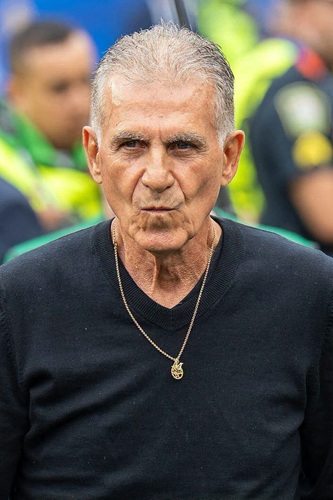
Carlos Queiroz and the Ghana Football Association (GFA) have mutually agreed to terminate his contract as Head Coach of the Black Stars.
In a statement, the Portuguese coach said the decision was reached following discussions held in a spirit of mutual respect.
“This was not an easy decision, but both parties agreed that under the present circumstances, ending our professional relationship was the most appropriate course of action, with the interests of Ghana, the Black Stars, and Ghanaian football above everything else,” Queiroz said.
Queiroz described his time in charge as an honour and thanked the GFA and its President for the trust and opportunity to lead the national team.
“I came to Ghana determined to help build a stronger future for the Black Stars and support the development of the country’s talent. Despite our commitment and efforts, the necessary conditions were not fully established, and our recent performance contributed to the decision to bring this journey to an end,” he noted.
The former Real Madrid and Portugal manager expressed gratitude to his technical staff and everyone who supported the team during preparations for the 2026 World Cup.
He also paid tribute to the Black Stars players, urging Ghanaians to continue to support them.
“Above all, I pay tribute to the players of the Black Stars. Thank you to all of you who represented Ghana with courage, commitment, and pride. You fought for your country and carried the hopes of millions. Believe in these players. Protect them. Support them,” he said.
According to him, “The talent and potential are there. With unity, support, and the right environment, this generation can achieve great things for Ghana.”
Queiroz thanked the Ghanaian people and Black Stars supporters for their passion and warmth.
“Ghana comes first. The Black Stars come first. Ghanaian football comes first. Thank you, Ghana,” he added.
By Edem Mensah-Tsotorme