News
14 IEC and GNC officers inaugurated


Bishop Dr Gordon Kisseih of GCCI (thirdleft) in
a group photograph with the inductees
A total of 14 International Executive Council and Ghana National Council officers of the Great Commission Church International (GCCI) have been inaugurated for a five-year tenure.
The induction service which took place in Accra over the weekend was for these officers to assist the church in bringing the gospel to people in other regions, localities and countries.
During the service, Dr Gordon Kisseih who inducted the officers charged them to fulfill the only purpose of the grace of God upon the lives of Christians as that would help them fulfill their ministries.
“For the gifts and calling of God are without repentance, whenever God calls a person into ministry, he also equips them therefore be assured God will sail you through your best step in his ministry,” he quoted.
The chairman of the IEC of GCCI, Mr Joseph Felix Kwesi Mensah in an acceptable speech on behalf of his colleagues expressed gratitude to the church for the confidence reposed in them to further proclaim the gospel globally.
Mr Mensah encouraged his colleague members and all Christians to continue trusting and doing the will of God by winning and keeping souls in order to help finish the task of global evangelism.
On the part of the chairman of the Ghana National Council (GPC), Dr Samuel Vincent Ansah added that the officers should strive to move the existing churches in the nation in God’s way because many were backsliding and misinterpreting the gospel.
“There are many things gripping the minds of people and the church must rise up to take charge. Although there are many churches and christians many are backsliding,” he said.
The officers inducted include Mr Joseph Felix Kwesi Mensah, Dr Samuel Vincent Ansah, Apostle Prosper Yawotse Nové, Professor Samuel Assuming-Brempong, Rev. Godson Kwasi Gbloe, Rev Yawo Amenyo Atsuga and Rev Gérard Bodjona.
Others are Mr Richard Kwami Adanu, Rev Moses Kwame Obeng Pinkrah, Rev Stephen Toku Cato, Rev Dr Samuel Arthur, Rev Alexander Obeng-Oguamenah, Rev Emmanuel Kodzo Oppong and Rev Charles Somerset Adanunyo.
The GCCI which was founded on 1st April, 1991 in Ghana, has spread to many other countries including Togo, Benin, Gabon among others.
By Spectator Reporter


A Professor at the University of Ghana Medical School, Prof. Vincent Boima, has called for a major shift in the treatment and prevention of chronic kidney disease (CKD) in Ghana and across Africa, warning that the continent cannot rely on dialysis alone to manage the growing health burden.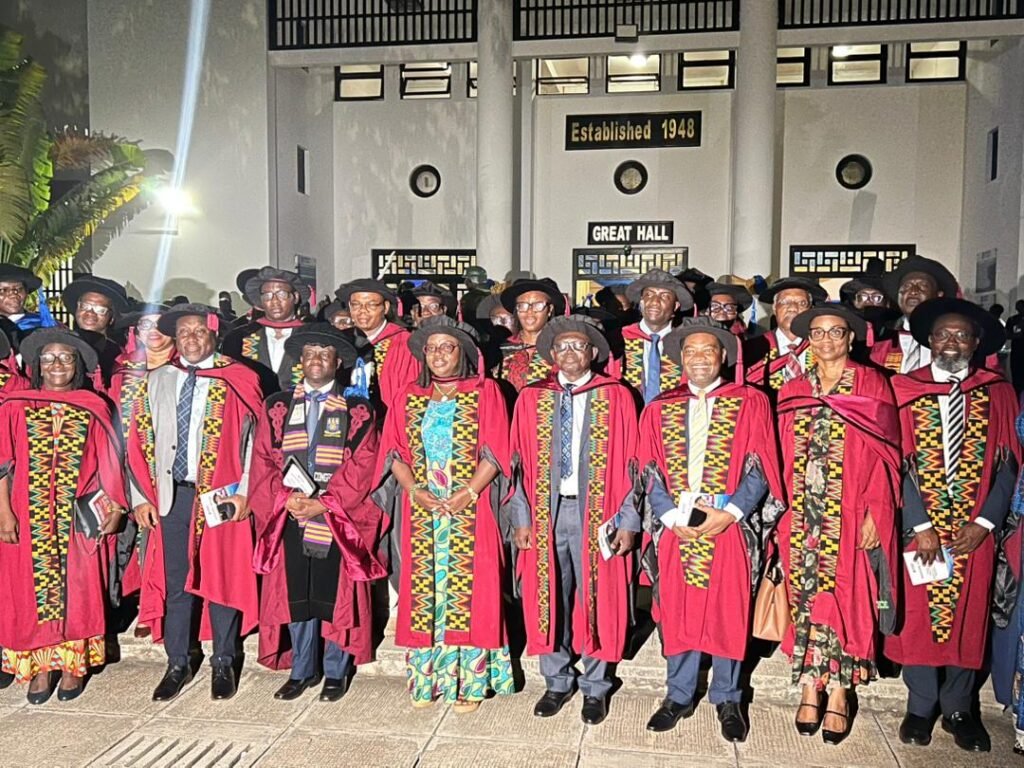
Delivering his inaugural lecture at the university’s Great Hall on Thursday, Prof. Boima stated that chronic kidney disease was more common in Africa than in many high income countries, with most patients seeking treatment only when the disease had reached advanced stages.
Speaking on the theme, “From Genes to Mind: Holistic Pathways to Precision Kidney Care for Africa,” he explained that hypertension and diabetes remained the leading causes of kidney disease in Ghana, where many younger and economically active people were being affected.
According to him, the high cost of dialysis, limited transplant facilities and unequal access to treatment raised concerns about whether many cases of kidney failure could have been prevented through earlier interventions.
Prof. Boima proposed what he described as the “Genes–Mind–Community” model, which combines genetics, mental health and community based healthcare approaches to improve kidney care in Africa.
He explained that the “Genes” pillar focused on understanding the role genetics played in kidney disease among Africans, particularly the APOL1 risk variants common in West Africa.
The professor noted that studies in Ghana and other West African countries had shown that many people carried high risk APOL1 genes, which increased the chances of developing non diabetic kidney disease when combined with factors such as infections, hypertension and environmental pollution.
However, he cautioned that genetic information should be used responsibly and ethically, stressing that it should improve treatment decisions without increasing stigma or inequality.
Prof. Boima therefore called for more African led research into kidney disease genetics, affordable testing methods for early detection and stronger health systems to prepare for future gene targeted treatments.
On mental health, he indicated that psychological wellbeing was an important part of kidney care because many patients with hypertension, chronic kidney disease and those on dialysis experienced depression, anxiety and emotional distress.
He explained that financial difficulties, irregular access to medication and weak follow up systems often worsened the mental health burden on patients, affecting their ability to continue treatment.
To address the problem, he proposed routine mental health screening in hypertension and kidney clinics, together with culturally sensitive counselling and support systems.
Prof. Boima stressed that psychological care should become part of chronic disease management rather than being treated as optional.
Touching on the “Community” pillar, he stated that prevention remained the most effective and affordable strategy for reducing kidney failure, stroke and heart disease in Africa.
He disclosed that community studies in Ghana had shown that large scale blood pressure screening programmes could identify many people living with undiagnosed hypertension.
Despite this, he pointed out that many patients struggled to continue treatment because of transport costs, long hospital waiting times, expensive medication and inadequate financial support.
Prof. Boima proposed decentralising healthcare through community based services and primary healthcare centres, while also empowering nurses, pharmacists and other non physician health workers to assist with prevention and treatment.
He further recommended the use of simple technologies such as text message reminders to help patients take medication, reduce salt intake, exercise regularly and attend medical appointments.
The nephrologist also encouraged the use of family and faith based support systems to improve treatment adherence and continuity of care.
Speaking on the state of kidney treatment in Ghana, Prof. Boima explained that dialysis remained the main form of kidney replacement therapy in the country, although treatment was expensive and available mainly in a few locations.
He observed that many patients paid for dialysis from their own pockets, creating serious financial hardship for families, while kidney transplantation services also remained limited.
According to him, these challenges highlighted the need for Ghana to focus more on prevention, primary healthcare and long term chronic disease management instead of depending heavily on dialysis centres.
He called for expanded National Health Insurance coverage for essential medicines and diagnostic services, improved data systems, stronger primary healthcare and policies to support mental health and ethical genetic care.
Prof. Boima concluded by urging African countries to lead a new era of “precision kidney care” that focused on people rather than only treating diseased organs.
The Vice Chancellor of the University of Ghana, Professor Nana Aba Appiah Amfo, commended Prof. Boima for his work, stating that the lecture had reshaped thinking on kidney healthcare in Africa.
She noted that the presentation highlighted the hidden financial and social costs of kidney disease and reinforced the need for healthier lifestyles, including reducing salt intake, exercising regularly and taking blood pressure checks seriously.
Prof. Appiah Amfo added that Africa must not only participate in precision medicine but should also help shape its future direction.
By: Jacob Aggrey

The Ministry of Foreign Affairs has announced that passport applications that remain incomplete for more than two months will be automatically cancelled.
According to a public notice issued on May 15, the new directive takes immediate effect and applies to all passport applications from the date they are first submitted.
The Ministry explained that incomplete applications include cases that require further vetting, missing supporting documents, incomplete biometric capture or applications awaiting biometric re capture.
It warned that applicants whose submissions are cancelled will lose the fees already paid because the payments are non refundable.
Affected persons will therefore be required to begin a fresh application process and pay the required fees again.
“The general public is therefore encouraged to complete applications on time to avert cancellations,” the notice stated.
The Ministry also urged applicants to respond quickly whenever they are asked to provide additional documents or update their biometric information to avoid delays.
Officials explained that the policy is aimed at reducing delays and clearing backlogs caused by abandoned and incomplete passport applications in the system.
The Ministry assured the public of its commitment to improving passport service delivery across the country.
Applicants seeking further information have been advised to contact the Ministry’s 24 hour call centre
By: Jacob Aggrey

 News3 days ago
Ghana’s Chris Koney participates in high-level dialogue at Africa Forward Summit 2026
- News1 week ago
Isaac Adongo defends BOG Governor, says Ghana “in safe hands”
- Features3 days ago
Fix It Fast or Lose Them Forever: The Ever-Rising Importance of Service Recovery in Competitive Industries