Nutrition
Flavorsome soya chunks dry masala


• Soya chunks with rice
Soya chunks are also sometimes known as meal maker or nutri nuggets. Like TVP (textured vegetable protein), they are made from defatted soy flour, a byproduct after extracting soybean oil.
Hence, they are a great source of plant based protein, where a 50g serving provides more than 25g of protein and only about 170 calories. Their texture closely resembles that of meat, making them the perfect substitute for animal protein.
Preparation:
- Soak soya chunks in hot water for around 10 minutes to rehydrate them. Make sure that sufficient hot water is used to fully cover them as they will expand upon soaking.
- Once your they have softened, drain and rinse with cold water. Using your hands, gentle squeeze out excess moisture.
- Place rehydrated chunks into a bowl and add in chili powder, garam masala and salt. Toss until everything is well incorporated. Set aside.
- Heat up a tablespoon or so of neutral oil in a non-stick pan or cast-iron skillet. Once pan is heated, add in onion and saute for 3-4 minutes until translucent. Next, add in garlic and saute for another minute.
- Now, add in tomato puree, water, garam masala, chili powder and coriander powder. Bring mixture to a boil, then lower heat to a gentle simmer. Let it simmer, covered for about 10 minutes.
- Lastly, toss in rehydrated chunks into the pan and stir to combine. Let it cook for several minutes, or until mixture appears dry. Your soya chunks masala is ready to be served!
- Rice – This soya chunks masala is best paired with rice. You can simply do some basic steamed brown or white rice.
Source: https://www.myplantifulcooking.com/


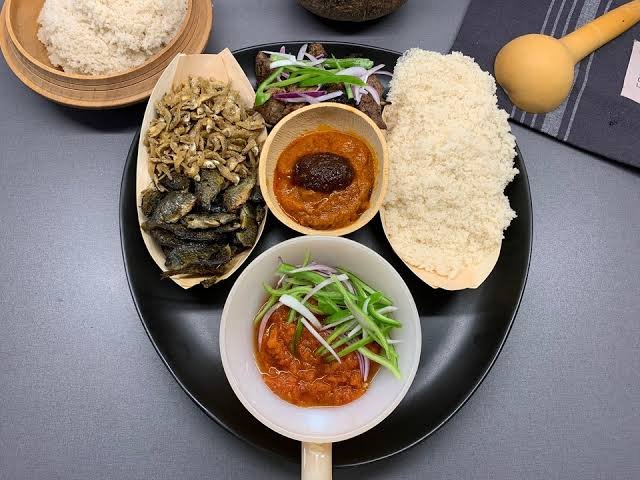
‘Yake Yake’ is a traditional Ghanaian dish from the Volta Region made from steamed, grated cassava
It is similar to Attieke but typically steamed in a different, more rustic, or water-free style
Ingredients
-4 tubes of cassava
-4 tablespoonfuls of salt
Preparation
–Peel the cassava tubers, remove the fibrous inner core, and wash thoroughly to remove soil and starch
– Grate the cassava using a blender or grater until it is fine and grainy
–Place the grated cassava into a muslin or cheesecloth and squeeze out as much water as possible
–Squeeze cassava through a strainer to separate coarse chunks, ensuring a fine, powdery texture
– Line a steamer (or a pot with a perforated insert) with a cheesecloth. Pour the cassava flakes into the cloth, forming a dome shape
– Steam for about 3–4 minutes until fluffy
–Turn the ‘Yake Yake’ out onto a plate. It should appear as a soft, cake-like dome
-Pair with tilapia, hot pepper, and sliced onions for a complete, authentic Ghanaian meal.
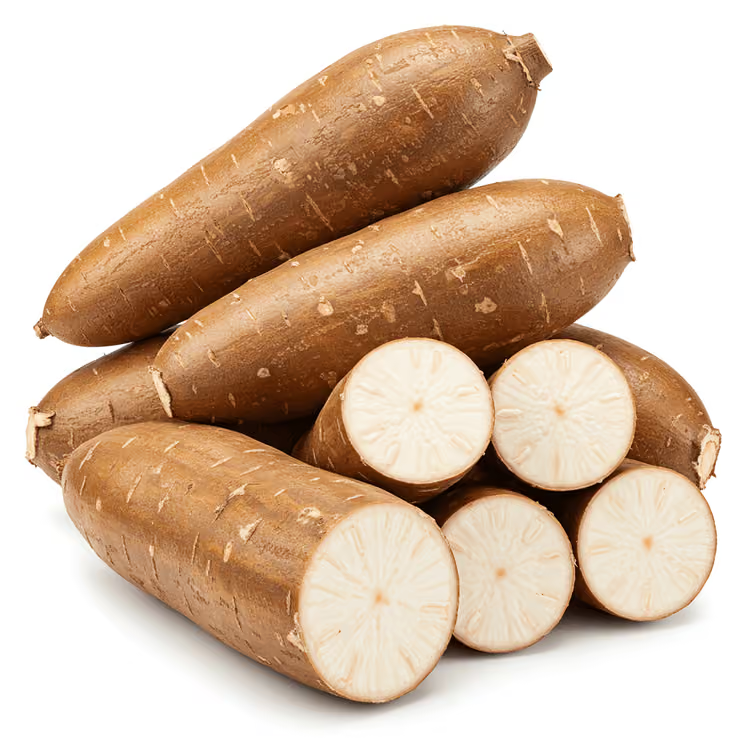
The cassava plant (Cassava) is a perennial woody shrub with edible roots rich in Nutrients with a higher carbohydrate content than rice and corn.
Used to make traditional tapioca flour but also the key ingredient for a diverse range of common products including sweeteners, alcohol, confectionery, animal feeds, personal care and cosmetics and many other commercial, pharmaceutical and industrial uses.
The best part is that this plant can survive for very long in soil that is poor in quality. Cassava is thought to improve health by boosting immunity and regulating digestion.
The root of the plant is rich in vitamin C, while the leaves contain beta-carotene, lysine, and other compounds beneficial to the skin and metabolism. Below are the various possible benefits of Cassava.
– Cassava sugar is healthier than sucrose
-Improves digestive system, weight loss
-Boost energy and improves brain functions
– Strengthens immunity
– Prevents cancer
– Lowers blood pressure
– Supports healthy muscles
– Helps prevent rheumatic disease
– Healthy eyesight