Features
The AU and Ghanaian /African Diaspora in Finland

- /home/u249204778/domains/spectator.com.gh/public_html/wp-content/plugins/mvp-social-buttons/mvp-social-buttons.php on line 27
Warning: Trying to access array offset on false in /home/u249204778/domains/spectator.com.gh/public_html/wp-content/plugins/mvp-social-buttons/mvp-social-buttons.php on line 27
&description=The AU and Ghanaian /African Diaspora in Finland', 'pinterestShare', 'width=750,height=350'); return false;" title="Pin This Post">
- Share
- Tweet /home/u249204778/domains/spectator.com.gh/public_html/wp-content/plugins/mvp-social-buttons/mvp-social-buttons.php on line 72
Warning: Trying to access array offset on false in /home/u249204778/domains/spectator.com.gh/public_html/wp-content/plugins/mvp-social-buttons/mvp-social-buttons.php on line 72
&description=The AU and Ghanaian /African Diaspora in Finland', 'pinterestShare', 'width=750,height=350'); return false;" title="Pin This Post">
My write up today is about the Ghanaian/African Diaspora in Finland and how they marked the Africa Day as a day to celebrate the African Union (AU) on 25th May of each year. I dedicate it to the AU.
Incidentally, 25th May is my birthday too, but I focus mainly on the AU and activities of the Ghanaian/African migrants in Finland to mark that day.
What I write here is to highlight some positive things from activities to celebrate the AU’s anniversary.
The African Union
History tells us that the Organisation of African Unity (OAU) now African Union was formed on 25th May 1963 in Addis Ababa, the Ethiopian capital, with Ghana’s first President, Dr Kwame Nkrumah playing an instrumental role.
The African Union (AU) is a continental body consisting of the 55 member states that make up the countries of the African Continent. It was officially launched in 2002 as a successor to the Organisation of African Unity (OAU, 1963-1999), according to information on its website.
The Union promotes a prosperous and peaceful Africa which is driven by its own citizens and represents a dynamic force on the global arena (see https://au.int/en/overview).
History
The history is that in May 1963, 32 Heads of independent African States met in Addis Ababa, Ethiopia, to sign the Charter creating Africa’s first post-independence continental institution, The Organisation of African Unity (OAU).
The OAU was the manifestation of the pan-African vision for an Africa that was united, free and in control of its own destiny. This was solemnised in the OAU Charter in which the founding fathers recognised that freedom, equality, justice and dignity were essential objectives for the achievement of the legitimate aspirations of the African peoples, the information further says.
The guiding philosophy was that of Pan-Africanism which centred on African socialism and promoted African unity, the communal characteristic and practices of African communities, and a drive to embrace Africa’s culture and common heritage (see https:// au.int/en/overview).
Diaspora activities in Finland
There is no doubt that the African Diaspora and people of African descent are eager to portray and promote a sense of African unity, the communal characteristics and practices as pertains in African communities, and a drive to embrace Africa’s culture and common heritage in Finland.
This is in agreement with the AU’s objective that the Diaspora Division serves as the focal point and hub for implementing the African Union decision to invite and encourage the African Diaspora to participate in the building and development of the African continent (see https://au.int/diaspora-division).
Unity in diversity
Almost all activities organised have endeavoured to portray a sense of unity in diversity, bringing together the diverse cultural identity of the people originally from their African countries.
Although customs of, for example, northern African societies differ vastly from the customs of other parts of the continent, there are more common customs and cultural similarities.
With their various cultural and religious backgrounds, the African Diaspora in Finland promote unity and integration without any considerations to the fact that there are different countries in Africa and that there could be vastly diverse identities.
Enlightening information
and Cultural display
Events organised by members of the African Diaspora focus mainly on information that is enlightening about the African Union and its tenets as well as the African culture.
Some of the highlights of the events involved group of people that holding discussions about what the African Diaspora such as academics and other stakeholders in Finland and elsewhere can do to drive change in the education sector in Africa.
Participants from and representing the various countries on the continent took part in the activities to commemorate the Africa Day.
They engaged in cooking and eating of some African kinds of food (or an improvisation from food combinations) which are deemed typically Ghanaian or that of other African countries.
African migrants, including those originally from Ghana and other African countries organised celebrations and other events in typical “African way”. They adorned African clothes and performed cultural activities portraying the cultures of the various countries of the continent. Thank you!
By Perpetual Crentsil
Email: perpetualcrentsil@yahoo.com

There is a scripture that is found in Matthew 6:22 which says that the lamp of the body is the eye and therefore the eye must see well to enable the body to get to its destination.
What most people do not know is that behind the scenes, there is a strong interaction between the eyes and the brain before a picture becomes clear. The state of mind therefore is crucial to the eye seeing clearly to enable the body to process accurately the information the eyes are feeding it for proper identification of what the eyes see.
This is similar to how a person behaves i.e. what informs the decisions that forms in the mind that results in the actions that a person performs. The actions of a person does not therefore just happen but is as a result of things that went on in the mind, which in most cases resulted from information passed on to it by the eyes either consciously or unconsciously.
There are so many issues that affect our society which makes one wonder, whether the people who displayed such acts were created by someone or something other than God.
How can a person see a beach created by God with beautiful beaches and fresh air blowing all around, decides to defecate at such places, and therefore desecrate the environment? lt is simply mind boggling?
When other people in other countries who dwell on the coast are using their beaches for tourist attraction purposes as a means of livelihood and also to promote environmental health, some people living around our beaches, have turned them into rubbish dumping sites and toilets.
It is a very sad situation and the earlier we did something about it the better. It is a national emergency that must engage the attention, first of the government and then the citizenry, where religious bodies and NGOs must play a critical role.
The things we focus on in this country, needs to be addressed. Our minds which processes the info the eyes send to the brain, must be disciplined. There are certain behaviours that a disciplined mind can ignore even when the eye has provided info to the brain. One of the things a disciplined mind does, is the avoidance of a second look, which is critical for every person who wants to avoid adultery or fornication.
Once a person is not blind, he will see things. The boobs, the ‘shankus’, the coca cola shapes, the light complexioned, the dark complexioned etc. the eyes will definitely see and report same to the brain. What the brain or the mind decides to do or instructs the eye to do is the issue.
It can decide to instruct the eye to take a second look and let the mind drool over it or say ignore it and that will be the end.
If the mind becomes trained to focus on environmental issues like clean environment, the eyes will automatically be reporting on insanitary conditions to the brain as and when it sees them. The mind will pay attention to such data and begin to process them and to identify solutions to deal with the reported insanitary conditions.
There is the need to encourage citizens to train the mind to focus on the right thing so that in tandem with the eyes, focus will be maintained. When the mind is so trained, it communicates with the eye to also focus on hood things that helps in both are spiritual life and our secular lives, for indeed the eyes are the lamp of the body. God bless.
THE relationship between New Times Corporation (NTC) and African Concrete Productions (ACP) is based entirely on matters of the stomach. Each depends on the other in a dietary symbiosis, reinforced by the close proximity of each other
At lunchtime, you’d see a particular set of Times workers marching regimentally to ACP to face the wall. You’d think they are soldiers. It has long been declared that the company manufactures the best kokonte in the Greater Accra Region. ACP is, therefore, a culinary haven for those NTC kokonte fans, both male and female.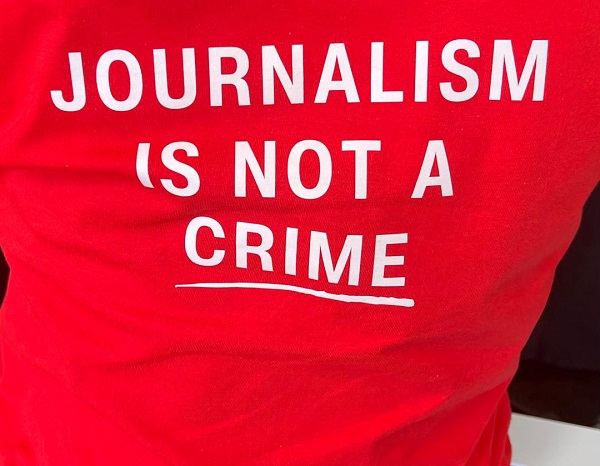
As the NTC kokonte warriors cross the border to ACP, you’d see some ACP banku fanatics dancing joyously to NTC. They are lucky folks because they do not have to obtain visa to enter into ‘Times’ to attack the balls of banku with precision and accuracy. They also claim that the lightsoup at ‘Times’ is arguably the best in West Africa.
So the relationship between the two entities was quite cordial and based practically on stomach palaver, until ACP workers staged an industrial revolution, whereupon the managing director, accountant and estate manager were allegedly stripped naked and locked up in a room. An insurgency had began in earnest.
An ACP worker came to ‘Times’, this time not to eat banku and okro. He had come to inform newsmen that juicy stuff awaited them at ACP. It could make a front page lead story.
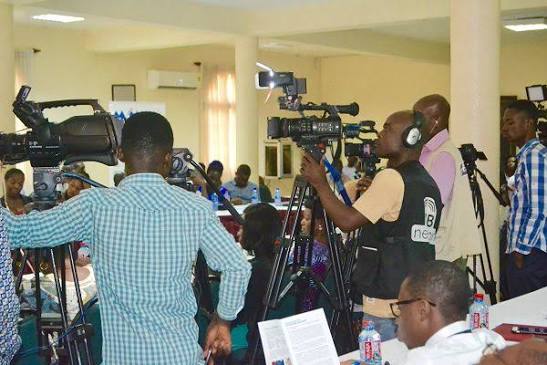
A camerawoman and a female reporter were accordingly dispatched to go and bring back news, juicy news as juicy as kokonte and groundnut soup.
I was driving to work when I espied the familiar camerawoman clicking away outside the ACP premises. I didn’t see any ‘Times’ reporter but angry workers who were on the verge of getting violent. I slowed down and the driver behind blew his horn at me like a lunatic. I drove on.
Later, I heard the reporter and camerawoman were harassed and brutalised. The report came,. “The camerawoman, Mrs Salome Adonu-Agbottah and reporter Mrs Doreen Allotey, in an attempt to retrieve the camera which the workers had seized from them were severely beaten. They were manhandled and almost pushed into a big gutter opposite the company’s premises.
BRUISES
“….The camerawoman had bruises on her body, her hand bag was destroyed and the money in it stolen. Mrs Allotey’s watch was also snatched and her feet stamped on.”
Luckily, it was not her nose that was trampled upon. She has a beautiful nose.
The bad news was received with extreme sorrow. If the victims had been men, it would not have seemed too bad. But to brutalise women is just unacceptable. The New Times Corporation has not stopped mourning the incident which has been condemned in many circles.
Some people keep asking me why Times sent females to cover a potentially violent demonstration. I tell them they might as well ask why CNN’s amazon, Christina Amanpour, is assigned to cover the carnage in Bosnia-Herzegovina and Rwanda. She is always on the frontline in jeans and jacket.
Journalism is a potentially hazardous profession, and once you accept to study and practise the trade, you might as well bone up to face any assignment as long as your superiors feel you are capable of handling it or you have demonstrated the capacity to handle it. Both males and females can be assigned anywhere, anytime just like policemen and women are assigned.
The only difference between cops and pressmen is that the latter are armed only with a pen and the former with a gun. The question is should newsmen also arm themselves so that in any event of an assault they would not be found wanting in self-defence? They can’t adequately defend themselves with a pen and a jotter. A pen cannot even disfigure an opponent’s upper lip.
Photo-journalists have particularly suffered violence. Spectator ace-cameraman Vincent Dzatse was severely assaulted by AMA men when he attempted to take pictures of their indiscretions.
Sports cameraman, P. K. Arthur has been beaten more than once at the sports stadium when riots errupted and he wanted to capture it on his lenses.
Some sports journalists have been banned from entering the Accra Sports Stadium by supporters because in their comments, they didn’t write “sense”. Some supporters once nearly lynched Christian Abbew, Spectator Sports Editor, near a courtroom. He was stoned like the biblical Stephen. He had gone to defend a contempt charge.
I think it is time journalists met and discussed how best to defend themselves in any event of an attack by individuals or mobs. In the pursuance of their duty, they must be free from harassment and assault.
Some journalists go to work and return home with a black-eye or a double fore-head. It is just not right. Something has to be done about it. I think journalists should be armed. But first we must be trained in the use of firearms so that our warning shot do not hit below the belt. What about training in Kung Fu?
This article was first published on Saturday, October 17, 1998.