Fruitful Living
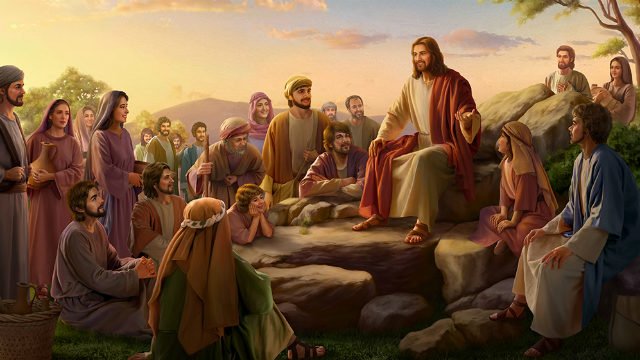
The Sermon On The Mount

- /home/u249204778/domains/spectator.com.gh/public_html/wp-content/plugins/mvp-social-buttons/mvp-social-buttons.php on line 27
https://spectator.com.gh/wp-content/uploads/2023/01/Sermon-on-the-mount.jpg&description=The Sermon On The Mount', 'pinterestShare', 'width=750,height=350'); return false;" title="Pin This Post">
- Share
- Tweet /home/u249204778/domains/spectator.com.gh/public_html/wp-content/plugins/mvp-social-buttons/mvp-social-buttons.php on line 72
https://spectator.com.gh/wp-content/uploads/2023/01/Sermon-on-the-mount.jpg&description=The Sermon On The Mount', 'pinterestShare', 'width=750,height=350'); return false;" title="Pin This Post">
In the same way, let your light shine before others, that they may see your good deeds and glorify your Father in heaven. But seek first His kingdom and His righteousness, and all these things will be given to you as well. – Matthew 5:16; 6:33.
INTRODUCTION
After Jesus’s time in the desert, He launched into His public ministry by proclaiming the message that the kingdom of God was at hand, choosing His disciples, and preaching to and healing the crowds. In Matthew 5, the Gospel shifts to the record of Jesus’s Sermon on the Mount – His teaching on how citizens of the kingdom of God should conduct themselves. The sermon begins with the Beatitudes; blessings God gives to people who cultivate certain spiritual attributes. They emphasise inner motives rather than mere outward conformity. Jesus then shifted His message to the issue of behaviour. Jesus addressed several Jewish laws and helped His disciples understand how right behaviour is never the ultimate indicator. A person must have the right heart motive too. The commands of God remind us that He has a plan for how we ought to live our lives, and that plan is based on who He is and how He’s treated us. Ultimately, we must remember that the God who demands perfection has already provided a means through the perfect sacrifice of His Son, Jesus.
As Salt and Light, we believe in the Sermon on the Mount as Jesus’s Kingdom values for everyday living. We would like to share this again since it is still relevant to us today.
Introduction to The Sermon on The Mount – Matthew 5:1-48
Now when Jesus saw the crowds, He went up on a mountainside and sat . His disciples came to Him, and He began to teach them.
The Beatitudes
He said: “Blessed are the poor in spirit, for theirs is the kingdom of heaven. Blessed are those who mourn, for they will be comforted. Blessed are the meek, for they will inherit the earth. Blessed are those who hunger and thirst for righteousness, for they will be filled. Blessed are the merciful, for they will be shown mercy. Blessed are the pure in heart, for they will see God. Blessed are the peacemakers, for they will be called children of God. Blessed are those who are persecuted because of righteousness, for theirs is the kingdom of heaven.
“Blessed are you when people insult you, persecute you and falsely say all kinds of evil against you because of me. Rejoice and be glad, because great is your reward in heaven, for in the same way they persecuted the prophets who were before you.
Salt and Light
“You are the salt of the earth. But if the salt loses its saltiness, how can it be made salty again? It is no longer good for anything, except to be thrown out and trampled underfoot.
“You are the light of the world. A town built on a hill cannot be hidden. Neither do people light a lamp and put it under a bowl. Instead they put it on its stand, and it gives light to everyone in the house. In the same way, let your light shine before others, that they may see your good deeds and glorify your Father in heaven.
The Fulfillment of the Law
“Do not think that I have come to abolish the Law or the Prophets; I have not come to abolish them but to fulfill them. For truly I tell you, until heaven and earth disappear, not the smallest letter, not the least stroke of a pen, will by any means disappear from the Law until everything is accomplished. Therefore anyone who sets aside one of the least of these commands and teaches others accordingly will be called least in the kingdom of heaven, but whoever practises and teaches these commands will be called great in the kingdom of heaven. For I tell you that unless your righteousness surpasses that of the Pharisees and the teachers of the law, you will certainly not enter the kingdom of heaven.
“You have heard that it was said to the people long ago, ‘You shall not murder, and anyone who murders will be subject to judgement.’ But I tell you that anyone who is angry with a brother or sister will be subject to judgement. Again, anyone who says to a brother or sister, ‘Raca,’is answerable to the court. And anyone who says, ‘You fool!’ will be in danger of the fire of hell.
“Therefore, if you are offering your gift at the altar and there remember that your brother or sister has something against you, leave your gift there in front of the altar. First go and be reconciled to them; then come and offer your gift.
“Settle matters quickly with your adversary who is taking you to court. Do it while you are still together on the way, or your adversary may hand you over to the judge, and the judge may hand you over to the officer, and you may be thrown into prison. Truly I tell you, you will not get out until you have paid the last penny.
“You have heard that it was said, ‘You shall not commit adultery.’ But I tell you that anyone who looks at a woman lustfully has already committed adultery with her in his heart. If your right eye causes you to stumble, gouge it out and throw it away. It is better for you to lose one part of your body than for your whole body to be thrown into hell. And if your right hand causes you to stumble, cut it off and throw it away. It is better for you to lose one part of your body than for your whole body to go into hell.
“It has been said, ‘Anyone who divorces his wife must give her a certificate of divorce.’But I tell you that anyone who divorces his wife, except for sexual immorality, makes her the victim of adultery, and anyone who marries a divorced woman commits adultery.
“Again, you have heard that it was said to the people long ago, ‘Do not break your oath, but fulfill to the Lord the vows you have made.’ But I tell you, do not swear an oath at all: either by heaven, for it is God’s throne; or by the earth, for it is his footstool; or by Jerusalem, for it is the city of the Great King. And do not swear by your head, for you cannot make even one hair white or black. All you need to say is simply ‘Yes’ or ‘No’; anything beyond this comes from the evil one.
“You have heard that it was said, ‘Eye for eye, and tooth for tooth.’ But I tell you, do not resist an evil person. If anyone slaps you on the right cheek, turn to them the other cheek also. And if anyone wants to sue you and take your shirt, hand over your coat as well. If anyone forces you to go one mile, go with them two miles. Give to the one who asks you, and do not turn away from the one who wants to borrow from you.
“You have heard that it was said, ‘Love your neighbour and hate your enemy.’ But I tell you, love your enemies and pray for those who persecute you, that you may be children of your Father in heaven. He causes his sun to rise on the evil and the good, and sends rain on the righteous and the unrighteous. If you love those who love you, what reward will you get? Are not even the tax collectors doing that? And if you greet only your own people, what are you doing more than others? Do not even pagans do that? Be perfect, therefore, as your heavenly Father is perfect.
Conclusion
Be perfect, therefore, as your heavenly Father is perfect – Matthew 5:48.
How can we be perfect?
1. In Character – In this life we cannot be flawless, but we can aspire to be as much like Christ as possible.
2. In Holiness – Like the Pharisees, we are to separate ourselves from the world’s sinful values. But unlike the Pharisees we are to be devoted to God’s desires rather than our own and carry His love and mercy into the world.
3. In Maturity – We can’t achieve Christlike characters and holy living all at once, but we must grow toward maturity and wholeness. Just as we expect different behaviour from a baby, a child, a teenager, and an adult, so God expects different behaviour from us, depending on our stage of spiritual development.
4. In Love – We can seek to love others as completely as God loves us.
We can be perfect if our behaviour is appropriate for our maturity level – perfect yet with much room to grow. Our tendency to sin must never deter us from striving to be more like Christ. Christ calls all of us disciples to excel, to rise above mediocrity, and to mature in every area, becoming like Him. Those who strive to become perfect will one day be perfect, even as Christ is perfect.
Stay blessed!
For further inquiries please contact us on Tel Nos. 0243588467 or 0268130615
Email: saltnlightministries@gmail. com
Website: saltandlightministriesgh. org
By Dr. Joyce Aryee, the author

Matthew 6:33. Notice Jesus said, “His righteousness”, not our own righteousness. We have to seek and understand God’s righteousness. Isaiah 54:14 says, “Their righteousness is of me, saith the Lord.” God’s righteousness comes from God, not from within us. Humans cannot make themselves God’s righteousness, as all humans have sinned and are therefore inferior to God. God’s righteousness is a gift from God: “ For He made Him who knew no sin to be sin for us, that we might become the righteousness of God in Him.” – 2 Corinthians 5:21
Righteousness, or right standing with God, has been attained for us through the exchange Jesus made on our behalf. Jesus took our sin and gave us His righteousness. God’s righteousness is imparted to us when we are made a new creature in Christ – 2 Corinthians 5:17. This righteousness is a gift from God and undeserved by us: “For if by the one man’s offense death reigned through the one, much more those who receive abundance of grace and of the gift of righteousness will reign in life through the One, Jesus Christ.”- Romans 5:17
Through our faith in Jesus’ blood, shed to remit our sins – Romans 3:25, God imparts righteousness to us by His grace. We actually become a new righteous creation, fully identifying in Jesus’ death, burial, resurrection and ascension. This is the foundational miracle we need to understand and have established in our heart. All the other miraculous promises of God come the same way, by God’s grace through faith. Righteousness must be established in our heart for us to truly have faith to receive our rich inheritance in Christ. Jesus has been made unto us righteousness (1 Corinthians 1:30). We are now “For all the promises of God in Him are Yes, and in Him Amen, to the glory of God through us”. – 2 Corinthians 1:20
Establishing our minds in righteousness
God expects that, when we accept Jesus Christ as our Lord and Saviour, we will be radically changed. In Romans 12:2 He tells us, And do not be conformed to this world, but be transformed by the renewing of your mind,
This transformation is to be a metamorphosis, of a magnitude at least comparable to that by which a caterpillar becomes a butterfly. He expects us to become totally different.
Scripture uses many different images to express the change that should occur: We become “a new creation; old things have passed away; behold, all things have become new.” – 2 Cor 5:17. It is almost as if we become a new species. Scripture speaks of the “first Adam” who was earthly and fell into sin, and the “second Adam” (Jesus Christ) who was sinless and holy – Rom. 5:12-19; 1 Cor 15:44-49.
We are “made new in the attitude of our minds” – Eph. 4:23.
We “put off our old self” and “put on the new self” – Eph. 4:22,24; Col 3:9-10.
We “live by the Spirit” and not by the flesh – Gal. 5:16; Rom 8:13.
We become “instruments of righteousness” rather than “instruments of wickedness” – Rom. 6:13.
Each of these metaphors, in a different way, emphasizes the magnitude of the change that is expected. Each is dramatic and astonishing in itself; their cumulative effect is even more powerful. We are talking about a tremendous transformation. It should be visible to others, but its internal effect should be far greater than what others can perceive.
The goal of this transformation
What is the goal of this metamorphosis? Scripture states it in a number of different ways, which overlap and can be seen as different ways of expressing the same basic concept. Scripture often does this, because our minds are inadequate to comprehend, and our language inadequate to express, the full scope of God’s revelation to us.
To be continued!
Stay blessed!
For further inquiries please contact us on Tel Nos. 0243588467 or 0268130615
Email: saltnlightministries@gmail.com
Website: saltandlightministriesgh.org
SKIP THE QUEUE, TAP THE NEWS

You can now read the Ghanaian Times and The Spectator newspapers from the comfort of your device via TimesNewsPlus.
Join our WhatsApp Channel: https://whatsapp.com/channel/0029VbBElzjInlqHhl1aTU27
Fruitful Living
Environmental Stewardship Is an Act of Worship: The Islamic response to climate change and environmental degradation (Final part)

The Role of Faith Leaders and the Way Forward
Addressing climate change and environmental degradation requires more than legislation, technological innovation, and financial investment. It also demands a transformation of attitudes, values, and behaviours. While governments formulate policies and enforce environmental regulations, faith leaders possess a unique moral authority to shape public conscience and inspire responsible stewardship. In Ghana, where religion plays a significant role in public life, religious institutions can become powerful partners in advancing environmental sustainability.
Islam assigns Imams and religious scholars the responsibility of guiding society toward righteousness and preventing harmful practices. Allah instructs, “Invite to the way of your Lord with wisdom and good instruction, and argue with them in a way that is best” (Qur’an 16:125, Sahih International). This responsibility extends beyond matters of ritual worship to encompass every aspect of life that affects human wellbeing, including the protection of the environment.
Environmental stewardship should therefore become an integral part of Islamic teaching, preaching, and community engagement.
Mosques, as centres of learning and social transformation, have enormous potential to cultivate environmental consciousness. Imams can regularly incorporate environmental themes into Friday sermons, Islamic lectures, marriage counselling, youth programmes, and educational activities. Teaching congregants that protecting rivers, forests, wildlife, and public spaces is an act of worship that helps bridge the perceived divide between religious devotion and environmental responsibility. Such education can inspire lasting behavioural change rooted not merely in fear of legal sanctions but in consciousness of accountability before Allah.
Religious institutions can also lead by example. Mosques can organise community clean-up campaigns, tree-planting exercises, and public awareness programmes on sanitation and responsible waste disposal. They can adopt environmentally friendly practices by reducing unnecessary waste during religious gatherings, encouraging water conservation during ablution, and promoting the proper maintenance of mosque facilities and surrounding communities. These initiatives demonstrate that Islamic values are best communicated through practical action as well
as words.
Meaningful environmental protection also requires collaboration among multiple stakeholders. Government agencies should continue strengthening the enforcement of environmental laws while addressing corruption and enhancing institutional accountability. Environmental governance must be guided by transparency, fairness, and the consistent application of the law. At the same time, sustainable economic alternatives should be developed for communities that depend on environmentally destructive activities, particularly illegal mining. Investments in vocational education, climate-smart agriculture, responsible small-scale mining, and entrepreneurship can provide dignified livelihoods while reducing pressure on fragile ecosystems (UNDP, 2023).
Traditional authorities equally have an indispensable role to play. As custodians of customary lands, chiefs and community leaders possess considerable influence over land use and natural resource management. Their collaboration with government institutions, faith leaders, and local communities is essential in protecting forests, water bodies, and communal lands from unsustainable exploitation. Community ownership of environmental conservation initiatives often produces more enduring outcomes than enforcement measures alone.
Educational institutions should integrate environmental ethics into their curricula from the basic to the tertiary levels. Beyond teaching scientific concepts, schools should cultivate a sense of environmental citizenship, encouraging young people to appreciate the interconnectedness of ecological health, economic development, and human wellbeing. Parents likewise bear the responsibility of nurturing environmentally responsible habits within the family by teaching children the values of cleanliness, moderation, conservation, and respect for public property.
Individual citizens cannot be absolved of responsibility. The Qur’anic concept of Khalifah reminds every believer that stewardship begins with personal conduct. Conserving water, disposing of waste responsibly, planting and protecting trees, reducing unnecessary consumption, respecting public spaces, and reporting environmental offences are practical ways through which every Muslim can fulfil this sacred trust. Environmental stewardship is not reserved for governments or
environmental experts; it is the collective duty of every member of society.
The environmental challenges confronting Ghana should also be viewed as opportunities to strengthen national unity. Climate change, pollution, and environmental degradation affect people irrespective of religion, ethnicity, political affiliation, or social status. They therefore call for collective action grounded in shared values of justice, responsibility, and compassion. Islam’s
ethical framework complements national development efforts by reminding believers that service to humanity and protection of creation are integral dimensions of worship.
As Ghana strives to achieve sustainable development, environmental protection must cease to be regarded as a peripheral concern and instead become a national moral priority. The combined efforts of government, traditional authorities, religious institutions, civil society, academia, the private sector, and citizens can restore degraded ecosystems and build resilient communities. Through wise leadership, sound governance, and unwavering commitment to the divine trust of
stewardship, the nation can preserve its rich natural heritage for generations yet unborn.
In conclusion, protecting the environment is not merely an environmental obligation—it is an act of worship, a fulfilment of humanity’s divine trust, and a legacy of justice for future generations.
Thank you.
The author is Chief Imam of Katamanso Municipal and Certified Counsellor and Governnace Expert
SKIP THE QUEUE, TAP THE NEWS
You can now read the Ghanaian Times and The Spectator newspapers from the comfort of your device via TimesNewsPlus.
Join our WhatsApp Channel: https://whatsapp.com/channel/0029VbBElzjInlqHhl1aTU27