Features
Burning Issues Any justification for National Development Bank in Ghana? (Part 1)

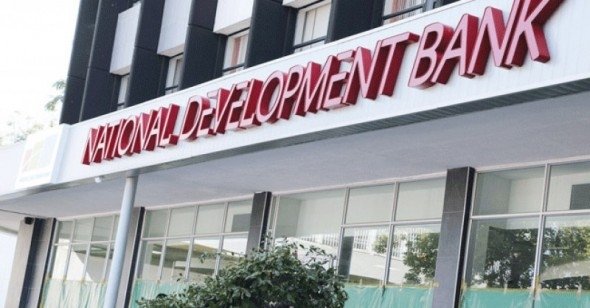
“The Development Bank is going to play a very important part in the rapid economic transformation of Ghana, following the onset of COVID-19.” These words came from President Nana Addo Dankwa Akufo-Addo during the signing ceremony on Wednesday May 19, 2021, when the President of the Republic held a meeting with the President of European Development Bank (EDB), Dr Werner Hoyer, as part of his official visit to Belgium.
According to President Akufo-Addo, the design and operation of the Development Bank Ghana (DBG) in Ghana has been on the drawing board over the past two years and when established, would satisfy the highest standards, scrutiny and best practices of development banks across the world.
He assured further that the €170 million facility being provided by European Investment Bank (EIB) for the establishment of the Development Bank Ghana (DBG), signals the determination of the country to continue partnering with the EU to continue to finance other projects in the pipeline as the country works to recover from the impact of COVID-19 as well as assist in the rapid recovery of the Ghanaian economy from the ravages of the pandemic.
Not quite long ago, during the presentation of the 2022 Budget Statement and Economic Policy to Parliament on Wednesday, 17th November, 2021, the Hon Minister of Finance, Ken Ofori-Atta, stated that the country would soon establish a national development bank to address our developmental issues. In opposition to the announcement, some of the minority in Parliament expressed the view that the Minister should have informed Parliament to pass the relevant law on the bank before making the announcement.
This is surprising because a Minister can announce an intention of setting up an entity in the country before informing Parliament about it. It appears everything by Government, even if good, will be antagonistically be attacked before going through the process, a behaviour that is unpalatable or awful and should, therefore, be discarded or thrown overboard.
WHY IS SUCH BEHAVIOUR EXHIBITED TOO OFTEN IN THIS COUNTRY?
We need to ensure that, as much as possible, we place our partisan interest far above that of the nation, so that we would be able to confront and overcome all challenges or obstacles that may come our way as a nation. This is the only way to ensure that we are able to rise above every difficulty in this country.
If right from the beginning, we are not able to do this, then we must note that moving forward as a nation will always be extremely difficult, if not impossible. Countries are admired today for their economic achievements – United States, Germany, France, Canada and all others that are able to donate funds to needy countries – exercised democracy in this way but had to keep their nations afloat before being able to reach where they are today.
It is also for this reason that we often say that Rome was not built in a day. What this means is that, the process of nation building always requires sacrifices on the part of residents before being able to get to the top. Similarly, the process of growth for every human takes a long time through a lengthy process before a baby becomes an adult, not forgetting daily guidance from parents and others in society in addition to the vital issue of socialisation.
What all this means is that, as citizens and residents in the country, we need to know our priorities and desire for societal values before being able to move from the first step to the end. It is said also that, the journey of a thousand miles begins with the first step. If this is the case, then Ghana as a country needs much patience to go through the various nationalistic processes needed to cement national progress for all and sundry.
We, therefore, have a long way to go before being able to achieve our developmental goals. These goals can only be attained if as a nation, we begin to understand each other, appreciate our differences in opinion while at the same time being critical at each other, through constructive criticisms not destructive or deadly ones, so as to be able to move the country forward.
ANY NEED FOR A NATIONAL DEVELOPMENT BANK?
One question that comes up immediately is whether there is the need for a bank for developmental purposes when indeed other banks are already operating in the country. It has even been argued that, to prevent the collapse of certain banks and strengthen the banking sector, the government in collaboration with the Bank of Ghana, recently sanitised the sector to ensure that it is strengthened up for business in the country.
And if this is the case, why should another bank be established if it is aimed at promoting the same economic development that we are all seeking?
DEVELOPMENT BANKS AND ECONOMIC GROWTH
Generally, development banks serve as important instruments to promote economic growth. They usually do this by providing credit and a wide range of advisory as well as capacity building programmes to stakeholders. The stakeholders here include households, small and medium enterprises and even large private companies. Usually, the financial needs of the huge private companies are not sufficiently served by private commercial banks or by local capital markets.
Email address /whatsapp number of author: Pradmat2013@gmail.com/0553318911
By Dr Kofi Amponsah-Bediako


Conflict at work is more common than you might think. According to 2022 research by The Myers-Briggs Company, more than a third of the workforce reports dealing with conflict often, very often, or all the time in the workplace.
Addressing a dispute might feel tense or awkward, but resolving the conflict is typically well worth it in the long run. Whether you are trying to mediate conflict between colleagues or are directly involved. Last week we looked at three and this week is the remaining four steps you can take to manage workplace conflict.
4. Find common ground
The best way to handle workplace conflict is to start with what you can agree on. Find common ground between the people engaging in conflict. If you are directly involved in the conflict, slow down and focus on results instead of who’s right.
If you are the mediator for conflict resolution between coworkers, observe the discussion and help point out the common ground others may not see.
5. Collectively brainstorm solutions
When deciding how to handle workplace conflict, it can be tempting to problem-solve on your own. Sometimes, it feels easier to work independently rather than collaboratively. However, if you want to achieve a lasting resolution, you will need to motivate your team to get involved.
Brainstorm possible solutions together, and solicit input from everyone involved on the pros and cons of each option until you settle on a solution that feels comfortable to everyone. This will help all team members feel a sense of ownership that can help prevent future conflicts.
6. Create an action plan
Once you have created an open dialogue around workplace conflicts, it is time to resolve them. Just like any other work goal, this requires creating a concrete plan and following through.
Create an action plan and then act on it. It does not matter what the plan is, as long as you commit to it and resolve the conflict as a result.
7. Reflect on what you learned
All conflicts offer an opportunity to grow and become a better communicator. Identify what went well and what did not.
Work with your whole team to gather learnings from the conflict so you can avoid similar situations in the future.
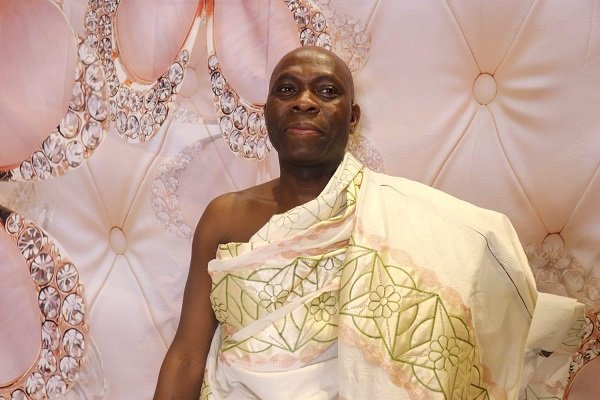
Today, I continue with my narration of personalities and their accomplishments as members of the Ghanaian Diaspora in Finland, with a focus on Mr Joseph Osei Amoah.
Mr Amoah is one of the senior members of the Ghanaian community in Finland and a top member of the Ghana Union Finland, an association of the Ghanaian migrant community in Finland.
He is an active and a well-respected person in the Ghanaian community in Finland. Mr Osei Amoah moved to Finland in the mid-1990s, and he has lived in Helsinki all this time.
Accomplishments and honours
It is important to recount accomplishments as part of the success stories of the personalities of Ghanaian descent in Finland in order to highlight their exploits both within the Ghanaian migrant community and in the wider Finnish society.
Mr Amoah holds a Master’s degree in Demography from the University of Helsinki. At the time he came to Finland in 1994, he had majored in Economics at the Bachelor’s level at the Kwame Nkrumah University of Science and Technology (KNUST).
Sometimes affectionately called “Chairman” in the Ghanaian migrant community, Mr Osei is a former Chairman of the New Patriotic Party’s (NPP) branch in Finland, assuming office around 2015, a few months after the branch was formed, until 2019 when he did not run again for the elections. He helped to bring vibrancy into the NPP Finland branch.
Religious life
Mr Amoah is a prominent member of the Global Methodist Church in Finland. In spite of his busy working life and other responsibilities, he remains a committed member of the Global Methodist Church in Finland.
He plays a key leadership role in the church, which is attended by many Ghanaian migrants and other African migrants, Finns, and those of other nationalities.
His position in Asanteman Finland
Mr Osei Amoah is an outstanding member of the Asanteman Finland, where he is the Gyasehene, a prominent position as a sub-chief in the Asante (and Akan) royal hierarchy, in the functioning of the traditional authority systemgenerally in Ghana.
The Asanteman Finland is an association formed purposely with the aim of supporting each other as well as to ensure unity among its members and others outside of the group.
One of its top priorities of Asanteman Finland is to display the Asante culture in Finland. Mr Osei Amoah finds this as very important since by upholding the traditional culture and heritage, the association enables its members and especially the young ones to get the chance to learn and appreciate Asante and Ghanaian cultural values. They do this through rites such as marriage, the naming ceremony, and death and funeral rites, which makes the people to learn more of their provenance and not forget their origins.
“My point is that, by displaying the traditional heritage it helps people to learn more about their provenance. For, I think it will be embarrassing to go home and see that even the young ones have much knowledge about how to perform certain rites whilst those of us in the diaspora may be deficient in understanding those practices”, he argued. It is also very important for the young ones who are born in Finland to learn what the culture of their original society is, he continued.
The Finnish educational system
Mr Osei has a lot to say about the Finnish educational system, which he sees as very good. “When we came to Finland, education was free. There were library books and manuscripts readily available in the library, and one could print or make as many photocopies as possible for your studies. There was more flexibility. One could read books and write exams on them for the necessary grades in order to complete your studies”. In his opinion, Ghana could learn much from the Finnish system, which is one of the best in the world.
He said the only initial challenge he found in Finland was how to master the Finnish language, without which it was difficult to get a job befitting one’s status after the studies. But things have changed today and there are many English courses so it is easy to study and get a job that matches your studies, especially in the area of ICT, he said.
His role in the Ghanaian community
Mr Osei Amoah has been very active in the Ghanaian community, as I have indicated earlier. He is still very active in the Ghana Union Finland, and has played a leadership in many functions organised by the Union, as a non-governmental organisation for the Ghanaian migrant community in Finland.
Mr Amoah has been a counsellor and mentor who has guided many young Ghanaian migrants on their career paths and has also been part in settling various kinds of conflicts between opposing parties or persons. In conclusion, I would say Mr Osei Amoah has succeeded in embossing his name in the golden pages of visionary Ghanaians in both Sweden and Finland.
With Dr Perpetual Crentsil