Editorial
Caring for underprivileged in our society is necessary

- /home/u249204778/domains/spectator.com.gh/public_html/wp-content/plugins/mvp-social-buttons/mvp-social-buttons.php on line 27
Warning: Trying to access array offset on false in /home/u249204778/domains/spectator.com.gh/public_html/wp-content/plugins/mvp-social-buttons/mvp-social-buttons.php on line 27
&description=Caring for underprivileged in our society is necessary', 'pinterestShare', 'width=750,height=350'); return false;" title="Pin This Post">
- Share
- Tweet /home/u249204778/domains/spectator.com.gh/public_html/wp-content/plugins/mvp-social-buttons/mvp-social-buttons.php on line 72
Warning: Trying to access array offset on false in /home/u249204778/domains/spectator.com.gh/public_html/wp-content/plugins/mvp-social-buttons/mvp-social-buttons.php on line 72
&description=Caring for underprivileged in our society is necessary', 'pinterestShare', 'width=750,height=350'); return false;" title="Pin This Post">
It is not everyone in society who will be born into families that are highly educated, rich or very knowledgeable; this is why we need to develop love and care for all people that we come in contact with in our society.
Under-privileged persons in our society include those who come from less educated families or the poor or those who have problems such as being physically challenged. Such people may find it difficult to go about their normal duties in society because of lack of financial resources or inadequate education or, better still, their inability to go about their duties with ease.
In such situations they need our sympathy and assistance to make it possible for them to go about their normal duties in society. Those who find ourselves in very good positions should count ourselves lucky and be willing to assist the underprivileged.
We must never discriminate against them or look down on them simply because of their poverty level or low level of education. Again, others may be involved in motor accidents and, therefore, become paralysed or physically challenged one way or the other.
In situations like this, we must show great love to such people and be prepared to spend part of our personal resources to make it possible for them to enjoy normal life.
We may not be able to bring them into the normal situation which God may have planned for them, but the little we do can make it possible for their lives to be better.
It is in light of this that we find it gratifying to see certain leaders in this country contributing massively to the underprivileged in our society. The Vice President of the Republic, Dr Mahamudu Bawumia, is often seen to be sharing his life and personal resources to some of these underprivileged persons.
His association with people suffering from leprosy, for example, is well known in this country. Also, his commitment to the poor irrespective of religious beliefs has touched the heart of many people across the country. The Vice President has called on Ghanaians to show care and concern to the underprivileged in society.
If we all emulate him, it will go a long way to make it possible for us to put smiles on the faces of those who have very little to eat and drink in the country. In addition, caring for them, including those admitted to our hospitals, will make life better for our unfortunate brothers and sisters who may find themselves in such unfortunate situations.
We pray that people who are leading the light in this way receive abundant blessings from God for the good work they are doing.
Let us count ourselves very fortunate and be prepared to help the underprivileged in society so that life can be made better for many of our brothers and sisters who require such help from us.


Dear Editor,
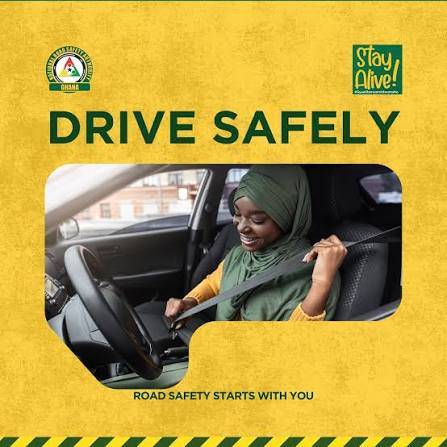
Before we start blaming the government, the authorities and how bad our roads are, perhaps we should first ask ourselves what role we played in making our roads unsafe.
Road safety is often discussed as though it is solely the responsibility of the government and law enforcement agencies, neglecting our roles we play to make the roads unsafe.
While authorities have an important role to play, the behaviour of individual road users remains equally important.
A driver who speed, overtakes recklessly, uses phone while driving or drives when tired is making a decision that could affect many lives.
A motorcyclist who ignored traffic light and also refuse to wear a helmet, passengers who encourage the driver to speed and the pedestrians who crosses a busy road carelessly can also contribute to danger.
We must therefore develop a strong culture of personal responsibilities on our roads.
Drivers should obey speed limit, avoid distractions and ensure their vehicles are road worthy, passengers should also not encourage reckless driving simply because they want to arrive at their destination quickly whiles pedestrians must also exercise greater caution when crossing roads.
At the same time authorities must continue to improve road infrastructures, enforce traffic regulations consistently and educate the public about responsible road use.
Road safety cannot succeed through enforcement alone; it requires change in attitude. If each road user understand that another person’s life may depend on their decision, our road can become safer.
Let us not wait for another crash before we remember the value of life. Thank you for the space.
From Akwasi Aaron
Accra.
Dear Editor,
I was concerned by a point raised during a radio review about the growing expectation among some parents that once their children attend government schools, particularly under the Free SHS programme, the government must provide virtually everything they need.
This mindset deserves serious public discussion.
The introduction of Free SHS has undoubtedly lifted a significant financial burden from parents. Government is already absorbing substantial costs associated with the education of thousands of Ghanaian children. Students in public second-cycle institutions also benefit from provisions such as tuition support, meals and other essential services.
However, Free SHS should not be interpreted as free parenting. A parent should not expect the government to provide every personal item a child needs simply because the child attends a public school. Items such as mattresses, sponges, toiletries, clothing, chop boxes and other personal necessities should, where possible, remain part of the parent’s responsibility.
The same principle applies at the basic-school level. Government has a responsibility to provide quality education and create an enabling environment for children to learn. Parents, however, have an equally important responsibility to support their children’s education and welfare.
Government cannot and should not replace the family. When parents gradually transfer every responsibility to the state, we risk creating a culture of dependency in which citizens expect government to solve every personal problem. That is neither sustainable nor healthy for our development as a nation.
We must therefore appreciate the support government provides while recognising that education is a shared responsibility. Parents must continue to contribute according to their means, schools must do their part, and government must continue providing the necessary educational infrastructure and support. Rather than asking, “What else will government give us?” parents should also ask, “What can I do to support my child’s education?”
Free education is a public investment, not an invitation for parents to abandon their responsibilities. Ghanaians must therefore change the mentality that government must provide everything. The state can carry a significant portion of the burden, but the family must never surrender its responsibility.
Free SHS should make education more accessible not make parenting optional.
From Desmond Aidoo
Sowutuom