Features
“BOAKYE GYAN’S WAR”

- /home/u249204778/domains/spectator.com.gh/public_html/wp-content/plugins/mvp-social-buttons/mvp-social-buttons.php on line 27
https://spectator.com.gh/wp-content/uploads/2020/05/520202030650-vaqdtgfssn-major-boakye-gyan.jpg&description=“BOAKYE GYAN’S WAR”', 'pinterestShare', 'width=750,height=350'); return false;" title="Pin This Post">
- Share
- Tweet /home/u249204778/domains/spectator.com.gh/public_html/wp-content/plugins/mvp-social-buttons/mvp-social-buttons.php on line 72
https://spectator.com.gh/wp-content/uploads/2020/05/520202030650-vaqdtgfssn-major-boakye-gyan.jpg&description=“BOAKYE GYAN’S WAR”', 'pinterestShare', 'width=750,height=350'); return false;" title="Pin This Post">
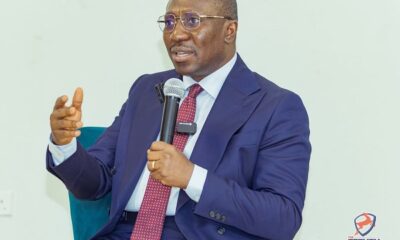
What is this I am hearing? That self styled OSAHENE Kojo Boakye Gyan (Major retired) says there will be CIVIL WAR in Ghana if the Electoral Commission insists on writing a new Voters’ Register for Ghana?
As an OSAHENE (War Chief) Boakye Gyan fully knows well all about WAR – breakdown of law and order, senseless baseless vengeful killings, rampant rape of women, hunger, total chaos and brigandage – and Major Boakye Gyan says all this will happen in Ghana just because EC wants to write a new Voters’ Register?
I wonder what thought processes took place in his mind to lead him to make such a far-fetched absolutely unrealistic declaration.
Fate brought Boakye Gyan into my life in Legon in 1976. One evening, I returned late from lectures at the Law Faculty to hear my room mate Tony Osei Tutu telling me “Effah, Captain was here – he said he will be back, so wait for him”.
Captain? Which Captain?
In those days the military was in power, SMC I under General I. K. Acheampong. I was a leading student anti-military campaigner. One day I remember so well after a lecture by Kwesi Botchway, I stood up from the floor and descended heavily on the military – abuse of power, corruption and so on to a surprisingly wild applause from my colleagues.
When I sat down, the next student seated by me whispered to me” “Effah, the man behind you is an Army Officer – Major Abobor. “I turned to look at him – he was staring at me, smiling!!!! (He later became a lawyer, a judge and died as a Circuit Court Judge).
Later that night, in entered my room – A34, Commonwealth Hall – a tall fair colored handsome gentleman: “My name is Captain Kojo Boakye Gyan – Ghana Army”.
He told me he was doing Qualifying Certificate in Law but he could not get time to attend lectures, so he went to see the Dean of the Law Faculty who suggested to him that I was one of the good students whose lecture notes he could rely on, so he had come to ask whether I could ensure that I don’t miss a law lecture so that every Saturday morning he would come for my law notes?
In a familiarization discussion, it turned out that he hailed from Jaman District in B/A Region, and that he was an old student of Achimota School, just like me!!!
Thanks to Boakye Gyan my lecture notes for my third year law were up to date and superb – I never missed a lecture. One evening he came to Commonwealth Hall in the company of another handsome very smart looking Air Force officer, chain smoking, whom he introduced as Jerry, his bosom friend, another old Achimotan!!!!
Every week end the three of us would meet and reader the debates! The arguments!!! Hot solid reasons for this or that viewpoint, and slowly my perception of the military changed: all soldiers are NOT zombies. If you commission half-baked drunks as officers, you will get drunks as officers, and if you commission highly intelligent level headedchaps you will get a military commandedby highly intelligent level-headed officers.
These two officers had such a gripping influence on me that I abandoned the pursuit of law and enrolled at the Ghana Military Academy as a law graduate cadet officer. I was sent to the Royal Military Academy Sandhurst and returned in time as an officer to see the outbreak of 4th June 1979 military uprising, led by my two paddies, Jerry Rawlings and Boakye Gyan.
I love history as a field of study so much that I personally talked to over 50 participants in 4th June 1979 and the conclusion I came to was that the principal master brain behind 4th June was L/Cpl PETER TASIRI of 5BN and a cabal of Boys Company soldiers who wanted to save the life of Jerry Rawlings from then ongoing General Court Martial. L/CplFulavi of 5BN radio room was the first casualty of 4th June, killed accidentally by my intake mate 2/LtAgyemang Bio who then committed suicide.
In subsequent years, anytime I hear Boakye Gyan high on oath pontificating about his role in 4th June – I laugh. He only came into the picture because after the release of Jerry Rawlings from the BNI cells by the 5BN soldiers, Jerry in his initial announcement mentioned his long time old Achimotan colleague as one of the principal officers – that is all, but now, Boakye Gyan keeps saying ad infinitum that they masterminded 4th June in order to punishAcheampong,Utuka,Kotei and co for removing the democratically elected Government of Prime Minister K A Busia on 13th January 1972!!!!
After 4th June, he was promoted Major and sent to London UK to study “War Studies” and then compulsorily retired from the Army. He lived in self-imposed exile in London for over 20 years and returned to Ghana, calling himself OSAHENE (Chief of War), joined the NDC and became Constituency Chairman for Jaman South Constituency then resigned to contest as NDC Parliamentary Candidate for Jaman South but lost the contest to NPP.
Now he lives in Accra, Iike Rawlings over 70 years old, restless, desperately seeking attention, once in a while being garrulous making wild baseless claims.
I had a very good laugh when the Editorial of Daily Guide Friday 15th May 2020 page 4 described the Osahene as suffering from Post Traumatic Stress Disorder Syndrome!!! There is a world famous surgeon at 37 Hospital, called DrAsumani. Doc, what is the meaning of Post Traumatic Stress Disorder Syndrome??
What has the writing of a new voters’ Register got to do with Civil War? Jean Mensah and her officers at Electoral Commission want to write a new Register because the Charlotte Osei Electoral Commission had so many ghosts- both human and imaginary non-existent polling stations – but even so, NPP, we won, so what is the fuss all about? As Mac Manu said and I agree with him, if because of COVID-19 time is against ElectoralCommission for writing a new Register, no problem, NPP will win all the same.
My worry is that either Osahene is being okro mouth, revealing the dark secrets of NDC, beating macabre war drums, vide ElectoralRegister, or he himself, suffering from Daily Guide’s Post Traumatic Stress Disorder Syndrome is planning something sinister todestabilize our peace and quiet.
Whichever way, to be forewarned is to be forearmed.Prevention is better than cure. I suggest that the security agencies should “invite” the Osahene to explain himself and henceforth put him on the security radar.
May God spare Ghana a Boakye Gyan War.
Nkrabeah Effah-Dartey


There is a scripture that is found in Matthew 6:22 which says that the lamp of the body is the eye and therefore the eye must see well to enable the body to get to its destination.
What most people do not know is that behind the scenes, there is a strong interaction between the eyes and the brain before a picture becomes clear. The state of mind therefore is crucial to the eye seeing clearly to enable the body to process accurately the information the eyes are feeding it for proper identification of what the eyes see.
This is similar to how a person behaves i.e. what informs the decisions that forms in the mind that results in the actions that a person performs. The actions of a person does not therefore just happen but is as a result of things that went on in the mind, which in most cases resulted from information passed on to it by the eyes either consciously or unconsciously.
There are so many issues that affect our society which makes one wonder, whether the people who displayed such acts were created by someone or something other than God.
How can a person see a beach created by God with beautiful beaches and fresh air blowing all around, decides to defecate at such places, and therefore desecrate the environment? lt is simply mind boggling?
When other people in other countries who dwell on the coast are using their beaches for tourist attraction purposes as a means of livelihood and also to promote environmental health, some people living around our beaches, have turned them into rubbish dumping sites and toilets.
It is a very sad situation and the earlier we did something about it the better. It is a national emergency that must engage the attention, first of the government and then the citizenry, where religious bodies and NGOs must play a critical role.
The things we focus on in this country, needs to be addressed. Our minds which processes the info the eyes send to the brain, must be disciplined. There are certain behaviours that a disciplined mind can ignore even when the eye has provided info to the brain. One of the things a disciplined mind does, is the avoidance of a second look, which is critical for every person who wants to avoid adultery or fornication.
Once a person is not blind, he will see things. The boobs, the ‘shankus’, the coca cola shapes, the light complexioned, the dark complexioned etc. the eyes will definitely see and report same to the brain. What the brain or the mind decides to do or instructs the eye to do is the issue.
It can decide to instruct the eye to take a second look and let the mind drool over it or say ignore it and that will be the end.
If the mind becomes trained to focus on environmental issues like clean environment, the eyes will automatically be reporting on insanitary conditions to the brain as and when it sees them. The mind will pay attention to such data and begin to process them and to identify solutions to deal with the reported insanitary conditions.
There is the need to encourage citizens to train the mind to focus on the right thing so that in tandem with the eyes, focus will be maintained. When the mind is so trained, it communicates with the eye to also focus on hood things that helps in both are spiritual life and our secular lives, for indeed the eyes are the lamp of the body. God bless.
THE relationship between New Times Corporation (NTC) and African Concrete Productions (ACP) is based entirely on matters of the stomach. Each depends on the other in a dietary symbiosis, reinforced by the close proximity of each other
At lunchtime, you’d see a particular set of Times workers marching regimentally to ACP to face the wall. You’d think they are soldiers. It has long been declared that the company manufactures the best kokonte in the Greater Accra Region. ACP is, therefore, a culinary haven for those NTC kokonte fans, both male and female.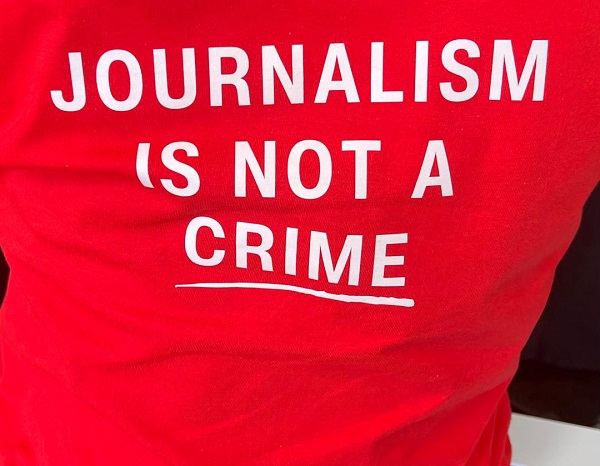
As the NTC kokonte warriors cross the border to ACP, you’d see some ACP banku fanatics dancing joyously to NTC. They are lucky folks because they do not have to obtain visa to enter into ‘Times’ to attack the balls of banku with precision and accuracy. They also claim that the lightsoup at ‘Times’ is arguably the best in West Africa.
So the relationship between the two entities was quite cordial and based practically on stomach palaver, until ACP workers staged an industrial revolution, whereupon the managing director, accountant and estate manager were allegedly stripped naked and locked up in a room. An insurgency had began in earnest.
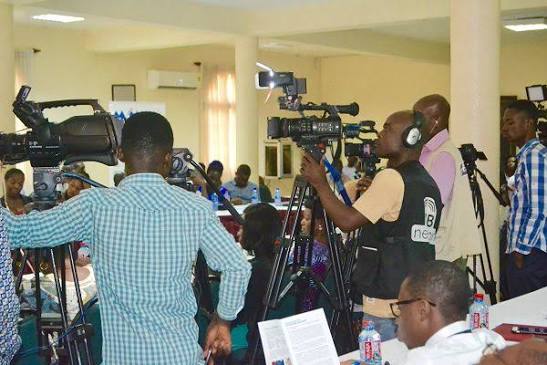
An ACP worker came to ‘Times’, this time not to eat banku and okro. He had come to inform newsmen that juicy stuff awaited them at ACP. It could make a front page lead story.
A camerawoman and a female reporter were accordingly dispatched to go and bring back news, juicy news as juicy as kokonte and groundnut soup.
I was driving to work when I espied the familiar camerawoman clicking away outside the ACP premises. I didn’t see any ‘Times’ reporter but angry workers who were on the verge of getting violent. I slowed down and the driver behind blew his horn at me like a lunatic. I drove on.
Later, I heard the reporter and camerawoman were harassed and brutalised. The report came,. “The camerawoman, Mrs Salome Adonu-Agbottah and reporter Mrs Doreen Allotey, in an attempt to retrieve the camera which the workers had seized from them were severely beaten. They were manhandled and almost pushed into a big gutter opposite the company’s premises.
BRUISES
“….The camerawoman had bruises on her body, her hand bag was destroyed and the money in it stolen. Mrs Allotey’s watch was also snatched and her feet stamped on.”
Luckily, it was not her nose that was trampled upon. She has a beautiful nose.
The bad news was received with extreme sorrow. If the victims had been men, it would not have seemed too bad. But to brutalise women is just unacceptable. The New Times Corporation has not stopped mourning the incident which has been condemned in many circles.
Some people keep asking me why Times sent females to cover a potentially violent demonstration. I tell them they might as well ask why CNN’s amazon, Christina Amanpour, is assigned to cover the carnage in Bosnia-Herzegovina and Rwanda. She is always on the frontline in jeans and jacket.
Journalism is a potentially hazardous profession, and once you accept to study and practise the trade, you might as well bone up to face any assignment as long as your superiors feel you are capable of handling it or you have demonstrated the capacity to handle it. Both males and females can be assigned anywhere, anytime just like policemen and women are assigned.
The only difference between cops and pressmen is that the latter are armed only with a pen and the former with a gun. The question is should newsmen also arm themselves so that in any event of an assault they would not be found wanting in self-defence? They can’t adequately defend themselves with a pen and a jotter. A pen cannot even disfigure an opponent’s upper lip.
Photo-journalists have particularly suffered violence. Spectator ace-cameraman Vincent Dzatse was severely assaulted by AMA men when he attempted to take pictures of their indiscretions.
Sports cameraman, P. K. Arthur has been beaten more than once at the sports stadium when riots errupted and he wanted to capture it on his lenses.
Some sports journalists have been banned from entering the Accra Sports Stadium by supporters because in their comments, they didn’t write “sense”. Some supporters once nearly lynched Christian Abbew, Spectator Sports Editor, near a courtroom. He was stoned like the biblical Stephen. He had gone to defend a contempt charge.
I think it is time journalists met and discussed how best to defend themselves in any event of an attack by individuals or mobs. In the pursuance of their duty, they must be free from harassment and assault.
Some journalists go to work and return home with a black-eye or a double fore-head. It is just not right. Something has to be done about it. I think journalists should be armed. But first we must be trained in the use of firearms so that our warning shot do not hit below the belt. What about training in Kung Fu?
This article was first published on Saturday, October 17, 1998.