News
$9million Grant Scheme launched for SMEs in toursim sector

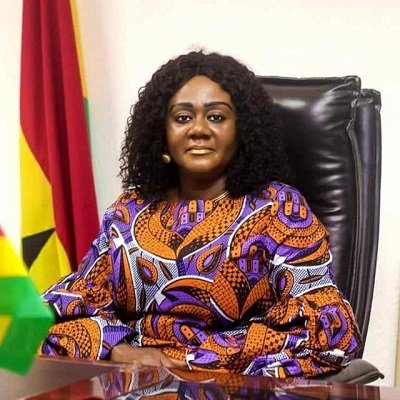
The Ministry of Tourism Arts and Culture, has launched a $9million Grant Scheme for Small and Medium Enterprises (SMEs) in the tourism and leisure sector.
The grant scheme which is under the Ghana Tourism Development Project (GTD), is aimed at supporting indigenous businesses to overcome challenges in the tourism sector.
The grant scheme is in three categories, thus, Site Upgrade Grant, SMEs Grant for companies within the tourism sector, and Capacity Building for emerging companies and individuals with ideas.
To be eligible for the scheme, one needs to register his or her company with the appropriate state entities and the company should be majority Ghanaian ownership.
Addressing the press on Wednesday at the Ministry of Information conference room, Barbara Oteng-Gyasi, Minister of Tourism Arts and Culture, said, the sector had been identified as a strategic pillar for the economy, and Ghana Beyond Aid agenda.
She said in the country’s quest to improve leisure tourism, the President, Nana Addo Dankwa Akufo-Addo, solicited for a facility from the World Bank to implement the Ghana Tourism Development Project for which an aspect, known as the ‘Grant Scheme’ had been launched.
The minister revealed that the project comprised four main components, namely, Strengthening Tourism Enabling Environment, Developing Tourism Sites and Destinations, Tourism Enterprise Support, and the final component would be a support for the Ministry’s Management and Coordination efforts.
She added that as part of the project, some tourist sites have been identified and currently under renovation at various stages of completion, adding that very soon, a plan for the establishment of a state-of-the-art tourism and hospitality training institutions at different parts of the country would be outdoored.
It was her hope that beneficiaries would utilise the funds to achieve the purpose of the project, adding that her outfit would undertake rigorous evaluation programmes.
Senior Minister, Yaw Osafo Marfo, who supervised the launch, expressed government’s commitment to improve the tourism sector, adding that the move demonstrated the vision for the sector.
He said, if the players in the sector utilised the funds successfully, other financial support would follow, because tourism played a key role in the preservation of culture and creating employment opportunities.
The Senior Minister urged stakeholders to take advantage of the opportunities the Grant Scheme presented to revitalise and improve the sector despite the negative effect of COVID-19.
By Edem Mensah-Tsotorme


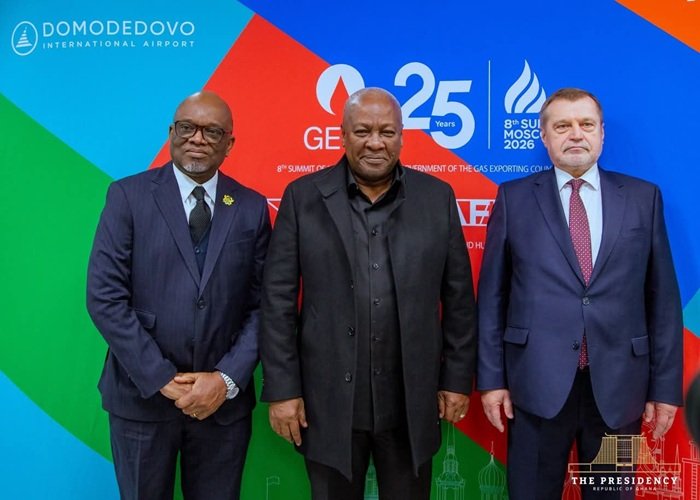
President John Mahama has arrived in Moscow, Russia, from Ethiopia to participate in the 3rd Russia-Africa Summit.
The summit is being hosted by Russian President Vladimir Putin.
During the visit, President Mahama will join fellow African leaders at the Economic and Humanitarian Forum and summit plenary sessions.
He is also scheduled to hold high-level bilateral talks with President Putin and attend a Kente exhibition organised by the Russia-Ghana Parliamentary Forum.
As part of the visit, the President will receive honorary doctorate degrees from the Russian University of Transport and the Peoples’ Friendship University of Russia.
He will also engage Russian businesses and state institutions to advance bilateral cooperation between Ghana and Russia.
By Edem Mensah-Tsotorme
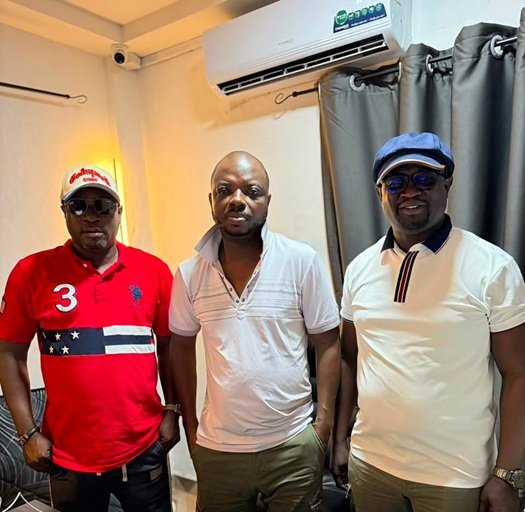
The Greater Accra Regional Organiser of the New Patriotic Party (NPP), Moses Abor, has met with the Bono Regional Chairman of the party, Kwame Baffoe, popularly known as Abronye DC, to address concerns arising from recent social media developments.
In a statement shared , Mr. Abor said he yesterday visited Chairman Baffoe over comments he made on his show, which had raised concern among some party activists.
According to him, he also engaged Charles Opoku Presidoo and ironed out grievances he had earlier held regarding the matter.
Mr. Abor said he was pleased that in the spirit of unity and the party’s shared commitment to return to power in 2028, they had a constructive conversation and addressed the concerns amicably.
“With the matter now resolved, I encourage all Party activists to let the matter rest and redirect our energy toward holding the NDC accountable for its failures and misleading claims,” he said.
He urged party members to continue making the case to Ghanaians on why Dr. Mahamudu Bawumia is the right person to lead the country in 2028.
By Edem Mensah-Tsotorme