News
Youth without Tech backgrounds must embrace AI — AI Consultant


- /home/u249204778/domains/spectator.com.gh/public_html/wp-content/plugins/mvp-social-buttons/mvp-social-buttons.php on line 27
https://spectator.com.gh/wp-content/uploads/2026/08/Ms-Akua-Barden.jpg&description=Youth without Tech backgrounds must embrace AI — AI Consultant', 'pinterestShare', 'width=750,height=350'); return false;" title="Pin This Post">
- Share
- Tweet /home/u249204778/domains/spectator.com.gh/public_html/wp-content/plugins/mvp-social-buttons/mvp-social-buttons.php on line 72
https://spectator.com.gh/wp-content/uploads/2026/08/Ms-Akua-Barden.jpg&description=Youth without Tech backgrounds must embrace AI — AI Consultant', 'pinterestShare', 'width=750,height=350'); return false;" title="Pin This Post">
A TV presenter, AI Consultant and Trainer, Ms Akua Barden, has urged young people without formal backgrounds in technology to embrace Artificial Intelligence (AI) and learn how to use it to improve their productivity.
She said AI was not the preserve of technology professionals and that people from different backgrounds could use the technology to improve their work and create new opportunities.
Ms Barden made the call in an interview on the second day of the Beyond AI Workshop, dubbed “Nyansa Futures 2026”, held at the Academic City University, Haatso, Accra.
The workshop was held on the theme: “From Adoption to Ownership, Shaping Africa’s AI Future.”
Ms Barden said she became interested in AI after becoming curious about the rapid pace at which technology was transforming the world.
She said although she was not a professional technology expert, she decided to learn about AI after encountering the technology and recognising its potential.
According to her, the early versions of some AI tools produced poor images and inaccurate responses, but she remained interested because she believed the technology represented an important part of the future.
She said her continued learning and use of AI had changed her perception of what the technology could achieve.
Ms Barden said AI could help individuals reduce their workloads, improve efficiency and accomplish more within shorter periods.
She said people who learned how to use AI effectively could gain a significant advantage in their respective fields.
“I’m not a tech person. I’m just a media girl who reads, goes on TV and does what I have to do on radio. But now I use AI and I teach people how to use it because I know the benefits of using AI,” she said.
She said AI had the potential to make work systems smoother and help people produce more value in less time.
According to her, AI could also help individuals develop their ideas quickly by assisting them in moving from the conceptual stage to implementation.
Ms Barden encouraged young people to stop allowing the absence of technical qualifications to prevent them from exploring AI.
She said her own experience showed that people did not necessarily need to attend an IT school before learning how to use AI.
She therefore urged young people from the media, business, creative industries and other sectors to identify AI tools that could improve their work and deliberately learn how to use them.
Ms Barden said one of the most important lessons from the growth of AI was that the technology could be useful to almost everyone, regardless of their profession.
She encouraged young people to attend workshops, engage with AI communities and continuously experiment with the technology.
She said learning AI should not be viewed as something exclusively for computer scientists or software developers.
Rather, she said, the technology should be seen as a productivity tool that could complement existing skills.
She therefore called for greater awareness and practical training to ensure that young people were not left behind in the rapidly changing digital environment. –ICNghana.com








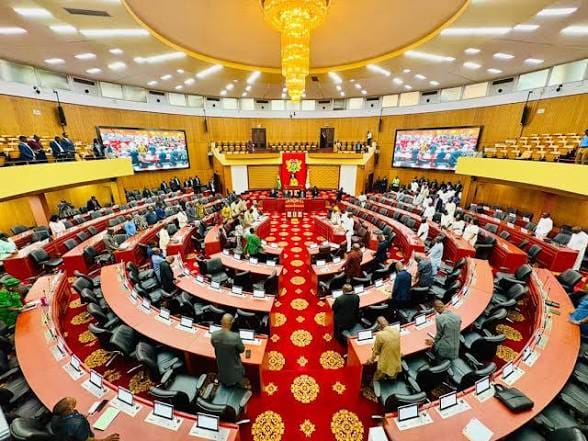
Parliament has clarified public commentary on social media regarding a notice on its notice board that read “No Vacancy for National Service Personnel 2026/2027. Kindly go for reposting.”
In a statement, signed by the Director of Media Relations, David Sebastian Damoah, Parliament said the notice has been misconstrued and was not a policy statement, a freeze on national service placements, or a change in its support for the National Service Scheme.
According to Parliament, the notice was a routine administrative message to prospective personnel who reported to the House, informing them that it has received more personnel than it can accommodate for the 2026/2027 service year and that they should seek reposting to other institutions.
It said it remains committed to the National Service Scheme and values the contribution of service personnel to its work, and regrets any confusion or inconvenience the wording may have caused.
By Edem Mensah-Tsotorme
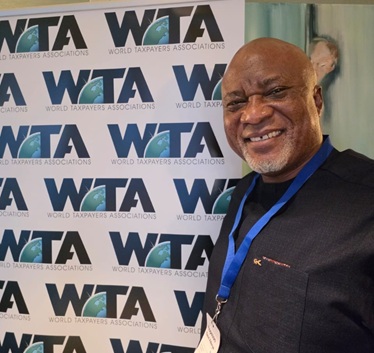
Ghanaian public advocate Hopeson Yaovi Adorye has been elected to the Board of Directors of the World Taxpayers Association (WTA).
The election took place on Sunday, October 5, 2026, during the Association’s conference in Kraków, Poland.
His election marks a significant addition to his international leadership portfolio and provides a platform for Ghanaian and African perspectives to contribute to global discussions on taxpayer rights, responsible taxation, transparency and prudent management of public resources.
Reacting to his election, Mr. Adorye expressed appreciation to the leadership and members of the WTA for the confidence reposed in him.
“I am deeply honoured by this confidence and conscious of the responsibility that comes with it. Taxpayers are at the heart of every economy, and they deserve fairness, transparency, accountability and value for the taxes they pay. I look forward to working with colleagues from across the world to strengthen the voice of taxpayers and promote responsible fiscal governance,” he said.
According to him, taxation should not be viewed solely as a mechanism for raising government revenue, but also as an important component of the social contract between citizens and the state.
Mr. Adorye said governments have a responsibility to ensure taxes are collected fairly and public resources are utilised efficiently to deliver quality infrastructure, healthcare, education, security and other essential services.
His election also creates an opportunity to bring African experiences into international conversations on taxation and public expenditure.
Mr. Adorye, who is Executive Director of Taxpayers League Ghana, has previously served as Global Board Chairman of the International Youth Network for UN Security Council Resolution 2250, an NGO associated with the United Nations Economic and Social Council (ECOSOC).
He is expected to use his new role to champion fiscal accountability, taxpayer education, good governance and stronger citizen participation in public financial management.