Features
Why Prof. Frimpong-Boateng spilled the beans

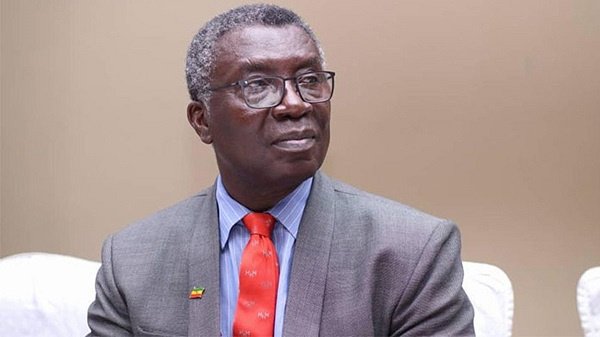
Prof. Frimpong-Boateng
With the greatest respect and special permission from my colleague journalist and Member of Parliament for Sagnarigu Constituency in the Northern Region, Honourable Alhassan Bashir Alhassan Fuseini, popularly known as A.B.A. Fuseini, who is imbued with hilarious adages that can even resurrect the dead, I quote this adage from his repertoire to buttress my point and set the record straight. “When you have cotton wool on your anus, you don’t have to jump a fire; otherwise, you will set yourself in flames and burn to ashes”. Similarly, there is another saying that says, “When you stretch and push a person firmly against a wall, he will eventually explode when he manages to extricate himself “.
PROFESSOR FRIMPONG-BOATENG
Such is the case of a cool and collected Professor Kwabena Frimpong-Boateng, one of Ghana’s foremost and finest heart surgeons of international repute and the brain behind the establishment of the National Cardiothoracic Centre, situated at the country’s largest health facility, the Korle-Bu Teaching Hospital in Accra. The learned professor was a one-time former Minister of Environment, Science and Technology in the first term of the current administration led by Nana Addo Dankwa Akufo-Addo.
I have known this great and knowledgeable professor for many years, dating back to the days when I was a senior reporter with the state-owned Ghanaian Times newspaper. Since I was then reporting and writing on health issues, I came into contact with this nice medical officer and international surgeon when he set foot in Ghana in 1992 to set up the prestigious Cardiology Centre at Korle-Bu. At that time, there was no such facility in the country, so his aim was to establish the centre to carry out various heart surgeries and also to train young surgeons in that particular field.
HOW PROF. CAME TO GHANA
Professor Frimpong-Boateng, as I know him, is such an objective and principled man who believes in the truth, abhors lies, and is forthright and resolute in his actions and dealings with people and patients as well. He came to Ghana from Germany, where he had been practicing medicine for many years, through the instrumentality of the late former President, Flt-Lt. Jerry John Rawlings. He performed the first open-heart surgery in Ghana using a heart-lung machine.
For the benefit of my readers, patrons, and the younger ones who do not know this great man who has a lot under his sleeves, I will like to use this medium to enlighten them on a little background of Professor Frimpong-Boateng, who has been my good friend for many years. We are still friends, although it has been a long time since I came into contact with him.
WORKING EXPERIENCE OF THE LEARNED PROF
The learned professor joined the University of Ghana Medical School (UGMS) as a lecturer in 2000 and was promoted to Associate Professor the same year. He was made a full professor in 2002 and served as the Head of the Department of Surgery at the UGMS prior to his appointment as the Chief Executive of the Korle-Bu Teaching Hospital in that same year. It may interest my readers to know that during his tenure at Ghana’s largest and foremost hospital, Professor Frimpong-Boateng managed to transform Korle-Bu into a first-class and modern hospital in Sub-Saharan Africa. His greatest exploits encouraged patients from Africa and beyond to travel to Ghana to seek medical attention at Korle-Bu. This man was able to reclaim most of the Korle-Bu lands, including that of the medical school, which were encroached upon by squatters, and built a fence around them. The entrance to the hospital was given a tremendous facelift by this man with offices and packing lots.
Professor Frimpong-Boateng was elected to the Ghana Academy of Arts and Sciences in December 2002, and he gave his inaugural lecture the following year. He was instrumental in the formation of the Ghana Heart Foundation, a charitable foundation that is responsible for paying for heart surgery for some indigent Ghanaians under his care. The finest surgeon felt that “he has what it takes to lead this country to the highest pedestal when it comes to politics” and, therefore, decided to offer himself in the presidential primaries of the New Patriotic Party (NPP).
POLITICAL CAREER OF PROF
In March 2006, he announced his intention to seek the nomination as the candidate of the NPP for the December 2008 Presidential Election, but his hope was dashed as Nana Akufo-Addo emerged victorious in the primaries. When Nana Akufo-Addo finally became president in the 2016 General Election, he appointed Professor Frimpong-Boateng as a Cabinet Minister in charge of Environment, Science and Technology. It was during the first term of President Akufo-Addo that the illegal small-scale mining popularly known as “galamsey” took on a different dimension, which led to the formation of a special inter-ministerial committee led by Professor Frimpong-Boateng to see how the situation could be brought under control.
ILLEGAL SMALL-SCALE MINING
As hard as he tried, the situation got out of hand because, as he alleged, certain personalities within the Akufo-Addo-led government were having underground dealings with faceless people involved in the galamsey business. At a point, he (Prof. Frimpong-Boateng) was implicated as having diverted some seized excavators and other machines that were seized by the taskforce. He flatly denied that, and this had been a subject of contention until this time. He rather accused a number of high-profile personalities within government circles, including Gabby Otchere-Darko, a leading member of the NPP, of being behind the illegal galamsey business in the country. He said Gabby interfered in his galamsey fight to rid the system of these nation-wreckers. Since then, there has been banter between Gabby and Professor Frimpong-Boateng on this thorny issue, which has polluted our water bodies, destroyed our forest cover, and had a devastating effect on the country’s ecology.
CALL FOR THOROUGH INVESTIGATION
Professor Frimpong-Boateng has since submitted a paper on his allegations to the Presidency for thorough investigations into the matter so that those mentioned in his report can be interrogated to establish the truth and deal with the matter accordingly. It is the hope of every Ghanaian that this particular case should be thoroughly investigated, not swept under the carpet as in most cases.
This illegal small-scale mining issue has dragged on for some time now, and it looks as if there is no solution in sight. The eminent chief and traditional ruler, Otumfuo Osei Tutu II, the Asantehene, has been vocal about this unhealthy situation and has gone to the extent of warning some of his subchiefs who are deeply involved in this treacherous and devasting business to refrain from the practice. Clearly, it is emerging that there are government functionaries who are deeply involved in this galamsey business, and we need to expose them.
POLITICAL OFFICE HOLDERS TO NOTE
Professor Frimpong-Boateng, who is a staunch member of the ruling NPP administration as I know him, will not fabricate and peddle lies against his own party functionaries and appointees just for the sake of it. He is so principled and will never tread on that path of lies and untruth. That is why this matter should engage the attention of the prosecuting agencies to deal with the case independently for the truth to prevail.
This is a lesson to all political appointees and office holders in the country: they cannot suppress the truth and go scot-free because they will one day be exposed and dealt with accordingly.
By Charles Neequaye
Contact email/WhatsApp of author:
ataani2000@yahoo.com
0277753946/0248933366


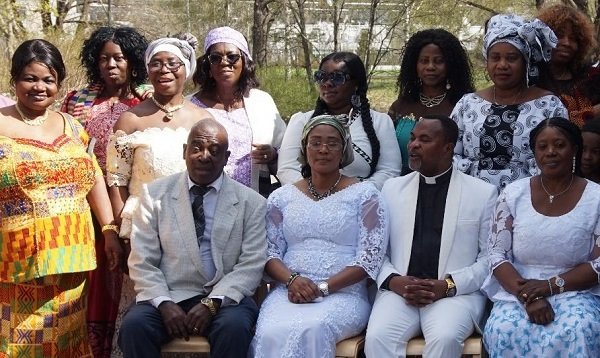
Today, I focus on the Apostolic Church International in Finland, as I continue with my description of institutions and personalities and their accomplishments as members of the Ghanaian Diaspora in Finland.
The Apostolic Church International, Finland (or, Apostolic International Association Ry) was established in October 9, 2023. The Church in Finland has seen significant strides and accomplishments within the short time that it has been established in Finland, which must be highlighted.
History of the Church in Ghana
The Apostolic Church Ghana originated from the 1904–1905 Welsh revival, officially established in Ghana (then called Gold Coast) in 1935 following connections between a local prayer group in Asamankese (a town in southern Ghana), led by Peter Newman Anim, and the Apostolic Church, UK. There were historical splits in 1939 and 1953, but the Apostolic Church attained autonomy in 1985.
Today, the Church is headquartered in Accra. Last year (2025), it dedicated its new 10-storey headquarters, “The Apostolic Church Tower,” in Frafraha, Adenta West in Accra.
Activities of the Apostolic Church in Finland
The Apostolic Church in Finland conducts church service on Sundays. The service starts at 11a.m. in the morning and closes by 1 p.m. in the afternoon. There are no other activities during other days for now.
The Minister in charge of the church in Finland is also the Area Head of Italy Area. He is Pastor Daniel Kofi Addison who is the new Italy Area Head, and has just been transferred from UK South Area to Italy Area during the just-ended Council Meeting in March this year. Italy Area comprises Italy, which has 13 Assemblies, Germany, one Assembly, and Finland, one Assembly.
Elder Ebenezer Amoaning-Coffie is the Presiding Elder in charge of the Assembly in Finland. A Presiding Elder is responsible for day to day activities of the church (Assembly) and reports to the District Pastor, or in the absence of the District Pastor, reports to the Area Head.
Achievements
The Apostolic Church International, Finland was officially registered under the Finnish Law, guaranteeing freedom of worship and providing legal foundation for future growth. The church service is conducted in both English and Twi.
The church opens its doors to all people of every nation, especially Ghanaians who are in Finland and other African nationals. Now, the membership comprises Ghanaians, Nigerians and Sierra Leoneans.
The Church and the Ghanaian migrant community in Finland
The Apostolic Church in Finland plays a prominent role as a religious group that serves Ghanaian migrants and others in the Finnish society.
Thus, the Apostolic Church is a religious body for Ghanaian migrants in Finland and other nationalities who want to worship with them for diversity and better intercultural and multicultural understanding.
Elder Amoaning-Coffie said that the main and primary aim of the church is to bring people closer to God. “We aim to win souls for Christ. We aim to preach the gospel to the world. By propagating the gospel to the people, we are hopeful that they will turn away from any ungodly ways and be good individuals in the community and in society in general”, he stated.
He said that everything is going well so far. A key challenge, however, is how to get more members especially the youth. As a new Assembly, we are in need of instrumentalists, for example. We pray to God Almighty to help us do His work, the Elder disclosed.
Integration
By its activities, the Apostolic Church is helping to ensure integration of its members well into the Finish society. This is important since social interaction and citizens’ well-being are an important part of the integration process in Finland.
As I mentioned some time ago, the role of migrant associations and groups such as the Apostolic Church acting as bridge-builders for the integration and inclusion of migrants through participation in the decision making process and by acting as a representative voice is highly appreciated in Finland. Thank you!
With Dr Perpetual Crentsil
The landscape of the Ghanaian palate is shifting, and not necessarily for the better. In our bustling urban centres, from the streets of Accra to the suburbs of Kumasi, a quiet culinary revolution is taking place; one where the mortar and pestle are being replaced by the pizza oven and the deep fryer. This transition from traditional staple foods like fufu, banku, akple, kenkey, tuo zaafi, and ampesi toward “continental” dishes is more than just a change in appetite; it is a reflection of a deeper social struggle with identity and prestige.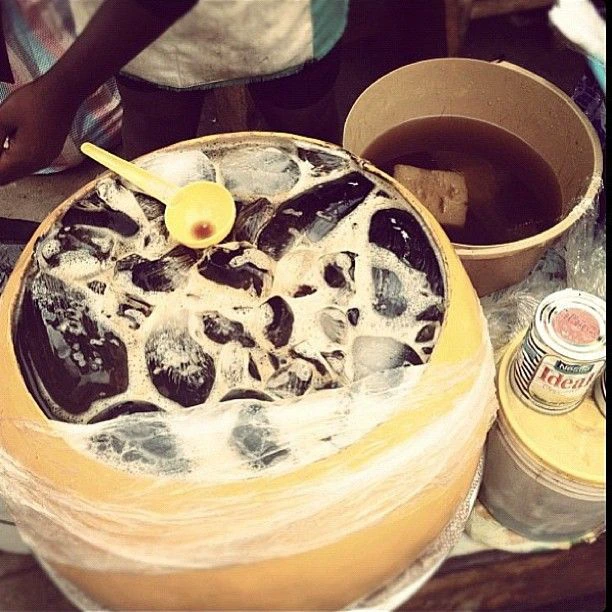
The illusion of modernity
For many, “stepping out” for a meal has become synonymous with consuming foreign cuisine. There is an unspoken social hierarchy where a bowl of Abunuabunu is relegated to the village category, while burgers, pizzas are branded as prestigious choices. We have reached a stage where we equate foreign with modern and local with primitive.
This perception is a dangerous illusion. Our traditional dishes are marvels of culinary engineering complex, nutrient-dense, and deeply rooted in our history. When we choose a processed foreign import over a meal made from local tubers or fermented maize, we are not just changing our lunch; we are eroding the indigenous knowledge attached to our local ingredients and foods.
We need to turn the consumption of indigenous grains and tubers like millet, sorghum, and plantain into a statement of self-worth and national pride.
The cultural and health erosion
Every time a local dish disappears from a restaurant menu to make room for foreign fast food, we lose a piece of our cultural fabric. Traditional Ghanaian cooking is an art that requires patience and skill. By choosing the convenience of foreign fast food, we are raising a generation that may know the taste of a pepperoni pizza but cannot identify the rich, earthy profile of Prekese or the subtle tang of well-fermented dough dishes like corn porridge, banku, etew, abolo, agidi or kamfa, and kenkey.
Furthermore, we are at the crossroads of a nutrition transition. Replacing high-fiber, indigenous crops with calorie-dense but nutrient-poor foreign fast foods is driving a rise in lifestyle diseases such as obesity, hypertension, diabetes, stroke, cancer, and liver disease. We are trading our longevity for 15-minutes convenience or unhealthy diet.
A call for culinary patriotism
It is time for us to appreciate, preserve, and promote our indigenous foods and culinary traditions. We need to be proud of our local dishes, ingredients and cooking methods, rather than relying heavily on foreign or imported foods. We must stop viewing our local delicacies as low-class and start treating our culinary heritage as the high-end gastronomy it truly is.
True sophistication does not come from imitating Western fast food; it comes from innovation and adding values to our own resources. We see glimpses of this potential in the rise of branded Sobolo and the creative use of gluten-free plantain flour in modern baking of flour-based dishes such as bread, cakes, biscuits and others. This is the path forward. We must elevate our local dishes, making them as accessible, affordable, presentable and trendy as any foreign alternative.
To the hospitality industry: Innovate or stagnate
Our hotels and high-end restaurants must lead the charge. They must stop relegating local dishes to the “traditional corner” of the buffet, and apply the same culinary finesse given to imported dishes to our Fante Fante, apapransa, aborbi tadi, fetritoto, akple, abolo, yakayeke, fufu, ampesi, kokonte, wasawasa, tubani, apapransa, mpotompoto, kelewele, aliha, brukutu, pito, and other local dishes. The industry must enhance customer experiences making eating local dishes the ultimate luxury experience for both tourists and residents alike. We must elevate the presentation of our foods by using modern plating techniques to show that a bowl of light soup can be as visually stunning as a French consommé. We need to reclaim our Ghanaian plate before it is too late.
To the policy makers: Let us encourage buying of local ingredients to promote the local food industry and economy. There should be educational programmes and talks about the nutritional and cultural benefits of local foods so that people understand their value.
We need to encourage serving traditional dishes at school programmes, parties, and celebrations instead of only fast foods,
To the Youth: Let us value and appreciate our traditional dishes instead of always choosing foreign foods. There must be balance in our choice of local and foreign dishes. Confidence in our culture encourages others to respect it too. Our local dishes can also be promoted by sharing pictures, recipes, and videos on platforms such as Instagram, TikTok, and WhatsApp to make them attractive and trendy.
Young citizens must learn from their parents and elders how to prepare local meals to keep the knowledge and cultural relevance alive. Local dishes can be modernised to appeal to younger generations and tourists.
Conclusion
We cannot afford to trade our heritage for foreign cuisines which are gaining grounds across the country at an alarming rate. We must disabuse our minds of the perception that anything foreign or imported is better than those locally made. Our health, economy, and identity are tied to the soil. It is time to stop apologising for our local flavours and start celebrating them. It is possible to embrace modernity without losing ourselves and our cultural identity. Let us make the Ghanaian kitchen the heart of our modern identity once again.
By: Marilyn Gadogbe