Features
When war affects us


- /home/u249204778/domains/spectator.com.gh/public_html/wp-content/plugins/mvp-social-buttons/mvp-social-buttons.php on line 27
https://spectator.com.gh/wp-content/uploads/2022/05/War-Pix.jpg&description=When war affects us', 'pinterestShare', 'width=750,height=350'); return false;" title="Pin This Post">
- Share
- Tweet /home/u249204778/domains/spectator.com.gh/public_html/wp-content/plugins/mvp-social-buttons/mvp-social-buttons.php on line 72
https://spectator.com.gh/wp-content/uploads/2022/05/War-Pix.jpg&description=When war affects us', 'pinterestShare', 'width=750,height=350'); return false;" title="Pin This Post">
About two weeks ago I watched the harrowing tale of a 16-year-old Ukrainian on one of the international television channels. According to the teenager, two Russian soldiers chanced into their home. One of them was either drunk or high on some substance. The drunk wanted to have sex with her, though she was heavily pregnant. She was threatened with death, so the soldier had his way with her.
That, this young girl had the courage to appear on television to tell her story almost moved me to tears. She is a war-affected child for the rest of her life. Whatever justification Czar Putin has to invade Ukraine, there are clear international rules of engagement being violated by the men he sent into battle.
The situation in Ukraine, as being reported, brings to my mind the situation we faced in our sub-region three decades or so ago, especially in Liberia. In 1999 I was a participant at a conference on war-affected children at the Accra International Conference Centre, organised by the United Nations refugee agency (UNHCR), represented by Mr. Olara Otunu.
Deliberations at this conference centred on the effects of the Liberian situation on children who survived the war, but were traumatised by the things they witnessed and went through. How child-soldiers were victims themselves and what rehabilitation they needed. I had the opportunity to meet with Liberian politicians, including a one-time interim President, Dr. Amos Sawyer and Professor Togbah-NahTipoteh who stood for president on three occasions.
A friend who knew me as the Deputy Editor of The Accra Mail at the time asked that I interveiew a Liberian woman who had a rather bizarre tale to narrate. For the sake of this narrative, let me call her Ronda. By her side was a young lad whose voice sounded like just breaking out of puberty and she held a toddler by the hand. Let’s say he identified himself as Ted.
Speaking in the Americanised Liberian accent, Ronda said she was preparing a meal for her husband and son one afternoon in a remote part of Monrovia when rebel soldiers burst into their cottage demanding to search their abode for enemy soldiers. Her husband, on hearing the commotion, came out of the hut where he was taking a nap to ask what the matter was. For daring to ask, a slap from one of the rebels, numbering about a dozen, sent her husband sprawling on the ground.
The soldiers found nothing of value in the cottage, but they were not done yet. They beat up her husband and then called out to her teenage son, who was fanning the fire on which she was cooking and beckoned him over. She was ordered to strip naked, which she did out of fear, thinking they were going to gang-rape her. She was asked to lie down spread-eagled, which she did and the soldiers asked her husband to watch her own teenage son have sex with her.
Her son, Ted, could not but oblige while her husband wept like a child watching the unfolding scenario. After watching the act, the soldiers marched her husband out of the cottage, leaving her and Ted shivering from it all. A couple of 100 metres in the distance, they heard gunshots and she knew her husband was dead.
Ronda said it took them some time to get their wits about them. She and her son took a few clothes and fled into the bush, where they lived on raw cassava and its leaves, any edible fruits they knew and on riped palm fruits that were in abundance. She could not tell how long they were in the bush, but she realised later that she was pregnant, not for her late husband but for her son.
Somehow, according to her, intuition pushed her to follw the direction of the rising sun (East) and she was sure they might get to safety and help. They might have walked many days and slept wherever darkness fell and continued at sunup. Many days later, they crossed into the Ivory Coast and into a border town called Ganta where a family took them in till she gave birth to a baby girl, which was the toddler she was with.
As a journalist, I was minded not to put my emotions and sentiment into a story I was covering, but this was a chat I was having with a victim of war. While I was recording this narrative, I formed a mental picture of what was happening on that day. So, Ted’s daughter was his own sister and the little girl’s older brother was her father. How was Ronda dealing with that? Too many questions ran through my mind as I was listening.
She loved her two children to bits, she told me, because they were her only relatives left at the time. It was not Ted’s fault he sired his sister. Rather, it bonded them together, not in any sensual way, as a family. All she wanted was for her children to have education and for her to be there for them and support them. She was bitter at the loss of her husband, but there was nothing she could do about that.
Ronda was more composed narrating her ordeal than me listening to her. She was a comely young woman one could describe as an African beauty. In spite of her ordeal, she carried herself well. Later I got a Clinical Psychologist to attend to her for the duration of the conference. Ronda was a strong woman, according to the doctor. She wanted to go back to Liberia and put their lives back together. Fortunately, an NGO took her case up and got her back to her country, I was later informed.
When I was a UN Consultant to Liberia in 2005 and saw bullet marks on many buildings in the capital, Ronda and her children were on my mind for the period I stayed in the country. She might be lucky, but there were thousands whose trauma knew no bounds, whose future may have been ruined forever. I saw what happened in Rwanda.
Now it’s Ukraine. The whole country is being razed to the ground. Nothing is being spared by Czar Putin. This is like cleansing Ukraine from the map. Some snipets of information coming from Russia indicate that more than 90 per cent of Russians do not know what is happening next door except what is fed them by state media. And that the soldiers get to the war front before their commanders tell them their mission. It’s simple: orders from the Kremlin. No questions.
There will be children affected by Putin’s war on Ukraine plus more. Russia and Ukraine together produce more than half the world’s wheat demands and Russia alone supplies a huge chunk of Europe’s gas and oil. So, the war on Ukraine has a huge global dimension aside of the trauma the people of Ukraine are already dealing with.
Economies will take some time to heal but the emotional and psychological scars on the women and children of Ukraine will take far longer to heal. Not only that; returning Russian soldiers will, not be the same gain, if what we know about the aftermath of wars is anything to go by. Definitely the Rondas of Ukraine will have their tales to tell when the deal is done. This is very sad for a Twentieth Century world.
Writer’s email address:
akofa45@yahoo.com

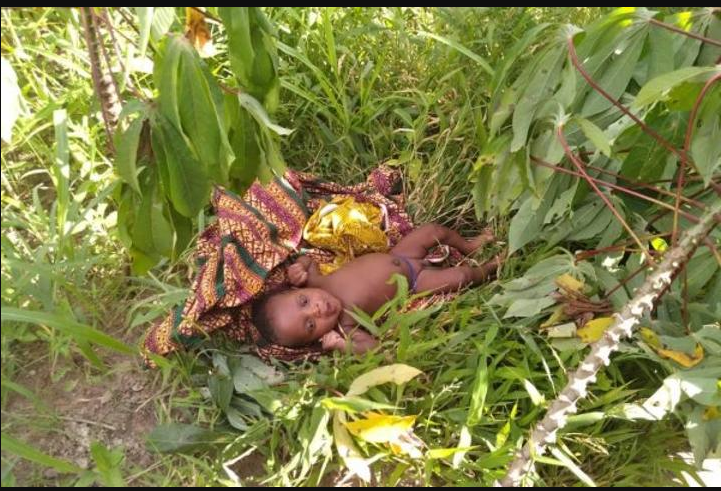
“A woman who abandons her baby in a dustbin at Kasoa Lorry Station is not always a wicked woman. Sometimes, she is a wounded woman whose mind has broken, whose family has rejected her, and whose society has left her with only one terrible option: disappear or be disgraced.”
That is the hard truth Ghana must hear.
In the last 10 days alone, our nation has been confronted with the same painful headline, twice.
Case 1 – Kasoa Main Lorry Station, Central Region: A newborn baby girl was found abandoned inside a dustbin at the public toilet of the Kasoa Main Station. A woman who went to use the facility discovered the infant and raised an alarm. Commercial drivers and bystanders quickly retrieved the baby and rushed her to the Kasoa Polyclinic for emergency medical care.
Case 2 – Asante Bekwai, Ashanti Region: On Thursday morning, August 20, 2026, a two-week-old neonate was reportedly abandoned by an unknown nursing mother at Bekwai in the Ashanti Region. Residents who came across the child raised the alarm. The baby was admitted to the Bekwai Government Hospital as police commenced investigations.
Let me be clear from the start: Newborn abandonment is wrong. It is dangerous. It is criminal. And it can kill. This article does not excuse it. But if we only arrest and shame, we will never stop it. We must treat the root, not just punish the fruit.
What exactly is newborn abandonment? – The two definitions
The Legal Definition: Under Ghana’s Criminal Offences Act, 1960 (Act 29), Section 96, and the Children’s Act, 1998 (Act 560), abandonment of a child under 12 years is a criminal offence. It is classified as exposure and abandonment, punishable as a misdemeanor or felony. The law sees the mother as a perpetrator.
The Psychological definition: In clinical textbooks, newborn abandonment is defined as the intentional, permanent relinquishment of all parental rights, care, and responsibilities over an infant within the first 28 days of life without making formal, legal arrangements for care.
To understand this crisis properly, we must not confuse it with child abandonment. Newborn abandonment happens within 0-28 days of life, often driven by acute panic, denial of pregnancy, or postpartum psychosis where the attachment bond never formed. Child abandonment, on the other hand, involves toddlers to teenagers where a bond existed but collapsed over time due to chronic poverty, family breakdown, or parental burnout. One is an acute crisis of the first month; the other is a chronic breakdown over years. Both are harmful, but they need different interventions.
Psychologically, newborn abandonment is the ultimate rupture of the primary attachment bond. Think of a 19-year-old university student who secretly gives birth alone in her hostel room, wraps the crying baby in a polythene bag, and drops it at a refuse dump at midnight. That is not just a crime scene; it is a scene of extreme panic and psychological dissociation.
Why would a mother carry a baby for 9 months and then abandon it?
This is the question every Ghanaian asks. If you wanted to abandon it, why not abort? The answer is deeply psychological:
1. The psychodynamics of denial of pregnancy: This is a profound defense mechanism, not a lie. The mother’s subconscious mind completely rejects the reality of the pregnancy. She does not gain weight normally, feels no kicks, does not seek antenatal care, and genuinely convinces herself she is not pregnant until sudden, shocking labour pains take her by surprise in a toilet or bedroom.
2. Fantasy of a dissolving problem: This is called cognitive avoidance. She believes “my boyfriend will come back,” “my mother will forgive me,” or “something miraculous will happen before birth.” So she waits, paralyzed, until the baby is here.
3. Barriers to safe abortion: Deep religious guilt, moral anxiety, fear of dying from a back-alley abortion, lack of money for a safe procedure, and family laws force her to carry to term even when she feels incapable.
4. The shock of reality and acute panic: Upon delivery, the physical presence and crying of the newborn shatters all denial. Confronted with immediate exposure, shame, and reality, her brain enters a trauma response — “fight, flight, or freeze.” For many, it becomes “flight” — physically escape the threat of exposure to survive socially. That is why babies are left in places where others will find them -lorry stations, churches, hospitals.
Source:
Counselor Prince Offei, CPAC’s founder, is a leading Mental Health Professional, Marriage Counsellor, Author, ADR Expert/Arbitrator, and Spectator Newspaper Columnist. He writes on relationships, marriage, parenting, special needs support, and their connection to mental health. For therapy, counselling, or enquiries, contact Counselor Prince & Associates Consult (CPAC) in Accra on 0559850604 / 0551428486.
SKIP THE QUEUE, TAP THE NEWS

You can now read the Ghanaian Times and The Spectator newspapers from the comfort of your device via TimesNewsPlus.
Join our WhatsApp Channel: https://whatsapp.com/channel/0029VbBElzjInlqHhl1aTU27
Features
Environmental stewardship is an act of worship: The Islamic response to climate change, environmental degradation (Part 4)

The environmental consequences of illegal mining have reached alarming levels in Ghana. Several major rivers, including the Pra, Ankobra, Offin, Birim and Tano, have experienced significant pollution from illegal mining activities, increasing the cost and complexity of water treatment while threatening the availability of potable water for millions of citizens (Water Resources Commission, 2024; Ghana Water Limited, 2024). These developments underscore the urgent need for stronger environmental governance and collective action.
Islam equally emphasises accountability in governance. The Prophet Muhammad (peace be upon him) taught that every leader is responsible for those under his or her authority (Sahih al-Bukhari, Hadith 7138; Sahih Muslim, Hadith 1829). This principle extends to public officials entrusted with environmental regulation, traditional authorities responsible for communal lands, mining companies, local assemblies, and community leaders. Environmental protection cannot succeed
where accountability is absent.
At the same time, addressing galamsey requires more than law enforcement. Sustainable solutions must tackle the underlying socio-economic realities that drive individuals into illegal mining. Many young people are motivated by unemployment, poverty, and limited economic opportunities. Islamic principles of social justice therefore call for the creation of alternative livelihoods through sustainable agriculture, vocational training, responsible small-scale mining under strict environmental standards, entrepreneurship, and skills development. Environmental protection and economic empowerment should not be viewed as competing priorities but as complementary goals that promote human dignity and national development.
Faith communities also have an indispensable role to play. Mosques, churches, schools, traditional councils, and civil society organisations possess significant influence in shaping public attitudes and behaviours. Imams, in particular, should consistently remind congregations that wealth acquired through actions that destroy communities and Allah’s creation cannot be regarded as a blessing. Religious education should cultivate environmental ethics alongside spiritual devotion, reinforcing the understanding that protecting rivers, forests, and farmlands is an expression of gratitude to Allah and a fulfilment of the trust of Khalifah.
Ultimately, the struggle against galamsey is more than a campaign to protect natural resources; it is a struggle to uphold justice, preserve human dignity, and honour the trust that Allah has placed upon humanity. Lasting solutions will require strong governance, responsible citizenship, sustainable economic opportunities, and renewed moral leadership. Only when these elements
work together can Ghana safeguard its natural heritage for present and future generations.
Water conservation, waste management and sustainable development: Practical expressions of Islamic stewardship
Religious education should cultivate environmental ethics alongside spiritual devotion, reinforcing the understanding that protecting rivers, forests, and farmlands is an expression of gratitude to Allah and a fulfilment of the trust of Khalifah.
Ultimately, the struggle against galamsey is more than a campaign to protect natural resources; it is a struggle to uphold justice, preserve human dignity, and honour the trust that Allah has placed upon humanity. Lasting solutions will require strong governance, responsible citizenship, sustainable economic opportunities, and renewed moral leadership. Only when these elements
work together can Ghana safeguard its natural heritage for present and future generations.
Islam is not merely a religion that condemns environmental destruction; it also provides practical guidance for preserving and sustaining the natural world. Through its teachings on moderation, cleanliness, conservation, and responsible consumption, Islam cultivates an environmental ethic that remains remarkably relevant to contemporary challenges such as water scarcity, pollution, waste management, and climate change. These teachings encourage Muslims to become
responsible custodians of Allah’s creation in both private and public life.
Water conservation: A sacred responsibility
Water occupies a unique position in Islam as the source of life and an essential element of worship. Allah says, “And We made from water every living thing. Then will they not believe?” (Qur’an 21:30, Sahih International). This verse reminds believers that water is not merely an economic resource but a divine blessing upon which all living creatures depend. The importance of water is further reflected in Islamic acts of worship. Muslims perform ablution (wudu) before the five daily prayers and ritual bathing (ghusl) under prescribed circumstances.
Yet, despite its central role in purification, Islam strongly discourages wastefulness. The Prophet Muhammad (peace be upon him) once advised one of his companions not to waste water while performing ablution, even when using water from a flowing river (Sunan Ibn Majah, Hadith 425). This timeless guidance establishes the principle that abundance does not justify extravagance.
Conservation remains a religious obligation regardless of the apparent availability of natural resources.
This Prophetic teaching carries profound implications for contemporary Ghana. Illegal mining has severely polluted many rivers, increasing the cost of water treatment and limiting access to safe drinking water for numerous communities. Climate change has also intensified seasonal variability in rainfall, placing additional pressure on freshwater resources (IPCC, 2023). Against this
backdrop, conserving water is no longer simply an environmental preference—it is a moral imperative grounded in Islamic teaching.
Water conservation should therefore become a shared responsibility among households, educational institutions, industries, and places of worship. Simple practices such as repairing leaking pipes, harvesting rainwater, protecting riverbanks, avoiding contamination of water bodies, and promoting efficient irrigation contribute to safeguarding one of Allah’s greatest blessings. Every effort to preserve water is an investment in public health, food security, and the
wellbeing of future generations.
Unfortunately, indiscriminate disposal of refuse remains a significant challenge in many communities. Plastic waste clogs drainage systems, contributes to flooding during the rainy season, pollutes rivers and beaches, and threatens marine ecosystems. Open burning of waste further degrades air quality and poses serious health risks, particularly for children and the elderly (UNEP,2024).
The author is Chief Imam of Katamanso Municipal and Certified Counsellor and Governnace Expert.
SKIP THE QUEUE, TAP THE NEWS
You can now read the Ghanaian Times and The Spectator newspapers from the comfort of your device via TimesNewsPlus.
Join our WhatsApp Channel: https://whatsapp.com/channel/0029VbBElzjInlqHhl1aTU27