Features
TUC: Hoisting ‘hot anger flags’ on labour front?

- /home/u249204778/domains/spectator.com.gh/public_html/wp-content/plugins/mvp-social-buttons/mvp-social-buttons.php on line 27
https://spectator.com.gh/wp-content/uploads/2022/05/Dr-Yaw-Baah-TUC-boss.jpg&description=TUC: Hoisting ‘hot anger flags’ on labour front?', 'pinterestShare', 'width=750,height=350'); return false;" title="Pin This Post">
- Share
- Tweet /home/u249204778/domains/spectator.com.gh/public_html/wp-content/plugins/mvp-social-buttons/mvp-social-buttons.php on line 72
https://spectator.com.gh/wp-content/uploads/2022/05/Dr-Yaw-Baah-TUC-boss.jpg&description=TUC: Hoisting ‘hot anger flags’ on labour front?', 'pinterestShare', 'width=750,height=350'); return false;" title="Pin This Post">
Today is Saturday, May 14, 2022. So, obviously, almost half of the month of May is gone. And in the next two weeks, we shall surely be ‘entering’ the month of June, in the year of Our Lord, 2022.
So, the month of June is just around the corner. And June is the sixth month of the year, thus, halving the year into two; with the remaining months to end the year, starting from July to December.
Readers, the Trades Union Congress of Ghana (TUC), the ‘umbrella body’ of all the radical labour unions in the country, has ‘hoisted’ a ‘dangerous flag’ with a warning that before the end of June 2022, more and more labour unrests will occur in Ghana.
The proviso to the warning is: “If the Government fails to protect jobs and consider an upward review of salaries before the end of June 2022.”
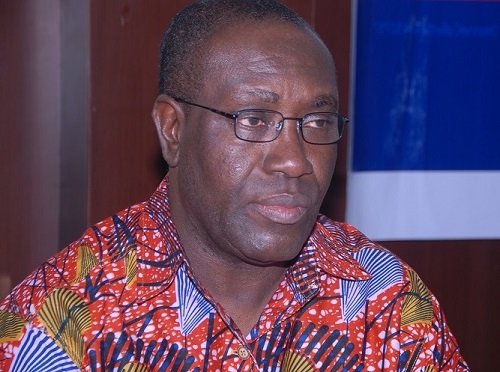
The Secretary-General of the TUC, Dr Anthony Yaw Baah says: “For the past six years, the TUC has sought to use dialogue to resolve labour issues with its employer(Government) but that has achieved very little results.”
Speaking to Citi-TV just recently, Dr Baah said; “workers will resort to unpleasant means to press home their demands, due to the Government’s reluctance to give them their due.”
According to the TUC boss: “This is the signal that I gave (during the May Day) to let Government know that if they do not listen to us through dialogue, we will do what trade unions do.”
Dr Baah warned:”If Government does not change its way of doing things, in terms of protecting incomes and jobs, I can tell you that things will happen.”
Dr Baah said: “Reviewing the Single Spine Pay Policy and making sure that our incomes are protected is our priority.”
He added: “If inflation keeps going up, it will come to a point where we can’t take it anymore, and that will start serious labour unrests in this country, which will not be good for all of us.”
Recently, the TUC has intensified its calls on Government to improve the low wages and salaries many of its members earn.
Some labour unions spoke against the four per cent and seven per cent salary increment offered by Government in 2021 and 2022 and accused the TUC leadership of having been compromised by Government.
They claim that the TUC rather chose to accept” a paltry four per cent and seven per cent salary increment for workers who earn the minimum to average salaries and rather overlooked the increase of the Article 71 Office Holders, who already earn higher salaries yet increased theirs to 79 per cent .”
The General Secretary of the Ghana National Association of Teachers (GNAT), Mr Thomas Musah, also said:”Our current incomes have direct effect on our pensions,” stressing that , “this is the opportune time for Government to put smiles on the faces of workers, by adjusting salaries of workers upwards.”
Speaking in an interview with TV3, Mr Musah said:”Times are hard for workers and so salaries must be made to meet inflation figures, increment in transport fares, fuel price hikes among others.”
Mr Musah stresses:”The reason the issue of income has become crucial and critical is that , the income you take today has a direct correlation to your pension; so if your income is very low today, if you go on pension , the money you will take cannot even take you home.”
A labour analyst says, much as the workers have the legitimate right to ask for salary increment and better conditions of service, Government must set conditions to measure levels of productivity at work places, to reward workers who meet their targets.
The labour analyst says:”Truth be told, if proper levels of productivity were to be measured at various workplaces in the country, many workers, including their managers , will be dismissed without any compensation.”
According to the labour analyst:”Some Chief Executive Officers of some State-Owned-Enterprises, which are constantly making losses without any justification, are better paid than some of those making profits.”
The labour analyst says:”Even some of the President’s own Ministers are not performing to expectation, yet they are still receiving the fat salaries they are enjoying.”
Some Ghanaians, however, say , Government must quickly listen to the TUC and do the needful because all rational labour unions under the canopy of the TUC are ready to ‘battle’ Government since they are all experiencing the current economic hardships, mainly triggered by known global factors.
This column is also prompting Government to ‘fruitfully’ engage the leadership of the TUC to avert the actualisation of TUC’s ominous ‘intents’ in its warning.
This is because if the threats are carried through, the impact on our ailing economy will be very difficult to reverse and the ‘holy’ name of Ghana will be tarnished in the eyes of the global community.
The TUC is a ‘mighty’ institution and Government must remember that June 2022, is just ‘hanging’ around the corner.
Contact email/ WhatsApp of the author:
asmahfrankg@gmail.com (0505556179)
By G. Frank Asmah


There is a culture that permeates all aspects of leadership in the advanced countries which I believe has contributed to the success in all aspects of their national lives. Citizens strive to excel so that they will not find themselves in a situation where they would have failed, to necessitate a decision to resign.
Countries where failure is frowned upon, it pushes the citizens to strive for success. In our part of the world, failure and mediocrity has become an accepted norm and therefore, there is no shame in failing in a particular position of leadership.
A head of an organisation mismanages the place and he does not see the need for him to resign. The appointing authority does not also see the need to sack him and so the merry go round continues.
It becomes friends and family as usual and if care is not taken, the rest of the world will leave us far, far behind.
The practice of resignation in parts of the world for failure in some parts of the world has to be institutionalised in our country too. It encourages the principle of accountability which is good for any organisation, sector of an economy or a country.
It promotes good governance, a necessary ingredient in the growth of the economy of any country.
When this practice becomes a culture, every individual, privileged to hold a position of trust, gives his or her full attention to the job assigned him or her, to ensure that objectives are achieved.
This trickles down to every individual down the chain of command and there are no rooms for errors.
That is how efficient systems are built over time and this is the difference between advanced nations and third world countries.
Where systems are designed such that people take responsibility for things that go wrong under their supervision or ultimate responsibility, there is evidence of development.
There are a few people that I admire in Ghana as far as this culture of resignation based on principled stance. One of them is the late Mrs Emma Mitchell. She was a cabinet member but chose to resign after the confrontation between late President Jerry Rawlings and late Vice President Kow Akaah.
She was not prepared to be part of a cabinet which was lying to the general public that Rawlings did not assault Akaah.
She was of the conviction that telling the truth is more honourable than telling lies and that if she was bound by confidentiality oaths to tell a lie, then she would resign and she did exactly that.
That is how we build a culture of truth and accountability. We have people in positions who have not lived up to expectation but are still holding on to their positions not prepared to let go of it.
This is a clear case of display of selfishness, trying to be a Boss instead of a Servant to serve the people, which leadership is all about.
The ineffectiveness of some leaders, often result in waste of resources which could have been channeled to other sectors of the economy which could have been more productive. A culture of voluntary resignation must be advocated for by all stakeholders, especially the CSOs, traditional leaders and the clergy.
This is the only way the needed growth in every sector of our national life would manifest.
Presidents, Prime Ministers, heads of reputable organisations have voluntarily resigned by taking ultimate responsibility and it is about time, we started seeing it manifest in our country.
The people in charge of our sports especially our soccer, can initiate this long desired culture and resign in view of the embarrassment witnessed from the defeat of the Black Stars by Gambia. God bless.
BY LAUD KISS-MENSAH
SKIP THE QUEUE, TAP THE NEWS
You can now read the Ghanaian Times and The Spectator newspapers from the comfort of your device via TimesNewsPlus.
Join our WhatsApp Channel: https://whatsapp.com/channel/0029VbBElzjInlqHhl1aTU27
THE QUR’AN FORBIDS RELIGIOUS PROVOCATION
There is a remarkable verse in the Qur’an which every Muslim preacher should memorise.
Allah says:
“And do not insult those they invoke besides Allah, lest they insult Allah in hostility without knowledge.” (Qur’an 6:108).
Think about this carefully.
Allah knows that the unbelievers worship false gods.
Yet Allah tells Muslims: Do not insult their objects of worship.
Why?
Because your speech may provoke an even greater offence.
This establishes a profound principle:
A Muslim must not fight religious provocation with religious provocation.
If someone insults what we hold sacred, we do not respond by insulting what they hold sacred.
If someone attacks Islam, we defend Islam with knowledge.
If someone misrepresents Muhammad (pbuh), we explain who is Muhammad to him.
If someone lies about Islam, we answer with truth and knowledge.
We do not allow another person’s bad behaviour to dictate our own morality.
LOOK AT MUHAMMAD (PBUH) — HE WAS INSULTED BEFORE WE WERE
Servant of Allah,
Sometimes we speak as though the Prophet (pbuh) lived in a world where everyone respected him.
No.
He was mocked and insulted. Quran 37:36, Quran 15:6
He was called a liar, magician, and a mad man. Quran 51:52, Quran 17:47
He was ridiculed. Quran 6:10
His followers were tortured, and some were killed. Quran 85:8-10
He himself was persecuted, leading to his migration to Madina.
Yet he remained the Messenger of Allah.
Allah said:
“Indeed, we know that your heart is distressed by what they say.” (Qur’an 15:97)
Allah acknowledged the Prophet’s pain.
Islam does not say that insults do not hurt. They hurt.
But the question is: What do you do with the pain?
THE DAY OF TA’IF: WHEN THE PROPHET (PBUH) COULD HAVE CHOSEN
REVENGE
One of the most powerful examples is the journey of the Prophet (pbuh) to Ta’if.
He went seeking support for his message.
Instead, the people rejected him and incited their children and others against him.
He was chased.
He was insulted.
He was struck with stones until his feet bled.
He was physically and emotionally exhausted.
Then the Angel of the Mountains came to him.
The two angels offered to crush the people of Ta’if between the mountains.
The Prophet (pbuh) could have said: “Do it.”
But he did not.
Instead, he hoped that Allah would bring from their descendants people who would worship Him.
This account is recorded in the authentic hadith literature, including Sahih Muslim (Muslim, 1795).
What a lesson!
The Prophet (pbuh) had suffered injustice.
But he did not turn his pain into indiscriminate revenge.
He saw beyond the offender.
He saw the possibility of tomorrow.
And this is one of the greatest characteristics of prophetic leadership:
The Prophet (pbuh) did not merely ask, “What punishment does this person deserve?”
He also asked, in effect: “What can this person become?”
THE PROPHET IN MADINAH: LEADER OF A DIVERSE SOCIETY
When Muhammad (pbuh) migrated to Madinah, he did not enter an empty city.
Madinah contained different communities, including Muslims and Jews, and there were also Christians who interacted with the Muslim community.
The Prophet became the political and communal leader of Madinah.
The Sahifah (A Covenant) of Madinah, preserved in the early sīrah (Prophet’s biography) tradition, established arrangements concerning mutual obligations, security, justice and relations among the communities of the city.
This is important:
The Prophet did not build Madinah by teaching Muslims to hate everyone who was not Muslim.
He built a society governed by covenant, responsibility and justice.
Allah says:
“Allah does not forbid you from being kind and just to those who have neither fought you because of your religion nor driven you from your homes. Indeed, Allah loves those who act justly.” (Qur’an 60:8)
This is not weakness.
This is Islam.
THE PROPHET DEALT WITH JEWS IN MADINAH
‘A’ishah (Wife of the Prophet) narrated that the Prophet (pbuh) bought food from a Jewish man on credit and gave him his iron armour as collateral.
“The Prophet purchased food from a Jew on credit and mortgaged his iron armour to him.” (Sahih al-Bukhari, 2068)
Think about it.
This was Muhammad.
The Messenger of Allah.
Yet he conducted lawful commercial dealings with a Jewish citizen.
He did not say: “He is not a Muslim, therefore I cannot deal with him.”
No.
Islam gave him a relationship governed by justice and trust.
Jabir رضيهللاعنه narrated:
“A funeral procession passed before us and the Prophet (pbuh) stood up, and we stood with him. We said, ‘O Messenger of Allah, it is the funeral of a Jew.’ He said: ‘When you see a funeral procession, stand.’” (Sahih al-Bukhari, 1311)
Another narration records his response: “Is it not a soul?” (Sahih al-Bukhari, 1312–1313)
What kind of heart did Muhammad (pbuh) possess?
A heart that recognised human dignity even in death.
THE PROPHET AND THE CHRISTIANS OF NAJRAN
The Prophet also received the Christian delegation of Najran.
They disagreed with him theologically.
Yet when they requested a trustworthy person, he did not choose someone because of hatred.
He selected Abu ‘Ubaydah ibn al-Jarrah.
The Prophet said:
“I shall send with you a man who is truly trustworthy.”
He then appointed Abu ‘Ubaydah.
This is authentically reported in Sahih al-Bukhari 4380–4381.
Notice something profound:
The Prophet could disagree with people without becoming dishonest toward them.
That is the standard we need today.
The author is the chief Imam of Katamanso Municipal and Certified Counsellor and Governance Expert.