Connect with us

News

We will redeem North East For NPP – Lawyer Sulley Sambian Vows

Published

on

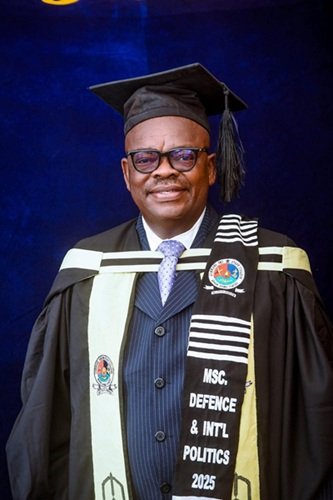
A private legal practitioner and current New Patriotic Party (NPP) North East Regional Secretary, Lawyer Sulley Sambian, has assured that, under his watch, the party’s image will be redeemed and it will continue to make giant strides.

Sulley Sambian, who threw his hat into the ring for the Regional Chairmanship position months ago, set up a direct contest with the sitting chairman as delegates gather at this weekend’s regional conference to decide the race.

Speaking to journalists about his bid, Lawyer Sambian pitched his candidacy as a fusion of legal discipline and years of grassroots party work, arguing that the region, the home turf of NPP flagbearer Dr. Mahamudu Bawumia, cannot afford to leave its 2028 electoral fortunes to chance.

According to him,”I am tried, tested, and ready to lead the NPP in the region as Chairman. I am offering my expertise following years of service to ensure that the region becomes a no-go area for our opponents,” he said, adding, “I have the strategy and the mental ability to deliver.”

Advertisement

Lawyer Sambian’s bid revives a contest last decided at the Nalerigu Regional Conference on May 27, 2022, when incumbent Chairman Nurudeen fended off a crowded field to retain his post, polling 71 of 146 valid votes.

His nearest rival on that occasion, former Yagaba Kubore Constituency Chairman Akamara Bawah Henry, managed 50 votes a 21-vote gap that left the race closer than some party insiders had anticipated.

That history looms over this weekend’s vote. With Nurudeen expected to seek another term, Sambian’s entry signals that the NPP’s internal race in the North East may once again be tightly fought, testing whether the party’s grassroots structures still back the incumbent or are ready for a change in direction.

Rather than campaign on personality, Sambian is staking his candidacy on what he frames as a results-driven approach to party organisation.

Advertisement

He argued that the 2028 election will reward disciplined strategy over rhetoric, telling reporters that success will come down to “who can combine brawn and brainpower to reclaim and increase the parliamentary seats in the area.”

The remark points to a broader concern within NPP ranks in the North East, where the party has had to contest strongly against an entrenched NDC presence.

For Sambian, tightening the party’s organisational machinery rather than relying on campaign messaging alone is the route back to expanding the NPP’s seat count in the region.

As Regional Secretary, Sambian has held a front-row seat to the party’s internal operations, a position he is now relying on as evidence of readiness rather than treating it as a stepping stone he must abandon.

Advertisement

With delegates set to vote this weekend, his candidacy places added weight on the conference, not just as a leadership contest but as an early signal of how united or divided the NPP’s regional structures are heading into a flagbearer’s home-region campaign for 2028.

By: Jacob Aggrey

News

Police arrest two suspects over inciteful comments

Published

on

The Ghana Police Service, in collaboration with the National Signals Bureau (NSB), has arrested suspect Masud Abdullah, aged 35, in connection with a video in which he made statements advocating violence against persons who speak ill of Prophet Mohammed.

According to information available to the Police, the suspect, an Imam, allegedly made the statements while delivering a sermon at a mosque at Ntensere in the Atwima Nwabiagya North District of the Ashanti Region.

In a related development, the the Cyber Vetting and Enforcement Team has arrested suspect Daniel Junior Yaw Adjei alias Apostle Daniel JY Adjei who was seen in a video making derogatory and offensive comments about Prophet Mohammed.

Investigations are on going and both suspects will be taken through the due process of the law.

The Ghana Police Service used the opportunity to remind the public, particularly religious leaders, preachers, community leaders, social media commentators that freedom of religion and freedom of expression must never be used as justification for inciting violence or encouraging members of the public to harm others.

Advertisement

According them, such inciteful utterances constitute infractions and perpetrators will be arrested to face the full rigours of the law.

Continue Reading

News

Poor budget execution could hurt economic growth – IFS warns govt

Published

on

The Institute for Fiscal Studies (IFS) has warned that poor execution of Ghana’s 2026 budget could hurt economic growth, particularly if government continues to restrict spending on capital projects and arrears payments.

The warning was contained in the IFS Policy Brief No. 26, titled An Analysis of the Government of Ghana’s 2026 Mid-Year Budget Review, which assessed the implementation of the 2026 budget in the first half of the year.

Presenting the fiscal performance for the period, Research Fellow at the IFS, Dr Samuel Addo, reported that total revenue and grants stood at GH¢124.78 billion in the first half of 2026, falling short of the budgeted GH¢126.14 billion by GH¢1.37 billion, representing 1.1 per cent.

He noted that tax revenue amounted to GH¢103.77 billion, compared with a target of GH¢105.26 billion, while non-tax revenue stood at GH¢12.27 billion against a target of GH¢14.90 billion.

Advertisement

Dr Addo explained that the shortfall in non-tax revenue was largely driven by lower-than-expected dividend, interest and profits from oil, which fell short of its target by GH¢1.43 billion, or 37.1 per cent.

He added that foreign grants also fell short of the target, recording GH¢1.05 billion against GH¢1.07 billion, while other revenue, including ESLA proceeds, performed above target, recording GH¢7.69 billion against a target of GH¢4.21 billion.

On expenditure, Dr Addo reported that total government expenditure, including arrears payments and discrepancies, amounted to GH¢136.94 billion, falling short of the budgeted GH¢172.54 billion by GH¢35.60 billion, or 20.6 per cent.

He identified arrears clearance and capital expenditure as the areas with the biggest shortfalls.

Advertisement

According to him, actual arrears clearance stood at GH¢5.34 billion against a budget target of GH¢13.98 billion, representing a shortfall of 61.8 per cent and an execution rate of only 38.2 per cent.

Capital expenditure also stood at GH¢22.18 billion against a target of GH¢36.56 billion, representing a shortfall of GH¢14.38 billion, or 39.3 per cent.

Dr Addo further reported that interest payments amounted to GH¢21.50 billion against a target of GH¢28.44 billion, while grants to other government units stood at GH¢26.21 billion against GH¢31.10 billion.

Compensation of employees also fell short of target, recording GH¢42.90 billion against GH¢45.38 billion.

Advertisement

He said the significant underspending resulted in the overall fiscal deficit on a commitment basis standing at GH¢6.82 billion, compared with the budgeted GH¢32.41 billion.

The primary balance on a commitment basis, he added, recorded a surplus of GH¢14.68 billion against a programmed deficit of GH¢3.97 billion.

Dr Addo also noted that despite the significant changes in actual revenue and expenditure performance, most of the components of the revised 2026 budget remained unchanged from the original budget.

He explained that the major changes involved an increase in the “other expenditure” item from GH¢16.23 billion to GH¢21.23 billion, with GH¢5 billion allocated to the Ghana Gold Board (GoldBod).

Advertisement

Capital expenditure, he said, was reduced by GH¢5 billion from GH¢57.53 billion to GH¢52.53 billion to accommodate the increase in the other expenditure item.

He explained that the allocation to GoldBod was intended to enable the institution to take full financial responsibility for the gold purchase programme and relieve the Bank of Ghana of that responsibility.

Poor budget execution

Commenting on the findings, IFS Fiscal Policy Researcher and microeconomist, Dr Said Boakye, described poor budget execution as one of the major challenges identified in the mid-year review.

Advertisement

He argued that the government’s failure to spend as planned could have serious implications for economic growth because capital expenditure and arrears payments play important roles in economic activity.

Dr Boakye explained that arrears payments provide liquidity to government contractors, suppliers and businesses that depend on them, while capital expenditure is an important component of GDP.

He therefore warned that restricting such spending could directly affect economic growth.

According to him, non-oil real GDP growth recorded 6.3 per cent in the first quarter of 2026, but this represented a noticeable decline from the growth rates recorded in the previous four quarters.

Advertisement

He attributed the decline partly to the sharp reduction in government spending and cautioned that continued restrictions on expenditure could cause non-oil real GDP growth to decline further.

Dr Boakye said the shortfall in revenue mobilisation and foreign borrowing could not fully explain the GH¢35.60 billion expenditure gap.

He noted that the combined shortfall in total revenue and grants and foreign borrowing amounted to GH¢8.39 billion, which was less than one-fourth of the total expenditure gap.

He identified domestic budget financing as the major reason for the expenditure shortfall, saying it fell short by GH¢34.45 billion, representing 67.2 per cent of the budgeted GH¢51.28 billion.

Advertisement

Dr Boakye questioned why government had accumulated GH¢15.6 billion in the Sinking Fund by July 22, 2026, despite the amount not being provided for in the original budget.

He argued that while the budget was being starved of domestic financing, government was borrowing to build up the Sinking Fund, thereby affecting funding for important areas such as capital expenditure and arrears payments.

He said the situation raised questions about whether government was unaware of the financing requirement when preparing the 2026 budget or had deliberately chosen not to capture it in the budget presented to Parliament.

“Whatever the case may be,” he argued, the situation showed poor planning and had affected the credibility of the 2026 budget.

Advertisement

Unrealistic targets

Dr Boakye criticised the government for maintaining what the IFS considers unrealistic revenue and economic growth targets.

He noted that the government had maintained the total revenue and grants-to-GDP target at 16.8 per cent in the mid-year review.

He argued that the target was unrealistic because Ghana’s total revenue and grants as a share of GDP had remained below 16 per cent in recent years.

Advertisement

He noted that between 2021 and 2025, the average initial budget target was 17.5 per cent, while the average mid-year revised target was 16.5 per cent.

However, actual outturns averaged only 15.6 per cent over the period.

Dr Boakye therefore questioned the decision to maintain the 16.8 per cent target despite the repeated underperformance.

The IFS criticised the government for keeping its 2026 real GDP growth projection at 4.8 per cent.

Advertisement

Dr Boakye noted that Ghana’s economy grew by 6.0 per cent in 2025, exceeding the government’s 4.8 per cent projection, while real GDP growth in the first quarter of 2026 reached 6.4 per cent.

He argued that the new data should have prompted an upward revision of the 2026 growth projection during the mid-year review.

Positive developments

Despite its concerns, the IFS acknowledged some positive developments in the economy.

Advertisement

Dr Boakye noted that the macroeconomic environment remained relatively stable in the first half of 2026 despite the effects of the war in the Middle East on global energy prices.

He pointed to the decline in interest rates as a particularly positive development for the private sector.

The 91-day Treasury Bill rate, he noted, had fallen to 5.7 per cent in June 2026, while the average lending rate declined to 15.6 per cent.

He welcomed the government’s decision to extend the Ministry of Finance’s Commitment Authorisation System to State-Owned Enterprises, describing it as an appropriate measure to strengthen expenditure controls and prevent the accumulation of arrears.

Advertisement

The IFS, however, identified inconsistencies in some of the fiscal figures presented in the mid-year budget review.

It noted, for instance, that the stated first-half revenue and grants target of GH¢126.14 billion differed from the GH¢125.43 billion obtained when the individual components were added together.

The institute questioned the presentation of two different figures for tax refunds in the budget document.

The IFS said such inconsistencies could undermine confidence in the fiscal data and called for stronger validation and verification before the figures are incorporated into budget documents.

Advertisement

Small-scale mining revenue

The institute also criticised the government for failing to present a clear strategy to generate more revenue from the small-scale gold mining sector.

Dr Boakye noted that Ghana’s gold exports increased by 103.3 per cent in 2025, from US$10.31 billion to US$20.98 billion.

Small-scale mining contributed US$10.80 billion, representing 51.5 per cent of total gold exports.

Advertisement

However, mineral royalties collected by government increased by only 21.1 per cent, from US$364.87 million in 2024 to US$441.82 million in 2025.

The IFS argued that the figures showed that the significant growth in gold exports from the small-scale sector was not translating into a corresponding increase in government revenue.

The institute therefore called on government to develop a clear strategy to mobilise revenue from the sector.

It recommended that government improve budget execution by spending in line with approved plans, make its economic and fiscal forecasts more evidence-based, and strengthen the verification of fiscal data.

Advertisement

The IFS further urged the government to ensure that Ghana receives a fair share of the benefits from the extraction of its mineral resources, regardless of the scale of the mining operation.

By: Jacob Aggrey

Continue Reading
Advertisement

Trending