News
US Ambassador visits development partners in Northern Regions

- /home/u249204778/domains/spectator.com.gh/public_html/wp-content/plugins/mvp-social-buttons/mvp-social-buttons.php on line 27
https://spectator.com.gh/wp-content/uploads/2022/03/The-Ambassador-visited-the-Trauma-and-Emergency-Ward-at-Yendi-Government-Hospital-1.jpg&description=US Ambassador visits development partners in Northern Regions', 'pinterestShare', 'width=750,height=350'); return false;" title="Pin This Post">
- Share
- Tweet /home/u249204778/domains/spectator.com.gh/public_html/wp-content/plugins/mvp-social-buttons/mvp-social-buttons.php on line 72
https://spectator.com.gh/wp-content/uploads/2022/03/The-Ambassador-visited-the-Trauma-and-Emergency-Ward-at-Yendi-Government-Hospital-1.jpg&description=US Ambassador visits development partners in Northern Regions', 'pinterestShare', 'width=750,height=350'); return false;" title="Pin This Post">
Ambassador Stephanie S. Sullivan, last week, paid a visit to development partners in Tamale, Yendi, Buipe, and Salaga, affirming the United States’ commitment to Peacebuilding and development in the Northern Region.
She held meetings with, Mr Shanui Alhassan Shaibu, the Northern Regional Minister and Chairman of the Regional Security Council, as well as representatives of the Northern Regional Peace Council and West African Network for Peacebuilding (WANEP).
The Ambassador met with traditional leaders including the Overlord of Dagbon, Ya-Naa Abukari II, Mion Lana Abdulai Mahamadu, Paramount Chief of Buipe, Buipewura Abdulai Jinapor II, and Paramount Chief of Salaga, Kpembewura Bangabe Ndefuso IV.
She congratulated the Northern Regional Peace Council and WANEP on their work and urged them to continue building community resilience, reinforcing social cohesion, and help individuals to reject extremism.
The Ambassador highlighted United States Agency for International Development (USAID) projects and pledged to support initiatives meant to equip traditional authorities and Regional Peace Councils with skills and knowledge to mediate conflicts in their jurisdictions.
Mrs Sullivan visited the Buipe Port in the Savannah Region where USAID’s West Africa Trade and Investment Hub is supporting businesses in the north to develop export partnerships to access international markets.
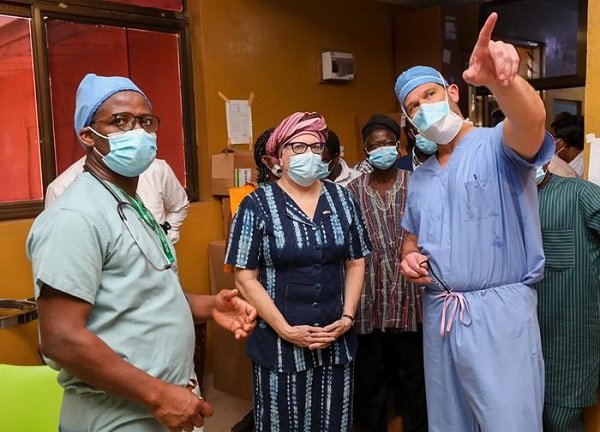
The Ambassador again visited a new Trauma and Emergency Ward at the Yendi Government Hospital being constructed by Mission:318, a private U.S. charitable organisation that has provided medical services and supplies to the Yendi community for more than 10 years.
“Americans’ deep connection with Ghanaians is not just about the strong and enduring partnership with the U.S. Government. Mission:318 models many of the values of the American people – sharing the fruits of our prosperity and helping others to help themselves,” she said.
Coinciding with the start of Women’s History Month, the Ambassador further met with six female alumni of U.S. exchange programmes, focused on peace and security, countering extremism, and empowering civil society.
By Spectator Reporter


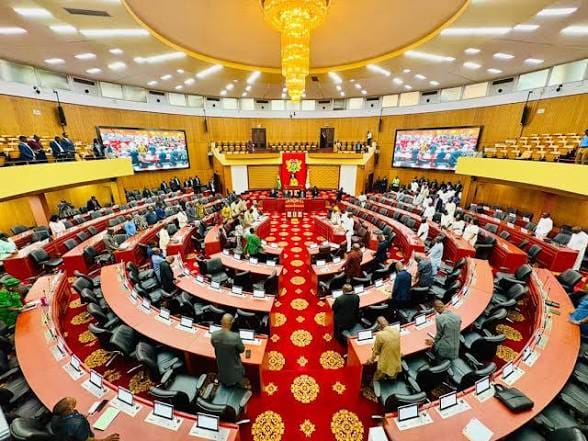
Parliament has clarified public commentary on social media regarding a notice on its notice board that read “No Vacancy for National Service Personnel 2026/2027. Kindly go for reposting.”
In a statement, signed by the Director of Media Relations, David Sebastian Damoah, Parliament said the notice has been misconstrued and was not a policy statement, a freeze on national service placements, or a change in its support for the National Service Scheme.
According to Parliament, the notice was a routine administrative message to prospective personnel who reported to the House, informing them that it has received more personnel than it can accommodate for the 2026/2027 service year and that they should seek reposting to other institutions.
It said it remains committed to the National Service Scheme and values the contribution of service personnel to its work, and regrets any confusion or inconvenience the wording may have caused.
By Edem Mensah-Tsotorme
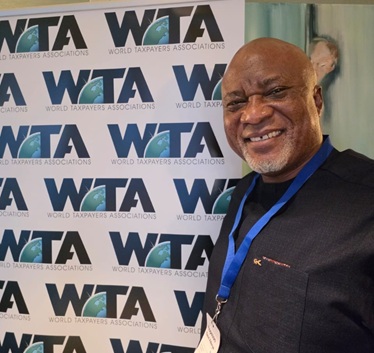
Ghanaian public advocate Hopeson Yaovi Adorye has been elected to the Board of Directors of the World Taxpayers Association (WTA).
The election took place on Sunday, October 5, 2026, during the Association’s conference in Kraków, Poland.
His election marks a significant addition to his international leadership portfolio and provides a platform for Ghanaian and African perspectives to contribute to global discussions on taxpayer rights, responsible taxation, transparency and prudent management of public resources.
Reacting to his election, Mr. Adorye expressed appreciation to the leadership and members of the WTA for the confidence reposed in him.
“I am deeply honoured by this confidence and conscious of the responsibility that comes with it. Taxpayers are at the heart of every economy, and they deserve fairness, transparency, accountability and value for the taxes they pay. I look forward to working with colleagues from across the world to strengthen the voice of taxpayers and promote responsible fiscal governance,” he said.
According to him, taxation should not be viewed solely as a mechanism for raising government revenue, but also as an important component of the social contract between citizens and the state.
Mr. Adorye said governments have a responsibility to ensure taxes are collected fairly and public resources are utilised efficiently to deliver quality infrastructure, healthcare, education, security and other essential services.
His election also creates an opportunity to bring African experiences into international conversations on taxation and public expenditure.
Mr. Adorye, who is Executive Director of Taxpayers League Ghana, has previously served as Global Board Chairman of the International Youth Network for UN Security Council Resolution 2250, an NGO associated with the United Nations Economic and Social Council (ECOSOC).
He is expected to use his new role to champion fiscal accountability, taxpayer education, good governance and stronger citizen participation in public financial management.