News
Unveiling untold stories: Exhibition sheds light on trans-atlantic slave trade legacies

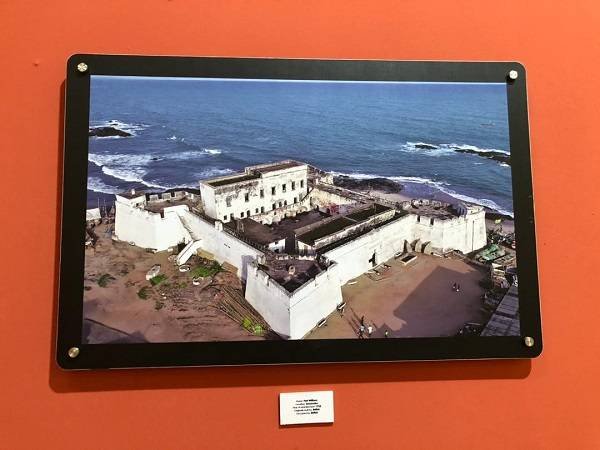
Slavery, a haunting chapter of history, has long been rec¬ognised as an outmoded custom in today’s world.
However, the intricate details of how it unfolded in Ghana is often overshadowed by a repetitive nar¬rative involving European countries’ trade with African nations.
To rekindle awareness of this forgotten past, the “Danmarks frie forskningfond,” an independent research fund in Denmark, has or¬chestrated an exhibition that delves into the history of slavery between Africa and the Caribbean—specifi¬cally the Trans-Atlantic slave trade.
At the inauguration of the event, Professor Mads Anders Bagges¬gaad articulated the exhibition’s purpose, emphasising its role in fostering collaboration between local researchers and international partners.
Dubbed “Authoring Slavery: Blind Spots,” the exhibition aims to cast a spotlight on overlooked aspects of the transatlantic slave trade.
As the exhibit unfolded, guests were moved by a recorded poem penned by Kofi Anyidoho.
The poem pays tribute to the souls lost during the brutal slave trade, honouring their tireless struggle to restore Africa’s dignity in the 20th century.
A Post-Doctoral Research Fellow from the University of Hull in the United Kingdom, Dr. Cassandra Gooptar took the stage to explore the enduring legacies of enslave¬ment and restorative justice.
She discussed the socio-political dimensions of the trans-atlantic slave trade, emphasising its lasting impact on contemporary society.
Dr. Gooptar highlighted the rele¬vance of modern day slavery, par¬ticularly in societies like the United Kingdom, where racial divisions persist and education often omits critical historical events.
The exhibition’s significance ex¬tended to its exploration of critical blind spots in the study of slavery.
Dr. Isabel Robinson underscored the importance of raising the profile of black history and addressing overlooked issues related to slavery.
Meanwhile, Dr. Emmanuel Sab¬oro’s presentation delved into the ethno-racial differences and colo¬nial effects that continue to shape Ghana.
He shed light on the term ‘Donkor’ which signifies captivity in northern Ghana, and discussed how ethnicity and skin color continue to influence identity perceptions.
The “Authoring Slavery: Blind Spots” exhibition successfully re¬vitalised the discourse around the trans-atlantic slave trade, shed¬ding light on hidden narratives and inspiring conversations about the enduring impact of historical injus¬tice on today’s world.
By George Obeng Osei


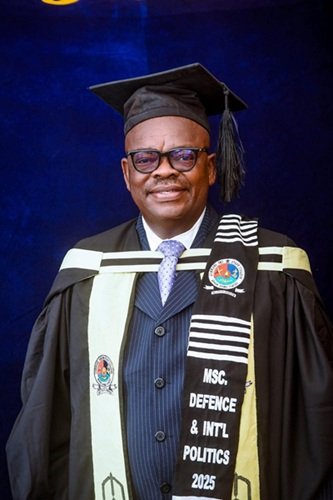
Management and staff of Owass FM have announced the passing of media personality, comedian and politician Seth Kwame Dzokoto following a medical emergency during a live morning show discussion at the station earlier today.
According to the station, Dzokoto was participating in a panel discussion on its morning show “Oman Nkoso” when he suddenly took ill and collapsed.
A statement from the station said its team immediately rushed him to the hospital for medical attention, but he was pronounced dead by the attending medical doctor upon arrival.
“We are deeply saddened by this unfortunate incident, which occurred in the course of our regular programming. Our thoughts and prayers are with his family, loved ones, colleagues, and all those who have been affected by his passing,” the statement said.
Management acknowledged that information about the incident is already circulating in the public domain, but appealed to the public and colleague media houses to respect the privacy of the bereaved family and refrain from circulating unverified information or speculation regarding the circumstances of his death.
Owass FM extended its heartfelt condolences to the family of Seth Kwame Dzokoto.
By Edem Mensah-Tsotorme

The State through the Attorney General (AG) has filed an appeal at the Supreme Court challenging the suspension of the trial in the case of The Republic v Hanan Aludiba and Faiza Seidu.
On Monday, the Court of Appeal suspended the trial in the case. But the prosecution says it has filed an appeal against the suspension order.
According to the update, the law does not allow a criminal trial to be suspended simply because an accused person has complained about some of the charges on the charge sheet, particularly when those complaints were dismissed as meritless.
It argues that if the Court of Appeal’s decision is allowed to stand, no prosecution will ever be possible, since all it would take for a trial to be suspended is an accused person complaining about anything on the charge sheet.
By Edem Mensah-Tsotorme