News
UMaT to clean water bodies of mercury pollution

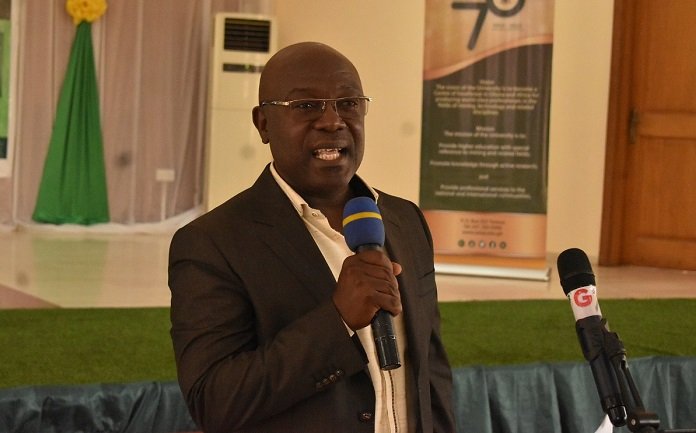
University of Mines and Technology (UMaT), Tarkwa in the Western Region, is set to undertake a project to clean major rivers in Ghana including River Pra, which have been polluted with mercury due to illegal mining, the Vice Chancellor Professor Richard KwasiAmankwah, has said.
The innovation, he explained, “is to ensure sanity in Ghana’s water bodies, safeguard riverine life and maintain their integrity for sustainable development.”
Prof. Amankwah told journalists on Monday at a meet the press series at the UMaT 6th Innovation and Career Fair dubbed “Think Smart, Be Innovative,” as part of its 70th anniversary celebrations.
“Immediately, we are selecting Pra, Offin and Brim. For example,Pra moves from Mpraeaso in the Eastern Region and joins the Atlantic Ocean at Shamain the Western Region while Offin takes its source from Mampongin the Ashanti Region and joins Pra at Assin areas.
“These are very long rivers and if you clean them, the impact will be greater. Birim is also a very big river and I believe when we clean it, the impact will the better. Then, later, we can look at Bia, Tano and others,” he said.
Prof. Amankwahhad thrown a challenge to the Ministry of Lands and Natural Resources that UMaThad the technology to clear all the rivers in Ghana which had been made dirty by small scale miners.
Discussions, he told journalists, were still ongoing and that, “anytime we get funds, we will select at least two major rivers and clear them to show the world what we are capable of doing. We need a little push to get this one done.”
He said, mercury was widely used in Ghana and that when the chemical went into the atmosphere and settled on the ground, it interacted with bacteria and got soluble in water.
Prof. Amankwah said, mercury then washes into water bodies and crabs and fishes could take in the substance.
“When you go and catch a fish, it has mercury in it, and it is transferred into your body. Mercury can cause birth defects. It can influence the chromosomes of a human being.
“Therefore, when you give birth and because you have mercury intoxification in your system, you pass over something to that child that makes his ability to develop the neurosystem very weak.” he explained
Already, he said, UMaT had started looking for plants in Ghana that have the ability to stop mercury from the soil and from rivers and also developed a system to undertake phytoremediation of mercury from polluted lands.
The Vice Chancellor reported that UMaT’s members of staff and students had greatly worked in extending the frontiers of knowledge with the innovations and inventions, saying some experts were promoting clean water and sanitation and clean energy.
He said, a PhD research student had developed a tracking device to track activities on small scale mine site across the country and even at Walewale and that Minerals Commission had commissioned UMat for that project.
The student, according to Prof. Amankwah, would receive about $250,000 for his creativity and ingenuity.

News
GES directs Ashanti Regional, Obuasi Municipal Education Directors to step aside over Obuasi SHTS scandal
The Management of the Ghana Education Service (GES) has directed the Ashanti Regional Director of Education, Dr. William Amankrah Appiah, and the Obuasi Municipal Director of Education, Mr. Kwamena Owusu-Nketiah, to step aside with immediate effect.
The directive forms part of ongoing investigations into allegations of sexual misconduct involving the headmaster of Obuasi Senior High Technical School (SHTS), Mr. Zakaria Abdulai.
According to GES, the decision is intended to ensure that the investigations proceed without potential interference, nor the perception of it.
The two directors are to hand over their offices and all state property in their possession to the Deputy Ashanti Regional Director of Education, Mr. Thomas Kwame Boateng.
Management added that the headmaster, Mr. Zakaria Abdulai, also remains interdicted and therefore urged the public to ignore any news circulating that he has been cleared.
Management is calling for calm, support and cooperation as thorough investigations into the matter continue.
By Edem Mensah-Tsotorme
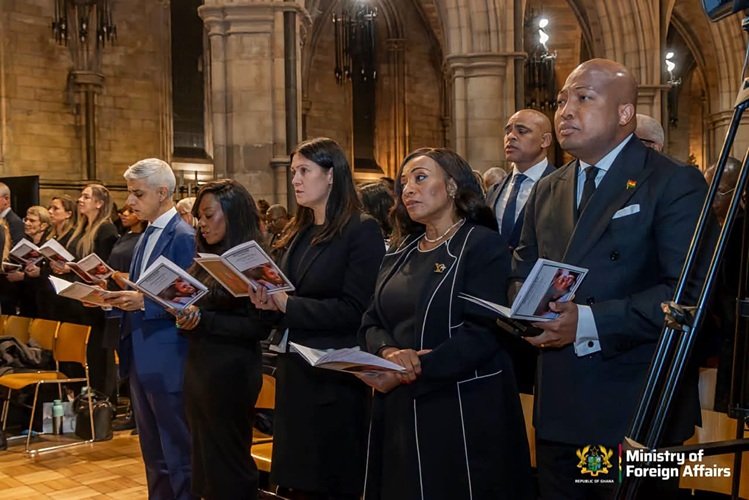
The Minister for Foreign Affairs, Samuel Okudzeto Ablakwa, has joined the family of the late Professor Jason Atta Kwei Arday, the Ghanaian community in the UK, and other dignitaries for a memorial service in Southwark, UK.
In a post, Mr. Ablakwa described the service as deeply moving and unforgettable, held in honour of the late professor’s memory.
According to him, in keeping with the government’s pledge, he joined the family, Ghana’s High Commissioner to London, British MPs, Ministers, the Mayor of London, Cambridge scholars, Prof. Arday’s students and loved ones to pay respects and honour his inspiring legacy.
Mr. Ablakwa noted that Prof. Arday’s accomplishments as the youngest Black professor appointed at the University of Cambridge and his widely appreciated charitable contributions will continue to inspire generations.
“The Government and People of Ghana will continue to stand by our compatriots everywhere they are in the world. As we do so, we profess our commitment to justice, equality and the creation of a new world,” he said.
He prayed for fortitude for the family in what he described as an extraordinarily difficult time.
“We shall always remember Prof. Arday for his response when asked what he will wish to do to change the world: ‘I would take a thread and a needle, and I’d interweave love into our society’,” Mr. Ablakwa added.
By Edem Mensah-Tsotorme