Hot!
To appreciate pregnant women: Men made to demonstrate in pregnancy jacket

- /home/u249204778/domains/spectator.com.gh/public_html/wp-content/plugins/mvp-social-buttons/mvp-social-buttons.php on line 27
https://spectator.com.gh/wp-content/uploads/2022/02/Mr-Yonye-rocking-his-pregnancy-jacket-and-carrying-water-at-the-same-time.jpg&description=To appreciate pregnant women: Men made to demonstrate in pregnancy jacket', 'pinterestShare', 'width=750,height=350'); return false;" title="Pin This Post">
- Share
- Tweet /home/u249204778/domains/spectator.com.gh/public_html/wp-content/plugins/mvp-social-buttons/mvp-social-buttons.php on line 72
https://spectator.com.gh/wp-content/uploads/2022/02/Mr-Yonye-rocking-his-pregnancy-jacket-and-carrying-water-at-the-same-time.jpg&description=To appreciate pregnant women: Men made to demonstrate in pregnancy jacket', 'pinterestShare', 'width=750,height=350'); return false;" title="Pin This Post">
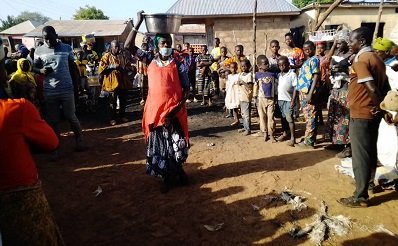
For them to understand how it feels to carry pregnancy for nine months and engage in domestic chores at the same time, some men at Sankana in the Nadowli-Kaleo District of the Upper West Region have been made to undertake a demonstration in pregnancy jackets.
The men were made to wear jackets stuffed with fabrics to the size of certain months of pregnancy beginning from six months and above.
They were then made to undertake domestic chores such as fetching firewood, washing and fetching water over long distances in the pregnancy jackets to familiarise themselves with the stress women go through in combining pregnancies with house chores.
The demonstration was mounted by the Community Aid for Rural Development (CARD) Ghana, a Wa-based non-governmental organisation (NGO) in a project dubbed “Maternal and Neonatal Health Project”.
The Project which is being implemented in conjunction with the Ghana Health Service is supported by United Nations Children’s Fund (UNICEF) to enhance maternal and neonatal health.
The men wore the stuffed jackets for close to two hours attested to the fact that women were doing tremendously well by carrying pregnancies for nine months and engaging in various house chores at the same time.
But they were skeptical of offering assistance to pregnant women as they shared some experiences from some of their colleagues who attempted to help their wives or partners at home.
“Even though we have noticed that it is not easy to carry a pregnancy and work at the same time, we are aware that some men who attempted to help their wives at home were disrespected by them in public”, a pregnancy jacket demonstrator, Mr Timothy Yonye, stated.
He explained that when men empathised with women and helped them during pregnancies and child birth, the women got used to the support and relegated those responsibilities to the men as permanent duties which they did not sign up for.
“Sometimes we are able to support until the child is six months old or even to the time of weaning the baby; but some of the women will still want us to fetch water, take care of the child and will have the guts to embarrass us in public when we are with our friends”, he said.
In response, the Executive Director of Card-Ghana, Ms Leenat Abdul-Rahaman encouraged the men to consider the health of their wives at the time of pregnancy and delivery, particularly for women who went through caesarian sessions, and support them regardless the experience they had shared with the gathering at the programme.
“These experiences can be sorted out at the domestic level before the men assume those responsibilities and we are working hard because we want to promote maternal wellbeing and reduce maternal and neonatal deaths”, she stressed.
Ms Abdul-Rahman appealed to the men to get involved in maternal and neonatal issues and support their women whilst advising them to respect the efforts their husbands made.
For his part, Mr John Maakpe, the Health Promotion Officer at the Regional Health Directorate also encouraged his male colleagues to support the nutritional needs of their wives so that they would be strong enough to carry the pregnancies.
“These jackets are external but we have all experienced how tiring it is, you can imagine blending this stress with hormonal imbalance as many women experience during pregnancy, so we can only appeal to men to support their wives during this time”, he added.
From Lydia Darlington Forjdour, Nadowli


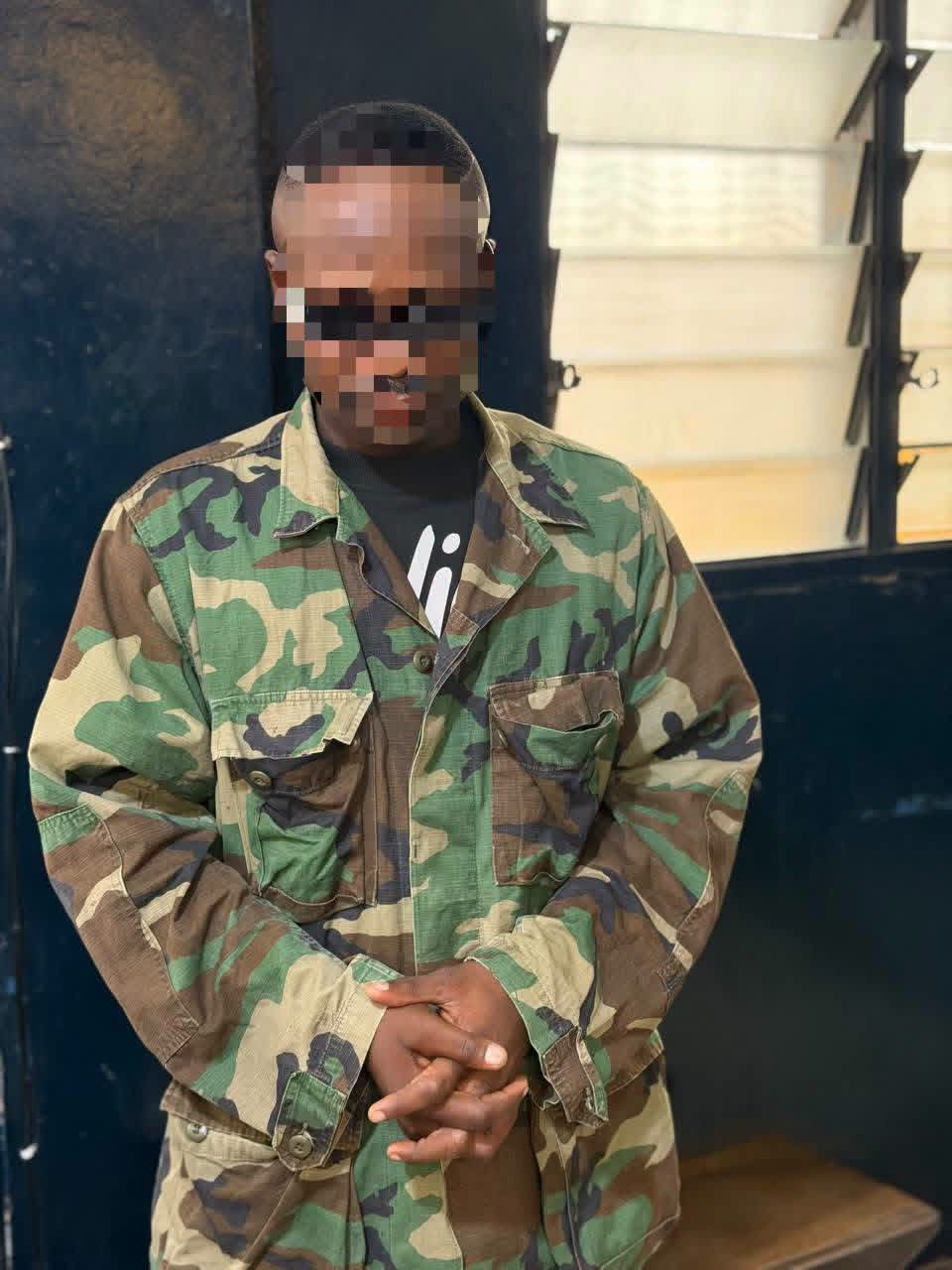
The Tema Regional Police Command has arrested a 32-year-old man for allegedly posing as a soldier and extorting money from unsuspecting members of the public at Ashaiman.
The suspect, identified as Bright Atsu Kudiabor, was arrested by the Ashaiman Police on Wednesday, September 16, 2026, at about 7:00 a.m.
According to the Police, he was arrested at an area known as “I Shall Return”, where he was allegedly parading himself as a soldier and demanding money from people.
The Police said Kudiabor, who is an ex-convict, was initially arrested by personnel of the Ghana National Fire Service in Ashaiman with assistance from other members of the public.
A search conducted on him after he was handed over to the Police reportedly led to the recovery of a set of military camouflage uniform.
The suspect is currently in Police custody and assisting with investigations.
The Tema Regional Police Command said he would be processed for court after investigations are completed.
The Police urged the public to remain vigilant and report anyone who falsely presents themselves as a soldier or a member of another security agency to deceive or extort money from the public.
By: Jacob Aggrey
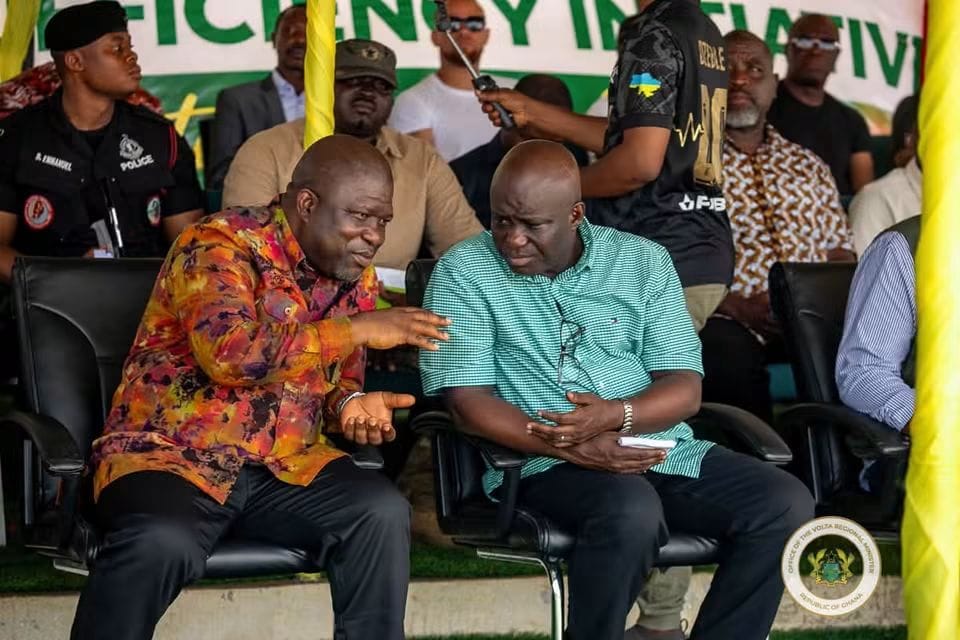
Volta Regional Minister, James Gunu, says the Volta Region holds enormous agricultural potential and efforts must be geared towards connecting farmers to the needed resources to unlock that potential.
He said focus must be on linking farmers to resources, technology, financing and markets to increase production, create jobs and build sustainable livelihoods.
Hon. Gunu made the remarks at the national launch of the Ghana Tomato Self-Sufficiency Initiative (GHATSI) held at Anloga in the Volta Region on Tuesday, September 15.
The initiative, under the theme “Produce at Home. Feed the Nation. Export the Surplus,” seeks to boost local tomato production, processing and marketing while reducing Ghana’s heavy reliance on imported tomatoes.
The launch was attended by the Minister for Food and Agriculture, Eric Opoku, his Deputy, John Setor Dumelo, Feed Ghana Coordinator, Bright Demordzi, Members of Parliament, traditional leaders, MMDCEs, farmers and other stakeholders.
Mr.Gunu expressed appreciation to the Minister for Food and Agriculture for the support announced for the region, including two excavators, 200 cartons of organic fertiliser, and GH¢200,000 for Ms. Kuatudzo Esther Dela, a tomato farmer and processor from Ziope.
He described the initiative as an important step towards making agriculture a stronger driver of food security, job creation and economic growth in the Volta Region.
By Edem Mensah-Tsotorme