Sports
Time to change direction, GFA

- /home/u249204778/domains/spectator.com.gh/public_html/wp-content/plugins/mvp-social-buttons/mvp-social-buttons.php on line 27
https://spectator.com.gh/wp-content/uploads/2023/11/image.webp&description=Time to change direction, GFA', 'pinterestShare', 'width=750,height=350'); return false;" title="Pin This Post">
- Share
- Tweet /home/u249204778/domains/spectator.com.gh/public_html/wp-content/plugins/mvp-social-buttons/mvp-social-buttons.php on line 72
https://spectator.com.gh/wp-content/uploads/2023/11/image.webp&description=Time to change direction, GFA', 'pinterestShare', 'width=750,height=350'); return false;" title="Pin This Post">
That Ghana football has been on the decline for many years now is no secret; it is like stating what is obvious to every follower of the game.
It is a situation the blind can see; the deaf can hear about and even a person suffering a speech impairment (Mutism) can utter something about.
What is, however, not known is exactly when Ghana’s enviable ‘birth right’ as a continental super power in football was lost.
The degeneration did not start today. It started many years ago under the supervision or the watchful eyes of the same stakeholders that called themselves ‘football people.’
Together with other stakeholders that carve a living out of this game that brought joy and happiness to many homes when clubs or the national teams perform excellently at the international stage, the game of football in Ghana has been brought to its knees through certain actions and inactions.
It is no longer appealing to the ordinary Ghanaian soccer fan again and that may best explain why the craze for the typical ‘agoro’ soccer identified with Ghanaian teams, has lost its appeal not only at the continental level but the world at large.
Gone were the days when Ghana was guaranteed two slots each in the now christened Confederation of African Football (CAF) Clubs Champions League and Confederations Cup tournament.
That platform used to be a regular ‘playground’ for the nation’s traditional outfits, Accra Hearts of Oak and Kumasi Asante Kotoko who were mostly at the forefront of Ghana’s rich club football history.
For over a decade now, that privilege has gone and does not seem to be coming soon. This is because our performance at the continental level keep sinking.
But of much concern for football administrators in the country should be the absence of Ghanaian teams in the newly introduced Africa Football League (AFL).
The maiden edition ended last two weeks with South African champions, Mamelodi Sundowns as the winners.
Teams selected for the inaugural edition include Enyimba FC (Nigeria), Wydad AC (Morocco), Mamelodi Sundowns FC (South Africa), TP Mazembe (DR Congo), Espérance Sportive de Tunis (Tunisia), and Atlético Petróleos de Luanda (Angola).
These were teams Hearts and Kotoko used to rub shoulders with.
Currently, they do not appear to be competitors at any level. While these clubs have managed to stay relevant and in the thick of affairs in their respective countries, it is not the case for Hearts and Kotoko who struggle every season with clubs that can comfortably be branded as their ‘grandchildren.’
Other representatives like Aduana Stars, Medeama SC, Dreams FC, Bechem United and others have attempted to stake a claim for Ghana but to no avail.
The winner for the inaugural edition took home a whopping amount of $4 million while the runner-up got $3 million and $1.7 million and $1 million reserved for semi-finalists and quarter-finalists, respectively. These are amounts that can change the fortunes of these clubs.
On Thursday, the African Club Association (ACA), consisting of some of Africa’s finest football clubs was launched at the CAF Headquarters in Cairo.
The ACA hopes to bring together stakeholders from across the African football landscape, fostering collaboration, innovation, and excellence within the continent’s club football scene.
Heads of these clubs are known as African Club Chairmen. They lead the formation of the ACA which objectives include protecting and promoting the interest of African football clubs, and ensuring that African football clubs were commercially viable, globally competitive and profitable.
Is it not heartbreaking for all these major interventions in African football to be happening without any mention of Ghana and any of the top clubs?
This speaks of the direction Ghana football has taken and the earlier the wheel was re-invented, the better it will be for us. Ghana needs her clubs at the pinnacle of African football.
By Andrew Nortey


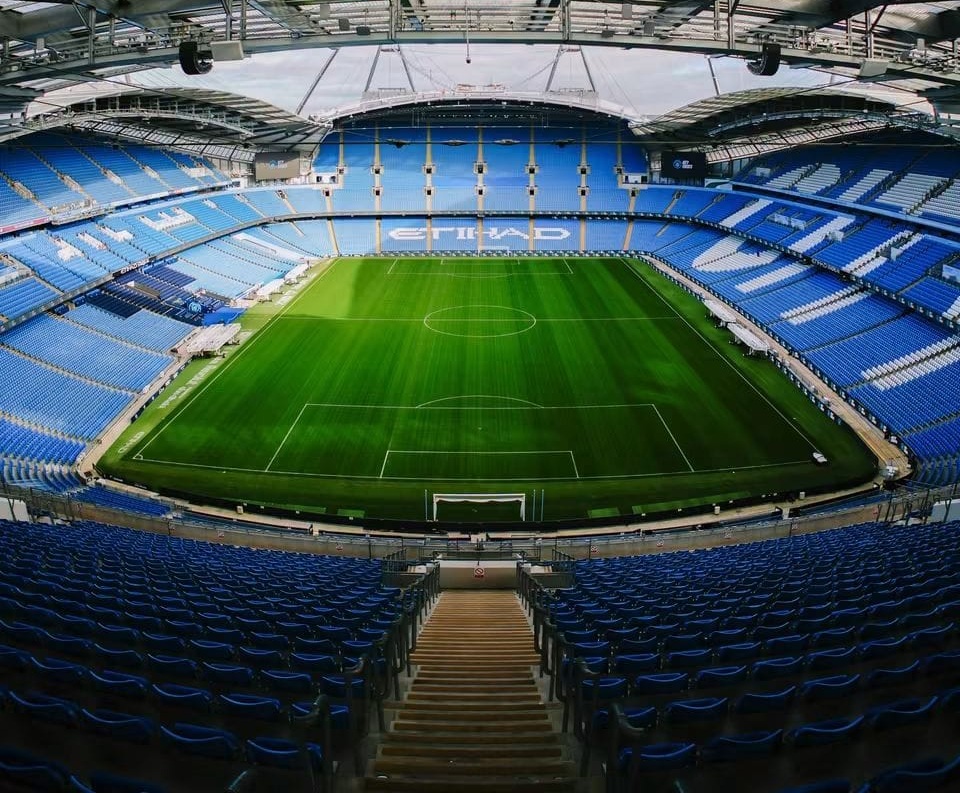
Manchester City Football Club has lodged a comprehensive appeal against the opinion of the Premier League Commission in relation to its long-running disciplinary case.
In a statement on Thursday, October 1, 2026, the Club confirmed that the appeal was filed at 7pm.
“The Club’s firm position is that, on multiple grounds, the opinion contains clear material errors, of law, principle and fact and is unsafe,” the statement said.
City maintained its innocence, stressing that a comprehensive body of irrefutable evidence exists in support of all its positions relating to the case.
“We will continue to respect due process and are necessarily restricted in what we can say further until all proceedings are complete,” the Club added.
The appeal sets the stage for the next phase of the legal battle between the Premier League champions and the league over alleged breaches of financial rules, which the club has consistently denied.
By Edem Mensah-Tsotorme
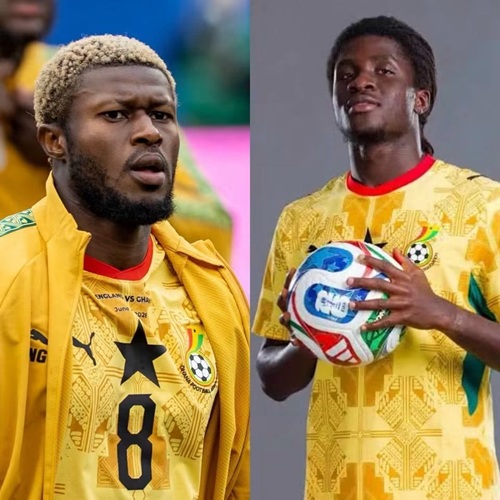
There is a particular type of heartbreak that only eleven grown men chasing a leather sphere can inflict upon a nation. It is a unique Ghanaian tragedy, seasoned with broken promises and served hot under the scorching morning sun. As I sat over my bowl of hausa koko and koose this morning, contemplating the state of our union, my mind drifted—as it unfortunately often does—to the entity we still fondly, if erroneously, refer to as the Black Stars.
Oh, for the days of Stephen Appiah! A time when the jersey meant blood, sweat, and actual victories, rather than Instagram reels, designer headphones, and hefty appearance fees.
Let us be completely honest with ourselves. We have reached a point where watching the national team has become a hazardous threat to public health. The blood pressures of regular, tax-paying Ghanaians are spiking faster than the inflation rate, all because we are pampering a crop of boys and suit-wearing officials who treat national assignments like an all-expenses-paid beach holiday.
And who is footing the bill? The government, of course. Or rather, you and I, through the benevolent, heavily depleted coffers of the state.
Now, the football purists and the high priests of the Ghana Football Association (GFA) will quickly scream, “FIFA sanctions! Government interference!” the moment anyone suggests a cleanup. But let us lower our voices and speak common sense. Nobody is talking about dissolving the FA. No one wants to barge into their shiny offices and seize their laptops.
We simply need to remind them of a basic law of property: the Black Stars do not belong to the GFA. The GFA does not own the emotions of thirty-plus million Ghanaians. They are merely trustees, caretakers of a national treasure that belongs firmly to the state. And right now, the caretakers are sleeping on the job while the house burns down.
This brings me to the highest office of the land. Mr. President, we have not forgotten. The records are there in black and white. You are on record to have directly pointed fingers at the previous administration for the historic, monumental disaster that was the failure to qualify for the AFCON 2025 tournament. You made it clear that football governance—or the lack thereof—was a political report card.
Well, Mr. President, the ball is now squarely in your court, quite literally.
My humble, dawn-induced plea to the Jubilee House is simple: Pull the plug. Cut the funding. Lock the vault and misplace the keys for the remainder of this administration’s term.
Why must we continue to throw good, scarce cocoa and gold money after bad football? Why must we spend hundreds of thousands of hard-earned dollars financing an abysmal, lifeless show on the pitch, only to be rewarded with mathematically impossible qualification scenarios and early exits? To what end are we funding this journey? An AFCON campaign that will ultimately lead us nowhere but to the departure lounge of an international airport?
Let the sanctions come. If FIFA decides to ban us because the government refuses to fund a product that brings nothing but national depression, then so be it. Let us embrace the ban with open arms and smiling faces!
Look at the silver lining: a funding freeze might actually force the football gods in this country to “focus small” on their own neglected stepchild—the Ghana Premier League. Perhaps if there are no dollar-denominated bonuses to squabble over in Marrakech or Luanda, our administrators will remember that football is grown on the local pitches of Dormaa, Berekum, and Accra.
Pulling out now gives us a rare gift: the chance to stop, breathe, regroup, and plan properly. We can hand over a clean slate—and a structurally sound plan—to the next administration.
It is a deeply sad day when Ghanaians look at the Black Stars and feel nothing but apathy. But until we stop throwing money at mediocrity, the “abysmal show” will continue to play on a loop. Mr. President, save our money, save our hearts, and let the boys fund their own flights.
By Emmanuel Amponsah (a concerned citizen musing at dawn)
The writer is a former Editor of The Spectator