Features
The power of deep relaxation

In today’s fast-paced world, stress and anxiety have become an unfortunate norm. The constant pressure to perform, produce, and conform can take a toll on our physical, emotional, and mental health.
However, there is a powerful tool that can help us mitigate the effects of stress and anxiety: deep relaxation.
In this comprehensive article, we will delve into the concept of deep relaxation, its benefits, and various techniques to achieve it. We will also explore the science behind deep relaxation and its impact on our brain, body, and overall well-being.
What is deep relaxation?
Deep relaxation is a state of profound physical, emotional, and mental calmness. It is characterised by a slowed heart rate, lowered blood pressure, and decreased stress hormones.
Deep relaxation is not just a feeling of relaxation; it is a physiological state that can be achieved through various techniques.
Benefits of deep relaxation
The benefits of deep relaxation are numerous and well-documented. Some of the most significant advantages of regular deep relaxation practice include:
1. Reduced stress and anxiety: Deep relaxation can help alleviate stress and anxiety by promoting emotional balance and calmness.
2. Improved sleep: Deep relaxation can help improve sleep quality, duration, and depth, leading to better rest and recovery.
3. Pain relief: Deep relaxation can reduce chronic pain by decreasing inflammation, improving mood, and enhancing the body’s natural pain-relieving mechanisms.
4. Boosted immune system: Deep relaxation can strengthen the immune system by reducing stress hormones, increasing antibody production, and activating natural killer cells.
5. Improved mental clarity and focus: Deep relaxation can improve mental clarity and focus by reducing mind-wandering and increasing attention.
6. Increased creativity and productivity: Deep relaxation can increase creativity and productivity by allowing the mind to wander and explore new ideas.
7. Better emotional regulation: Deep relaxation can improve emotional regulation by enabling individuals to manage stress, anxiety, and other emotions more effectively.
Techniques for achieving deep relaxation
There are various techniques that can help individuals achieve deep relaxation. Some of the most effective methods include:
1. Meditation: Regular meditation practice can help induce deep relaxation and promote overall well-being.
2. Yoga: Yoga combines physical postures, breathing techniques, and meditation to promote deep relaxation and reduce stress.
3. Progressive muscle relaxation: This technique involves systematically relaxing different muscle groups to promote deep relaxation.
4. Guided imagery: Guided imagery involves using visualization techniques to promote deep relaxation and reduce stress.
5. Deep breathing exercises: Deep breathing exercises can help slow down the heart rate, lower blood pressure, and promote relaxation.
The science behind deep relaxation
Deep relaxation is not just a feeling; it is a physiological state that can be achieved through various techniques. When we practice deep relaxation, our brain, body, and nervous system undergo significant changes.
1. Brain waves: Deep relaxation is associated with a decrease in beta brain waves (associated with stress and anxiety) and an increase in alpha, theta, and delta brain waves (associated with relaxation and sleep).
2. Neurotransmitters: Deep relaxation can increase the production of neurotransmitters like serotonin, dopamine, and endorphins, which are associated with feelings of relaxation, happiness, and well-being.
3. Hormones: Deep relaxation can decrease the production of stress hormones like cortisol and adrenaline, which can have negative effects on our physical and mental health.
4. Nervous system: Deep relaxation can activate the parasympathetic nervous system, which promotes relaxation, reduces stress, and slows down the heart rate.
Conclusion
Deep relaxation is a powerful tool that can help us mitigate the effects of stress and anxiety.
By incorporating deep relaxation techniques into our daily lives, we can improve our physical, emotional, and mental well-being.
Whether we choose to practice meditation, yoga, progressive muscle relaxation, or guided imagery, the benefits of deep relaxation are undeniable.
So, take a deep breath, relax, and let the power of deep relaxation transform your life.
By Robert Grimmond-Thompson

On Sunday, October 11, 2026, it was the turn of Ghanaian Catholics in Finland to lead the singing in the church service of the African Catholic Chaplaincy in Finland (ACCF).
It was indeed a spirit-filled feeling for worshippers present. And for the Ghanaian migrants, the occasion also brought back to them memories of church services in their home country, Ghana.
The ACCF has a roster for each country/community to sing from time to time. Next Sunday will be the turn of the Nigerian community. Other communities that usually sing are the Kenyan/Tanzanian community, the Cameroonian, the Ugandan, group, etc.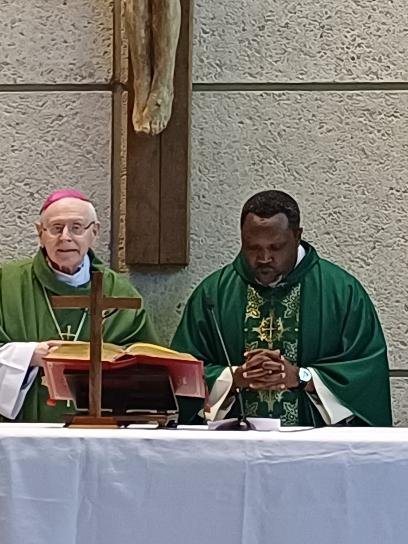
A powerful religious experience
The mass services of the Chaplaincy usually give a powerful religious experience and a display of cultural diversity, especially in occasions such as when the Bishop of Helsinki, Bishop Raimo Goyarrola, celebrated mass with the Chaplaincy on Pentecost Day, May 24, 2026.
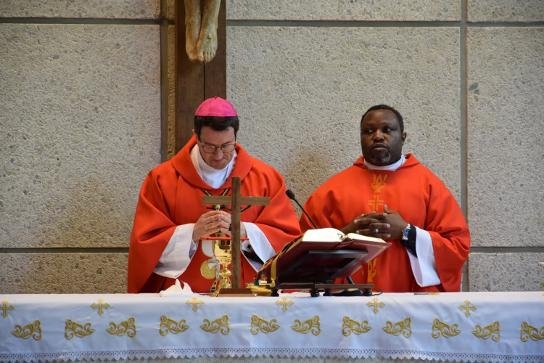
There was a similar time of spiritual joy last month (September 27, 2026) when Emeritus Bishop Teemu Sippo, former Bishop of Helsinki, visited the Chaplaincy. Bishop Teemu was the main celebrant, assisted by the Chaplain, Reverend Father Thomas Otieno.
Last Sunday, Reverend Father Bernard Sor, a Ghanaian Catholic priest based in Austria, was the main celebrant in the mass service where he performed a rite of baptism. Fr Bernard had celebrated mass a few months ago when he visited his sister and her husband in Helsinki. 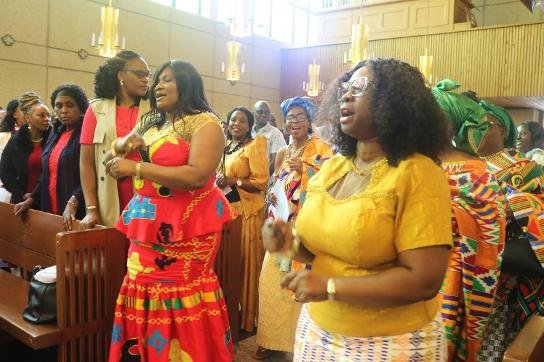
All these well-attended religious occasions indeed leave lasting memories. The homilies (peaching) by the priests usually emphasize religious tenets such as the importance of loving and serving God in truth, existing in peace with our fellow humans to promote unity in diversity, etc.
Unity in diversity and a colourful display of cultures
The African Chaplaincy church services usually produce impressive displays of diverse cultures from different parts of Africa and elsewhere. The events are often spiced by rich cultural displays of dances and colourful attires which are a delight to watch.
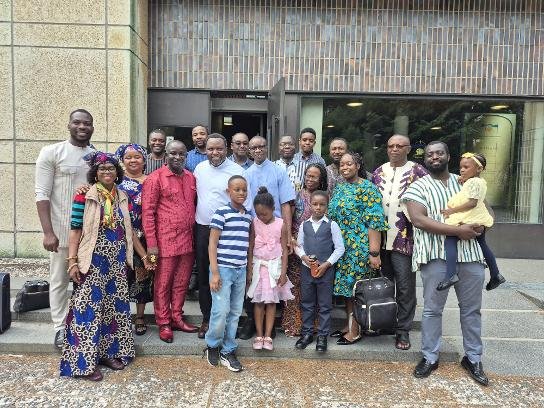
On special occasions, members of the Ghanaian Catholic community, in their gay and colourful kente attire and with adowa dance and music, usually lead the procession into the church. Other communities such as the Cameroonian, Nigerian, Kenyan and Tanzanian as well as Sudanese/South Sudanese groups also put up well-choreographed performances from their cultures.
The African Catholic Chaplaincy in Finland
The African Chaplaincy was founded on June 4, 2017, which was a Pentecost Sunday, in a Pontifical High Mass celebrated by Monsignor Emeritus Sippo S.C.I., the then Bishop of Helsinki, at the St. Mary’s Catholic Parish Church in Helsinki.
The Chaplaincy was created by Bishop Teemu in collaboration with the Diocesan body when they detected a great flocking of African immigrants to Finland, the majority of whom were Catholics. This was to give the immigrants a possibility to integrate into the Finnish society by worshiping as Catholics and in their African cultural identity.
The responsibility of the Chaplaincy was given by Bishop Teemu to Father Dr Leonard Wobilla Shwei, who is thus the first Chaplain and ably led the Chaplaincy. He was succeeded a few years ago by Father Thomas Otieno, who continues to move the Chaplaincy forward. Thank you!
GHANA MATTERS column appears fortnightly. Written in simple, layman’s terms, it concentrates on matters about Ghana and beyond. It focuses on everyday life issues relating to the social, cultural, economic, religious, political, health, sports, youth, gender, etc. It strives to remind us all that Ghana comes first. The column also takes a candid look at the meanings and repercussions of our actions, especially those things we take for granted or even ignore. There are key Ghanaian values we should uphold rather than disregard with impunity. We should not overlook the obvious. We need to search for the hidden or deeply embedded values and try to project them.
With Dr Perpetual Crentsil
SKIP THE QUEUE, TAP THE NEWS

You can now read the Ghanaian Times and The Spectator newspapers from the comfort of your device via TimesNewsPlus.
Join our WhatsApp Channel: https://whatsapp.com/channel/0029VbBElzjInlqHhl1aTU27
She did not find out he was cheating. She found out he was drowning.
It was two weeks after their beautiful wedding. The jollof was still in the fridge. A loan officer called her number-not his-and politely asked, “Madam, please tell your husband to pay his overdue loan. We have been calling him.”
That was how she discovered her new husband had entered their marriage with a hidden debt of over GH¢ 40,000. No cheating. No other woman. Just a financial secret.
And that is how many Ghanaian marriages begin to die. Not with a shout, but with a secret alert on a phone.
We prepare for the wedding. We do not prepare for the wallet.
What is money honesty?
Let me define it simply. Money honesty is not that you both earn the same. It is that you both know the same. It is the ability to sit down and say without fear:
“This is how much I earn.”
“This is how much I owe.”
“This is how I was raised to see money.”
“This is what scares me about money.”
Financial transparency is not about control. It is about clarity. You cannot build trust on top of secrets.
Many couples tell me, “Counsellor, we love each other, love will handle money.” I always answer, “Love is the car, but money honesty is the fuel. Love without honesty cannot move.”
How To Buy Your Marriage Insurance Today – My 5-Step Protocol
If you are engaged, newly married, or even 20 years in marriage, you can still fix this. At Counsellor Prince & Associates Consult—CPAC, this is what I give couples:
Step 1: The 90-Minute Money Naked Session.
No phones, no blame. Each partner writes down on paper: Monthly income, monthly debts, monthly family obligations, savings, and your biggest money fear. Then you exchange papers. Read it. Don’t react for 24 hours. Just absorb.
Step 2: Create OUR Money, YOUR Money, My Money.
You need three pots. OUR money for rent, food, school fees, utilities, properties, and the like— joint contribution. YOUR money and MY money—a small agreed allowance no one questions. This stops the feeling of being controlled.
Step 3: The No-Secret Debt Rule.
Agree from today: No new loan, no new hire purchase, no new family financial commitment above GHS 500 without telling each other first. Not permission, but information.
Step 4: Talk About Your Money Personality.
Are you a Spender or a Saver? Are you Risky or Safe? Most Ghanaian marriages are a Spender married to a Saver. Neither is wrong. But if you don’t understand your partner’s personality, you will call his saving “stinginess” and her spending “wastefulness.”
Step 5: Do a Monthly 30-Minute Money Date
Not an argument date. Light, with tea. “How did we do this month? What worried you? What should we plan for next month?” Couples who do this divorce far less.
My Final Word
Before you say “I Do” at the altar, have pre-marital counselling and also have the money talk on the sofa.
Ask your partner:
“If I lost my job today, how long can we survive?”
“What debt are you bringing into this marriage?”
“How much do you send to your family monthly and will that continue?”
If he or she gets angry that you asked, don’t get married yet. A person who is angry about accountability will be abusive about money.
Marriage insurance is not bought at Star Assurance or Enterprise. It is bought in honest conversations when no one is watching.
The wedding costs one day. The marriage costs a lifetime. Don’t enter a lifetime contract and covenant with hidden costs.
You can still insure your marriage today.
Source:
Counselor Prince Offei, CPAC’s founder, is a leading Mental Health Professional, Marriage Counsellor, Author, ADR Expert/Arbitrator, and Spectator Newspaper Columnist. He writes on relationships, marriage, parenting, special needs support, and their connection to mental health. For therapy, counselling, or enquiries, contact Counselor Prince & Associates Consult (CPAC) in Accra on 0559850604 / 0551428486.
SKIP THE QUEUE, TAP THE NEWS
You can now read the Ghanaian Times and The Spectator newspapers from the comfort of your device via TimesNewsPlus.
Join our WhatsApp Channel: https://whatsapp.com/channel/0029VbBElzjInlqHhl1aTU27