News
Teenage Pregnancy Surges in Adaklu-Waya

The Adaklu District Director of Health (DDH), Mr. Matthew Ayamba, has expressed concern over the sudden surge of teenage pregnancy cases recorded in the area. He noted that this trend not only threatens the health of young girls but also endangers their future.
According to Mr. Ayamba, 83 girls between the ages of 14 and 17 became pregnant from January to September 2025, while four girls aged 10 to 14 were also recorded as pregnant within the same period. The District Director shared this information during an educational programme on reproductive health and the general wellbeing of youth in Adaklu-Waya.
He observed that substance abuse, teenage pregnancy, and early marriages are major factors affecting youth development. Reports from local health facilities indicate that substance abuse cases are prevalent among the youth. Mr. Ayamba urged parents to take greater interest in the activities of their wards and protect them from practices that could harm their health and future. The District Health Directorate is closely monitoring developments and intensifying educational outreach across the district.
Mr. Ayamba also highlighted that anaemia has become prevalent among teenage couples due to inadequate nutrition. Additionally, he pointed out that the youth are suffering from various forms of cancer, linked to smoking, substance abuse, and alcohol consumption. “These promising young men will often only visit health facilities once they fall seriously ill, by which time they may already be experiencing mental disorders and cancer,” he stressed.
The DDH noted that regular education on adolescent reproductive health is ongoing, including the promotion of contraceptives like condoms to prevent unintended pregnancies and sexually transmitted infections.
Supporting the initiative, the Adaklu District Police Commander, Assistant Superintendent of Police (ASP) Ms. Esther Buakumah, emphasized the need for the youth to be law-abiding citizens. She warned that drug use is a crime, and offenders would face legal consequences if caught.
By Samuel Agbewode, Adaklu-Waya
Spectator
Join our WhatsApp Channel now!
https://whatsapp.com/channel/0029VbBElzjInlqHhl1aTU27











The Ghana High Commission in Abuja, Nigeria, is appealing to the public to help trace the relatives or next of kin of Apia Solomon, a Ghanaian national believed to be from Osu, Accra.
According to a public announcement by the High Commission, Mr. Solomon, born on March 6, 1960, in Accra, died on July 5, 2021, from cardiopulmonary failure.
He worked as a temporary civilian staff member at the National Defence College in Nigeria. His remains are currently being kept at the Nigerian Air Force Hospital morgue in Abuja, pending burial arrangements.
The High Commission says efforts to locate his relatives have so far been unsuccessful and is urging anyone with information about his family, friends or next of kin to come forward.
Anyone with relevant information is encouraged to contact the Ghana High Commission in Abuja.
By: Jacob Aggrey
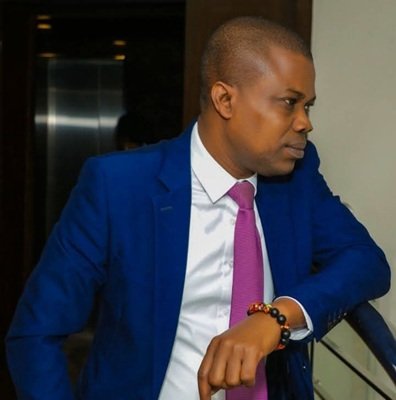
Security consultant Richard Kumadoe has blamed what he describes as flawed recruitment and incomplete background checks for some of the problems facing the Bureau of National Intelligence (BNI).
He has called on the leadership of the BNI to review the backgrounds of officers recruited during specific periods, particularly those who entered the agency under recent recruitment processes.
Speaking on the issue on TV3 yesterday, Mr Kumadoe alleged that some individuals were recruited into the intelligence agency without proper background checks and completed vetting.
“Certain categories of persons were dumped into the BNI, whose backgrounds were not checked, and whose vettings were not completed,” he stated.
He said some of the officers linked to the concerns appeared to have been recruited within the same period, making it necessary for the agency to examine the recruitment records and backgrounds of those who joined during that time.
Mr Kumadoe argued that the problems could be addressed by ensuring that recruitment procedures were properly followed and that all applicants underwent the required checks before being employed.
According to him, when the selection process is flawed, it can lead to problems within the institution.
He blamed the politicisation of security institutions, arguing that appointing people without the necessary intelligence experience and allowing political interests to influence recruitment could undermine their operations.
“When you have a selection procedure that was flawed because you politicised the place, brought in people to come and head the place when they have no business being there, they don’t know anything about being a BNI officer, they are not intelligence officers, and you flood the place with politicians and political artists, then you circumvent the standard procedure and you are going to have some of these problems,” he said.
Mr Kumadoe, however, defended the current leadership of the BNI, arguing that efforts to address longstanding problems within security institutions could bring such issues to light.
He said the leadership should be assessed in the context of the steps it is taking to improve the agency’s operations and uphold professional standards.
Drawing on his own experience in the intelligence field, he said the opportunity to serve under experienced officers had helped him develop the skills and integrity needed to contribute to national security.
By: Jacob Aggrey