Hot!
Teacher invents automated mobile urinal

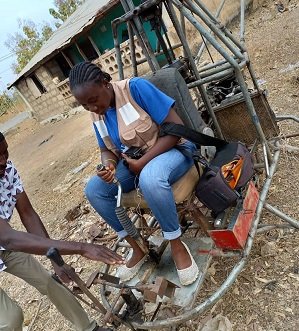
A professional teacher in the Upper West Region has manufactured an automated mobile urinal suitable enough for all occasions.
The urinal locks automatically from within soon as someone enters and opens when the user inserts a coin in a slot at the door after use.
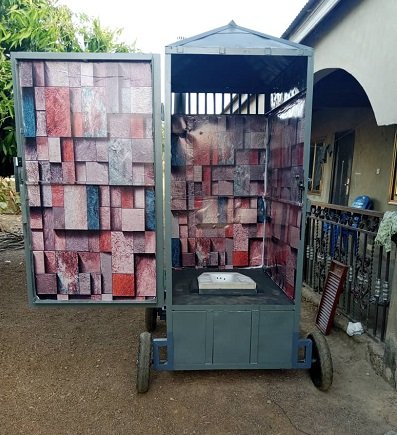
It is of utmost interest for readers to know that Mr. Alexau Issifu, an indigene of Lawra with backgroud in Geography (General Arts) has been able to manufacture implements which meet “modern standards”.
Another notable item put together by Mr Issifu is a power supply system that uses water to generate power for electrical needs, including welding and other tasks that require high voltage.
When contacted by The Spectator Newspaper he said his inventions were geared towards contributing to the advancement of the Ghanaian society citing that the mobile urinals could be acquired by individuals and placed at vantage points at the markets and lorry stations for people to patronise at a fee.
“This can help improve upon the sanitation at those places with regard to the power supply system; the gadget works when water is fed into it and does not require a large amount of water to operate”, he elaborated.
Mr Issifu explained that it all started when he was a young boy and said he used to put things together to produce simple items for play and work which later won him several awards at school.
“I have never attended a technical institution; I attended a Senior High School, went to the Training College after which I attended the university”, he stated.
The Geography tutor at the Lawra Senior High School is again putting tthings together to make modern day helicopter which, according to him, would soon be ready for test flight when all the parts are fixed.
Mr Issifu stated again that he was able to manufacture customised tools for local artisans at their request especially when those tools were not available on the market.
“The ideas on what to manufacture come to me naturally and I am able to put wires and tools together to produce them and they function perfectly but sometimes I fall on technical people for technical advice when it becomes necessary”, he said.
He explained that if given the needed support, he would open a workshop to train the youth to produce more items but was quick to express fear over potential low patronage as some people were skeptical of products made in Ghana.
He said that he manufactured the items at home and sometimes brought a few young people together to train and further stated that he would be grateful if he was able to get support from government and relevant stakeholders to expand his trade and produce more for the local market.
Lydia Darlington Fordjour, Wa


The professor who spends his days exploring the intricacies of African languages found himself at the centre of a different kind of lesson on Friday, October 2, 2026. 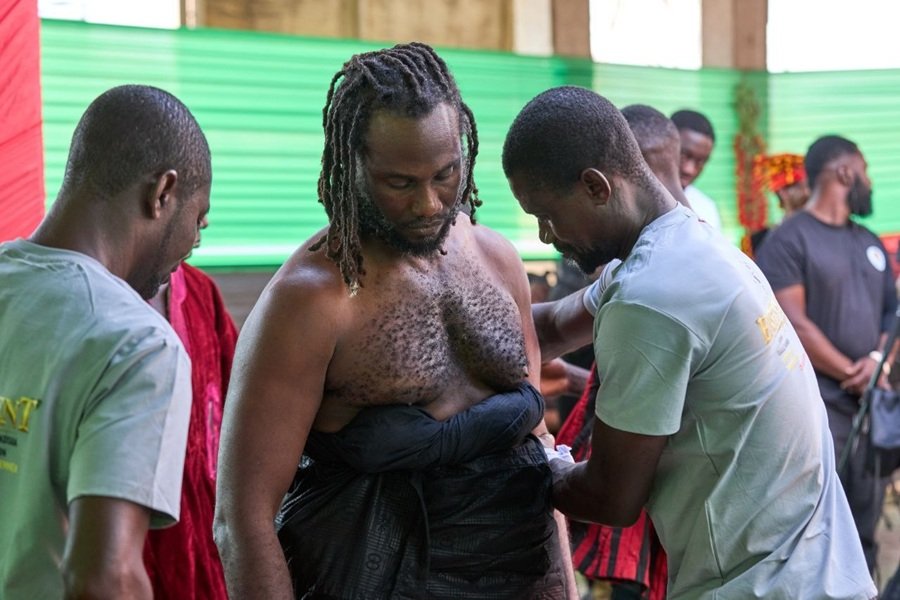
This time, there were no lecture notes, academic arguments or university classrooms. Instead, there was the weight of tradition, the rhythm of a community celebration and the solemnity of an oath at a royal palace.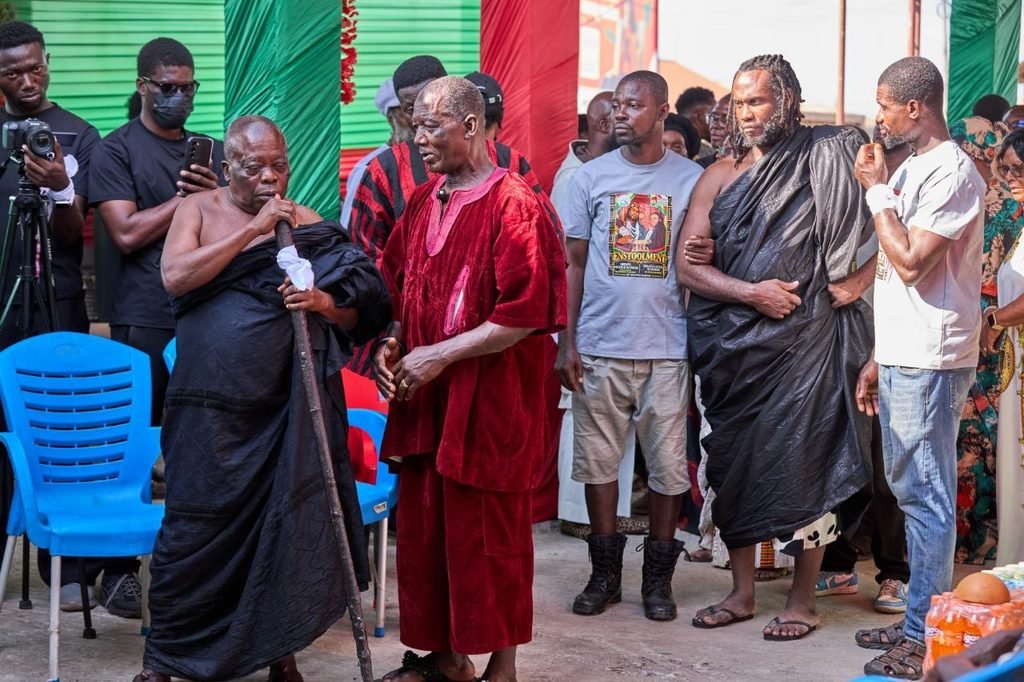
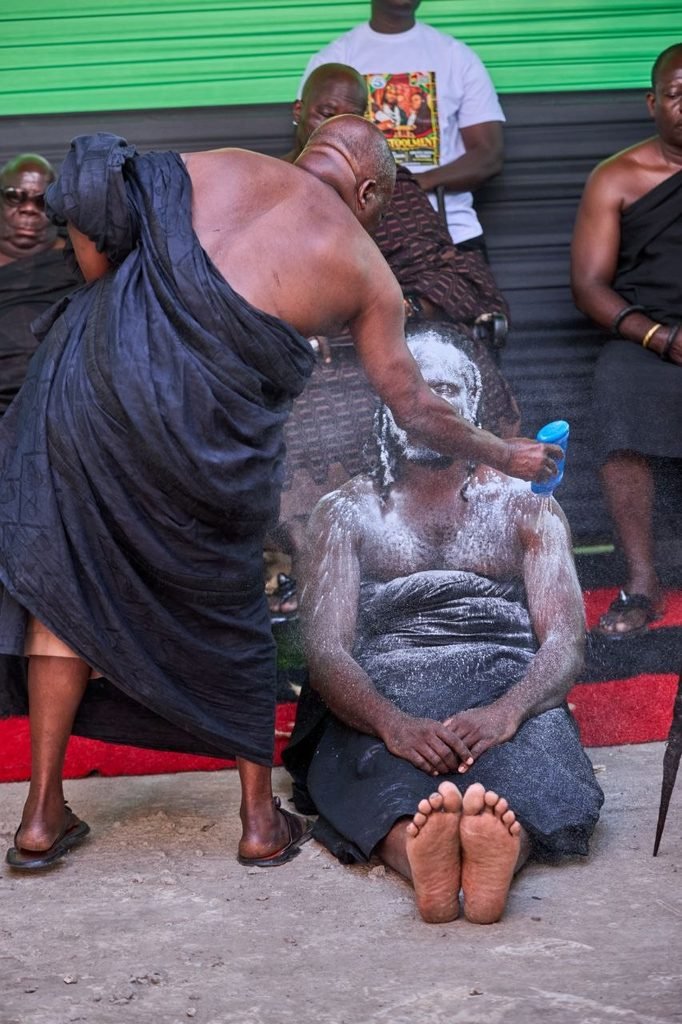
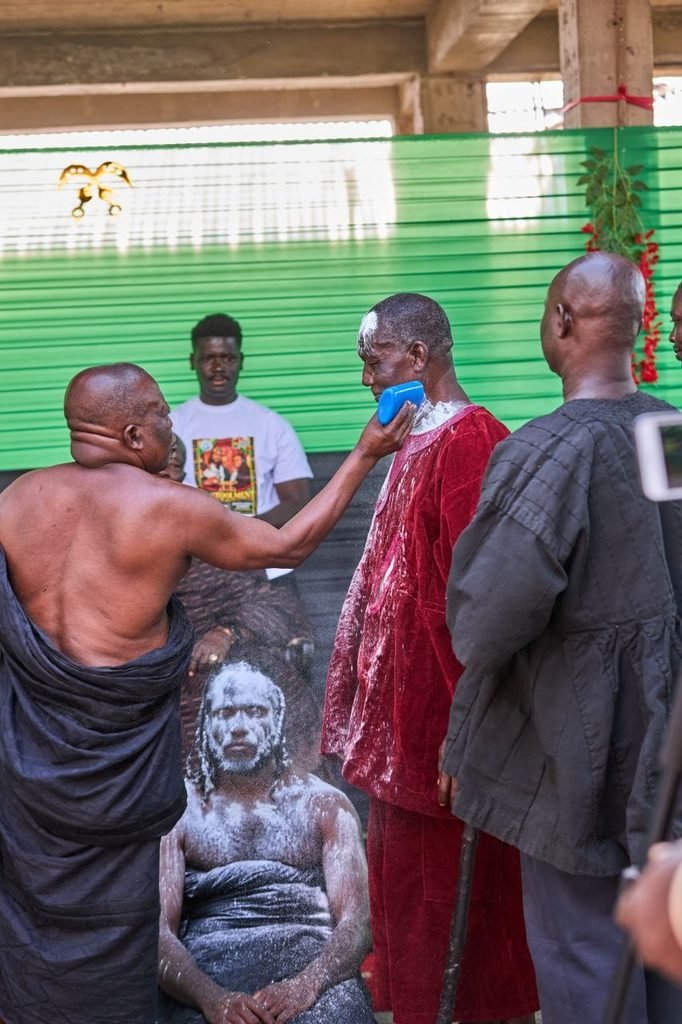
Professor Ọbádélé Kambon, a full Professor of African Linguistics at the University of Ghana, was enstooled as Apagyahene and Sunsum Ɔsahene of Akuapem Mampong in the Eastern Region in a ceremony that brought academia and traditional authority together.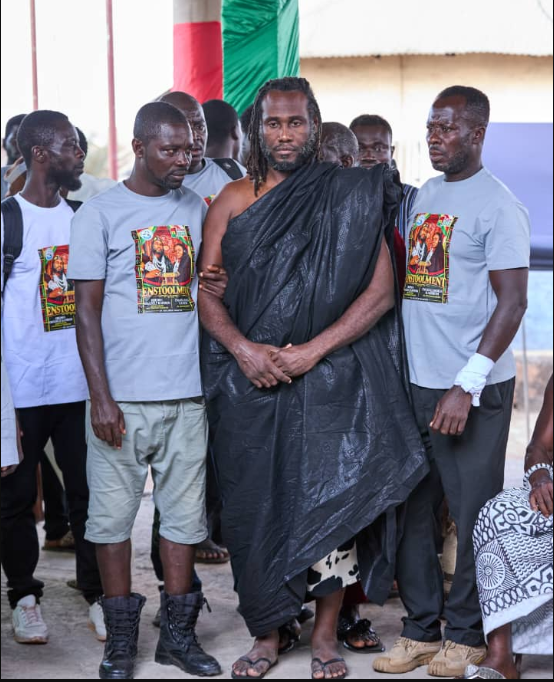
For the professor, the occasion was more than a new title. It was a moment that connected his academic interests in African languages and indigenous knowledge with the living traditions of an Akan community.
The day’s events unfolded through a series of customary observances. Kambon was first taken to the compounds of the Ɔkyeamehene and Gyasehene, where the preparations for his installation continued.
Then came the application of hyire, the white kaolin powder associated with traditional rites.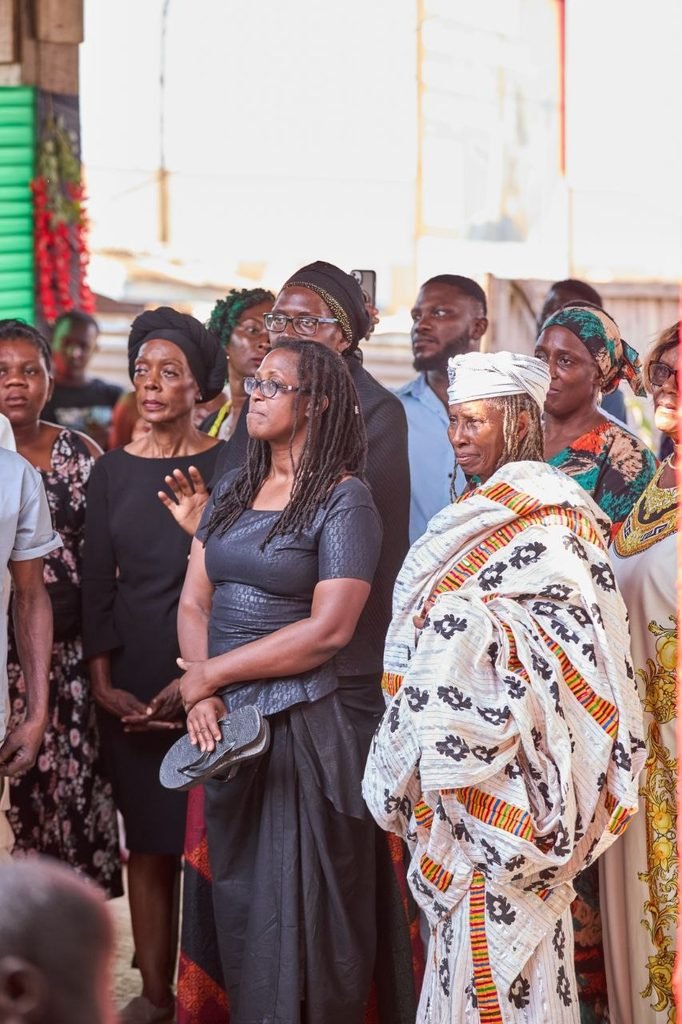
With the customary proceedings underway, the new chief was lifted onto the shoulders of celebrants and carried along the main thoroughfare of Akuapem Mampong.
The procession transformed the streets into a public stage for a ceremony rooted in the community’s traditional institutions.
There was something striking about the image, a university professor, accustomed to the measured language of academic discourse, being carried through the town in a display of traditional recognition.
Yet the celebration was not complete with the procession.
A ram was sacrificed at the Mamponghene’s compound before Kambon was taken to the palace, to swear the oath associated with his new offices.

The ceremony brought him formally into his roles as Apagyahene and Sunsum Ɔsahene.
Beyond the colourful proceedings, the titles themselves carry layers of historical meaning.
Kambon in his research explores the historical connections between Apagya and Akan political and military organisation.
Accounts cited in his work linked Apagya to an asafo, or military company, while historical writing traces an Apagya stool in Asante to the reign of Opoku Ware I in the eighteenth century.
These historical associations offer a glimpse into the institutions that have shaped Akan society over generations, although they do not automatically define the precise responsibilities of the office in Akuapem Mampong.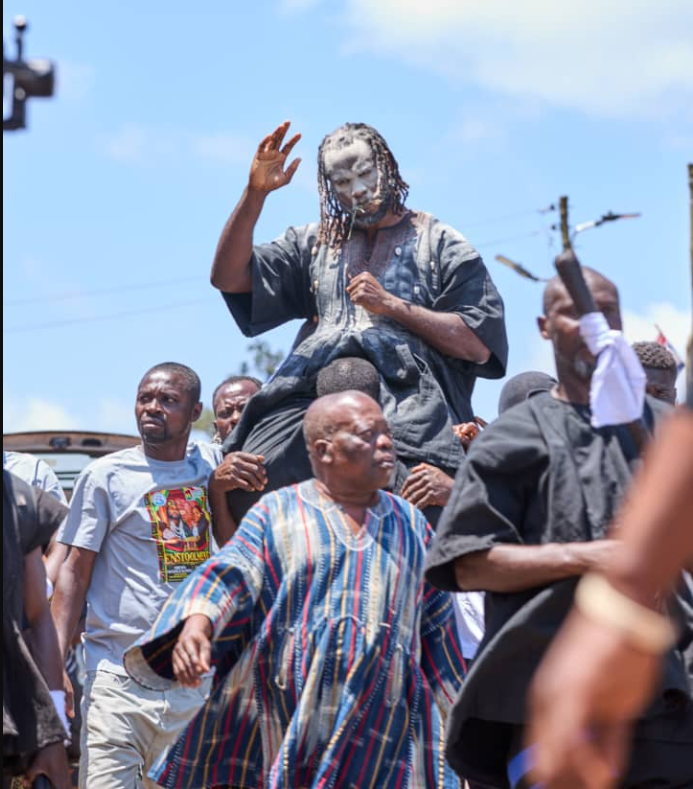
Kambon’s own professional life reflects a similar interest in preserving and examining African knowledge.
His work encompasses Akan language structure, naming practices across the Black world, proverbs and indigenous intellectual traditions.
Through Abibitumi, the platform he founded, he also promotes language learning, scholarship and cultural engagement.
But tradition was only one part of the story that day.
When the formal ceremony gave way to a reception, the occasion expanded into a celebration of three milestones: Kambon’s enstoolment, his promotion to full professor and his daughter Ama’s admission to the University of Ghana.
The gathering therefore carried a personal significance that went beyond the honours bestowed on one man. 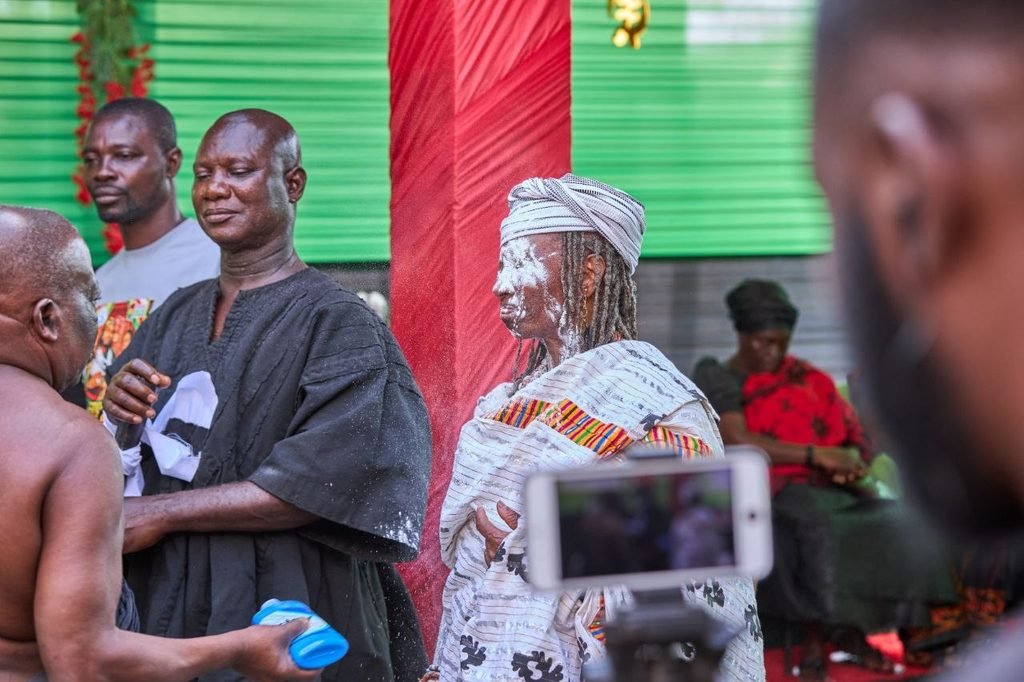
It celebrated professional advancement, the continuation of family aspirations and a connection to cultural heritage.
For a father, seeing a daughter gain admission to the same university where he holds a distinguished academic position offered another reason to celebrate.
For the professor, the moment placed family achievement alongside his own professional and traditional milestones.
Kambon had already established a place in the traditional life of Akuapem Mampɔn through an earlier installation as Banmuhene Kyidɔmhene, recorded in 2017.
His latest enstoolment adds another chapter to that relationship.
In Akuapem Mampɔn, the day brought together the university, the palace and the family table in one celebration. And for Kambon, the journey from the lecture room to the traditional procession showed how scholarship, cultural responsibility and family achievement could converge in a single memorable occasion.
By Enoch Ntiamoah Siaw
SKIP THE QUEUE, TAP THE NEWS
You can now read the Ghanaian Times and The Spectator newspapers from the comfort of your device via TimesNewsPlus.
Join our WhatsApp Channel: https://whatsapp.com/channel/0029VbBElzjInlqHhl1aTU27

Intercity STC Coaches Limited has interdicted a driver captured in a viral video allegedly hitting a Sprinter bus during an overtaking manoeuvre at Pokuase before driving away from the scene.
In a public notice, the company described the driver’s conduct as unacceptable, stressing that it did not reflect the safety standards and professionalism it upholds.
Management said it had commenced an immediate investigation into the incident and identified the driver, who has been interdicted pending the outcome of the disciplinary process.
The company added that it was awaiting an official report from the Pokuase Police Command to help establish the facts surrounding the incident.
STC reaffirmed its commitment to passenger safety and responsible road use, while thanking members of the public for bringing the incident to its attention.
Management assured the public that appropriate action would be taken following the investigation.
By: Jacob Aggrey