News
Take interest in science subjects — Mrs Phyllis Otu


- /home/u249204778/domains/spectator.com.gh/public_html/wp-content/plugins/mvp-social-buttons/mvp-social-buttons.php on line 27
https://spectator.com.gh/wp-content/uploads/2021/07/A-section-of-the-students-having-a-practical-laboratory-experiment.jpg&description=Take interest in science subjects — Mrs Phyllis Otu', 'pinterestShare', 'width=750,height=350'); return false;" title="Pin This Post">
- Share
- Tweet /home/u249204778/domains/spectator.com.gh/public_html/wp-content/plugins/mvp-social-buttons/mvp-social-buttons.php on line 72
https://spectator.com.gh/wp-content/uploads/2021/07/A-section-of-the-students-having-a-practical-laboratory-experiment.jpg&description=Take interest in science subjects — Mrs Phyllis Otu', 'pinterestShare', 'width=750,height=350'); return false;" title="Pin This Post">
Ghanaian students have been encouraged to take keen interest in the study of science subjects in order to help in the development of the country.
Mrs. Phyllis Otu, the Head of Department (HoD), Science Laboratory Technology Department (SLTD), Accra Technical University (ATU), was addressing 113 Junior High School students who received a day’s practical laboratory training at the university.
She said her presence and other females in science-related fields were enough proof to erase the erroneous opinion that science was difficult and, therefore, should be reserved for boys.
She said the programme was aimed at igniting in the youth the passion for science, adding that the department would in the future follow up to the schools to find out how the students fared in the practical training received, and identify some of their challenges.
Mrs Otu said the department offered all science courses in the university and asked the students to remain focused in their studies but eschew negative tendencies and over relying on social media to the detriment of making use of their precious time.
The programme under the auspices of Science Laboratory Technology Department (SLTD), of the Accra Technical University in collaboration with ignite Science Technology Engineering & Mathematics (iSTEM), a research group which assists students in research activities, drew students from Calvary Methodist JHS 1, Reverend Lartey Adotey Memorial School, both at Adabraka, and Labone SDA School, Accra..
The programme was under the theme “Contributing to the Scientific and Technological base of the Nation.”
The students who were divided into groups, were taught the components used in the preparation of alcohol, sanitizer, the extraction of DNA from banana and how to build a circuit to produce light.
Mr Bright Azumah, a lecturer in Biochemistry at ATU, and one of the facilitators who taught the students how to connect a battery to an L.E.D light source, use electrical energy to produce heat and mechanical energy among others, said the lessons learnt formed the foundation of building electrical devices including smart phones, building their own software and coming out with many inventions.
Mr Ayi Joshua Oku, the President of Science Laboratory Technology, ATU, reiterated the need for more students to study science and technology since it provided a lot of options and benefits to the nation.
Three participants, Alia Yusif and Nadia Ahmed both students of Labone SDA School and Barikisu Abubakar of Reverend Lartey Adotey Memorial School, were grateful for the hands-on-laboratory experience they received, adding that they had been inspired to pursue science at the higher level.
By Raymond Kyekye


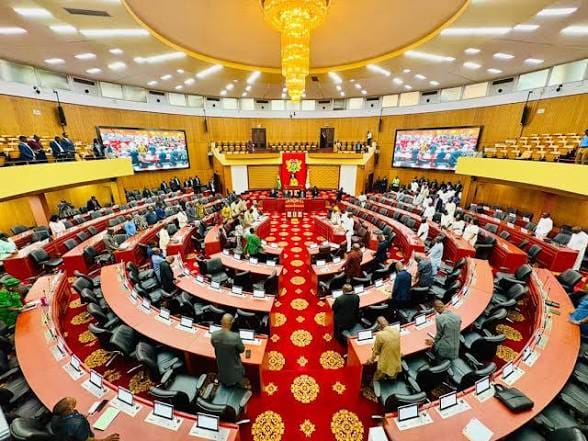
Parliament has clarified public commentary on social media regarding a notice on its notice board that read “No Vacancy for National Service Personnel 2026/2027. Kindly go for reposting.”
In a statement, signed by the Director of Media Relations, David Sebastian Damoah, Parliament said the notice has been misconstrued and was not a policy statement, a freeze on national service placements, or a change in its support for the National Service Scheme.
According to Parliament, the notice was a routine administrative message to prospective personnel who reported to the House, informing them that it has received more personnel than it can accommodate for the 2026/2027 service year and that they should seek reposting to other institutions.
It said it remains committed to the National Service Scheme and values the contribution of service personnel to its work, and regrets any confusion or inconvenience the wording may have caused.
By Edem Mensah-Tsotorme
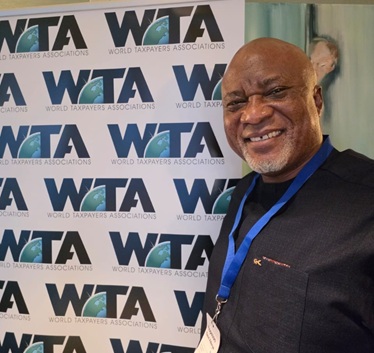
Ghanaian public advocate Hopeson Yaovi Adorye has been elected to the Board of Directors of the World Taxpayers Association (WTA).
The election took place on Sunday, October 5, 2026, during the Association’s conference in Kraków, Poland.
His election marks a significant addition to his international leadership portfolio and provides a platform for Ghanaian and African perspectives to contribute to global discussions on taxpayer rights, responsible taxation, transparency and prudent management of public resources.
Reacting to his election, Mr. Adorye expressed appreciation to the leadership and members of the WTA for the confidence reposed in him.
“I am deeply honoured by this confidence and conscious of the responsibility that comes with it. Taxpayers are at the heart of every economy, and they deserve fairness, transparency, accountability and value for the taxes they pay. I look forward to working with colleagues from across the world to strengthen the voice of taxpayers and promote responsible fiscal governance,” he said.
According to him, taxation should not be viewed solely as a mechanism for raising government revenue, but also as an important component of the social contract between citizens and the state.
Mr. Adorye said governments have a responsibility to ensure taxes are collected fairly and public resources are utilised efficiently to deliver quality infrastructure, healthcare, education, security and other essential services.
His election also creates an opportunity to bring African experiences into international conversations on taxation and public expenditure.
Mr. Adorye, who is Executive Director of Taxpayers League Ghana, has previously served as Global Board Chairman of the International Youth Network for UN Security Council Resolution 2250, an NGO associated with the United Nations Economic and Social Council (ECOSOC).
He is expected to use his new role to champion fiscal accountability, taxpayer education, good governance and stronger citizen participation in public financial management.