Hot!
Staff of 3 state institutions to be prosecuted for misappropriating Covid funds


- /home/u249204778/domains/spectator.com.gh/public_html/wp-content/plugins/mvp-social-buttons/mvp-social-buttons.php on line 27
https://spectator.com.gh/wp-content/uploads/2022/03/Eric-Oduro-Osae-606x424-1.jpeg&description=Staff of 3 state institutions to be prosecuted for misappropriating Covid funds', 'pinterestShare', 'width=750,height=350'); return false;" title="Pin This Post">
- Share
- Tweet /home/u249204778/domains/spectator.com.gh/public_html/wp-content/plugins/mvp-social-buttons/mvp-social-buttons.php on line 72
https://spectator.com.gh/wp-content/uploads/2022/03/Eric-Oduro-Osae-606x424-1.jpeg&description=Staff of 3 state institutions to be prosecuted for misappropriating Covid funds', 'pinterestShare', 'width=750,height=350'); return false;" title="Pin This Post">
The Director-General of the Internal Audit Agency (IAA), Dr Eric Oduro Osae, has revealed that staff of three state institutions will soon be prosecuted for misappropriating Covid-19 funds.
According to him, the Agency is collaborating with the Economic and Organised Crime Office (EOCO) to fast track the processes for the prosecution.
Dr Oduro Osae was speaking at the Ghana Anti-Corruption Coalition public forum on the accountability gap in Covid-19 responses of Ghana.
He said in 2021, they started receiving internal audit reports from the internal auditors as far as the Covid-19 expenditure audit is concerned.
“We started reviewing them in 2021 and some of the expenditure areas were revealing. Areas where we have challenges we do a follow up. A team is sent to the field to go and validate.
“Those we think have criminal consequences, we would work with EOCO to prosecute them. I’m not allowed to indicate what we are doing or the level of prosecution but I can assure you that at the moment, we are working with EOCO to prosecute three institutions,” he disclosed.
He added that the IAA has already set up an audit report review panel to audit all Covid-19 spending.
“As far as the Internal Audit Agency is concerned, we continued to pursue and establish how total Covid-19 expenditure were spent and whether we are getting value for money.”
“The challenge with Covid-19 expenditure is that it is bothered by service delivery which we use financial audit. This won’t aid in us getting the needed results; we need a performance audit,” he stated.
Meanwhile, the Chairman of Parliament’s Public Accounts Committee, James Klutse Avedzi, said the House will continue to look into the infractions of COVID-19 expenditure and those found guilty recommended for prosecution.
According to him, persons involved in the misappropriation of the funds will not be spared.
“There is always a gap of a year or two between the time the report is issued and the time the Public Account Committee discussed the report. Covid-19 expenditure is something we did not plan for and in pandemic of this nature it’s an opportunity for some people to enrich themselves so it will be good to look into it and take it as a project to ensure that people don’t abuse the system”, he revealed.
The Minority in Parliament has filed a Private Member’s motion for an inquiry into the expenditure made by the government during the Covid-19 period.
The Minority Leader, Haruna Iddrisu; the Minority Chief Whip, Mohammed Mubarak Muntaka and Minority Spokesperson on Finance, Cassiel Ato Forson filed a motion to Alban Bagbin, asking for a bipartisan probe into the ¢8.1 billion expenditure by government.
That motion was admitted.
However, the First Deputy Speaker, who subsequently presided over proceedings in the House in the Speaker’s absence, dismissed the motion.
Currently, the Minority is readying to challenge the dismissal of their motion.
Explaining the Majority’s stance against the motion, Deputy Majority Leader, Alexander Afenyo-Markin, stated that the auditing of the Covid expenditure should be left to the appropriate state agencies to deal with.
On Wednesday, February 23, Speaker Alban Bagbin expressed dissatisfaction with his deputy, Joesph Osei-Owusu, for dismissing the motion and described the act as illegal and unconstitutional.
Source: www.myjoyonline.com


The Tema Regional Police Command has arrested a 32-year-old man for allegedly posing as a soldier and extorting money from unsuspecting members of the public at Ashaiman.
The suspect, identified as Bright Atsu Kudiabor, was arrested by the Ashaiman Police on Wednesday, September 16, 2026, at about 7:00 a.m.
According to the Police, he was arrested at an area known as “I Shall Return”, where he was allegedly parading himself as a soldier and demanding money from people.
The Police said Kudiabor, who is an ex-convict, was initially arrested by personnel of the Ghana National Fire Service in Ashaiman with assistance from other members of the public.
A search conducted on him after he was handed over to the Police reportedly led to the recovery of a set of military camouflage uniform.
The suspect is currently in Police custody and assisting with investigations.
The Tema Regional Police Command said he would be processed for court after investigations are completed.
The Police urged the public to remain vigilant and report anyone who falsely presents themselves as a soldier or a member of another security agency to deceive or extort money from the public.
By: Jacob Aggrey
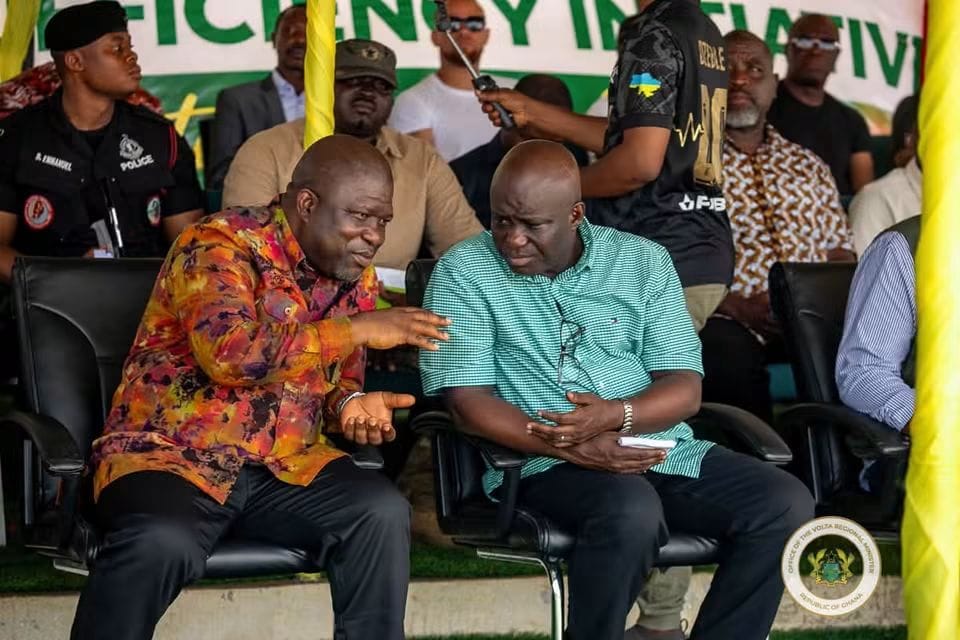
Volta Regional Minister, James Gunu, says the Volta Region holds enormous agricultural potential and efforts must be geared towards connecting farmers to the needed resources to unlock that potential.
He said focus must be on linking farmers to resources, technology, financing and markets to increase production, create jobs and build sustainable livelihoods.
Hon. Gunu made the remarks at the national launch of the Ghana Tomato Self-Sufficiency Initiative (GHATSI) held at Anloga in the Volta Region on Tuesday, September 15.
The initiative, under the theme “Produce at Home. Feed the Nation. Export the Surplus,” seeks to boost local tomato production, processing and marketing while reducing Ghana’s heavy reliance on imported tomatoes.
The launch was attended by the Minister for Food and Agriculture, Eric Opoku, his Deputy, John Setor Dumelo, Feed Ghana Coordinator, Bright Demordzi, Members of Parliament, traditional leaders, MMDCEs, farmers and other stakeholders.
Mr.Gunu expressed appreciation to the Minister for Food and Agriculture for the support announced for the region, including two excavators, 200 cartons of organic fertiliser, and GH¢200,000 for Ms. Kuatudzo Esther Dela, a tomato farmer and processor from Ziope.
He described the initiative as an important step towards making agriculture a stronger driver of food security, job creation and economic growth in the Volta Region.
By Edem Mensah-Tsotorme