News
Seek early care to avoid strokes …Doctor warns

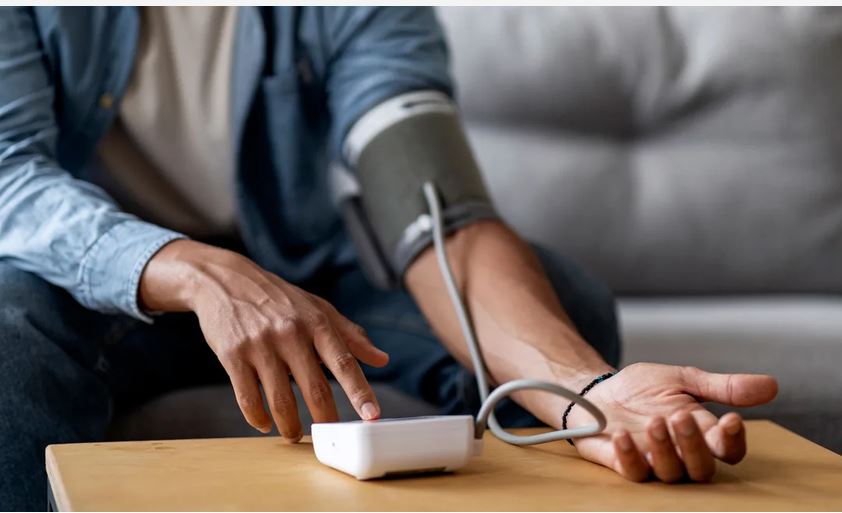
Dr Saiid Kwasi Adu, a health professional, has cautioned the public to be aware of symptoms and signs of stroke.
He said, before one suffered from stroke signs like, palpitation of the heart, pains in the heart, missing heartbeat, various forms of headaches, pains in the chest, breathing difficulty, dizziness, sleeplessness, occasional weakness in the whole body and tiredness after the least work would manifest.
Others are movements in the body, pulling in the calf and thighs, pinching pins in the body, spasm in the muscles, numbness and heaviness in the head, or any other part of the body like the legs or feet.
He said that there might be general feeling of heaviness in the whole body, burning sensation, sensation of movements on the skin and purposeless movements in the limbs.
Dr Adu said people with abnormal blood pressure should be careful of these signs and report to the doctor for the causes and treatment.
Dr Adu said anytime there was stroke, the nerves and the brain were seriously damaged.
The nerves are a tiny web-like threads which cannot be seen with the naked eyes. It is the continuation of the brain in the spinal cord and the body.
It carries messages from the body and the environment to the brain for interpretation. The brains also send information through the nerves to command parts of the body to act.
Dr Adu added that no treatment of stoke would be effective without treatment of the brains and nerves.
He noted that there was no drug that treated every stroke patient.
This is because stroke is a condition but not one disease.
However, the best opportunity was to know the causes of stroke and start treatment as early as possible, adding that giving the right treatment after early diagnosis was possible to reverse the condition completely. –GNA

News
GES directs Ashanti Regional, Obuasi Municipal Education Directors to step aside over Obuasi SHTS scandal

The Management of the Ghana Education Service (GES) has directed the Ashanti Regional Director of Education, Dr. William Amankrah Appiah, and the Obuasi Municipal Director of Education, Mr. Kwamena Owusu-Nketiah, to step aside with immediate effect.
The directive forms part of ongoing investigations into allegations of sexual misconduct involving the headmaster of Obuasi Senior High Technical School (SHTS), Mr. Zakaria Abdulai.
According to GES, the decision is intended to ensure that the investigations proceed without potential interference, nor the perception of it.
The two directors are to hand over their offices and all state property in their possession to the Deputy Ashanti Regional Director of Education, Mr. Thomas Kwame Boateng.
Management added that the headmaster, Mr. Zakaria Abdulai, also remains interdicted and therefore urged the public to ignore any news circulating that he has been cleared.
Management is calling for calm, support and cooperation as thorough investigations into the matter continue.
By Edem Mensah-Tsotorme
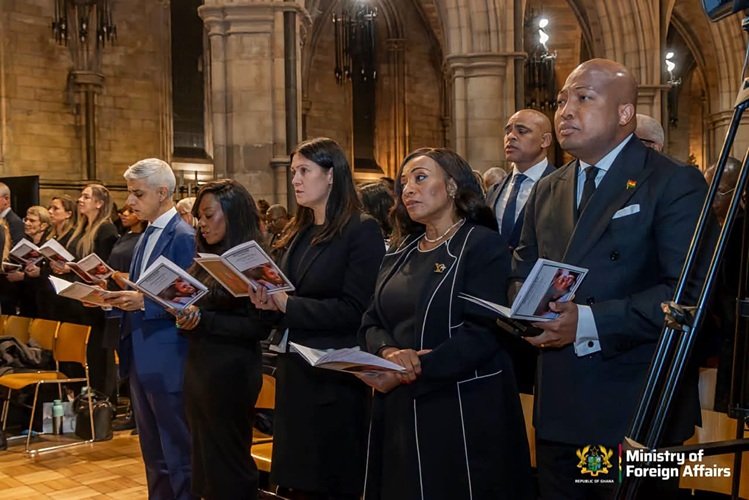
The Minister for Foreign Affairs, Samuel Okudzeto Ablakwa, has joined the family of the late Professor Jason Atta Kwei Arday, the Ghanaian community in the UK, and other dignitaries for a memorial service in Southwark, UK.
In a post, Mr. Ablakwa described the service as deeply moving and unforgettable, held in honour of the late professor’s memory.
According to him, in keeping with the government’s pledge, he joined the family, Ghana’s High Commissioner to London, British MPs, Ministers, the Mayor of London, Cambridge scholars, Prof. Arday’s students and loved ones to pay respects and honour his inspiring legacy.
Mr. Ablakwa noted that Prof. Arday’s accomplishments as the youngest Black professor appointed at the University of Cambridge and his widely appreciated charitable contributions will continue to inspire generations.
“The Government and People of Ghana will continue to stand by our compatriots everywhere they are in the world. As we do so, we profess our commitment to justice, equality and the creation of a new world,” he said.
He prayed for fortitude for the family in what he described as an extraordinarily difficult time.
“We shall always remember Prof. Arday for his response when asked what he will wish to do to change the world: ‘I would take a thread and a needle, and I’d interweave love into our society’,” Mr. Ablakwa added.
By Edem Mensah-Tsotorme