Hot!
Rise in unregulated world of Accra’s ‘shadow boys’

- /home/u249204778/domains/spectator.com.gh/public_html/wp-content/plugins/mvp-social-buttons/mvp-social-buttons.php on line 27
https://spectator.com.gh/wp-content/uploads/2024/07/A-popular-loading-boy-at-the-Odawna-trotro-station-happily-going-about-his-work.jpg&description=Rise in unregulated world of Accra’s ‘shadow boys’', 'pinterestShare', 'width=750,height=350'); return false;" title="Pin This Post">
- Share
- Tweet /home/u249204778/domains/spectator.com.gh/public_html/wp-content/plugins/mvp-social-buttons/mvp-social-buttons.php on line 72
https://spectator.com.gh/wp-content/uploads/2024/07/A-popular-loading-boy-at-the-Odawna-trotro-station-happily-going-about-his-work.jpg&description=Rise in unregulated world of Accra’s ‘shadow boys’', 'pinterestShare', 'width=750,height=350'); return false;" title="Pin This Post">
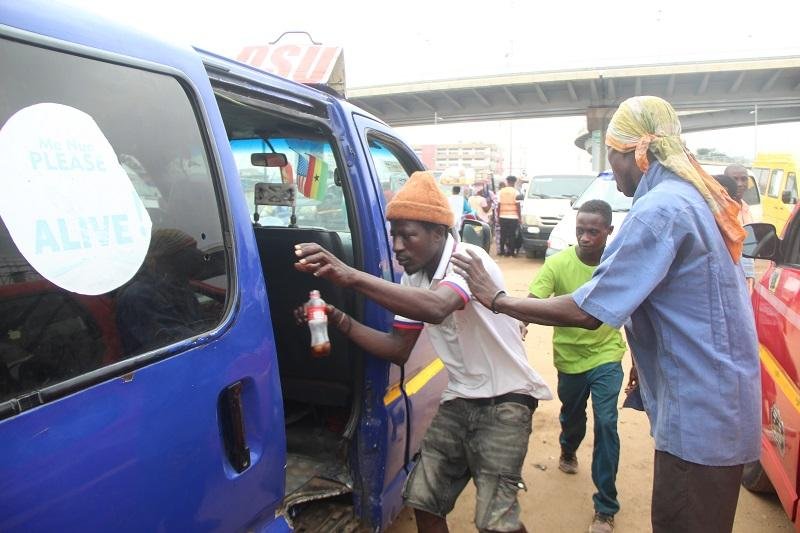
A popular loading boy at the Odawna trotro station happily going about his work
Amidst the chaos of honking cars and shouting bus conductors at various bus terminals in Accra, these group of young men who call themselves ‘shadow boys’ can be seen darting between vehicles, while directing potential commuters to commercial buses for transport.
The story of the ‘shadow boys’ is one of resilience in the face of increasing unemployment and also, a testament to the struggling but evolving transportation system in Ghana.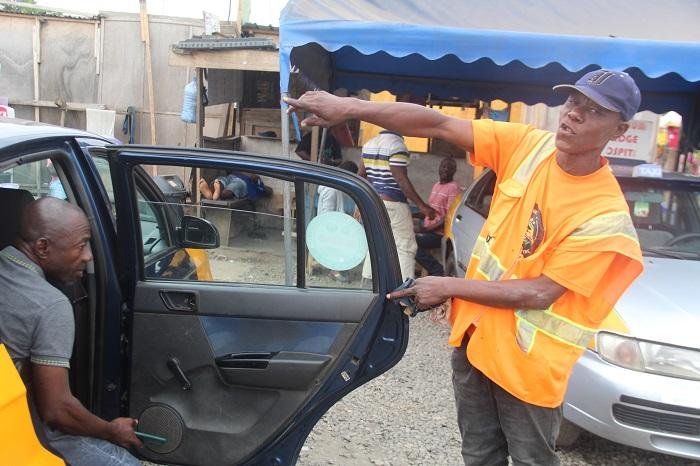
According to a 2023 report from Trading Economics, Ghana’s unemployment rate has risen to 3.6 per cent, with indications of rising further at the end of 2024.
Although this number may seem modest compared to other African countries, the reality is that many young people like the ‘shadow boys’ are forced to take up unconventional jobs to survive amidst rising cost of living in the country.
The lack of limited jobs and opportunities has led to a surge in unconventional occupations, with ‘shadow boys’ being a prime example.
In recent times, they have increased significantly in number and can be seen at almost every bus terminal and loading station in Accra; where they abound and go about their daily operations. Although an unconventional job, ‘shadow boys’ depend on this work for their daily survival. Their job can be described as a hand-to-mouth work because generally, they struggle to get reasonable profit for their labour.
Currently, they receive a commission which ranges from GHȻ5 to GHȻ10 per each bus they fill. This price is however subject to change depending on the number of passengers, they are able to bring for each bus. On good days, they can make up to GHȻ150 but on normal days, they settle with a paltry GhȻ50.
Kwame Foster, is a 29-year-old ‘shadow boy’ at Circle. According to him, their job description is to help official bus conductors get passengers for their commercial vehicles, commonly referred to as ‘trotro’ in Ghana.
Kwame, who has been in this business since 2007 after he got injured as a bus conductor, said he chose to become a ‘Shadow Boys’ because he could not get another decent job to make ends meet. Kwame’s story is a reflection of the lives of many others who joined the business due to lack of alternative job prospects.
The life of ‘shadow boys’ is considerably difficult. They face numerous challenges including physical danger, harassment, unpredictable income and social stigma. Many people see them as nuisances and criminals, rather than hardworking individuals.
Faced with unpredictable income, their earnings vary greatly, with some days yielding nothing significant. The lack of recognition and regulation also exposes them to exploitation and abuse. Despite these struggles, the ‘shadow boys’ persevere, driven by the need to support themselves and their families.
Though informal, ‘shadow boys’ have become a third wheel in the transportation ecosystem. In areas like Madina, Circle, and other major transport hubs, they have become an integral part of the system, as daily they energetically solicit passengers for commercial transport vehicles.
Aside this and their work being a source of livelihood for them, they have also made easier the work of bus conductors. In essence, they contribute to the overall efficiency of the transport system by reducing the stress and uncertainty associated with finding the right vehicle for transit and ensuring that vehicles were fully occupied-thus reducing the number of empty vehicles on the road.
However, their methods have also been criticised for being overly aggressive and exploitative. Some drivers have reported being forced to pay exorbitant fees, with threats of violence or damage to their vehicles if they refuse.
Others also described instances where they refused services of ‘shadow boys’ who still insisted on being paid after getting passengers for the car. This raises concerns about the lack of regulation and oversight in the industry.
Their services may seem invaluable but general concerns surrounding their practices have sparked debate and raised questions about the legal framework governing their activities.
Ghanaian law does not specifically address the activities of ‘shadow boys.’ However, the Road Traffic Act (2004) and the Transport Ownership and Regulation Act (2015) provide some insight. While these laws primarily focus on vehicle operation and transportation services, they do not explicitly mention the role of intermediaries like ‘shadow boys.’
Again, the Ghana Road Transport Coordinating Council (GRTCC) regulates the transport sector, but its mandate does not extend to the activities of ‘shadow boys.’ Rather, the GRTCC’s focus lies in ensuring compliance with safety standards, vehicle maintenance, and fare regulation.
In the absence of specific legislation, ‘shadow boys’ operate in a legal gray area. Their services, though valuable to some, are often characterised by unregulated pricing and strong-arm tactics due to the absence of regulation for their service.
This, has led to increased calls for regulation and oversight to protect drivers, bus conductors, passengers, and the transport industry as a whole.
Some proposed that ‘shadow boys’ be licensed and registered, with clear guidelines on their fees and conduct. Others suggest that their services be integrated into the formal transport sector, ensuring fair compensation and adherence to established standards.
As Ghana’s transport industry continuous to evolve, the role of ‘shadow boys’ cannot be ignored. While their unconventional employment provides a means of livelihood, it also highlights the need for comprehensive regulation and protection for all stakeholders involved.
The Ministry of Transport is therefore urged to address the legal vacuum surrounding ‘shadow boys’ by developing policies to regulate their operations.
In conclusion, the activities of ‘shadow boys’ underscores the resourcefulness and adaptability of Ghanaians in the face of economic challenges. However, their activities must be regulated to ensure fairness and protection for all parties involved.
As the transport industry continues to grow, it is essential that policymakers and stakeholders work together to create a framework that acknowledges the contributions of ‘shadow boys’ while promoting a more formalised, efficient and equitable transport system.
University of Media, Arts
and Communication-Institute
of Journalism (UniMAC-IJ)
By Eyram Vordzorgbe


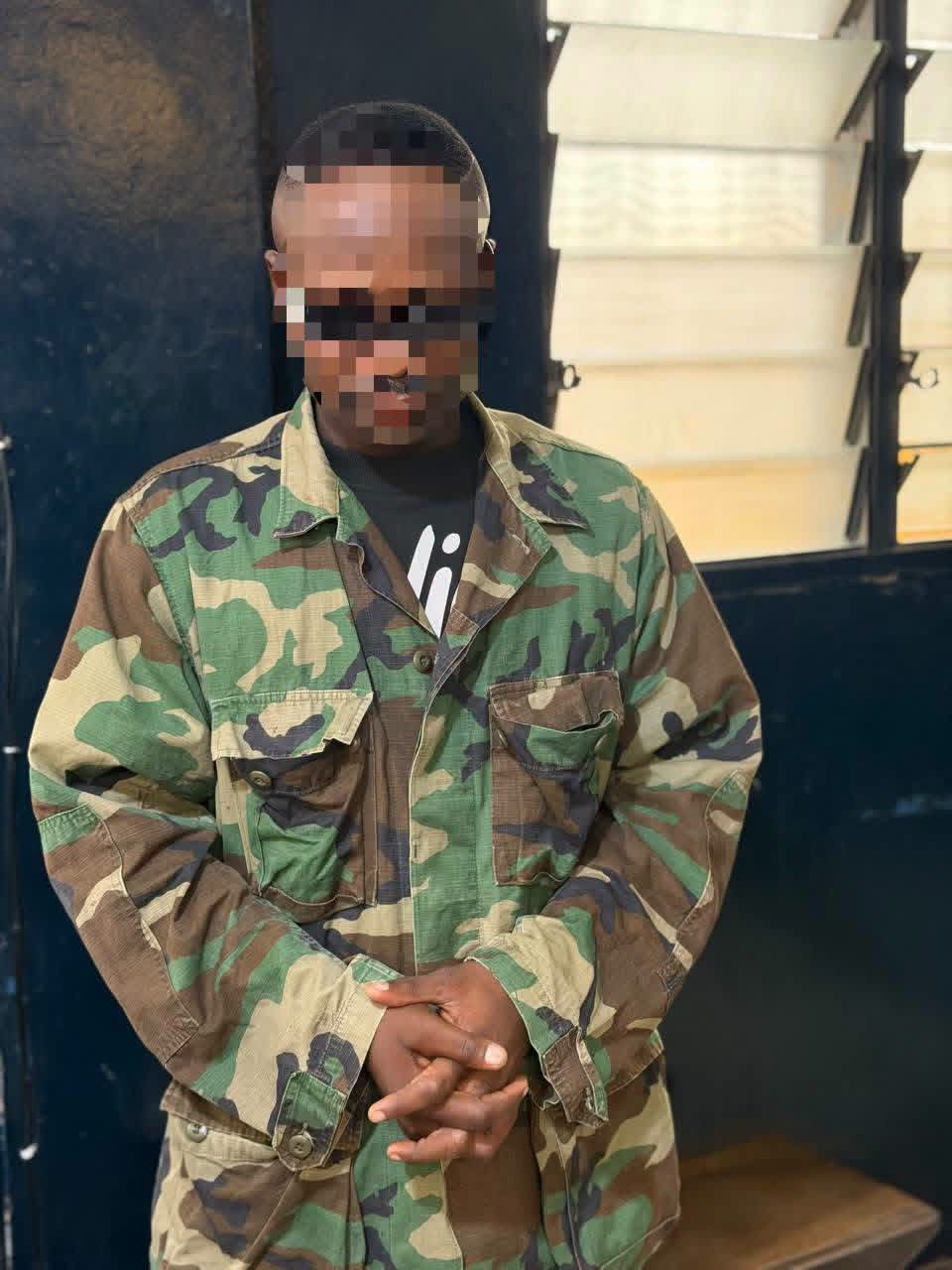
The Tema Regional Police Command has arrested a 32-year-old man for allegedly posing as a soldier and extorting money from unsuspecting members of the public at Ashaiman.
The suspect, identified as Bright Atsu Kudiabor, was arrested by the Ashaiman Police on Wednesday, September 16, 2026, at about 7:00 a.m.
According to the Police, he was arrested at an area known as “I Shall Return”, where he was allegedly parading himself as a soldier and demanding money from people.
The Police said Kudiabor, who is an ex-convict, was initially arrested by personnel of the Ghana National Fire Service in Ashaiman with assistance from other members of the public.
A search conducted on him after he was handed over to the Police reportedly led to the recovery of a set of military camouflage uniform.
The suspect is currently in Police custody and assisting with investigations.
The Tema Regional Police Command said he would be processed for court after investigations are completed.
The Police urged the public to remain vigilant and report anyone who falsely presents themselves as a soldier or a member of another security agency to deceive or extort money from the public.
By: Jacob Aggrey
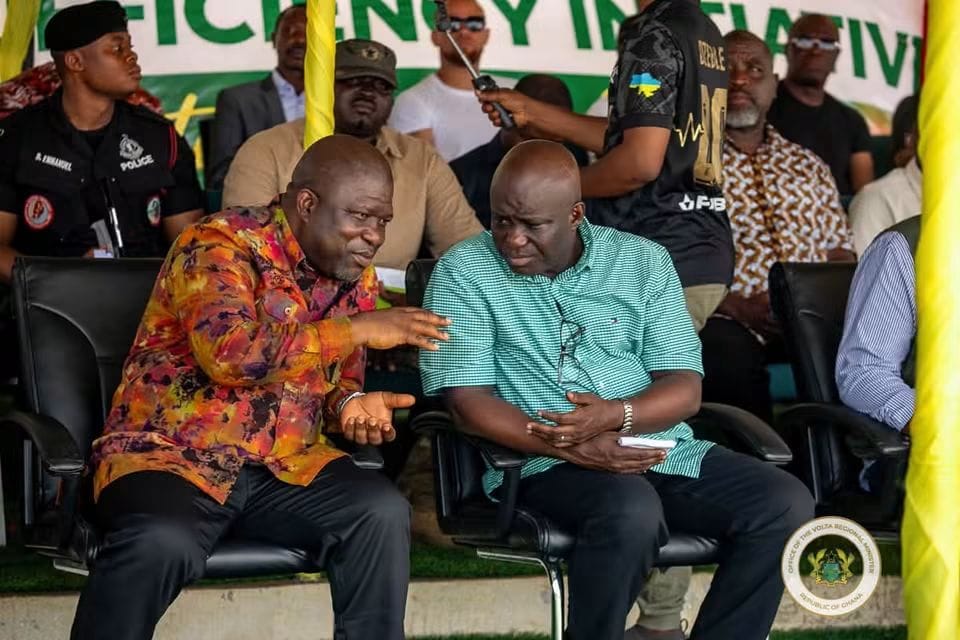
Volta Regional Minister, James Gunu, says the Volta Region holds enormous agricultural potential and efforts must be geared towards connecting farmers to the needed resources to unlock that potential.
He said focus must be on linking farmers to resources, technology, financing and markets to increase production, create jobs and build sustainable livelihoods.
Hon. Gunu made the remarks at the national launch of the Ghana Tomato Self-Sufficiency Initiative (GHATSI) held at Anloga in the Volta Region on Tuesday, September 15.
The initiative, under the theme “Produce at Home. Feed the Nation. Export the Surplus,” seeks to boost local tomato production, processing and marketing while reducing Ghana’s heavy reliance on imported tomatoes.
The launch was attended by the Minister for Food and Agriculture, Eric Opoku, his Deputy, John Setor Dumelo, Feed Ghana Coordinator, Bright Demordzi, Members of Parliament, traditional leaders, MMDCEs, farmers and other stakeholders.
Mr.Gunu expressed appreciation to the Minister for Food and Agriculture for the support announced for the region, including two excavators, 200 cartons of organic fertiliser, and GH¢200,000 for Ms. Kuatudzo Esther Dela, a tomato farmer and processor from Ziope.
He described the initiative as an important step towards making agriculture a stronger driver of food security, job creation and economic growth in the Volta Region.
By Edem Mensah-Tsotorme