News
Respond to Ofori-Atta’s suit and stop the unnecessary presser – Frank Davies to Special Prosecutor


- /home/u249204778/domains/spectator.com.gh/public_html/wp-content/plugins/mvp-social-buttons/mvp-social-buttons.php on line 27
https://spectator.com.gh/wp-content/uploads/2025/03/FB_IMG_1742231188561-1.jpg&description=Respond to Ofori-Atta’s suit and stop the unnecessary presser – Frank Davies to Special Prosecutor', 'pinterestShare', 'width=750,height=350'); return false;" title="Pin This Post">
- Share
- Tweet /home/u249204778/domains/spectator.com.gh/public_html/wp-content/plugins/mvp-social-buttons/mvp-social-buttons.php on line 72
https://spectator.com.gh/wp-content/uploads/2025/03/FB_IMG_1742231188561-1.jpg&description=Respond to Ofori-Atta’s suit and stop the unnecessary presser – Frank Davies to Special Prosecutor', 'pinterestShare', 'width=750,height=350'); return false;" title="Pin This Post">
A member of former Finance Minister, Ken Ofori-Atta’s legal team, Frank Davies, has criticised the Special Prosecutor, Kissi Agyabeng for what he describes as “unnecessary publicity stunts” in his attempt to probe his client for alleged corruption and corruption-related offences.
Speaking in an interview on Joy FM’s Middaynews on Monday, March 17, Mr Davies expressed his growing disappointment with the OSP’s handling of the case, insisting that the office should respond to the latest suit filed against him by Mr Ofori-Atta rather than running to the media.
“You have been served with an originating notice of motion. The OSP has conceded that the process has been duly served. As a trained lawyer occupying such an esteemed office, what should he have done? Respond to the motion—not engage in knee-jerk reactions, showboating, and unnecessary attempts to court public attention through press conferences,” Mr Davies asserted.
The criticism comes after the OSP issued a stern warning to Mr Ofori-Atta, stating that he would be re-listed as a wanted person if he fails to appear for questioning on June 2, 2025.
The latest stance of the OSP comes after Ken Ofori-Atta filed a suit against him, seeking an injunction to prevent his reclassification as a wanted person.
His legal team argues that the OSP’s actions are baseless and unjustified, emphasising that he has cooperated with investigations through his lawyers. They claim that any attempt to label him a fugitive would be unfair and damaging to his reputation.
After the former Finance Minister assured authorities of his cooperation with ongoing corruption investigations, the OSP had previously removed his name from its wanted list in good faith.
In a statement responding to a lawsuit filed by Mr Ofori-Atta, challenging the OSP’s earlier decision to declare him a fugitive, the prosecuting authority reiterated its stance. According to the OSP, Mr Ofori-Atta had personally requested his removal from the wanted list, providing assurances that he would make himself available for questioning on a specific date.
Mr Davies, however, questioned the OSP’s motives, insisting that his client remains available and that there is a prior agreement for his appearance in June.
“Our client is still outside the country for a reason, and this reason has been communicated through proper procedures. What else should be done? The OSP agreed that he would appear on June 2. Why not wait until then? This is an act of extreme bad faith, unethical and unprofessional conduct coming from a trained lawyer,” Mr Davies argued.
He further emphasised that there are legal processes available to ensure Mr Ofori-Atta returns to Ghana if necessary, dismissing claims that his client is evading justice.
Source: Myjoyonline.com










The Accra Regional Police Command has arrested former professional boxer Michael Ayitey Okai, popularly known as “Ayitey Powers,” over an alleged threat of death against the Director-General of the National Sports Authority, Yaw Ampofo.
According to the Police, the 46-year-old former boxer was arrested on Monday, August 24, 2026, in connection with the alleged threat.
The Police said the arrest followed a video circulating on social media in which Ayitey Powers is alleged to have issued the threat against Mr Ampofo.
He is currently in Police custody and is assisting with investigations.
The Accra Regional Police Command said investigations are ongoing to establish the circumstances surrounding the alleged threat and determine the appropriate action to be taken in accordance with the law.
The Command has urged the public to refrain from sharing unverified information about the matter while the investigation continues.
By: Jacob Aggrey
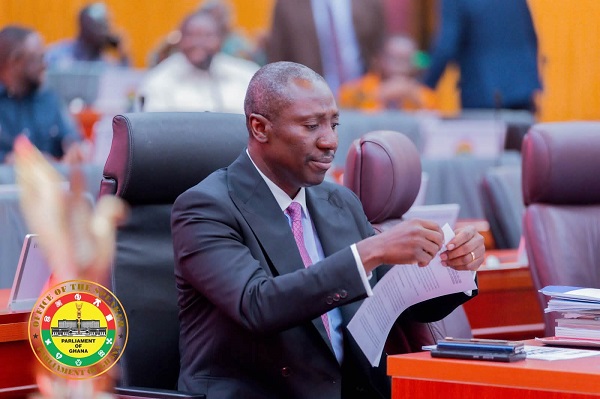
Minority Leader in Parliament Alexander Afenyo Markin has sued the Chief Executive Officer of the Ghana Gold Board (GoldBod), Sammy Gyamfi, and Multimedia Group Limited over alleged defamatory comments made against him on the Newsfile programme.
In a writ filed at the High Court in Accra, Mr Afenyo Markin is seeking GH¢15 million in damages, an apology and retraction of the statements, among other reliefs.
The suit follows comments allegedly made by Mr Gyamfi during the Saturday, August 22, 2026 edition of Newsfile, hosted by Samson Lardy Anyenini.
According to the statement of claim, Mr Gyamfi described Mr Afenyo Markin as an “extortionist” while responding to a question about GoldBod’s reported profits and its position on losses arising from its operations.
The plaintiff claims that Mr Gyamfi repeated the allegation when the host sought clarification on whether he stood by the description.
Mr Afenyo Markin further claims that Mr Gyamfi challenged him to sue him and insisted that the allegation was true.
The plaintiff argues that the statements created the impression that he engages in extortion, uses his political influence to put improper pressure on public institutions and officials, and conducts himself in a manner inconsistent with the standards expected of a lawyer and public office holder.
He denies the allegations and maintains that he is not an extortionist and has never engaged in the conduct alleged by Mr Gyamfi.
The Minority Leader also argues that the comments were made maliciously and were presented as facts without evidence being disclosed.
He claims the statements have damaged his reputation, professional standing and public image, particularly because of his position as a senior political figure and legal practitioner.
The suit also names Multimedia Group Limited as a defendant because, according to the plaintiff, the alleged defamatory comments were broadcast through JoyNews and subsequently circulated on social media platforms, including X, Facebook and YouTube.
Mr Afenyo Markin claims Multimedia failed to stop the comments or deactivate Mr Gyamfi’s microphone after the allegations were made.
He is therefore asking the court to award him general, aggravated and exemplary damages, as well as GH¢15 million in compensation and legal costs.
He is also seeking an order compelling the defendants to issue a full, unconditional and unequivocal retraction and public apology.
The plaintiff wants the apology and retraction to be given similar prominence and reach as the original publication, including through JoyNews and the social media platforms where the comments were disseminated.
He is further seeking a permanent injunction preventing the defendants from repeating the alleged defamatory statements or words with a similar meaning.
The writ requires the defendants to enter an appearance within eight days after being served.
It warns that failure to do so could result in judgment being entered in their absence.
The case was filed by lawyer Paa Kwesi Abaidoo of Dehyena Chambers on behalf of Mr Afenyo Markin.
By: Jacob Aggrey