Hot!
Republic of Malta celebrates National Day in Accra …with a call for investments in Ghana

- /home/u249204778/domains/spectator.com.gh/public_html/wp-content/plugins/mvp-social-buttons/mvp-social-buttons.php on line 27
https://spectator.com.gh/wp-content/uploads/2023/12/76bdab5e-f4f6-42b9-9629-2a0744618d3f-1.jpg&description=Republic of Malta celebrates National Day in Accra …with a call for investments in Ghana', 'pinterestShare', 'width=750,height=350'); return false;" title="Pin This Post">
- Share
- Tweet /home/u249204778/domains/spectator.com.gh/public_html/wp-content/plugins/mvp-social-buttons/mvp-social-buttons.php on line 72
https://spectator.com.gh/wp-content/uploads/2023/12/76bdab5e-f4f6-42b9-9629-2a0744618d3f-1.jpg&description=Republic of Malta celebrates National Day in Accra …with a call for investments in Ghana', 'pinterestShare', 'width=750,height=350'); return false;" title="Pin This Post">
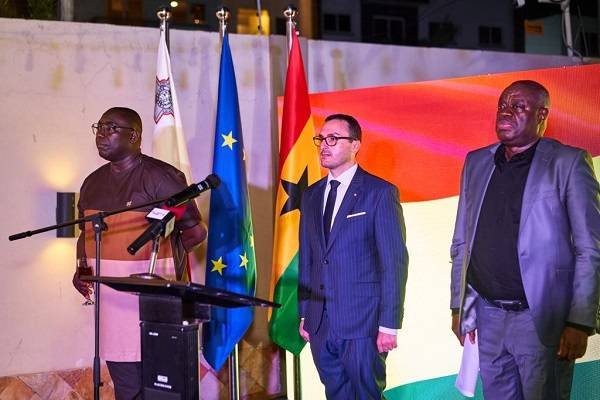
The High Commission of the Republic of Malta in Ghana, on Wednesday 13th December, 2023 celebrated Malta’s forty-ninth (49th) Republic Day in a colourful event at the premises of the High Commission, located at Ridge in Accra.
The Guest of Honour at the well-attended event was Honourable Ibrahim Mohammed Awal, the Minister for Tourism, Arts and Culture. During his speech, he urged foreign investors to take advantage of Ghana’s strategic position to invest in the country under the African Continental Free Trade Area (AfCFTA).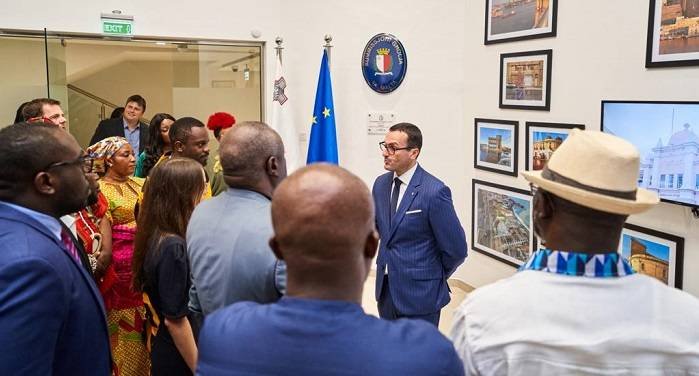
Hon. Awal further explained that AfCFTA, which is a market of about 1.3 billion people with a combined GDP of over US$3.3 Trillion, equally offers enormous opportunities for private sector operators to establish their businesses in Ghana through strategic partnerships and Joint Ventures.
The Minister stressed on the four pillars of the Government’s Economic Transformation Agenda which encompass the building of a resilient economy, modernizing Ghana’s agricultural sector, industrial transformation, and infrastructural development. He added that Ghana is committed to building a competitive and stable economy and becoming a more attractive destination for investment. 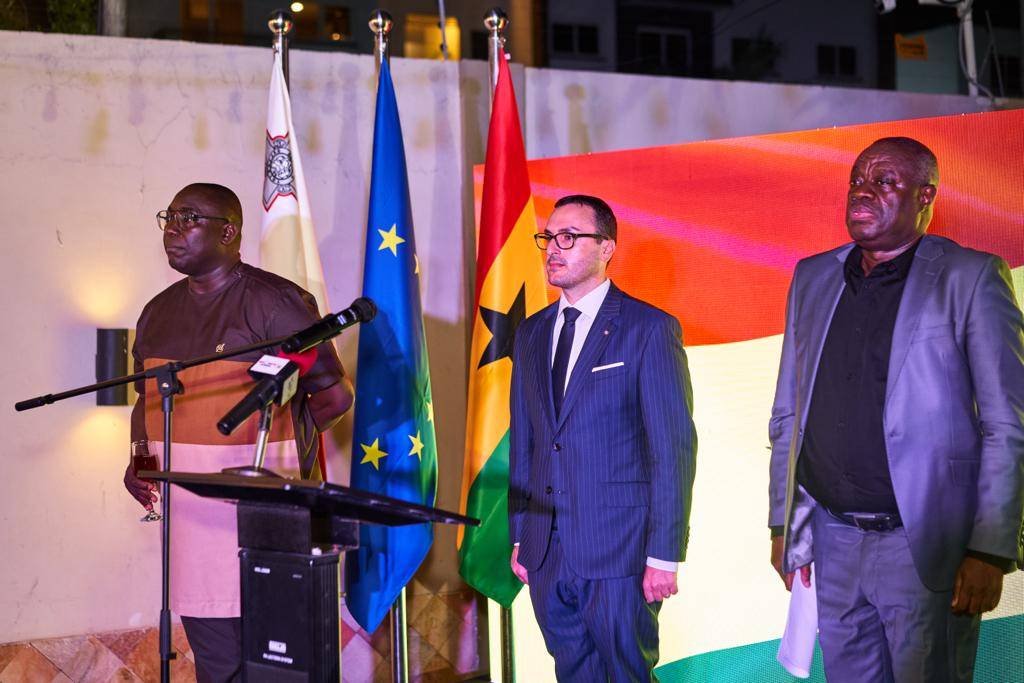
“Government’s prioritization of strategic sectors such as tourism, pharmaceuticals, mining, petrochemicals and integrated aluminium situated within the ambit of flagship programmes such as the “Year of Return and Beyond the Return”, “One District One Factory”, present golden opportunities for an enhanced Ghana-Malta cooperation,” he said.
Relations
On the Ghana/Malta relations, he said Ghana valued its relations with Malta and welcomed the cooperation between the two countries in various fields which have deepened bonds of friendship and cooperation.
“Malta is reputed to be a country that has made steady progress to become one of the most competitive industrialised countries in the world.
It is, therefore, worth mentioning that Malta’s efforts towards achieving a buoyant economy and asserting itself as a relevant global player, is indeed worthy of emulation,” he added.
Increasing cooperation
The Maltese High Commissioner to Ghana, Jean Claude Galea Mallia, said the relationship between the two countries has developed since the establishment of the High Commission of Malta in Ghana in 2019.
He said going forward, his outfit will continue working enthusiastically as a proponent for more exchanges between the people of Malta and Ghana.
He said Malta’s priorities in Ghana are driven by the Malta-Africa Strategy for Partnership and aimed at establishing a strong and lasting mutually beneficial collaboration with the country, region, and continent.
“Malta and Ghana are both committed to increasing cooperation and meaningful exchanges in tourism and culture, including knowledge transfer and cooperation on destination marketing strategies, public relations, advertising campaigns, heritage regeneration and repurposing, as well as exchanging tourism-related research and information,” he said.
Photography exhibition
As part of the celebration, a photography exhibition, dubbed, Valletta-Accra: A dialogue between Mercantile Cities, was inaugurated.
According to the High Commissioner, the exhibition forms part of an ongoing collaboration between Maltese and Ghanaian researchers: Architect Erica Giusta representing AP Valletta, Architect David Kojo Derban, Art and Design Writer, Ann Dingli, and Photographer, Paul Addo, supported by the Malta Arts Council.
He said the purpose of the exhibition and the research project is to convey a dynamic perspective on heritage, rooted in the basic theoretical principle that heritage should not be static but rather in constant evolution.
“The conclusion that shall be taken from this is that sustainable heritage could be achieved by the full utilisation and harmonisation of natural, cultural, folkloric, and historical and architectural resources fused.
Through such partnerships, researchers, architects, artists, and curators from both countries may share experience and knowledge with finding innovative solutions for preserving heritage and bringing it closer to the public,” he said.


The University of Ghana Medical Centre (UGMC) has disputed claims made on social media by comedian Michael Blackson concerning the treatment given to his late mother, saying a review found that the allegations did not accurately reflect what happened during her stay at the hospital.
In a statement issued in Accra on August 5, 2026, the management of UGMC expressed condolences to Mr. Blackson and his family over the death of his 83-year-old mother, who died at the facility on July 16, 2026.
The hospital said it had taken the concerns raised by Mr. Blackson seriously and conducted a thorough review in line with its clinical and administrative procedures.
According to the statement, the facts presented by Mr. Blackson on social media contained “numerous inaccuracies” and did not accurately reflect the medical care provided to his mother.
UGMC explained that she was referred to the facility from another hospital and received treatment there from May 27 to July 16, 2026, a period of about eight weeks.
The hospital stated that it would not release details of her diagnosis, treatment, medical records or other aspects of her care because it had a duty to protect patient confidentiality, even after death.
It said the decision was intended to respect the dignity of the deceased and the privacy of her family.
UGMC further stated that all clinical decisions at the facility are made by qualified healthcare professionals based on medical judgment, established standards of care and the best interests of the patient.
The statement added that such decisions are made in consultation with authorised family representatives where necessary and that billing and financial procedures are governed by institutional policies and are separate from clinical decision-making.
The hospital noted that it values feedback from patients and their families and considers both positive and negative comments important for improving the quality of care.
Mr. Blackson had earlier used social media to criticise the care his mother received at UGMC, prompting the hospital’s response.
By: Jacob Aggrey
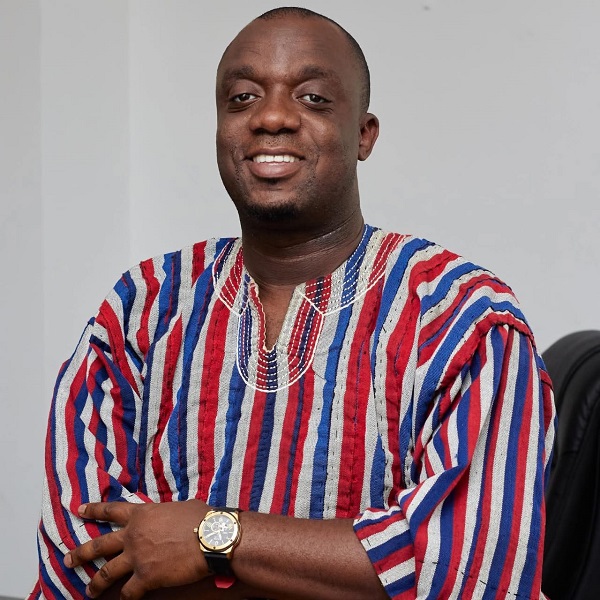
The New Patriotic Party (NPP) has directed all aspirants campaigning in the Greater Accra Region to suspend their campaign activities on August 5 and 6 and instead mobilise supporters for the party’s planned “Democracy Under Attack” demonstration.
The directive was issued by the party’s National Steering Committee in a statement signed by the NPP General Secretary, Justin Kodua Frimpong, on Tuesday.
According to the statement, the decision forms part of efforts to ensure a strong turnout for the demonstration, which is scheduled for Thursday, August 6, 2026.
The party said the protest would begin at 5:00 a.m., with participants expected to gather at the Supreme Court in Accra.
It further directed Regional, Constituency and Polling Station Executives in Greater Accra to work closely to mobilise members and supporters for the event.
“The National Steering Committee is calling on all aspirants currently campaigning across the Greater Accra Region to temporarily suspend their campaign activities on the 5th and 6th of August and join in mobilising support for the upcoming demonstration,” the statement noted.
The NPP appealed to party members and supporters to remain peaceful, disciplined and orderly throughout the protest.
The demonstration forms part of the party’s response to concerns it has raised over issues relating to Ghana’s democratic governance and the justice system.
The NPP leadership expressed confidence that party members would cooperate fully to ensure a successful and peaceful event.
By: Jacob Aggrey

 News1 week ago
Prof. Kwabena Twerefou holds inaugural lecture; calls for better stewardship of Ghana’s natural resources
- News1 week ago
Prez Mahama to visit Jamaica to strengthen ties and advance reparations agenda
- News1 week ago
Ahanta Heritage Month: Diplomats, youth tour forts, Cape Three Points and historic sites