News
Prioritise mental health issues at workplace

- /home/u249204778/domains/spectator.com.gh/public_html/wp-content/plugins/mvp-social-buttons/mvp-social-buttons.php on line 27
https://spectator.com.gh/wp-content/uploads/2024/10/Prof-Ohene.jpg&description= Prioritise mental health issues at workplace', 'pinterestShare', 'width=750,height=350'); return false;" title="Pin This Post">
- Share
- Tweet /home/u249204778/domains/spectator.com.gh/public_html/wp-content/plugins/mvp-social-buttons/mvp-social-buttons.php on line 72
https://spectator.com.gh/wp-content/uploads/2024/10/Prof-Ohene.jpg&description= Prioritise mental health issues at workplace', 'pinterestShare', 'width=750,height=350'); return false;" title="Pin This Post">
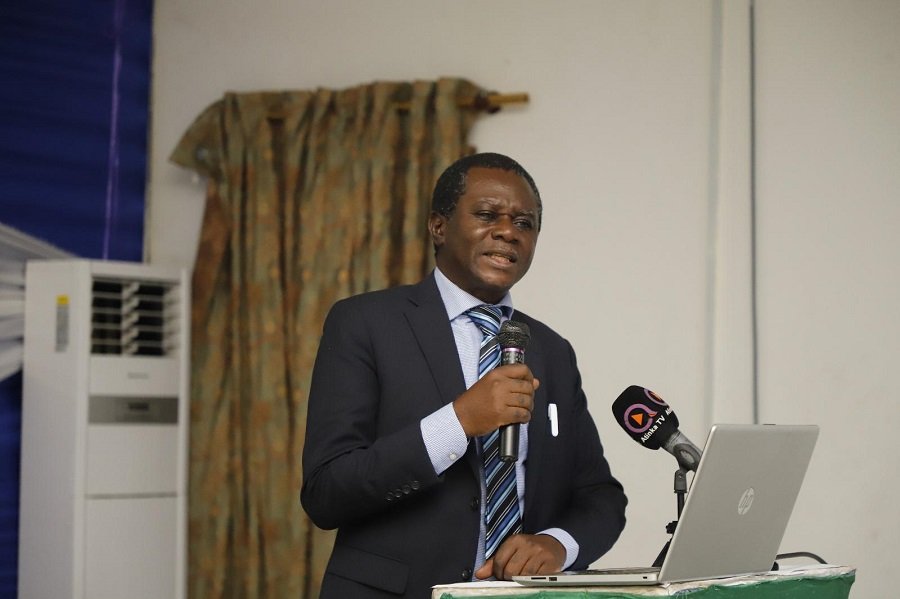
Prof Ohene
Discrimination, inequality, excessive workloads, low job control and job insecurity exposes workers to some risks of developing mental health problems, a Consultant Psychiatrist, Professor Sammy Ohene, has stated.
According to him, mental health issues among workers could also lead to absenteeism and ‘presenteeism’ which affects both the individual and the organisation
He defined ‘presenteeism’ as being present but not fully productive while absenteeism was when one is missing at work.
Prof. Ohene said this at a programme organised by the Department of Psychiatry of the Korle-Bu Teaching Hospital on the theme: ‘it’s time to prioritise mental health at the workplace.’
According to the Consultant Psychiatrist, high workloads, tight deadlines and long hours can lead to chronic stress and burnout, causing fatigue, irritability, and decreased productivity, adding that work related pressures such as job insecurity, lack of control and workplace conflicts, could trigger or exacerbate anxiety and depression.
Additionally, he noted that strained relationships with colleagues, supervisors or clients can arise from mental conditions, leading to conflicts and a toxic work environment and that employees experiencing mental health conditions may struggle with concentration, decision making and completing tasks efficiently, thereby impacting on their overall performance.
He stated that individuals with mental health conditions were particularly at risk in unhealthy workplaces while those with severe mental disorders were more likely to be excluded from employment, and if they do get employed, they were more likely to experience inequality.
Prof. Ohene also identified being out of work, recent job loss and financial insecurity as risk factors for suicide.
Moreover, he indicated that mental health issues could also manifest physically leading to headaches, stomach aches, muscle tension and other somatic complaints.
“Issues that might affect one’s mental health includes excessive workload, poor pay causing constant pressure, stigma around mental health, unsafe or poor physical working conditions, under-use of skills or being under-skilled for work, understaffing and long, unsocial or inflexible hours,” he added.
Prof. Ohene indicated that in order to prevent work related mental health conditions, the World Health Organisation (WHO) has recommended the implementation of organisational interventions that directly targets working conditions and environments.
He said these were interventions that mitigate, modify or remove risks to mental health such as flexible working arrangements, implementing frameworks to deal with violence and harassment at work.
WHO, he revealed, also recommends training for workers in mental health literacy and awareness to improve knowledge of mental health and reduce stigma against mental health conditions at work.
Also, he called for interventions for individuals to build skills to manage stress and reduce mental health symptoms, including psychosocial interventions and opportunities for leisure-based physical activity.
By Jemima Esinam Kuatsinu








A nine-member board for the New Times Corporation (NTC), publishers of The Ghanaian Times and The Spectator newspapers was sworn into office on Thursday with a call to strengthen the governance of the Corporation.![Dr. Binka (seated second from right) with Dr Okpoti [right] the board and Management of NTC photos Okai Elizabeth.](https://spectator.com.gh/wp-content/uploads/2026/08/Dr.-Binka-seated-second-from-right-with-Dr-Okpoti-right-the-board-and-Management-of-NTC-photos-Okai-Elizabeth-1024x683.jpg)
The new NTC board is chaired by Dr Charity Binka and has Very Rev. Helena Amma Serwah Opoku-Sarkodie, Mr Tito Kojo Voegborlo Esq and Naana Aklerh Amenyah Kubi I as members. Read More
SKIP THE QUEUE, TAP THE NEWS
You can now read the Ghanaian Times and The Spectator newspapers from the comfort of your device via TimesNewsPlus.
Join our WhatsApp Channel: https://whatsapp.com/channel/0029VbBElzjInlqHhl1aTU27

Christians have been urged to demonstrate a living faith in Jesus Christ by allowing their confession of Him as Lord and Saviour to reflect in their daily lives.
According to the Kaneshie District Pastor of the Evangelical Presbyterian Church, Ghana (EPCG), Rev. Dzidzor Nathaniel Affram, a genuine Christian’s confession should go beyond words and be demonstrated through obedience to God, love for others and service to the Church.
He made the call at the 40th anniversary remembrance service for the late Wesley Kwasi Kwadzo at the Evangelical Presbyterian Church, Ghana, Maranatha Congregation at Awudome Avenui in the Volta Region.
Speaking on the theme, “The Church Built on a Living Confession,” Rev. Affram said life would continually present challenges capable of testing Christians’ faith, making it necessary for believers to hold firmly to their confession that Jesus Christ is Lord.
He explained that accepting Jesus Christ as Lord and Saviour required Christians to live according to His teachings, stressing that their faith must be evident in their conduct.
“A living confession listens to God and not man,” he said, urging Christians to remain obedient to God even when faced with difficulties and pressures.
Rev. Affram further encouraged the congregation to care for vulnerable people and demonstrate concern for others, adding that such acts were practical expressions of Christian faith.
He also urged Christians to identify and use their God-given gifts to build the Church.
He said every member of the Church had a role to play and cautioned Christians against looking down on others because of their status or abilities.
The remembrance service brought together family members, friends, members of the congregation and sympathisers to commemorate the 40th anniversary of the late Wesley Kwasi Kwadzo.
By Lizzy Okai