Editorial
Preparing for our purchases during Christmas

Christmas is an occasion that is seen as important not only for Christians but for non-Christians as well for which reason various goods are bought for consumption.
Some of the items bought are clothes, food items, electrical gadgets and cables, cosmetics, among others. It is a period during which wholesalers, retailers and other traders cash-in to make huge profits on the sale of goods and services offered to the public.
Many consumers also make their purchases without paying much attention to what they buy, especially when they are lured by reduced prices to dispose of goods and services.
Reducing prices to dispose of goods and services in this way is not necessarily bad or wrong, but if the motive is to dispose of substandard products and make profits at the expense of the consumer, then it becomes a bad practice for business.
In the light of this, The Spectator urges all consumers to be careful about this trick during these occasions such as the Christmas and other seasons, so that they would not be found wanting in the purchases they make.
Similarly, regulatory bodies such as the Food and Drugs Authority, the Environmental Protection Agency (EPA), the National Petroleum Authority (NPA), will all have to work hard to protect the consumer before, during and after the season.
In the same way, the Ghana Standards Authority should also live up to expectation not only through mere declarations for publication by the media but actually go out in a meaningful manner to protect all consumers when it comes to electrical cables and energy devices, among others.
It is never true to assume that standards in countries like US, France and Germany rated higher by people over there while standards by people in Africa and other developing countries should be rated lower.
All men, irrespective of race and colour, are created equal so every effort will have to be made to ensure that standards and quality practices are effectively maintained not only by word of mouth but through practical efforts that yield positive results for the country.
What is good for the goose is good for the gander, so special efforts should be made to maintain required standards and quality for everyone in this country.
What this means is that there should be less talk but more action when it comes to actual delivery in the area of standardisation and quality practices. If this is done, we will be able to help prolong lives in this part of the world and make people live longer than is happening at the moment.
Consumers also have a role to play to complement the effort of all regulatory agencies in this country by making sure that they go in for only self-examined quality products and services rather than choosing cheaper products sold at unreasonably lower prices.
When it comes to maintaining standards and quality systems, everyone has a role to play, whether consumers or regulatory bodies, therefore, we need to work hard in line with this to ensure that our quality systems are maintained and even improved upon in all aspects of our lives.
This can be done and achieved so let us all, including consumers, work towards the attainment of the ultimate national good.


Dear Editor,
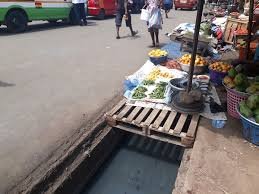
It is often said that a healthy nation is a wealthy nation. However, this saying becomes worrying when the health of citizens is threatened by the conditions under which the food they consume daily is sold.
In Ghana, the conditions under which food is sold is quite disturbing. Over the years, I have observed that the environments where food is prepared and sold are often unhygienic.
In many cases, containers holding food such as rice and waakye are left uncovered or not properly covered, exposing them to contamination.
While many Ghanaians paid little attention in the past to the conditions under which food was sold, the narrative seems to be changing in recent years.
I recall an incident during my days in Senior High School (S.H.S.) when my friends and I went out to buy food. At one location, some of us chose not to buy because we assumed the food would be expensive due to how neat the place looked.
Unfortunately, we ended up purchasing food from a different place that was somewhat unhygienic. We overlooked the poor conditions because we believed the quantity offered was better than at the cleaner location.
However, I am certain that my friends and I would not repeat such a mistake today, as we now understand the health implications of that decision.
While public education is important in addressing this issue, I believe it is time for regulatory and law enforcement agencies, such as the Food and Drug Authority (FDA), to crack the whip on food sellers and vendors who operate in unhygienic environments and conditions.
As citizens, we must also be mindful of where we buy our food to protect ourselves and our families from diseases and illnesses. We should choose ‘quality’ over ‘quantity’ and prioritize our health.
From Syram
Oyarifa
Dear Editor,
I write to express concern and call for improved security measures before and after every football match.
The recent robbery attack that led to the tragic death of a player, on their return from a Match day 29 game against Samartex, is both shocking and heartbreaking.
The incident, which reportedly occurred around 10:30 p.m., highlights the growing risks faced by players and team officials while traveling.
Football is meant to unite and entertain, not to expose lives to danger. It is therefore imperative that authorities, the Ghana Football Association, and security agencies put in place adequate protection for teams, especially during late-night travels.
I strongly urge all stakeholders to treat this matter with urgency to prevent such unfortunate incidents from recurring.
From Eugene Ampiaw
Accra