Sports
Post-Birmingham C’wealth Games: Let’s pick leaf from Nigeria


- /home/u249204778/domains/spectator.com.gh/public_html/wp-content/plugins/mvp-social-buttons/mvp-social-buttons.php on line 27
https://spectator.com.gh/wp-content/uploads/2022/08/Nigeria.jpg&description=Post-Birmingham C’wealth Games: Let’s pick leaf from Nigeria ', 'pinterestShare', 'width=750,height=350'); return false;" title="Pin This Post">
- Share
- Tweet /home/u249204778/domains/spectator.com.gh/public_html/wp-content/plugins/mvp-social-buttons/mvp-social-buttons.php on line 72
https://spectator.com.gh/wp-content/uploads/2022/08/Nigeria.jpg&description=Post-Birmingham C’wealth Games: Let’s pick leaf from Nigeria ', 'pinterestShare', 'width=750,height=350'); return false;" title="Pin This Post">
One thing that the just-ended Commonwealth Games in Birmingham may have thought Ghanaians is that investment and planning is key.
These are areas that the nation has fallen short over the years.
The exploits of Nigeria in Birmingham where they amassed 35 medals did not come from the blues. Years of meticulous planning backed by finance got them to the podium many times where their national anthems blared across the world. As hammered myriad times, you do not reap where you have not sown. When you put in something negligible, you would not expect to reap in bounty.
Three years before the Games, Nigeria’s Sports Minister Sunday Dare, launched what was termed as ‘Adopt-an-Athlete Initiative’ that was preceded by consultations with athletes and federations nationwide in a bid to find out the root cause of the challenges athletes faced which impeded their performances at the regional and world stages.
It was established that the unavailability of funding and grants, unavailability of scholarships and inadequate support amongst other challenges were what were militating against the rise of their athletes. It was also found that many of the athletes did not have enough income to survive and rather spent a lot of time trying to earn a living rather than spend time to further develop their skills.
The way out was to give them financial support to make a difference.
To be honest, the ‘Adopt an Athlete’ initiative itself was hatched by a sports journalist, Jide Fashikun. Sorrowfully, it was reported by the Vanguard newspaper of Nigeria that just when the programme was beginning to take shape and gain acceptance by Nigerians, Fashikun passed on.
Luckily, his partner on the project, Mary Onyali, was appointed as an aide to the present Sports Minister, Sunday Dare, who bought into the idea and latched on to it.
Companies, individuals and even state governments keyed into it, adopted potential athletes who they provided funds for to cater for their training and sundry requirements in order to avoid distractions as they prepared for competitions.
The reward is what Nigeria is reaping today. Who would have thought that a Nigerian athlete would be ruling the world in 100m hurdles with a gold medal added to it?
So, it goes without saying that a number of State Governors – from Delta, Edo, Ogun, Bayelsa and Lagos among others, were said to have embraced the initiative. After serious engagement, financial institutions like Fidelity Bank, Zenith Bank, UBA Bank, Access Bank and other corporate bodies also jumped into ‘fray’ as 38 athletes in total became beneficiaries of the ‘Adopt-an-Athlete’ initiative.
According to sources, once the initiative kicked off, some home-based athletes got as much as $10,000 paid directly into their accounts and managed solely by them.
“Some use it to pay for their coaches, kits, nutrition, health insurance, and others,” the source said.
High profile foreign-based athletes also earned $20,000 due to the fact that they had a higher overhead.
Now, three months before the Commonwealth Games, 21 meetings were said to have been held at various levels just to make sure all bases were covered. They were simply being deliberate about their goals. They knew what they wanted!
It did not end there.
The Sports Minister ensured that athlete’s allowances, bonuses and award money was available 48 hours ahead of their game. Before most athletes competed in their games, they had their allowances readily available to them. Some allowances were even increased and new bonuses activated.
Hitherto, too, Nigeria only participated in four disciplines at the Games because of unavailability of funds. This time around, the Birmingham came with nine – five more well prepared disciplines were added.
Who says good investment and planning is not the way to go? As you may have been aware, many records were smashed, glass ceilings shattered and new records set. Nigeria set four amazing new Games record, a world record and had their finest outing ever in the history of the Commonwealth Games.
It is imperative to note that Nigeria participated in nine events in Birmingham and emerged as the best in Africa and creditably seventh in the World. Records suggest that the Birmingham Commonwealth multi-sport festival was the largest ever held, with 72 participating nations.
Here in Ghana, we sent 13 disciplines and returned home with five medals (minus gold), placing 28th. Nigeria amassed 12 gold (won by Nigerian women athletes), nine silver and 14 bronze medals – 35 in all. It is Nigeria’s best outing in 15 appearances at the Games since its first participation in Auckland, New Zealand, in 1950.
Come to think about it: Nigeria’s National Sports Industry now has a Policy that has ‘reclassified’ Sports as Business and no longer as Recreation. This policy, it is said, will deliver a working plan between Private Sectors and the Federal Government. This way, the funds the Ministry does not have can easily be made up for.
On July 28, 2020, the Sports Industry Working Group (SIWG) comprising the Nigerian Economic Summit Group (NESG), the Federal Ministry of Youths and Sports (“the Ministry”), and critical sector stakeholders presented the National Sports Industry Policy (NSIP) draft document virtually to the Minister for Sports and Youth Development, Mr Dare.
This development is regarded as an important product of the Memorandum of Understanding (MOU) signed by the Ministry and NESG on December 17, 2019.
The NSIP is aimed at leveraging Nigeria’s remarkable sporting talent, passion, interest and excellence to advance and navigate diplomatic relations, and more importantly, generate employment, create jobs, increase government revenue, and bolster the economy. The NSIP also identifies four (4) key trigger factors essential to realizing these aims – Infrastructure, Incentives, Investment and Policy (popularly christened the 3 ‘I’s & 1 ‘P’).
It is time for us to wake up – and take a leaf from the Nigerian example, or be left far behind. We cannot afford to joke again, especially as we prepare to host the African Games on August 4, 2023 (less than a year away).
PlainTalk With John Vigah


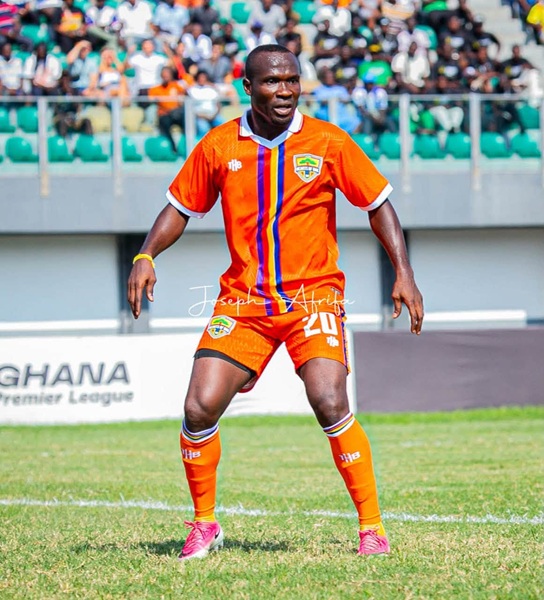
Accra Hearts of Oak and Dreams FC will headline Matchday 5 of the Ghana Premier League when the two sides meet at the University of Ghana Sports Stadium tomorrow, with both clubs seeking a result that could shape their early season campaign.
The encounter comes at a crucial moment for the two sides with the Phobians looking to recover from their first defeat of the campaign and Dreams still searching for their first victory after four matches.
The Rainbow lads started the season strongly but were beaten 1-0 by Karela United last weekend, while Dreams suffered a slim 1-0 defeat to Bechem United.
Hearts had earlier recorded impressive victories over Berekum Chelsea and Bibiani Gold Stars before drawing goalless with Bechem United, leaving the club with seven points from their opening four matches.
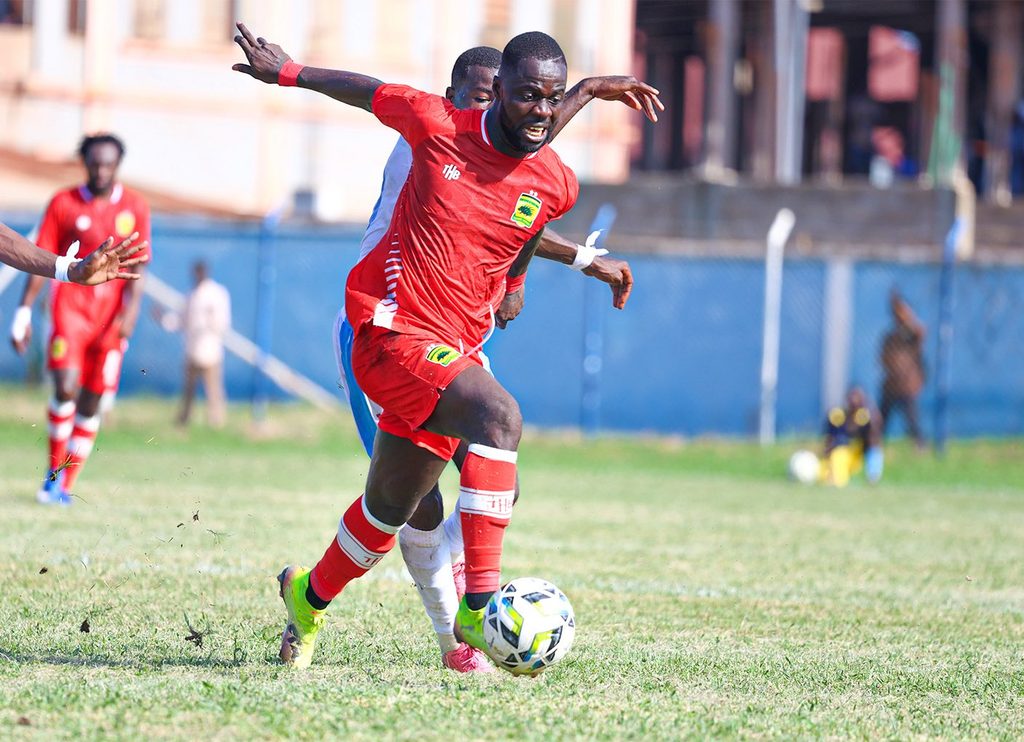
Their defeat at Karela United, however, means they will be under pressure to quickly return to winning ways against a Dreams side determined to make home advantage count.
Dreams, meanwhile, have endured a difficult beginning to the campaign and will see tomorrow’s fixture as an opportunity to change their fortunes.
The ‘Still Believe’ side have collected points from only their opening draws and are yet to register a victory, making the meeting with one of the country’s traditional giants an important test of their character.
Elsewhere, Vision FC will welcome Bibiani Gold Stars to the Nii Adjei Kraku II Sports Complex today, with both teams looking to strengthen their positions.
Vision have shown encouraging form in the early stages, while Gold Stars will be seeking a response after suffering a 2-0 home defeat to newcomers Port City FC.
At the Debibi Presby Park, newly promoted Debibi United will face defending champions Medeama SC tomorrow.
Medeama finally opened their account with a convincing 4-1 victory over Basake Holy Stars and will be hoping that the result marks the beginning of a stronger title defence.
Port City FC will continue their impressive debut campaign when they host Bechem United at the Daasebere Boamah Darko II Park.
Basake Holy Stars will attempt to recover from their heavy defeat to Medeama when they host Berekum Chelsea at the Ampain AAK II Sports Arena.
Aduana FC will welcome Swedru All Blacks to the Nana Agyemang Badu I Park after producing one of the weekend’s most notable results last Sunday.
At the Kpando Stadium, Heart of Lions will host FC AshantiGold ’04 in another meeting between sides coming off victories.
FC Samartex 1996 will meanwhile welcome Young Apostles FC to the Nsenkyire Sports Arena, with the home side seeking to maintain their unbeaten start to the campaign.
By Enoch Ntiamoah Siaw
SKIP THE QUEUE, TAP THE NEWS
You can now read the Ghanaian Times and The Spectator newspapers from the comfort of your device via TimesNewsPlus.
Join our WhatsApp Channel: https://whatsapp.com/channel/0029VbBElzjInlqHhl1aTU27
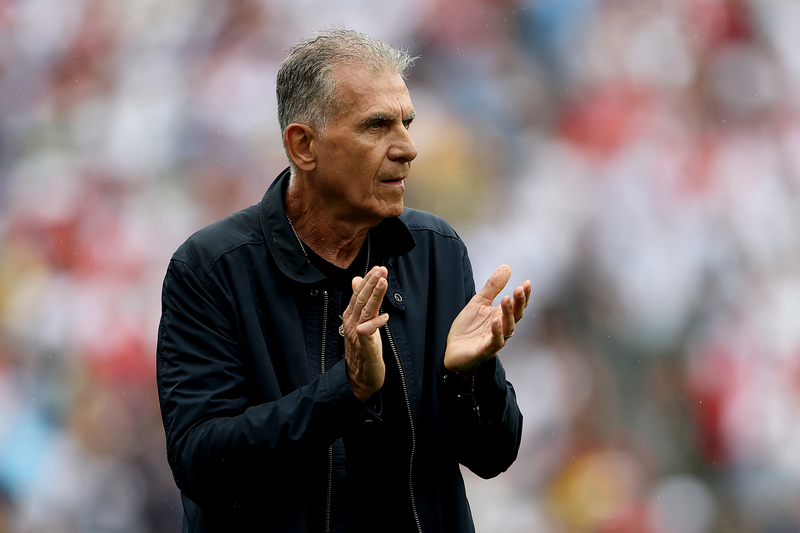
Tuesday, September 29, 2026 would go into the annals of Ghana football as one of the darkest days for the Black Stars.
In an AFCON 2027 qualifier against The Gambia, the Black Stars did not only break the hearts of the fans, but conceded a defeat that left followers with sleepless nights.
Coming from a Matchday 1 defeat to the Elephants of La Cote d’Ivoire in Bouake, the outcome of the second game against The Gambia was one that was non-negotiable.
It had the ability to spark a revival to contend for one of the slots for the next AFCON showpiece.
The Gambia is a formidable side but definitely, not one to have frustrated Ghanaians to watch in pain and awe the Black Stars lose a game from a winning position.
That is a possibility in the game of football but when the stakes are high in such cases, it becomes unacceptable to the fans.
And grievously has Carlos Queiroz answered the massive call for his resignation.
At his post-match press conference, he made it clear that bowing out was the easiest decision but insisted that would not solve the myriad problems facing the Black Stars.
For the coach to be fired two days after that declaration raises a lot of concerns as he seem to be aware of existing problems the FA may even not know.
Unfortunately, coaches over the years have always been sacrificial lambs in situations of this nature but when he talks about particular problems affecting the team, his sack leaves much to be desired.
That aside, it is important to also take another look at the country’s pool of players, both local and foreign based.
Some of us have been advocates for forming the Black Stars around the ever-present local players who may lack the skill, finesse and flamboyance believed to give the foreign based players the edge over their local counterparts.
The locals, however, compensate that with their commitment and dedication.
Sadly, it appears this consistent call have fallen on deaf ears and no one wants to give any attention to that.
If the fear is that results would be poor, then that would be no excuse again following outcomes of the Stars in their last two games.
From what was witnessed in Bouake and Accra, one can confidently boast that there isn’t much difference between the foreign based players and the locals.
If there is any, it would probably be the treatment given to the two sets of players.
The call on the FA now is to give major consideration to the local players. Any coach that sees no good in the local players must have no business handling the national team.
That does not also shut the door on the ‘foreigners’. We witnessed how the early 90s teams were beautifully blended to have a formidable team.
It is time the FA goes back to the basics. With the locals, there can be more camps, leading to improved cohesion. Any foreign based player invited must settle into the team quickly and make a difference. That is the only way to rescue the Black Stars from its free fall.
By Andrew Nortey
SKIP THE QUEUE, TAP THE NEWS
You can now read the Ghanaian Times and The Spectator newspapers from the comfort of your device via TimesNewsPlus.
Join our WhatsApp Channel: https://whatsapp.com/channel/0029VbBElzjInlqHhl1aTU27