News
Poor roads: Enemy of development

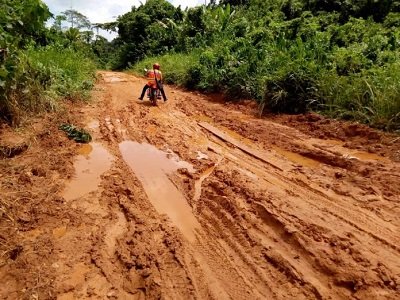
The state of our roads has been on my mind for some time now. No doubt there had been a major improvement in the overall road network in Ghana over the years. Yet, after 64years of Independence what Ghana can show on for its major highways is a complete disgrace.
For instance, the road linking our two major cities Accra-Kumasi is nothing more than a single-lane death trap! A distance of only 250 Km, it takes over five hours and if you are not lucky, it will take your life as well. How much more with the road networks linking deprived communities?
Sufficient evidence abounds that, the media houses are awash with complaints about bad roads and the need for the central government or district assemblies to step in to fix them.
Reliable and dependable roads help to facilitate the smooth movement of goods and people, create employment, support economic growth, enhance access to education and healthcare services, and connect people to families and places of entertainment. This also goes a long way in aiding in the fight against poverty.
In Ghana, road transport is one of the major keys which enhance economic potential. It is estimated that road transport alone accounts for 96 per cent of passenger and freight traffic and about 97 per cent of passenger in the country.
That is why sustainable development of our road infrastructure cannot be downplayed. As a result, I believe that placing a lot more premium on developing our road infrastructure will definitely be a step in the right direction.
Nonetheless, lately, there have been concerns across the country over the poor conditions of our roads. The country’s roads have seen further deterioration as a result of the heavy rains experienced recently.
For example, the pothole-ridden roads in Accra and other parts of the country are increasingly becoming alarming and worrying, which make the cost of road transport high and very risky.
Fortunately, Ghana has consistently been one of the countries in the top ranks of the African Development Bank’s Africa Infrastructure Development Index (AIDI), attracting funding for roads infrastructure.
That notwithstanding, there is still more road infrastructure deficit requiring urgent attention from the government. Efforts should, therefore, be put in place to save the situation.
Truth is, among the many modes of transport, road transport is the commonest. However, poor road infrastructure hinders road transport and curtails development and mobility.
It may interest readers to know that rural areas are places for the production of primary goods and services worldwide.
It is for this reason that the government should be able to take the necessary steps to invest more in road infrastructure so that the citizens can gain access to the remotest parts of the country in order to unlock the vast and untapped reservoir of productive potential in those areas.
Although the link between roads and human development is not well established, data from low-income countries demonstrate that communities living furthest from good roads experience higher levels of poverty, lower levels of school attendance and worse health outcomes.
This has become one of the reasons there are frequent agitations by some community members for the government to fix their roads.
The problem of poor road network can be addressed when a routine monitoring and evaluation mechanism is built into the road infrastructure investment policies to ensure that road construction carried out by contractors are properly done.
Furthermore, the government must always follow up on reports to check whether projects being implemented are done properly. This will become feasible when standards assessments are given the number one priority.
That is why, it is imperative that adequate investment is made into the road sector with proper monitoring and evaluation. Such measures when fully instituted, will ensure that the issue of poor roads and potholes will be a thing of the past.
By Donatella Esinam Kudoto
The writer is a student of the Ghana Institute of Journalism
Email: Dona.esi.15@gmail.com


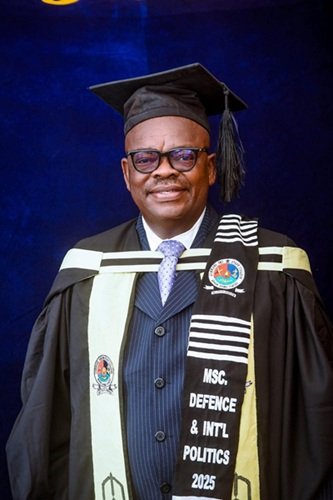
Management and staff of Owass FM have announced the passing of media personality, comedian and politician Seth Kwame Dzokoto following a medical emergency during a live morning show discussion at the station earlier today.
According to the station, Dzokoto was participating in a panel discussion on its morning show “Oman Nkoso” when he suddenly took ill and collapsed.
A statement from the station said its team immediately rushed him to the hospital for medical attention, but he was pronounced dead by the attending medical doctor upon arrival.
“We are deeply saddened by this unfortunate incident, which occurred in the course of our regular programming. Our thoughts and prayers are with his family, loved ones, colleagues, and all those who have been affected by his passing,” the statement said.
Management acknowledged that information about the incident is already circulating in the public domain, but appealed to the public and colleague media houses to respect the privacy of the bereaved family and refrain from circulating unverified information or speculation regarding the circumstances of his death.
Owass FM extended its heartfelt condolences to the family of Seth Kwame Dzokoto.
By Edem Mensah-Tsotorme

The State through the Attorney General (AG) has filed an appeal at the Supreme Court challenging the suspension of the trial in the case of The Republic v Hanan Aludiba and Faiza Seidu.
On Monday, the Court of Appeal suspended the trial in the case. But the prosecution says it has filed an appeal against the suspension order.
According to the update, the law does not allow a criminal trial to be suspended simply because an accused person has complained about some of the charges on the charge sheet, particularly when those complaints were dismissed as meritless.
It argues that if the Court of Appeal’s decision is allowed to stand, no prosecution will ever be possible, since all it would take for a trial to be suspended is an accused person complaining about anything on the charge sheet.
By Edem Mensah-Tsotorme