Hot!
Our standards have fallen!


A nation’s football strength and sturdiness is evidenced by its international performance – especially, at the club level.
At present, our club football is in comatose!
That, for 15 years, no Ghanaian club have won any continental fleece should be enough to portray the state of frustration and near hopelessness local fans find themselves.
Hearts clinched the CAF Champions League in 2000 – 21 years ago, topping up with a CAF Confederation Cup feat four years later. Great achievement, but that is all there is to it.
For Asante Kotoko, their last continental feat was in 1983 when they annexed the African Clubs Championship trophy (now CAF Champions League) by beating Al Ahly of Egypt.
Ever since, both Hearts and Kotoko have failed to re-enact their past glory after a panoply of disappointing attempts.
As far back as December 14, 1997, Obuasi Goldfields (now AshantiGold SC) found themselves in the CAF Champions League finale, losing narrowly to Morocco’s Raja Casablanca 5–4 on penalties at the Stade Mohamed V in Casablanca – the two legs having failed to produce a winner (1-1).
Three years later came the Hearts’ accomplishment.
But truth is that the Ghanaian game has slumped drastically over the years – a saturnine situation that compelled the Confederation of African Football (CAF) to slash the nation’s continental slot, and maybe, given the opportunity, CAF might even take back the solitary window accorded us.
The slump may have hit its apogee last week, probably showcasing why Ghanaian clubs should take a back seat for a while, do a very deep introspection and self-absorption before endeavouring to embark on another dead-duck adventure.
As you may have been aware, Hearts were flushed out of their African campaign in the most outrageous manner.
After taking a 2-0 lead in the play-off stage of the CAF Confederation Cup, Hearts dashed for the return leg encounter full of beans, bright-eyed and bushy-tailed, against Algeria’s JS Saoura – only to be hammered 4-0 after a rather shambolic performance, to bow out 4-2 on aggregate.
A month earlier or so, Hearts were whitewashed 6-1 in the preliminary stage of the Champions League by WAC of Morocco, after winning the opening fixture in Accra 1-0.
Conceding 10 goals in two away games against North African oppositions is as discomforting as ego-battering.
For a side that once dominated Africa and proceeded into the campaign as Ghanaian champions, last Sunday’s exit was pure mortification.
It must be reiterated that the performance of our clubs in Africa has for some time now been nothing to write home about. It is, perhaps, the snowballing effect of low investment and poor player quality.
Most of our premier clubs, today, have no corporate sponsorship and with pitiable attendance at games (even during pre-Covid 19 era), clubs are compelled to sell off their marquee players to their foreign counterparts for survival.
So, how do such clubs hope to compete on the same platform with their counterparts at the continental stage? Not possible! You cannot be ready for any serious competition, if you behave in this manner.
Our clubs ought to accept the fact that the game has changed completely. It is now more capital intensive than before. The planning and organisation of the game, too, is more demanding than used to be the case. Interestingly, we expect to reap a different result after doing same thing over time. It does not work like that.
Certainly, our local game is in some sort of crisis and the Ghana Football Association (GFA) and its stakeholders may have to meet and find an efficacious panacea to reviving its fortunes.
By John Vigah


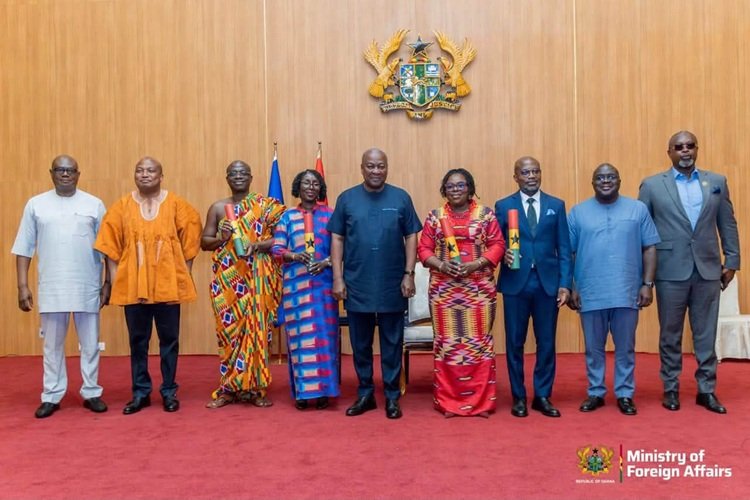
President John Dramani Mahama has commissioned four career diplomats as ambassador-designates to represent Ghana in four countries.
The commissioning ceremony took place on Friday, October 16, 2026.
The new envoys are Her Excellency Nana Antwiwaa Dodoo, Ambassador-Designate to Angola; His Excellency Louis Kwame Obeng, Ambassador-Designate to Qatar; Her Excellency Evelyn Korantemaa Ofosu-Amable, Ambassador-Designate to Israel; and His Excellency Jedidiah Reuben Adogla, Permanent Representative-Designate to Switzerland.
President Mahama charged them to advance Ghana’s national interests through strategic partnerships, economic diplomacy, investment mobilization, and expanded access to international markets.
He said Ghana’s diplomatic engagements must deliver tangible economic benefits, create jobs, and strengthen the country’s standing on the international stage.
The four envoys are career diplomats with over 27 years of experience.
On behalf of her colleagues, Her Excellency Nana Antwiwaa Dodoo thanked the President for the confidence reposed in them and pledged their commitment to emulate his leadership and deliver on the mandate given to them.
By Edem Mensah-Tsotorme
The professor who spends his days exploring the intricacies of African languages found himself at the centre of a different kind of lesson on Friday, October 2, 2026. 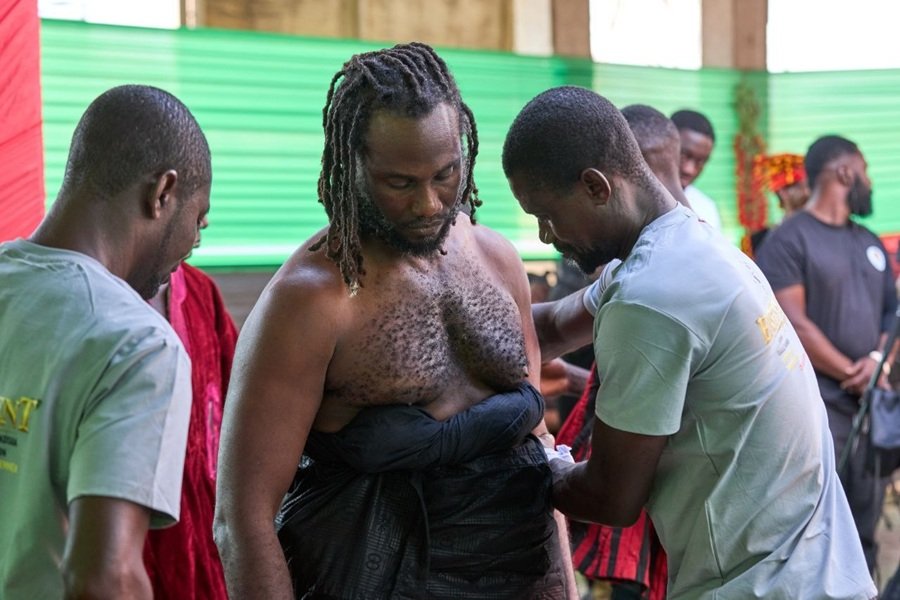
This time, there were no lecture notes, academic arguments or university classrooms. Instead, there was the weight of tradition, the rhythm of a community celebration and the solemnity of an oath at a royal palace.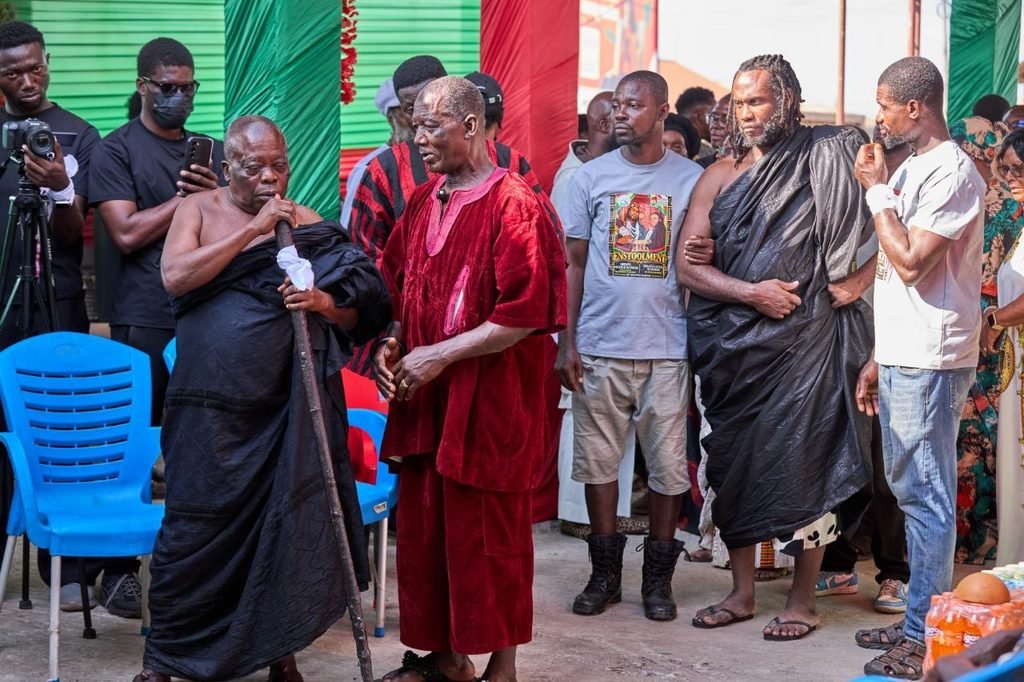
Professor Ọbádélé Kambon, a full Professor of African Linguistics at the University of Ghana, was enstooled as Apagyahene and Sunsum Ɔsahene of Akuapem Mampong in the Eastern Region in a ceremony that brought academia and traditional authority together.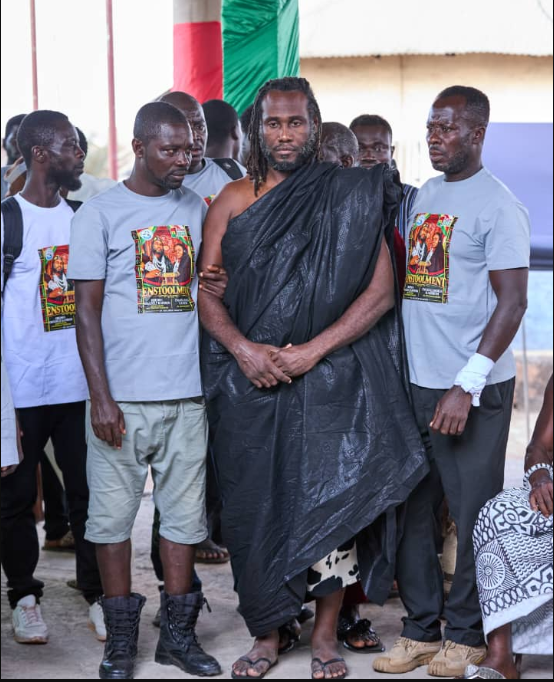
For the professor, the occasion was more than a new title. It was a moment that connected his academic interests in African languages and indigenous knowledge with the living traditions of an Akan community.
The day’s events unfolded through a series of customary observances. Kambon was first taken to the compounds of the Ɔkyeamehene and Gyasehene, where the preparations for his installation continued.
Then came the application of hyire, the white kaolin powder associated with traditional rites.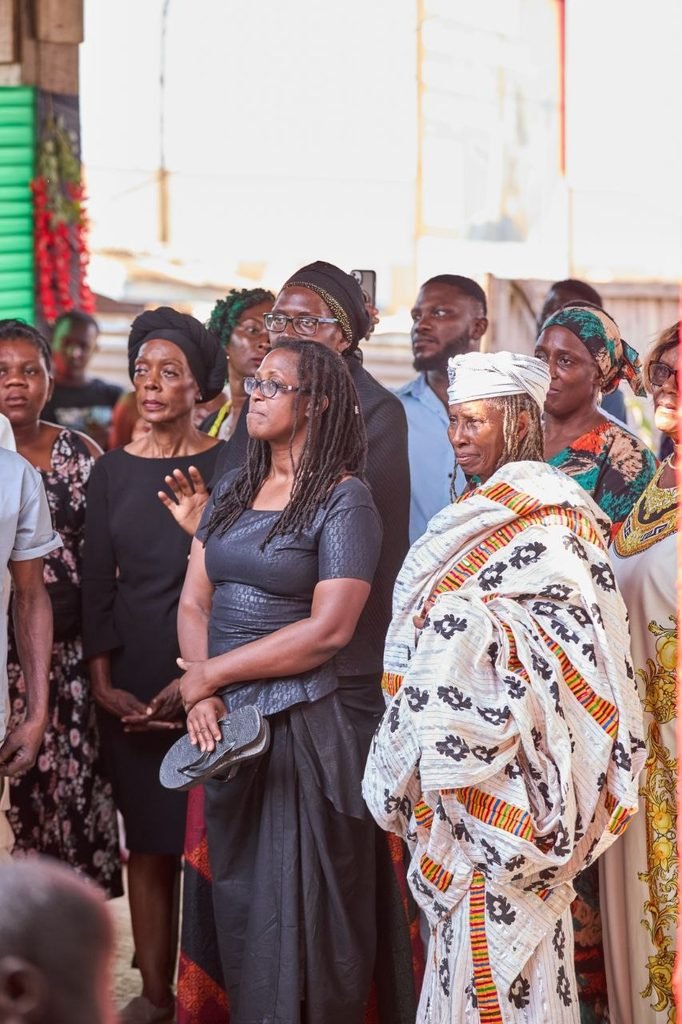
With the customary proceedings underway, the new chief was lifted onto the shoulders of celebrants and carried along the main thoroughfare of Akuapem Mampong.
The procession transformed the streets into a public stage for a ceremony rooted in the community’s traditional institutions.
There was something striking about the image, a university professor, accustomed to the measured language of academic discourse, being carried through the town in a display of traditional recognition.
Yet the celebration was not complete with the procession.
A ram was sacrificed at the Mamponghene’s compound before Kambon was taken to the palace, to swear the oath associated with his new offices.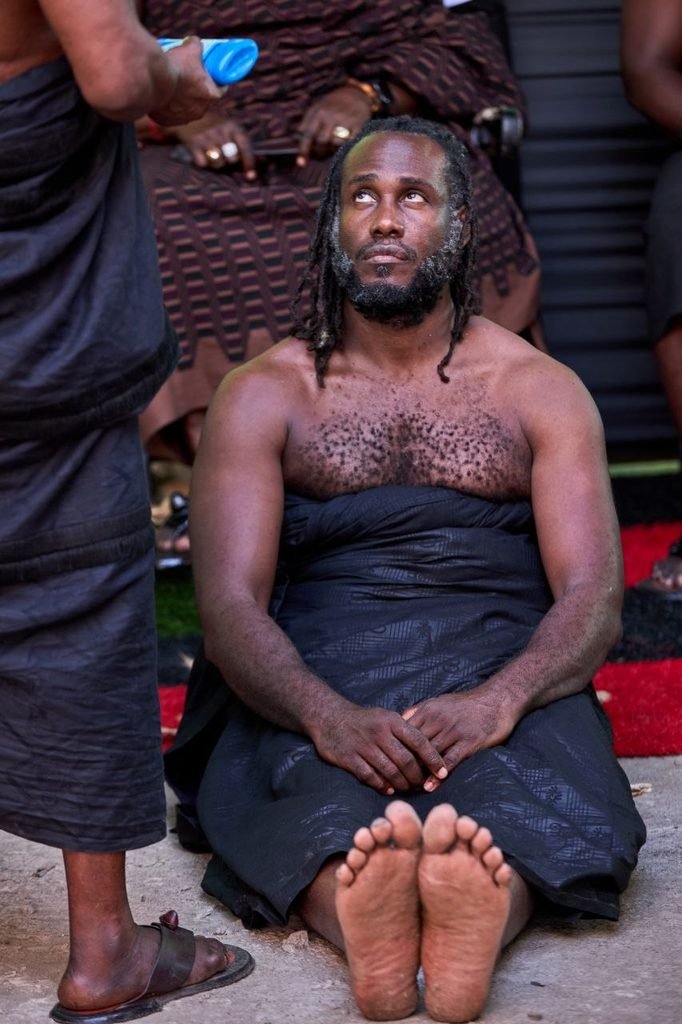

The ceremony brought him formally into his roles as Apagyahene and Sunsum Ɔsahene.
Beyond the colourful proceedings, the titles themselves carry layers of historical meaning.
Kambon in his research explores the historical connections between Apagya and Akan political and military organisation.
Accounts cited in his work linked Apagya to an asafo, or military company, while historical writing traces an Apagya stool in Asante to the reign of Opoku Ware I in the eighteenth century.
These historical associations offer a glimpse into the institutions that have shaped Akan society over generations, although they do not automatically define the precise responsibilities of the office in Akuapem Mampong.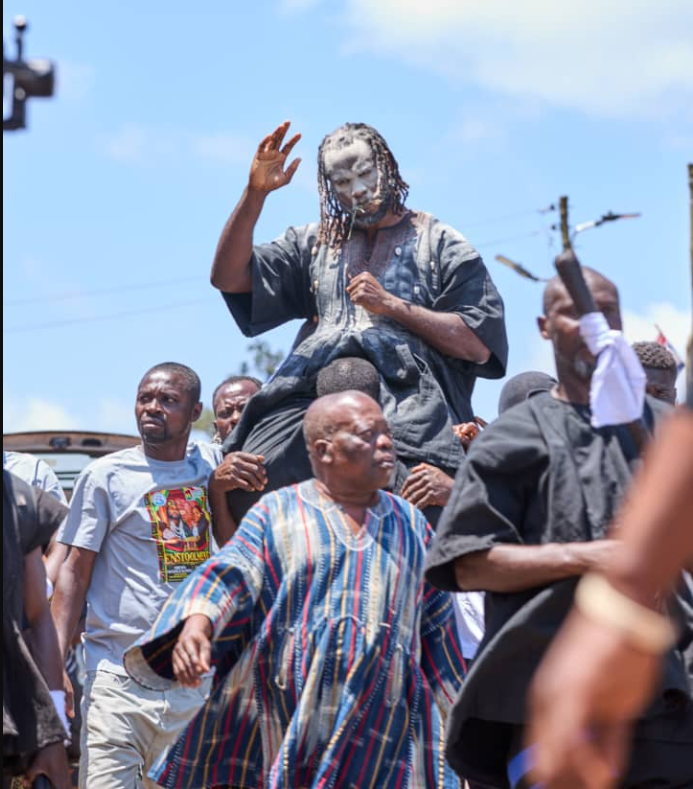
Kambon’s own professional life reflects a similar interest in preserving and examining African knowledge.
His work encompasses Akan language structure, naming practices across the Black world, proverbs and indigenous intellectual traditions.
Through Abibitumi, the platform he founded, he also promotes language learning, scholarship and cultural engagement.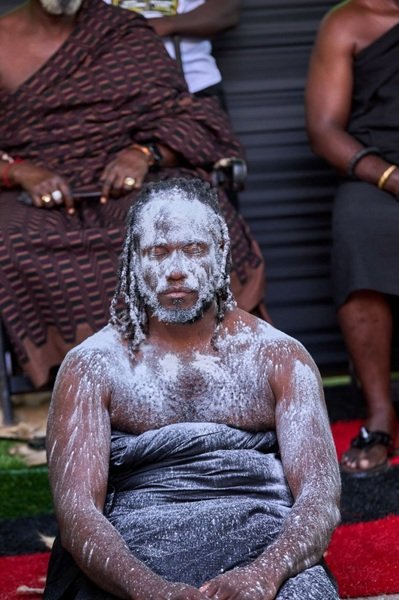
But tradition was only one part of the story that day.
When the formal ceremony gave way to a reception, the occasion expanded into a celebration of three milestones: Kambon’s enstoolment, his promotion to full professor and his daughter Ama’s admission to the University of Ghana.
The gathering therefore carried a personal significance that went beyond the honours bestowed on one man. 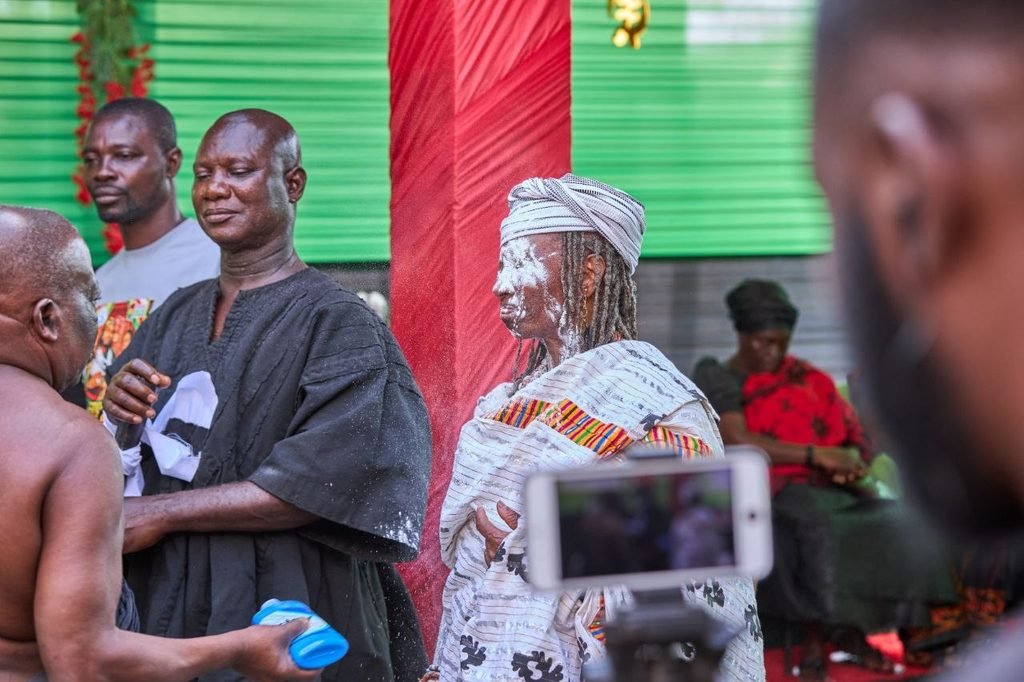
It celebrated professional advancement, the continuation of family aspirations and a connection to cultural heritage.
For a father, seeing a daughter gain admission to the same university where he holds a distinguished academic position offered another reason to celebrate.
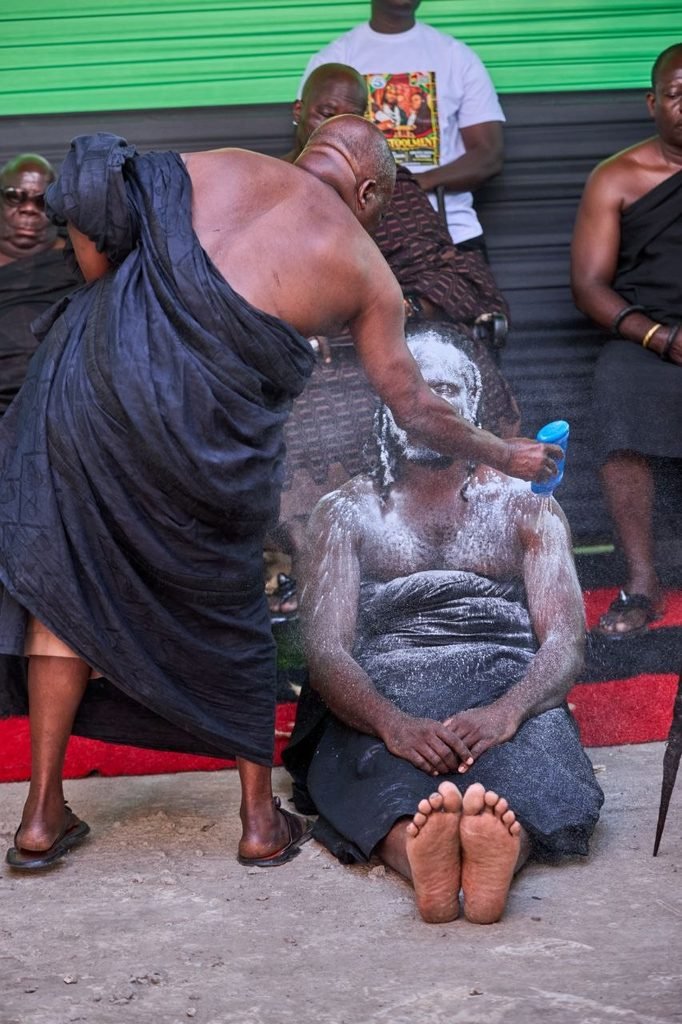
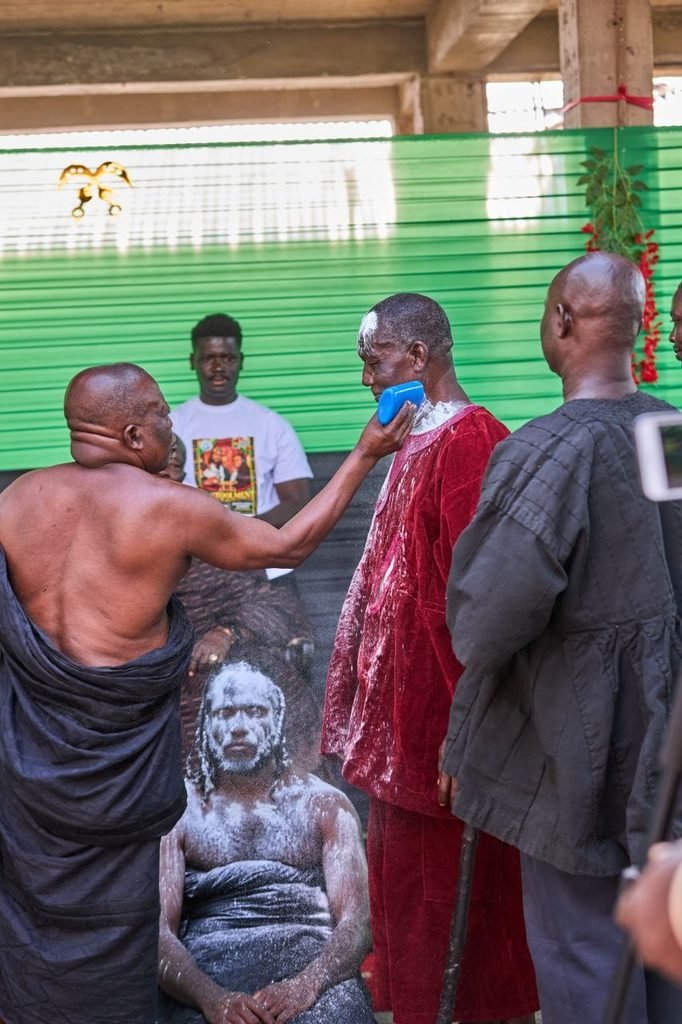
For the professor, the moment placed family achievement alongside his own professional and traditional milestones.
Kambon had already established a place in the traditional life of Akuapem Mampɔn through an earlier installation as Banmuhene Kyidɔmhene, recorded in 2017.
His latest enstoolment adds another chapter to that relationship.
In Akuapem Mampɔn, the day brought together the university, the palace and the family table in one celebration. And for Kambon, the journey from the lecture room to the traditional procession showed how scholarship, cultural responsibility and family achievement could converge in a single memorable occasion.
By Enoch Ntiamoah Siaw
SKIP THE QUEUE, TAP THE NEWS
You can now read the Ghanaian Times and The Spectator newspapers from the comfort of your device via TimesNewsPlus.
Join our WhatsApp Channel: https://whatsapp.com/channel/0029VbBElzjInlqHhl1aTU27