Hot!
Our locals deserve better!


Ghana head coach Otto Addo, the other day made stimulating assertions that may have cut refreshing vibrations through the hearts of home-based players.
He made a statement that suggested he did not really care whether a player was local or overseas-based; maintaining that his selection would be hinged on performance and nothing else.
Addo’s invitation of locals – Hearts’ top goal-poacher Afriyie Barnieh, Bechem United’s net-breaker Augustine Okrah (banged in 17 goals at the time of his invitation), ahead of Ghana Black Stars’ first two 2023 African Cup of Nations qualifiers against Madagascar and Angola, was seen by the public as indication of confidence in the ‘home contingent.’
The Stars demonstrated some stirring output at the Cape Coast Sports Stadium, a performance that crushed the Malagasy contingent 3-0 in an exhausting evening of good football.
Many Ghanaians celebrated the vintage win but had wished a local player had played a wee part in a victory that put the Stars at the summit.
However, that leading goal poachers – Banieh and Okrah were reportedly given defensive duties during their training with the national team, leaves much to be desired.
They say a good player should be versatile, ambidextrous and be able to play in all positions.
But certainly, you would not expect them to gleamer like the way they could have done in their regular attacking positions.
Of course, we agree players need to adjust and be able to grab and fight for any position thrown at them, but we also know that it is an Himalayan undertaking to unseat players in such departments.
If you really want to consummately appreciate the quality of players you have, let them play in their favourite positions – and assess them properly. Otherwise, it would appear as though you only want to set them up for failure and then have enough justification to gleefully flush them out!
Luckily, Hearts left-full back Dennis Korsah, was reported to have been given a late call-up for the team’s second group qualifier against Central African Republic.
That none of the league’s prolific scorers made the trip was a bit disappointing and all-too disconcerting, especially when the Coach had earlier gilded the lily of the guys, lauding them for their superb performance at training.
So what happened? Suddenly, the so-called fine-fettle form of the players evaporated into thin air?
The point is, if players (especially local ones) are constantly invited and not used, there is the tendency for them to feel sidelined and frustrated. And, If it becomes a regular feature, serious players who suspect they may not feature in matches, may not respond at all.
Nevertheless, it was also unfortunate on the part of Okrah to have turned down the invitation of Coach Addo for the team’s trip to Japan for a four-nation tournament that started on Friday (yesterday). Peeved and slighted as he may have felt, he should have pounced on the second offer. After all, how many times had he been called and dropped?
Who knows that was going to be a massive opportunity for him to explode off his talent to the world in the Japan tourney? It was delectable to see Barnieh saluting that second bite of the cherry and making the Asian trip.
Of course, this is not to suggest everybody should be made to just saunter into the Black Stars and grab a position on a silver platter. No, not all. We all appreciate how the team is being made competitive with players battling and jostling for positions. That is thrillingly positive.
But for goodness sake, what is Mubarak Wakasu doing in the team? That he came on late in the Stars’ victory against Madagascar was as disrespectful as shocking.
Wakasu will always be the number choice for every Ghanaian if he was in great shape or was playing regularly well for his team. Indeed, until the Stars’ game at the Cape Coast Stadium, he had not kicked a ball (played a game) for close to a year.
Though he was nursing an injury, Wakasu was also incredibly included in Ghana’s final squad to the Nations Cup in Cameroon early this year – and never kicked a ball.
In the brief moment he lasted in the Cape Coast game, we all saw a player in poor physique – limpidly showing he should not have been in the now-highly competitive team.
Could we not have brought on some of those fringe players instead of Wakasu?
Truth be spoken, Jonathan Mensah too is clearly at the twilight of his football, just like Wakasu. We saw how poorly he defended his line which resulted in Central Africa Republic’s equaliser during the Stars 1-1 draw game in their second Nation’s Cup qualifying tie played in Angola.
Remember, we are supposed to be building a formidably winsome Black Stars’ squad and cannot be taking things for granted.
A Ghanaian football fan made a disturbing statement on radio the other day that suggested that, no matter the game time you get overseas, “you are automatically better than the local player – and always the preferred choice for team selection.”
Certainly, we cannot turn our Black Stars into this white-bread expedition. If this is the situation now, then we must do our damndest and move away from this mediocrity.
PlainTalk With John Vigah


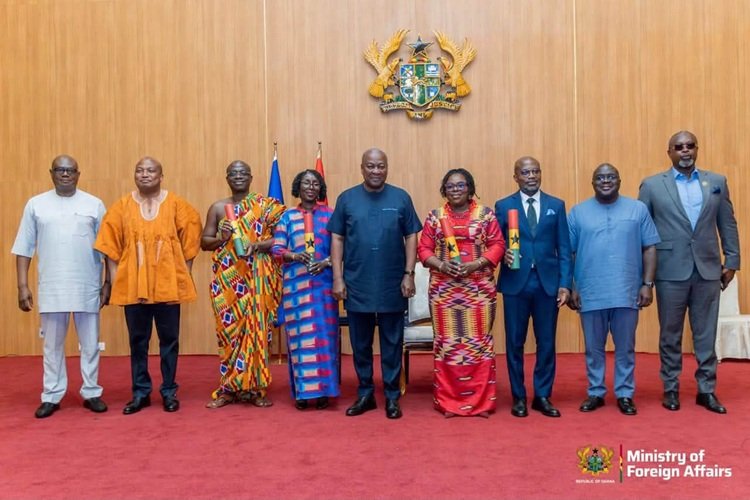
President John Dramani Mahama has commissioned four career diplomats as ambassador-designates to represent Ghana in four countries.
The commissioning ceremony took place on Friday, October 16, 2026.
The new envoys are Her Excellency Nana Antwiwaa Dodoo, Ambassador-Designate to Angola; His Excellency Louis Kwame Obeng, Ambassador-Designate to Qatar; Her Excellency Evelyn Korantemaa Ofosu-Amable, Ambassador-Designate to Israel; and His Excellency Jedidiah Reuben Adogla, Permanent Representative-Designate to Switzerland.
President Mahama charged them to advance Ghana’s national interests through strategic partnerships, economic diplomacy, investment mobilization, and expanded access to international markets.
He said Ghana’s diplomatic engagements must deliver tangible economic benefits, create jobs, and strengthen the country’s standing on the international stage.
The four envoys are career diplomats with over 27 years of experience.
On behalf of her colleagues, Her Excellency Nana Antwiwaa Dodoo thanked the President for the confidence reposed in them and pledged their commitment to emulate his leadership and deliver on the mandate given to them.
By Edem Mensah-Tsotorme
The professor who spends his days exploring the intricacies of African languages found himself at the centre of a different kind of lesson on Friday, October 2, 2026. 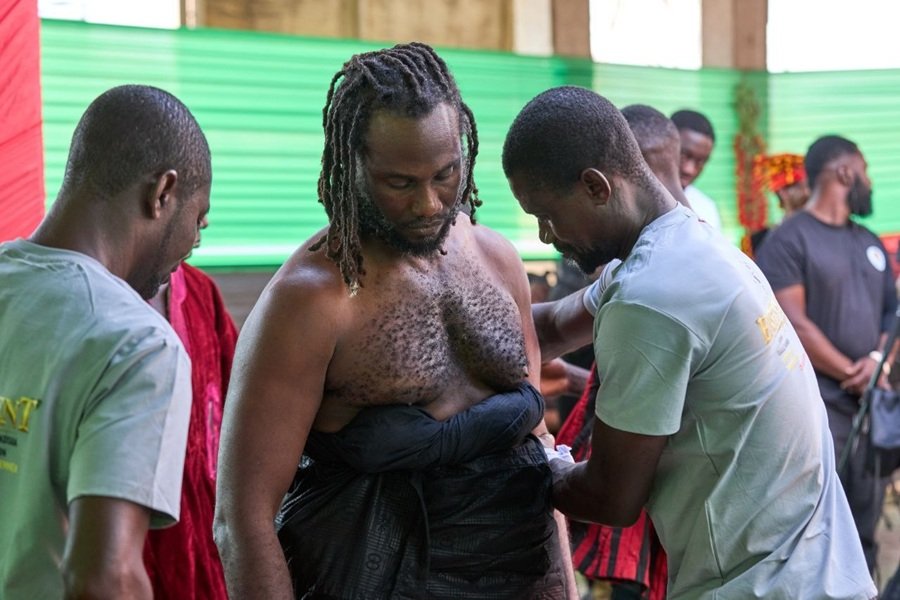
This time, there were no lecture notes, academic arguments or university classrooms. Instead, there was the weight of tradition, the rhythm of a community celebration and the solemnity of an oath at a royal palace.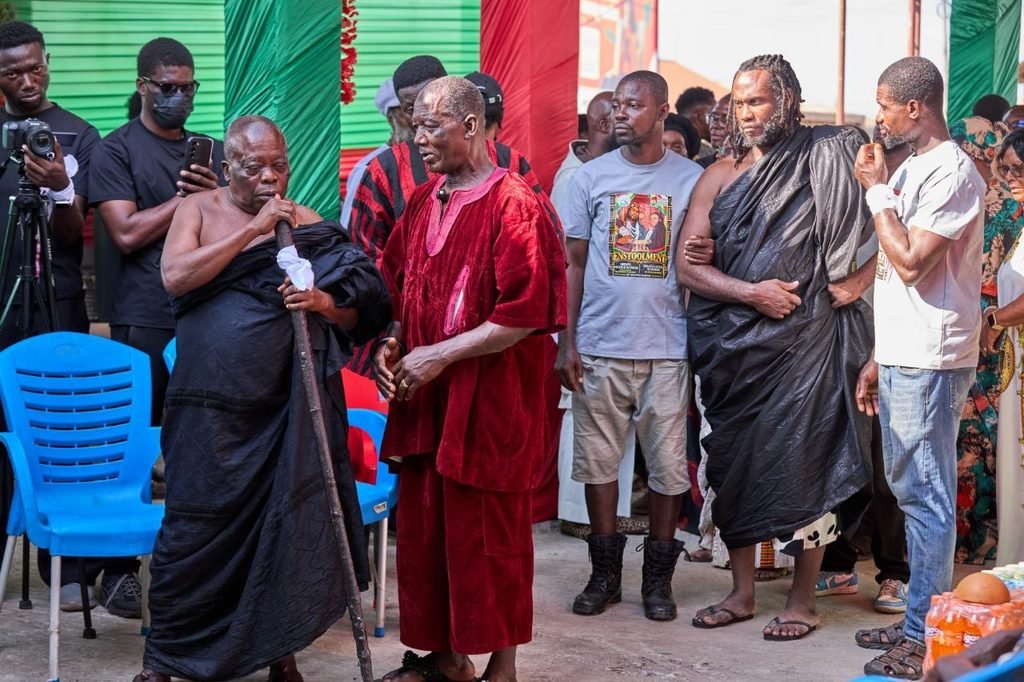
Professor Ọbádélé Kambon, a full Professor of African Linguistics at the University of Ghana, was enstooled as Apagyahene and Sunsum Ɔsahene of Akuapem Mampong in the Eastern Region in a ceremony that brought academia and traditional authority together.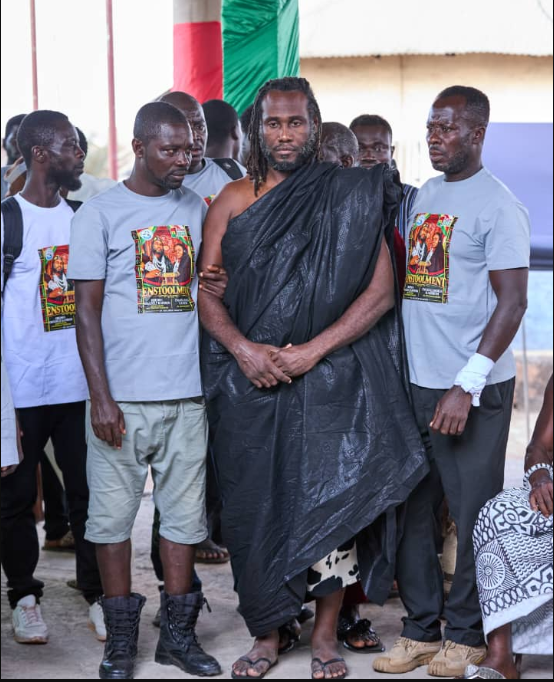
For the professor, the occasion was more than a new title. It was a moment that connected his academic interests in African languages and indigenous knowledge with the living traditions of an Akan community.
The day’s events unfolded through a series of customary observances. Kambon was first taken to the compounds of the Ɔkyeamehene and Gyasehene, where the preparations for his installation continued.
Then came the application of hyire, the white kaolin powder associated with traditional rites.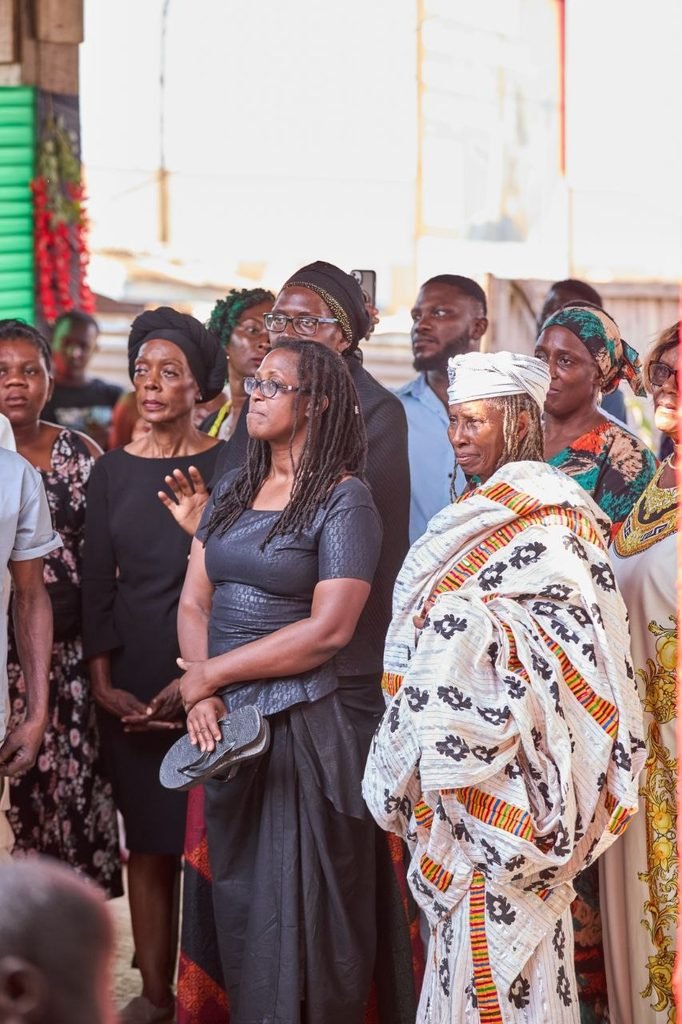
With the customary proceedings underway, the new chief was lifted onto the shoulders of celebrants and carried along the main thoroughfare of Akuapem Mampong.
The procession transformed the streets into a public stage for a ceremony rooted in the community’s traditional institutions.
There was something striking about the image, a university professor, accustomed to the measured language of academic discourse, being carried through the town in a display of traditional recognition.
Yet the celebration was not complete with the procession.
A ram was sacrificed at the Mamponghene’s compound before Kambon was taken to the palace, to swear the oath associated with his new offices.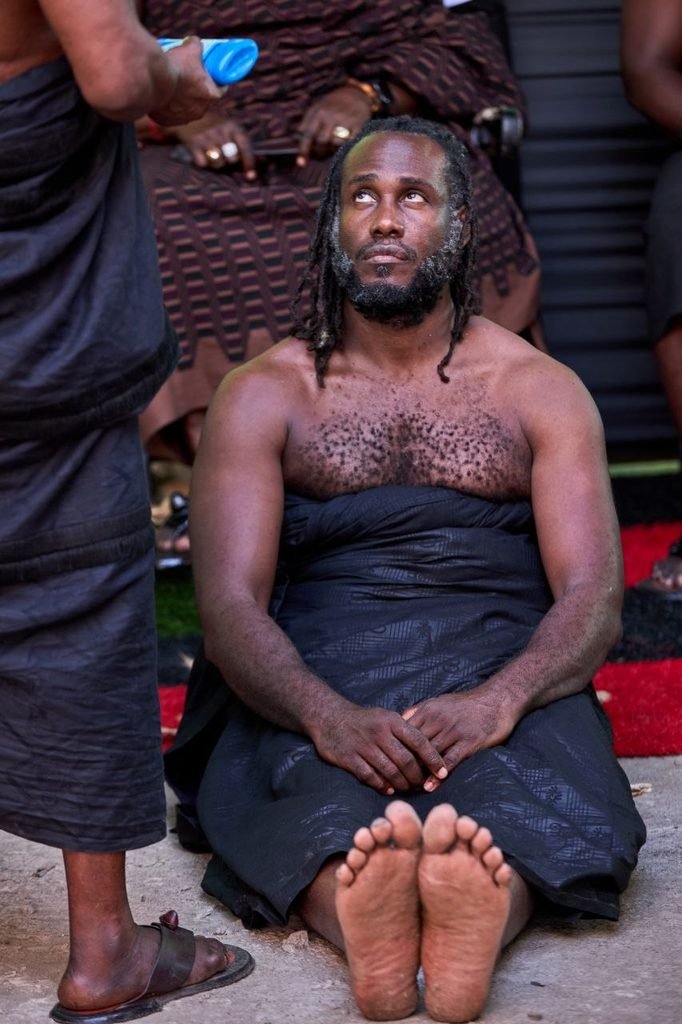

The ceremony brought him formally into his roles as Apagyahene and Sunsum Ɔsahene.
Beyond the colourful proceedings, the titles themselves carry layers of historical meaning.
Kambon in his research explores the historical connections between Apagya and Akan political and military organisation.
Accounts cited in his work linked Apagya to an asafo, or military company, while historical writing traces an Apagya stool in Asante to the reign of Opoku Ware I in the eighteenth century.
These historical associations offer a glimpse into the institutions that have shaped Akan society over generations, although they do not automatically define the precise responsibilities of the office in Akuapem Mampong.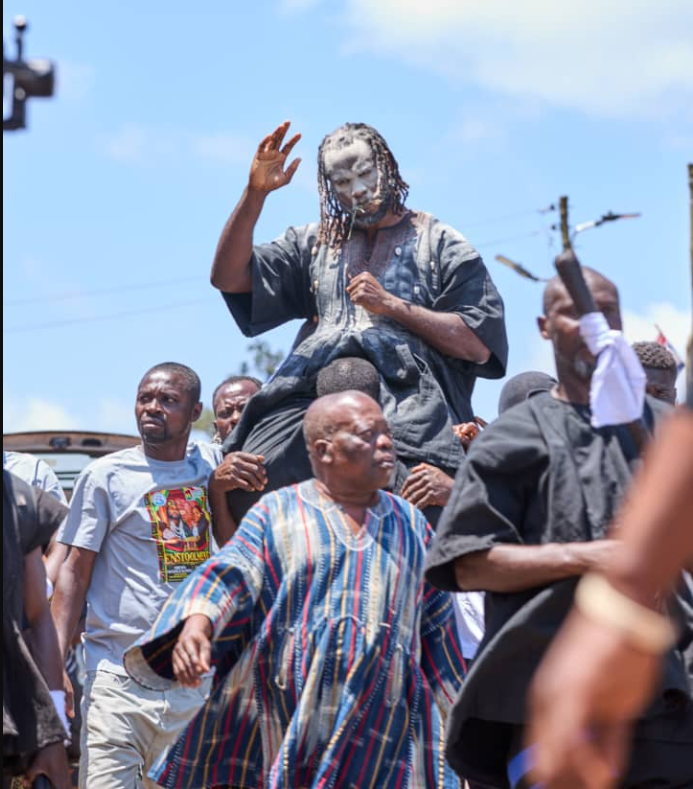
Kambon’s own professional life reflects a similar interest in preserving and examining African knowledge.
His work encompasses Akan language structure, naming practices across the Black world, proverbs and indigenous intellectual traditions.
Through Abibitumi, the platform he founded, he also promotes language learning, scholarship and cultural engagement.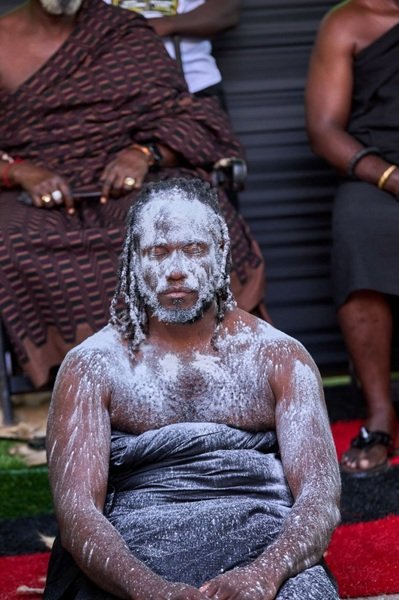
But tradition was only one part of the story that day.
When the formal ceremony gave way to a reception, the occasion expanded into a celebration of three milestones: Kambon’s enstoolment, his promotion to full professor and his daughter Ama’s admission to the University of Ghana.
The gathering therefore carried a personal significance that went beyond the honours bestowed on one man. 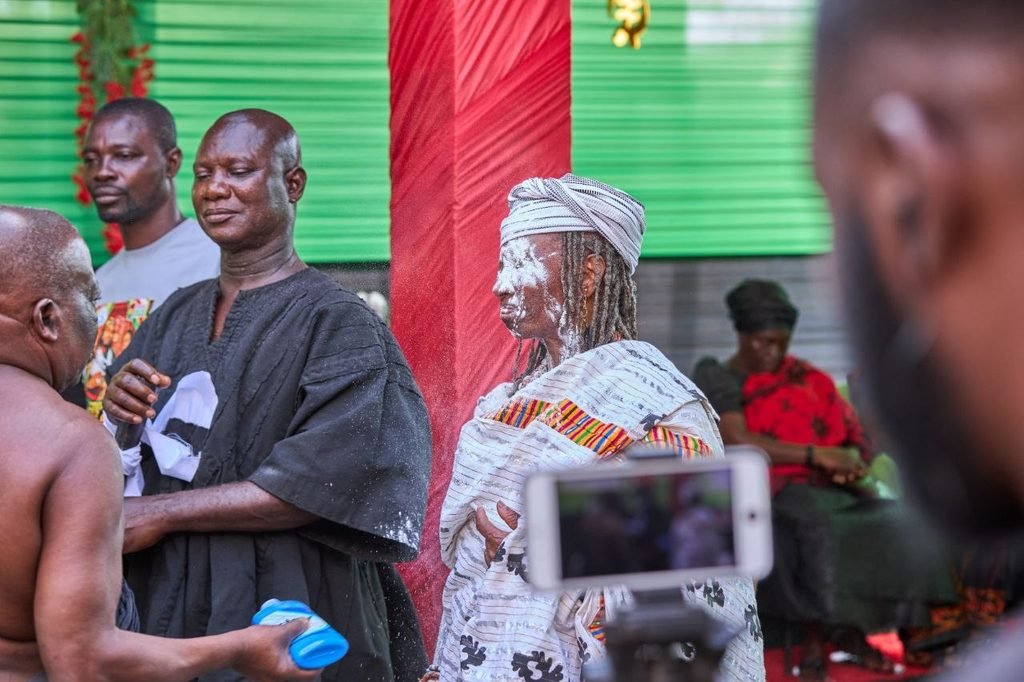
It celebrated professional advancement, the continuation of family aspirations and a connection to cultural heritage.
For a father, seeing a daughter gain admission to the same university where he holds a distinguished academic position offered another reason to celebrate.
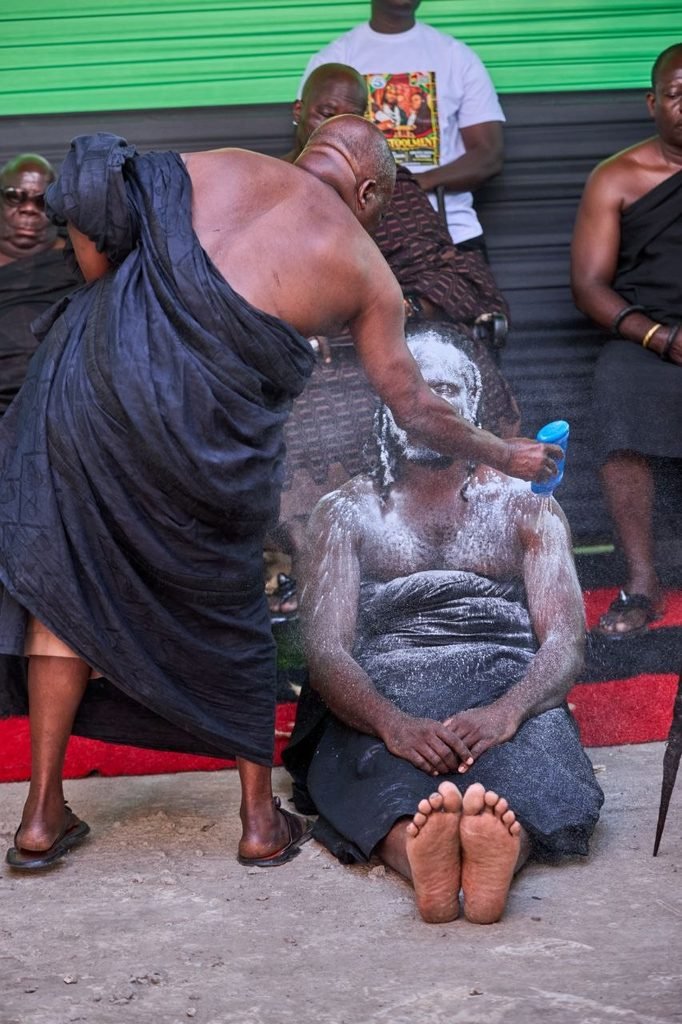
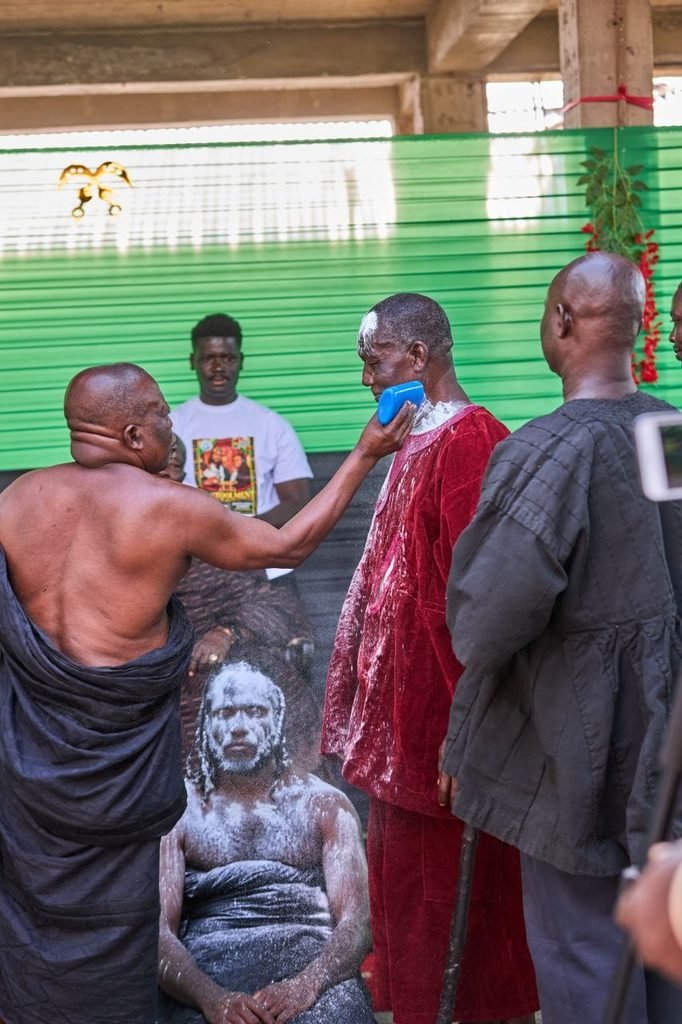
For the professor, the moment placed family achievement alongside his own professional and traditional milestones.
Kambon had already established a place in the traditional life of Akuapem Mampɔn through an earlier installation as Banmuhene Kyidɔmhene, recorded in 2017.
His latest enstoolment adds another chapter to that relationship.
In Akuapem Mampɔn, the day brought together the university, the palace and the family table in one celebration. And for Kambon, the journey from the lecture room to the traditional procession showed how scholarship, cultural responsibility and family achievement could converge in a single memorable occasion.
By Enoch Ntiamoah Siaw
SKIP THE QUEUE, TAP THE NEWS
You can now read the Ghanaian Times and The Spectator newspapers from the comfort of your device via TimesNewsPlus.
Join our WhatsApp Channel: https://whatsapp.com/channel/0029VbBElzjInlqHhl1aTU27