Features
Our lawyers must lead by example in fulfilment of their tax obligations


Income tax refers to a type of tax that governments impose on income generated by businesses and individuals within their jurisdiction. By law, taxpayers are required to file an income tax return annually to determine their tax obligations. Simply put, income taxes are sources of revenue for government to fund public services and provide goods for the citizens.
Personal income tax is a type of income tax that is levied on an individual’s wages, salaries and other types of income while business income tax applies to corporations, partnerships, small businesses and people who are self-employed.
GRA AND INCOME TAX COLLECTION
In accordance with the Income Tax Act 2015 (Act 896), the collection of these taxes falls within the jurisdiction of the Ghana Revenue Authority (GRA). It is the agency that is mandated by law to collect taxes on all forms of income such as wages, salaries, commissions, investments and business earnings. These personal income taxes can help fund government programmes and services such as national security, roads, schools, provision of water and electricity among others.
To facilitate the collection of these taxes, a Taxpayer Identification Number (TIN) has been designed by the GRA to determine people who are qualified and liable to register and pay taxes to the state.
PAYMENT OF TAXES WORLDWIDE
All over the world, paying your taxes is considered a civic duty, although doing so is also a requirement of the law. If you do not pay your taxes, the government agency that oversees taxes, will require you to pay, failure of which will attract penalties such as fines or imprisonment. Nobody irrespective of your status in society is above the law in this regard. Whether you are a lawyer, medical doctor, engineer, etc. you have to fulfil your civic obligation of paying tax.
Under the tax law, it is the employer’s responsibility to file a monthly tax returns on behalf of its employee. The employer is required to withhold the employee’s taxes to pay to the tax agency. Taxes withheld, must be filed and payment made by 15th of the month following the month in which these taxes are withheld. Additionally, the employer, shall not later than 30th April following the end of every year of assessment, furnish an Employer’s Annual Tax Deduction Schedule which shall specify tax withheld in respect of each employee. The return is required to outline salaries paid to each employee, exemptions, tax reliefs, chargeable income tax due and tax paid.
PROFESSIONAL BODIES AND THEIR TAX OBLIGATIONS
It is worthy to note that these obligations under the law apply to countries worldwide including our own country, Ghana, and our professional bodies are quite familiar with the provisions under the Act. It is, therefore, surprising to hear that about 6,000 lawyers in the country are not filing their income tax. Besides, many doctors and over 60, 000 business people have been evading tax of which the Ghana Revenue Authority (GRA) is fully aware and has a reliable data on them.
PRESIDENT LASHES AT LAWYERS FOR FAILURE TO PAY TAXES
This revelation came to light recently when the President, Nana Addo Dankwa Akufo-Addo, addressed the Ghana Bar Association’s 2021 conference at Bolgatanga in the Upper East Region. He described the failure of some lawyers in the country to pay their taxes as embarrassing.
“It is embarrassing that lawyers are often on top of the list of those who flout our tax laws and use their expertise to avoid paying taxes. They appear to think that being members of the learned profession puts them above compliance with everyday duties like paying taxes,” the President said, adding that “they will soon be receiving friendly calls from the tax authority. I sincerely hope that those involved will swiftly move to regularise their tax affairs before the GRA moves to crack the whip”.
It is a shame that lawyers who parade as learned professionals should abandon their civic responsibility of payment of taxes on their earnings. This unhealthy situation would have been kept under the carpet if the president had not highlighted the issue at the GBA conference.
APPLYING THE NECESSARY SANCTIONS AGAINST DEFAULTING LAWYERS
The GRA needs to calculate the amount involved on individual basis and apply the necessary sanctions, especially payment of interests on the amount to serve as a deterrent to others. Similarly, other professionals such as the doctors who have defaulted in the payment of their income taxes must also face similar consequences. If an ordinary worker defaults in the payment of income tax, the GRA will be on the neck of that fellow. Besides, officials from the GRA have been moving from shop to shop as well as other small scale businesses closing them for failure to honour their tax obligations and applying sanctions. What type of country is this, in which the laws are rigidly applied to certain group of people and individuals while others are let off the hook? That is interesting and amazing!
GRA OUGHT TO BE BLAMED FOR THESE INCOME TAX SHORTFALLS
The Ghana Revenue Authority must take the blame for its failure to act when it first discovered this anomaly in spite of all the facilities it has including the PIN numbers of the defaulters and to allow the numbers to increase to this magnitude. What then is the essence of acquiring these TIN numbers which people have to struggle to get from the GRA?
It is a fact that if we continue to behave in this way where those who are qualified to pay taxes that are ‘badly’ needed to develop this country are shying away from that obligation, our country will never witness any progress in its development. The question that many Ghanaians will be asking is that; Do these defaulting lawyers have the morality to defend people who have defaulted in their obligations, when they themselves, are the worst offenders? This negative behaviour on the part of these lawyers and other professionals can be one of the corrupt practices we have been experiencing in this country which we must deal with as a nation. It is not only when you dip your hands into state coffers and steal funds meant for development that makes you corrupt but also, the failure to fulfil your tax obligation as required by law.
LATE FORMER PRESIDENT PROFESSOR MILLS’ OBSERVATION
The situation as it stands now will make one to suspect that some officials within the tax collection agencies have been colluding with people in influential positions to evade taxes thereby denying the state money needed to carry out development projects in this country. The late former president John Evans Atta Mills of blessed memory, saw what happened years back when he paid an unannounced visit to the CEPS offices and spoke vehemently against the practice. He saw a situation in which young personnel who had gained employment to these tax collection institutions had become millionaires overnight and acquired huge mansions and expensive vehicles through some of these dubious and obnoxious practices at the expense of the state.
WE NEED THESE TAXES TO BUILD THE NATION
This country needs to develop to an appreciable level and it is some of these taxes that can be used to carry out this agenda. Therefore, we need to be stringent and meticulous in the collection of our legitimate taxes to prosecute this ambitious development. The IRS and other tax collection bodies in the country need to rise up to the challenge of raking in the needed revenue for the state. Our professional bodies must also encourage their members to pay their legitimate taxes to the state. Anything short of that is an affront to our democratic advancement.
Contact email/WhatsApp of author:
ataani2000@yahoo.com
0277753946/0248933366
By Charles Neequaye


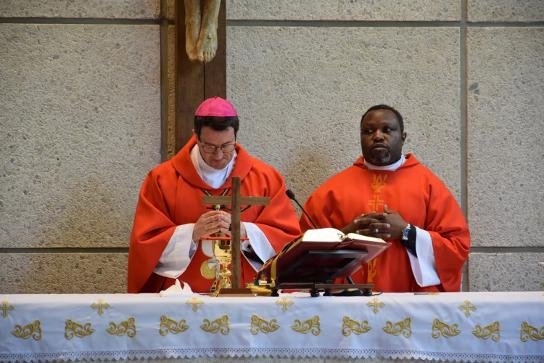
On Sunday, October 11, 2026, it was the turn of Ghanaian Catholics in Finland to lead the singing in the church service of the African Catholic Chaplaincy in Finland (ACCF).
It was indeed a spirit-filled feeling for worshippers present. And for the Ghanaian migrants, the occasion also brought back to them memories of church services in their home country, Ghana.
The ACCF has a roster for each country/community to sing from time to time. Next Sunday will be the turn of the Nigerian community. Other communities that usually sing are the Kenyan/Tanzanian community, the Cameroonian, the Ugandan, group, etc.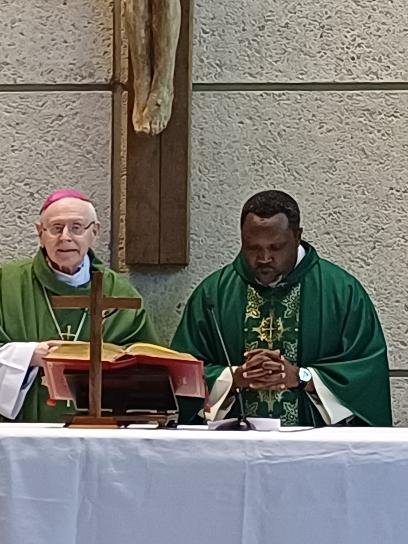
A powerful religious experience
The mass services of the Chaplaincy usually give a powerful religious experience and a display of cultural diversity, especially in occasions such as when the Bishop of Helsinki, Bishop Raimo Goyarrola, celebrated mass with the Chaplaincy on Pentecost Day, May 24, 2026.
There was a similar time of spiritual joy last month (September 27, 2026) when Emeritus Bishop Teemu Sippo, former Bishop of Helsinki, visited the Chaplaincy. Bishop Teemu was the main celebrant, assisted by the Chaplain, Reverend Father Thomas Otieno.
Last Sunday, Reverend Father Bernard Sor, a Ghanaian Catholic priest based in Austria, was the main celebrant in the mass service where he performed a rite of baptism. Fr Bernard had celebrated mass a few months ago when he visited his sister and her husband in Helsinki. 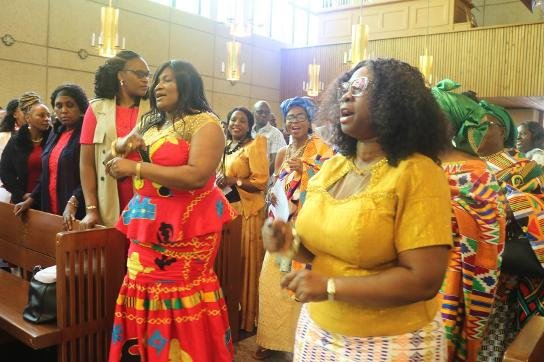
All these well-attended religious occasions indeed leave lasting memories. The homilies (peaching) by the priests usually emphasize religious tenets such as the importance of loving and serving God in truth, existing in peace with our fellow humans to promote unity in diversity, etc.
Unity in diversity and a colourful display of cultures
The African Chaplaincy church services usually produce impressive displays of diverse cultures from different parts of Africa and elsewhere. The events are often spiced by rich cultural displays of dances and colourful attires which are a delight to watch.
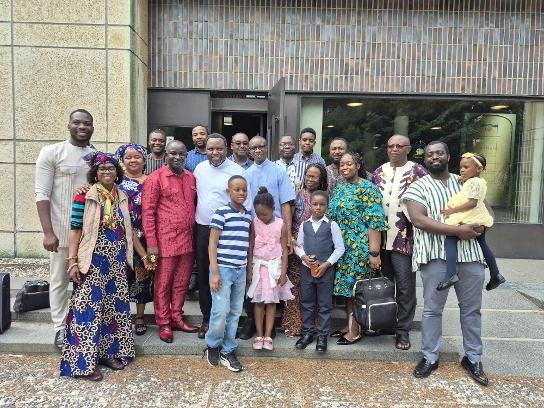
On special occasions, members of the Ghanaian Catholic community, in their gay and colourful kente attire and with adowa dance and music, usually lead the procession into the church. Other communities such as the Cameroonian, Nigerian, Kenyan and Tanzanian as well as Sudanese/South Sudanese groups also put up well-choreographed performances from their cultures.
The African Catholic Chaplaincy in Finland
The African Chaplaincy was founded on June 4, 2017, which was a Pentecost Sunday, in a Pontifical High Mass celebrated by Monsignor Emeritus Sippo S.C.I., the then Bishop of Helsinki, at the St. Mary’s Catholic Parish Church in Helsinki.
The Chaplaincy was created by Bishop Teemu in collaboration with the Diocesan body when they detected a great flocking of African immigrants to Finland, the majority of whom were Catholics. This was to give the immigrants a possibility to integrate into the Finnish society by worshiping as Catholics and in their African cultural identity.
The responsibility of the Chaplaincy was given by Bishop Teemu to Father Dr Leonard Wobilla Shwei, who is thus the first Chaplain and ably led the Chaplaincy. He was succeeded a few years ago by Father Thomas Otieno, who continues to move the Chaplaincy forward. Thank you!
GHANA MATTERS column appears fortnightly. Written in simple, layman’s terms, it concentrates on matters about Ghana and beyond. It focuses on everyday life issues relating to the social, cultural, economic, religious, political, health, sports, youth, gender, etc. It strives to remind us all that Ghana comes first. The column also takes a candid look at the meanings and repercussions of our actions, especially those things we take for granted or even ignore. There are key Ghanaian values we should uphold rather than disregard with impunity. We should not overlook the obvious. We need to search for the hidden or deeply embedded values and try to project them.
With Dr Perpetual Crentsil
SKIP THE QUEUE, TAP THE NEWS

You can now read the Ghanaian Times and The Spectator newspapers from the comfort of your device via TimesNewsPlus.
Join our WhatsApp Channel: https://whatsapp.com/channel/0029VbBElzjInlqHhl1aTU27
She did not find out he was cheating. She found out he was drowning.
It was two weeks after their beautiful wedding. The jollof was still in the fridge. A loan officer called her number-not his-and politely asked, “Madam, please tell your husband to pay his overdue loan. We have been calling him.”
That was how she discovered her new husband had entered their marriage with a hidden debt of over GH¢ 40,000. No cheating. No other woman. Just a financial secret.
And that is how many Ghanaian marriages begin to die. Not with a shout, but with a secret alert on a phone.
We prepare for the wedding. We do not prepare for the wallet.
What is money honesty?
Let me define it simply. Money honesty is not that you both earn the same. It is that you both know the same. It is the ability to sit down and say without fear:
“This is how much I earn.”
“This is how much I owe.”
“This is how I was raised to see money.”
“This is what scares me about money.”
Financial transparency is not about control. It is about clarity. You cannot build trust on top of secrets.
Many couples tell me, “Counsellor, we love each other, love will handle money.” I always answer, “Love is the car, but money honesty is the fuel. Love without honesty cannot move.”
How To Buy Your Marriage Insurance Today – My 5-Step Protocol
If you are engaged, newly married, or even 20 years in marriage, you can still fix this. At Counsellor Prince & Associates Consult—CPAC, this is what I give couples:
Step 1: The 90-Minute Money Naked Session.
No phones, no blame. Each partner writes down on paper: Monthly income, monthly debts, monthly family obligations, savings, and your biggest money fear. Then you exchange papers. Read it. Don’t react for 24 hours. Just absorb.
Step 2: Create OUR Money, YOUR Money, My Money.
You need three pots. OUR money for rent, food, school fees, utilities, properties, and the like— joint contribution. YOUR money and MY money—a small agreed allowance no one questions. This stops the feeling of being controlled.
Step 3: The No-Secret Debt Rule.
Agree from today: No new loan, no new hire purchase, no new family financial commitment above GHS 500 without telling each other first. Not permission, but information.
Step 4: Talk About Your Money Personality.
Are you a Spender or a Saver? Are you Risky or Safe? Most Ghanaian marriages are a Spender married to a Saver. Neither is wrong. But if you don’t understand your partner’s personality, you will call his saving “stinginess” and her spending “wastefulness.”
Step 5: Do a Monthly 30-Minute Money Date
Not an argument date. Light, with tea. “How did we do this month? What worried you? What should we plan for next month?” Couples who do this divorce far less.
My Final Word
Before you say “I Do” at the altar, have pre-marital counselling and also have the money talk on the sofa.
Ask your partner:
“If I lost my job today, how long can we survive?”
“What debt are you bringing into this marriage?”
“How much do you send to your family monthly and will that continue?”
If he or she gets angry that you asked, don’t get married yet. A person who is angry about accountability will be abusive about money.
Marriage insurance is not bought at Star Assurance or Enterprise. It is bought in honest conversations when no one is watching.
The wedding costs one day. The marriage costs a lifetime. Don’t enter a lifetime contract and covenant with hidden costs.
You can still insure your marriage today.
Source:
Counselor Prince Offei, CPAC’s founder, is a leading Mental Health Professional, Marriage Counsellor, Author, ADR Expert/Arbitrator, and Spectator Newspaper Columnist. He writes on relationships, marriage, parenting, special needs support, and their connection to mental health. For therapy, counselling, or enquiries, contact Counselor Prince & Associates Consult (CPAC) in Accra on 0559850604 / 0551428486.
SKIP THE QUEUE, TAP THE NEWS
You can now read the Ghanaian Times and The Spectator newspapers from the comfort of your device via TimesNewsPlus.
Join our WhatsApp Channel: https://whatsapp.com/channel/0029VbBElzjInlqHhl1aTU27