Hot!
Other side of priest who prayed for Gen Acheampong before execution

- /home/u249204778/domains/spectator.com.gh/public_html/wp-content/plugins/mvp-social-buttons/mvp-social-buttons.php on line 27
https://spectator.com.gh/wp-content/uploads/2022/04/Rev-Fr-Col-Matthias-Dismas-Kwame-Kumesi-e1650878631411.jpg&description=Other side of priest who prayed for Gen Acheampong before execution', 'pinterestShare', 'width=750,height=350'); return false;" title="Pin This Post">
- Share
- Tweet /home/u249204778/domains/spectator.com.gh/public_html/wp-content/plugins/mvp-social-buttons/mvp-social-buttons.php on line 72
https://spectator.com.gh/wp-content/uploads/2022/04/Rev-Fr-Col-Matthias-Dismas-Kwame-Kumesi-e1650878631411.jpg&description=Other side of priest who prayed for Gen Acheampong before execution', 'pinterestShare', 'width=750,height=350'); return false;" title="Pin This Post">
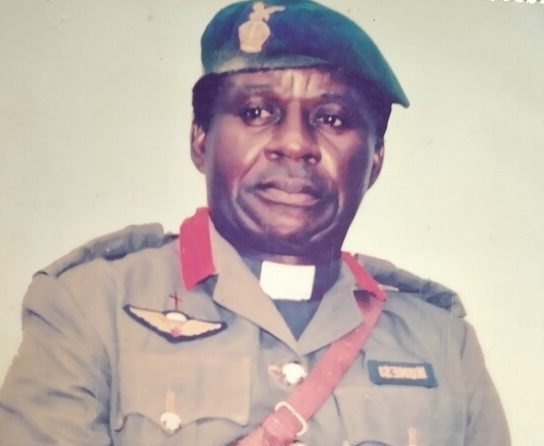
Rev Fr Col Matthias Dismas Kwame Kumesi (rtd), the priest who prayed for General I.K. Acheampong, a former military head of state, before his execution following the June 4, 1979 uprising led by JJ Rawlings, has spoken about his other activities in the Ghana Armed Forces (GAF).
He says, for instance, that he played a pioneering role that requires a determined character to surmount the challenges involved.
Hecan aptly be described as an extraordinary Catholic Priest who has broken uncharted grounds in the GAF for others to emulate..
He was the first chaplain of the GAF to be granted Presidential Commissioning into this prestigious military institution.
Not content with this achievement, he is on record as the first Chaplain of the GAF to train as a parachutist to rub shoulders with the officers and men who belong to this elite unit of the military.
In an interview with The Spectator at Nkwanta in the Oti Region recently, he said his batch was trained by Canadian Military Officers at the Ghana Military Academy and Training Schools (GMATS), Teshie, and his intake was the last batch of officers to be commissioned in December 1965 by Dr Kwame Nkrumah, Ghana’s first President, before his overthrow in March 1966.
He explained that chaplains who served in the GAF before him had no formal military training but were only given the military uniform to enable them to perform their pastoral duties.
The former Chaplain-General,who was later designated as the Director of Religious Affairs of the GAF, said after his commissioning, his first posting was to the 6th Battalion of Infantry (6BN) in Takoradi, which was under the Command of then Lt Col Ignatius Kutu Acheampong,, who became a General before he was executed following the June 4, 1979 Revolution.
He said after he had been commissioned into the GAF, he resolved that he would avail himself of all military training programmes and exercises to broaden his knowledge.
Therefore, when the opportunity came in 1971 and he was posted to the Airborne Force in Tamale as the chaplain, he utilised it (opportunity) to train as a parachutist, adding that though the training was difficult from the beginning and many thought he could not endure it because he was a chaplain, he managed to end it successfully.
Rev FrKumesi disclosed that in 1973, when the Rev FrMajor JamesOwusu, the Senior Catholic Chaplain, was appointed the Catholic Bishop of Kumasi Diocese, he was transferred to Accra to replace him.
The former Chaplain-General, whose tenure in office spanned from October 1, 1981 to November 15, 1988 and spent a total of 24 years of meritorious service in the military, said one of his greatest wishes as the Chaplain-General was to have a commissioned officer as the Imam, and he was elated when this wish eventually materialised.
Traumatic Experiences
Recounting some experiences in the military,Col Kumesi said when he was the Chaplain at 6BN, Takoradi, he found Gen Acheampong as a leader who was approachable but very firm.
“I could remember after Gen Joseph Arthur Ankrah’s coup, he called all the officers under his Command into his office while he was waiting for instructions from Accra,” he recollected.
He said some of the officers were later picked up for comments they made in connection with the coup while the officers waited in the Commanding Officer’s Office, inTakoradi.
“Some days after, l was called by the military authorities to give them details about the conversations of those officers who were picked, while we waited in the CO’s office. I told them as a Catholic priest l could not testify against anybody, so l was placed under close arrest three months for disobeying lawful command,” he said.
According to him, after three months, he was given an open arrest for nine months, which meant he could not move out of Accra. He added that it was during this period that some of the Catholic Bishops of Ghana visited him and assured him that they were solidly behind him.
After the ninth month, a military trial was arranged for him and his punishment was delay in his promotion.
From Raymond Kyekye–Nkwanta


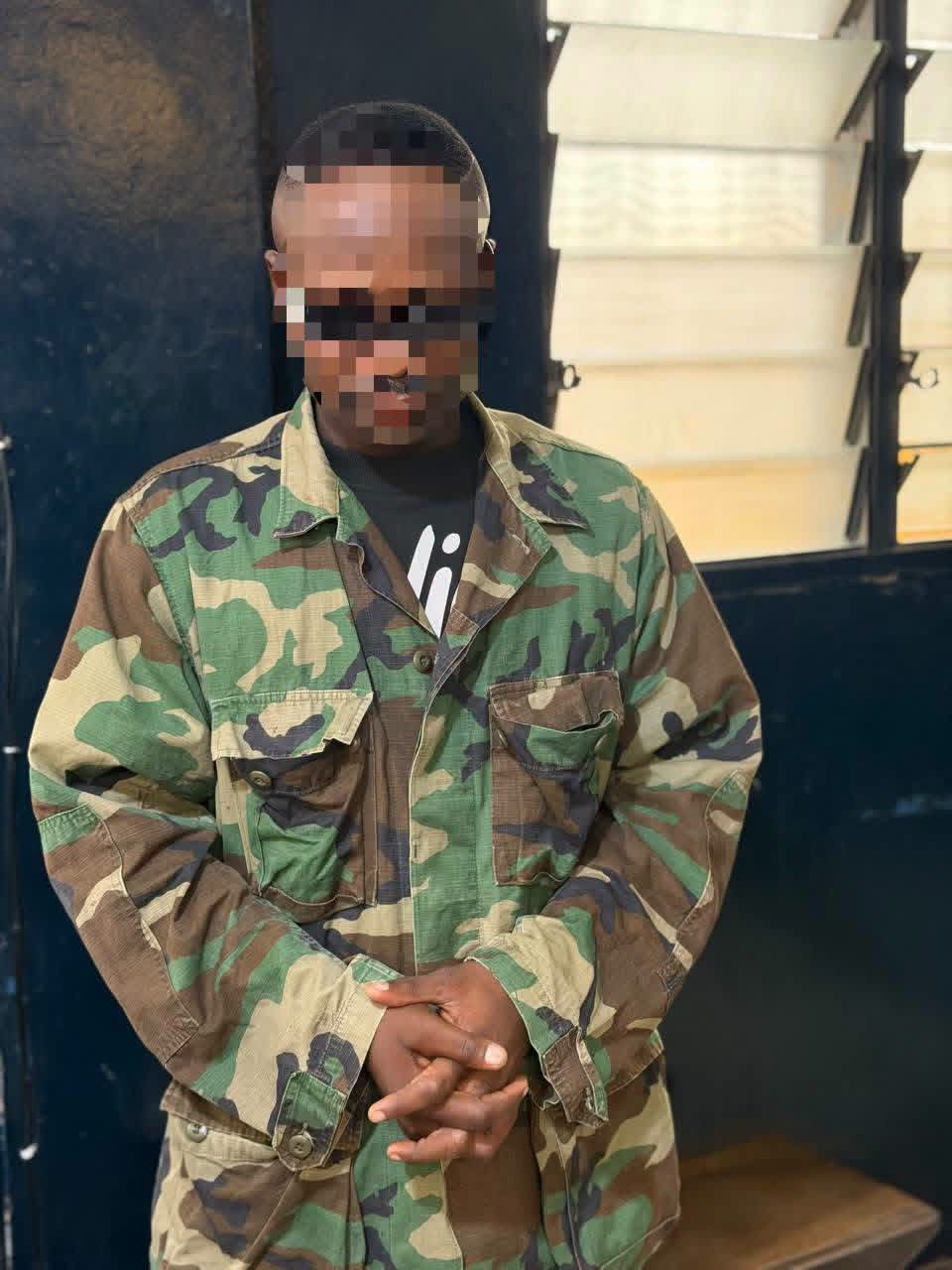
The Tema Regional Police Command has arrested a 32-year-old man for allegedly posing as a soldier and extorting money from unsuspecting members of the public at Ashaiman.
The suspect, identified as Bright Atsu Kudiabor, was arrested by the Ashaiman Police on Wednesday, September 16, 2026, at about 7:00 a.m.
According to the Police, he was arrested at an area known as “I Shall Return”, where he was allegedly parading himself as a soldier and demanding money from people.
The Police said Kudiabor, who is an ex-convict, was initially arrested by personnel of the Ghana National Fire Service in Ashaiman with assistance from other members of the public.
A search conducted on him after he was handed over to the Police reportedly led to the recovery of a set of military camouflage uniform.
The suspect is currently in Police custody and assisting with investigations.
The Tema Regional Police Command said he would be processed for court after investigations are completed.
The Police urged the public to remain vigilant and report anyone who falsely presents themselves as a soldier or a member of another security agency to deceive or extort money from the public.
By: Jacob Aggrey
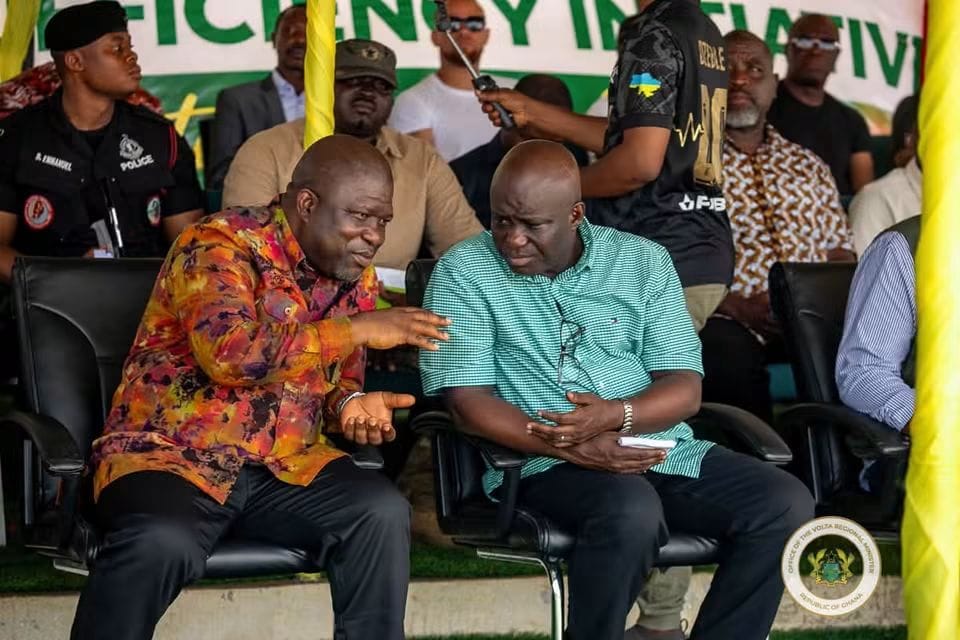
Volta Regional Minister, James Gunu, says the Volta Region holds enormous agricultural potential and efforts must be geared towards connecting farmers to the needed resources to unlock that potential.
He said focus must be on linking farmers to resources, technology, financing and markets to increase production, create jobs and build sustainable livelihoods.
Hon. Gunu made the remarks at the national launch of the Ghana Tomato Self-Sufficiency Initiative (GHATSI) held at Anloga in the Volta Region on Tuesday, September 15.
The initiative, under the theme “Produce at Home. Feed the Nation. Export the Surplus,” seeks to boost local tomato production, processing and marketing while reducing Ghana’s heavy reliance on imported tomatoes.
The launch was attended by the Minister for Food and Agriculture, Eric Opoku, his Deputy, John Setor Dumelo, Feed Ghana Coordinator, Bright Demordzi, Members of Parliament, traditional leaders, MMDCEs, farmers and other stakeholders.
Mr.Gunu expressed appreciation to the Minister for Food and Agriculture for the support announced for the region, including two excavators, 200 cartons of organic fertiliser, and GH¢200,000 for Ms. Kuatudzo Esther Dela, a tomato farmer and processor from Ziope.
He described the initiative as an important step towards making agriculture a stronger driver of food security, job creation and economic growth in the Volta Region.
By Edem Mensah-Tsotorme