Entertainment
Oscars: ‘CODA’, ‘Dune’ triumph as Will Smith smack dominates social media, plus full winners list

- /home/u249204778/domains/spectator.com.gh/public_html/wp-content/plugins/mvp-social-buttons/mvp-social-buttons.php on line 27
https://spectator.com.gh/wp-content/uploads/2022/03/gettyimages-1205162040-754x424-1.jpg&description=Oscars: ‘CODA’, ‘Dune’ triumph as Will Smith smack dominates social media, plus full winners list', 'pinterestShare', 'width=750,height=350'); return false;" title="Pin This Post">
- Share
- Tweet /home/u249204778/domains/spectator.com.gh/public_html/wp-content/plugins/mvp-social-buttons/mvp-social-buttons.php on line 72
https://spectator.com.gh/wp-content/uploads/2022/03/gettyimages-1205162040-754x424-1.jpg&description=Oscars: ‘CODA’, ‘Dune’ triumph as Will Smith smack dominates social media, plus full winners list', 'pinterestShare', 'width=750,height=350'); return false;" title="Pin This Post">
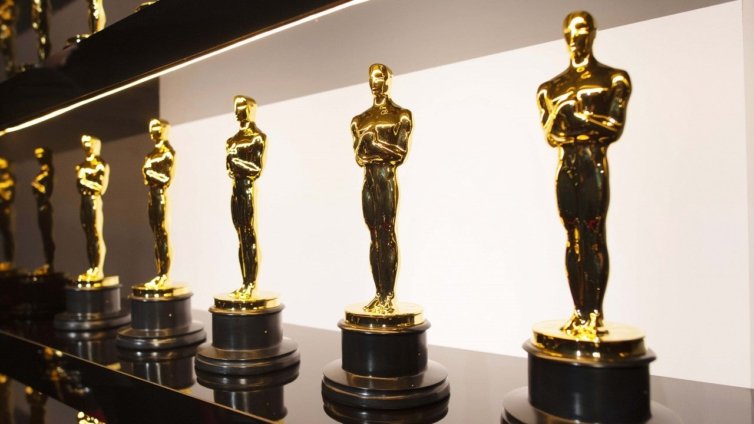
“CODA” made history on Sunday, becoming the first movie from a major streaming service to win an Oscar for best picture.
Its victory at the 94th Academy Awards provides a potent illustration of tectonic changes taking place in Hollywood, a shift in the way that movies are made and distributed that has been accelerated by the COVID-19 pandemic.
At a time when the movie business is under pressure to widen its aperture and tell more stories about people of colour and underrepresented groups, “CODA’s” win was barrier-breaking in other important ways.
The movie, which centres on the only hearing member of a deaf family’s relationship with her parents and brother, has been heralded for its sensitive depiction of the disabled community and its use of deaf actors.
“CODA” ran the table, converting all three of its nominations into wins, nabbing a best-supporting actor prize for Troy Kotsur and a best-adapted screenplay honour for Sian Heder, who also directed the movie. Its average may have been impressive, but it was “Dune,” an ambitious adaptation of Frank Herbert’s sprawling sci-fi novel, that had a leading six wins. All of its victories came in technical categories such as sound, score and editing.#
It was an evening of milestones and meme-able moments, none more social media-melting than the slap heard around the world. Will Smith was named best actor for his performance as Richard Williams, the hard-driving father of tennis greats Venus and Serena Williams, in “King Richard,” but his big night was overshadowed by a bizarre unscripted moment.
At one point, the actor strode to the stage and hit Chris Rock after the comic made a joke about his wife Jada Pinkett Smith being in a sequel to “G.I. Jane” due to her close-cropped haircut. Pinkett Smith has talked openly about losing her hair due to alopecia.
“Leave my wife’s name out of your fucking mouth,” Smith screamed at Rock. After winning his prize, Smith apologized to the Academy of Motion Picture Arts & Sciences, the non-profit behind the Oscars, and his fellow nominees, but also sought to explain his outburst.
“Love will make you do crazy things,” he said, adding, “To do what we do, you got to be able to take abuse. You got to be able to have people talk crazy about you. In this business you got to be able to have people disrespecting you. And you got to smile, you got to pretend like that’s okay.”
Jessica Chastain earned best actress for her chameleonic turn as televangelist Tammy Faye Bakker in “The Eyes of Tammy Faye.” While accepting her prize, Chastain cited Bakker’s history of championing gay men and AIDS patients at a time when many members of the evangelical community did not share her belief.
“Suicide is a leading cause of death in the United States,” Chastain said. “It’s touched many families. It’s touched mine. And especially members of the LGBTQ community who oftentimes feel out of place with their peers. We’re faced with discriminatory and bigoted legislation that is sweeping our country with the only goal of further dividing us. There’s violence and hate crimes being perpetuated on innocent civilians all over the world. And in times like this, I think of Tammy and I’m inspired by her.”
Best supporting actress went to Ariana DeBose for playing the passionate Anita in “West Side Story.” It was the role that won Rita Moreno the same prize for her work in the 1961 film version of the popular musical. DeBose made history, becoming the first queer Afro-Latina actress to win an Oscar.
She acknowledged that milestone in her speech, noting that her journey to the podium was an example of a person “..who found her strength in life through art.”
“To anybody who has ever questioned your identity or you find yourself living in the gray spaces, I promise you this — there is indeed a place for us,” DeBose concluded, referencing one of the most famous songs from “West Side Story.”
And Kotsur also made history, becoming just the second deaf actor to win an Oscar. “Children of a Lesser God’s” Marlee Matlin, the only other deaf performer to win an Oscar and the actress who played his wife in “CODA,” looked on from the audience.
“This is dedicated to the deaf community, the CODA community and the disabled community,” Kotsur said. “This is our moment.”
“CODA” was released by Apple TV Plus, the streaming arm of the Silicon Valley leviathan, which launched just three years ago as part of a new wave of Netflix challengers. Netflix, which entered the Oscars ceremony fielding best picture nominees such as the ecological satire “Don’t Look Up” and the revisionist Western “The Power of the Dog” fell short of capturing the top prize, an honour that also eluded previous Netflix releases such as “Roma” and “The Irishman.”
However, “The Power of the Dog,” which had a leading 12 nominations, snagged a best director win for Jane Campion. She became only the third woman to earn the prize, joining a tiny club that also includes Chloe Zhao (“Nomadland”) and Kathryn Bigelow (“The Hurt Locker”). It was the only statue that Netflix picked up at the ceremony.
The theme of this year’s Academy Awards was “movie lovers unite,” and it remains to be seen how many film fans heeded the call.
The 2021 edition of the Oscars was the lowest rated in history, attracting a paltry 10.4 million total viewers, a 56% drop from the previous ceremony. It did have the misfortune of airing before vaccines were widely available — the show was held in L.A.’s Union Station with only a small group of nominees and presenters invited to attend in person.
With COVID restrictions easing, this year’s celebration of movies returned to the cavernous Dolby Theatre. In an effort to streamline the ceremony, producer Will Packer opted to hand out eight prizes, including awards for below-the-line categories such as production design and hair and makeup, before the live telecast.
Their acceptance speeches were later shown in edited form during the broadcast — a move that attracted controversy. If it was intended to shave the running time, it didn’t work. The broadcast stretched past the three and a half hour mark.
Though the spirit inside the Dolby was largely festive (with the exception of the shock that greeted Smith’s slap), there were a few allusions to the violence conflicts and political divisions that are roiling the country and the world.
The broadcast included a moment of silence for Ukraine, an acknowledgment of Russia’s illegal invasion of the country. And hosts Wanda Sykes, Amy Schumer and Regina Hall used the opening monologue to poke fun at Republican Governor Ron DeSantis and Florida politicians’ efforts to ban classroom instruction about sexual orientation or gender identity to children in third grade or younger.
It’s an effort that resulted in a near staff revolt at the Walt Disney Company, with employees decrying the conglomerate’s history of financially supporting many of the same legislators who backed the legislation.
“For you people in Florida, we’re going to have a gay night,” Sykes joked before her co-hosts joined her in saying, “gay, gay, gay.”
With COVID upending the theatrical landscape, many of the movies up for major prizes such as “Licorice Pizza,” “West Side Story” and “Belfast,” the winner of best original screenplay, struggled to convert rave reviews into ticket sales. Others embraced hybrid distribution strategies, with the likes of “Dune” and “King Richard” debuting simultaneously in theatres and on HBO Max.
Even “CODA,” the night’s big winner, debuted on Apple TV Plus at the same time it opened in cinemas. That’s where most people saw the film. “CODA” earned a meagre $1 million at the box office. And while Best Animated Feature winner “Encanto” may have opened in theaters, it stumbled at the box office only to get a second life when it started showing on Disney Plus and TikTok users embraced its insanely catchy song “We Don’t Talk About Bruno.”
Even as the Oscars embraced its streaming future, the broadcast also honored the art form’s history, bringing back the casts of classics like “The Godfather” and “Pulp Fiction” and celebrating the 60th anniversary of James Bond with an incongruous presentation featuring skateboarder Tony Hawk, surfer Kelly Slater and snowboarder Shaun White. But even that venerable spy franchise isn’t immune to change.
This month, Metro-Goldwyn-Mayer, the distributor of the 007 films, closed an $8.5 billion sale to Amazon, one of the tech giants reshaping the movie business.
Here is the full list of 2022 Oscar winners:
Best Sound
“Dune,” Mac Ruth, Mark Mangini, Theo Green, Doug Hemphill and Ron Bartlett (WINNER)
“Belfast,” Denise Yarde, Simon Chase, James Mather and Niv Adiri
“No Time to Die,” Simon Hayes, Oliver Tarney, James Harrison, Paul Massey and Mark Taylor
“The Power of the Dog,” Richard Flynn, Robert Mackenzie and Tara Webb
“West Side Story,” Tod A. Maitland, Gary Rydstrom, Brian Chumney, Andy Nelson and Shawn Murphy
Best Documentary Short Subject
“The Queen of Basketball,” Ben Proudfoot (WINNER)
“Audible,” Matt Ogens and Geoff McLean
“Lead Me Home,” Pedro Kos and Jon Shenk
“Three Songs for Benazir,” Elizabeth Mirzaei and Gulistan Mirzaei
“When We Were Bullies,” Jay Rosenblatt
Best Animated Short Film
“The Windshield Wiper,” Alberto Mielgo and Leo Sanchez (WINNER)
“Affairs of the Art,” Joanna Quinn and Les Mills
“Bestia,” Hugo Covarrubias and Tevo Díaz
“Boxballet,” Anton Dyakov
“Robin Robin,” Dan Ojari and Mikey Please
Best Live Action Short Film
“The Long Goodbye,” Aneil Karia and Riz Ahmed (WINNER)
“Ala Kachuu – Take and Run,” Maria Brendle and Nadine Lüchinger
“The Dress,” Tadeusz Łysiak and Maciej Ślesicki
“On My Mind,” Martin Strange-Hansen and Kim Magnusson
“Please Hold,” K.D. Dávila and Levin Menekse
Best Original Score
“Dune,” Hans Zimmer (WINNER)
“Don’t Look Up,” Nicholas Britell
“Encanto,” Germaine Franco
“Parallel Mothers,” Alberto Iglesias
“The Power of the Dog,” Jonny Greenwood
Best Film Editing
“Dune,” Joe Walker (WINNER)
“Don’t Look Up,” Hank Corwin
“King Richard”, Pamela Martin
“The Power of the Dog,” Peter Sciberras
“Tick, Tick…Boom!” Myron Kerstein and Andrew Weisblum
Best Production Design
“Dune,” production design: Patrice Vermette; set decoration: Zsuzsanna Sipos (WINNER)
“Nightmare Alley,” production design: Tamara Deverell; set decoration: Shane Vieau
“The Power of the Dog,” production design: Grant Major; set decoration: Amber Richards
“The Tragedy of Macbeth,” production design: Stefan Dechant; set decoration: Nancy Haigh
“West Side Story,” production design: Adam Stockhausen; set decoration: Rena DeAngelo
Best Makeup and Hairstyling
“The Eyes of Tammy Faye,” Linda Dowds, Stephanie Ingram and Justin Raleigh (WINNER)
“Coming 2 America,” Mike Marino, Stacey Morris and Carla Farmer
“Cruella,” Nadia Stacey, Naomi Donne and Julia Vernon
“Dune,” Donald Mowat, Love Larson and Eva von Bahr
“House of Gucci,” Göran Lundström, Anna Carin Lock and Frederic Aspiras
Best Supporting Actress
Ariana DeBose (“West Side Story”) (WINNER)
Jessie Buckley (“The Lost Daughter”)
Judi Dench (“Belfast”)
Kirsten Dunst (“The Power of the Dog”)
Aunjanue Ellis (“King Richard”)
Best Cinematography
“Dune,” Greig Fraser (WINNER)
“Nightmare Alley,” Dan Laustsen
“The Power of the Dog,” Ari Wegner
“The Tragedy of Macbeth,” Bruno Delbonnel
“West Side Story,” Janusz Kaminski
Best Visual Effects
“Dune,” Paul Lambert, Tristan Myles, Brian Connor and Gerd Nefzer (WINNER)
“Free Guy,” Swen Gillberg, Bryan Grill, Nikos Kalaitzidis and Dan Sudick
“No Time to Die,” Charlie Noble, Joel Green, Jonathan Fawkner and Chris Corbould
“Shang-Chi and the Legend of the Ten Rings,” Christopher Townsend, Joe Farrell, Sean Noel Walker and Dan Oliver
“Spider-Man: No Way Home,” Kelly Port, Chris Waegner, Scott Edelstein and Dan Sudick
Best Animated Feature Film
“Encanto,” Jared Bush, Byron Howard, Yvett Merino and Clark Spencer (WINNER)
“Flee,” Jonas Poher Rasmussen, Monica Hellström, Signe Byrge Sørensen and Charlotte De La Gournerie
“Luca,” Enrico Casarosa and Andrea Warren
“The Mitchells vs. the Machines,” Mike Rianda, Phil Lord, Christopher Miller and Kurt Albrecht
“Raya and the Last Dragon,” Don Hall, Carlos López Estrada, Osnat Shurer and Peter Del Vecho
Best Supporting Actor
Troy Kotsur (“CODA”) (WINNER)
Ciarán Hinds (“Belfast”)
Jesse Plemons (“The Power of the Dog”)
J.K. Simmons (“Being the Ricardos”)
Kodi Smit-McPhee (“The Power of the Dog”)
Best International Feature Film
“Drive My Car” (Japan) (WINNER)
“Flee” (Denmark)
“The Hand of God” (Italy)
“Lunana: A Yak in the Classroom” (Bhutan)
“The Worst Person in the World” (Norway)
Best Costume Design
“Cruella,” Jenny Beavan (WINNER)
“Cyrano,” Massimo Cantini Parrini and Jacqueline Durran
“Dune,” Jacqueline West and Robert Morgan
“Nightmare Alley,” Luis Sequeira
“West Side Story,” Paul Tazewell
Best Original Screenplay
“Belfast,” written by Kenneth Branagh (WINNER)
“Don’t Look Up,” screenplay by Adam McKay; story by Adam McKay and David Sirota
“King Richard,” written by Zach Baylin
“Licorice Pizza,” written by Paul Thomas Anderson
“The Worst Person in the World,” written by Eskil Vogt, Joachim Trier
Best Adapted Screenplay
“CODA,” screenplay by Sian Heder (WINNER)
“Drive My Car,” screenplay by Ryusuke Hamaguchi, Takamasa Oe
“Dune,” screenplay by Jon Spaihts and Denis Villeneuve and Eric Roth
“The Lost Daughter,” written by Maggie Gyllenhaal
“The Power of the Dog,” written by Jane Campion
Best Documentary Feature
“Summer of Soul (…Or, When the Revolution Could Not Be Televised),” Ahmir “Questlove” Thompson, Joseph Patel, Robert Fyvolent and David Dinerstein (WINNER)
“Ascension,” Jessica Kingdon, Kira Simon-Kennedy and Nathan Truesdell
“Attica,” Stanley Nelson and Traci A. Curry
“Flee,” Jonas Poher Rasmussen, Monica Hellström, Signe Byrge Sørensen and Charlotte De La Gournerie
“Writing With Fire,” Rintu Thomas and Sushmit Ghosh
Best Original Song
“No Time To Die” from “No Time to Die,” music and lyric by Billie Eilish and Finneas O’Connell (WINNER)
“Be Alive” from “King Richard,” music and lyric by Dixson and Beyoncé Knowles-Carter
“Dos Oruguitas” from “Encanto,” music and lyric by Lin-Manuel Miranda
“Down To Joy” from “Belfast,” music and lyric by Van Morrison
“Somehow You Do” from “Four Good Days,” music and lyric by Diane Warren
Best Director
Jane Campion (“The Power of the Dog”) (WINNER)
Kenneth Branagh (“Belfast”)
Ryûsuke Hamaguchi (“Drive My Car”)
Paul Thomas Anderson (“Licorice Pizza”)
Steven Spielberg (“West Side Story”)
Best Lead Actor
Will Smith (“King Richard”) (WINNER)
Javier Bardem (“Being the Ricardos”)
Benedict Cumberbatch (“The Power of the Dog”)
Andrew Garfield (“Tick, Tick … Boom!”)
Denzel Washington (“The Tragedy of Macbeth”)
Best Lead Actress
Jessica Chastain (“The Eyes of Tammy Faye”) (WINNER)
Olivia Colman (“The Lost Daughter”)
Penélope Cruz (“Parallel Mothers”)
Nicole Kidman (“Being the Ricardos”)
Kristen Stewart (“Spencer”)
Best Picture
“CODA,” Philippe Rousselet, Fabrice Gianfermi and Patrick Wachsberger, producers (WINNER)
“Belfast,” Laura Berwick, Kenneth Branagh, Becca Kovacik and Tamar Thomas, producers
“Don’t Look Up,” Adam McKay and Kevin Messick, producers
“Drive My Car,” Teruhisa Yamamoto, producer
“Dune,” Mary Parent, Denis Villeneuve and Cale Boyter, producers
“King Richard,” Tim White, Trevor White and Will Smith, producers
“Licorice Pizza,” Sara Murphy, Adam Somner and Paul Thomas Anderson, producers
“Nightmare Alley,” Guillermo del Toro, J. Miles Dale and Bradley Cooper, producers
“The Power of the Dog,” Jane Campion, Tanya Seghatchian, Emile Sherman, Iain Canning and Roger Frappier, producers
“West Side Story,” Steven Spielberg and Kristie Macosko Krieger, producers
Source: Variety.com


Award-winning Ghanaian rapper, Michael Addo popularly known as Sarkodie, has called for a deeper and more sustainable partnership between Ghana’s creative industry and the financial technology sector.
The rapper made the call on Tuesday when he paid a courtesy call on the management of MobileMoney Fintech Limited at the company’s head office in Accra to explore opportunities for collaboration beyond the conventional corporate sponsorship arrangement.
The meeting focused on how the two sectors could work together to promote financial inclusion, digital financial services and opportunities within Ghana’s growing creative economy.
The rapper acknowledged MobileMoney Fintech Ltd’s past support for his annual Rapperholic concert, but emphasised that his broader objective was to establish a long-term partnership that creates sustainable value for both the company and the creative industry.
“I am here today not like the usual business where we come and ask, ‘Can we get sponsorship for our show?’ and that’s it. It goes beyond just coming in and getting support,” Sarkodie said.
He pointed out that artistes and creative professionals maintain long-term visions for their careers including album releases, tours, brand initiatives, and community engagement programmes and argued that corporate partnerships should be structured around shared objectives.
Sarkodie proposed to use his upcoming campus tour as a platform for MobileMoney Fintech Ltd to engage directly with young people, raising awareness about the company’s new MoMo app and its comprehensive suite for financial services.
Welcoming Sarkodie and his team, the Chief Executive Officer of MobileMoney Fintech Ltd, Mr Shaibu Haruna, described the visit as an important step towards strengthening the relationship between the creative and Fintech industries.
Mr Haruna explained that although MobileMoney Fintech Ltd was primarily a technology-driven company, its relationship with the entertainment industry remained strategic because of the enormous reach and influence of both sectors.
Both parties expressed commitment to future engagements to identify concrete areas of cooperation, focusing heavily on expanding financial inclusion, connecting young people to digital financial services, and accelerating the growth of Ghana’s creative economy.
By Linda Abrefi Wadie
SKIP THE QUEUE, TAP THE NEWS

You can now read the Ghanaian Times and The Spectator newspapers from the comfort of your device via TimesNewsPlus.
Join our WhatsApp Channel: https://whatsapp.com/channel/0029VbBElzjInlqHhl1aTU27
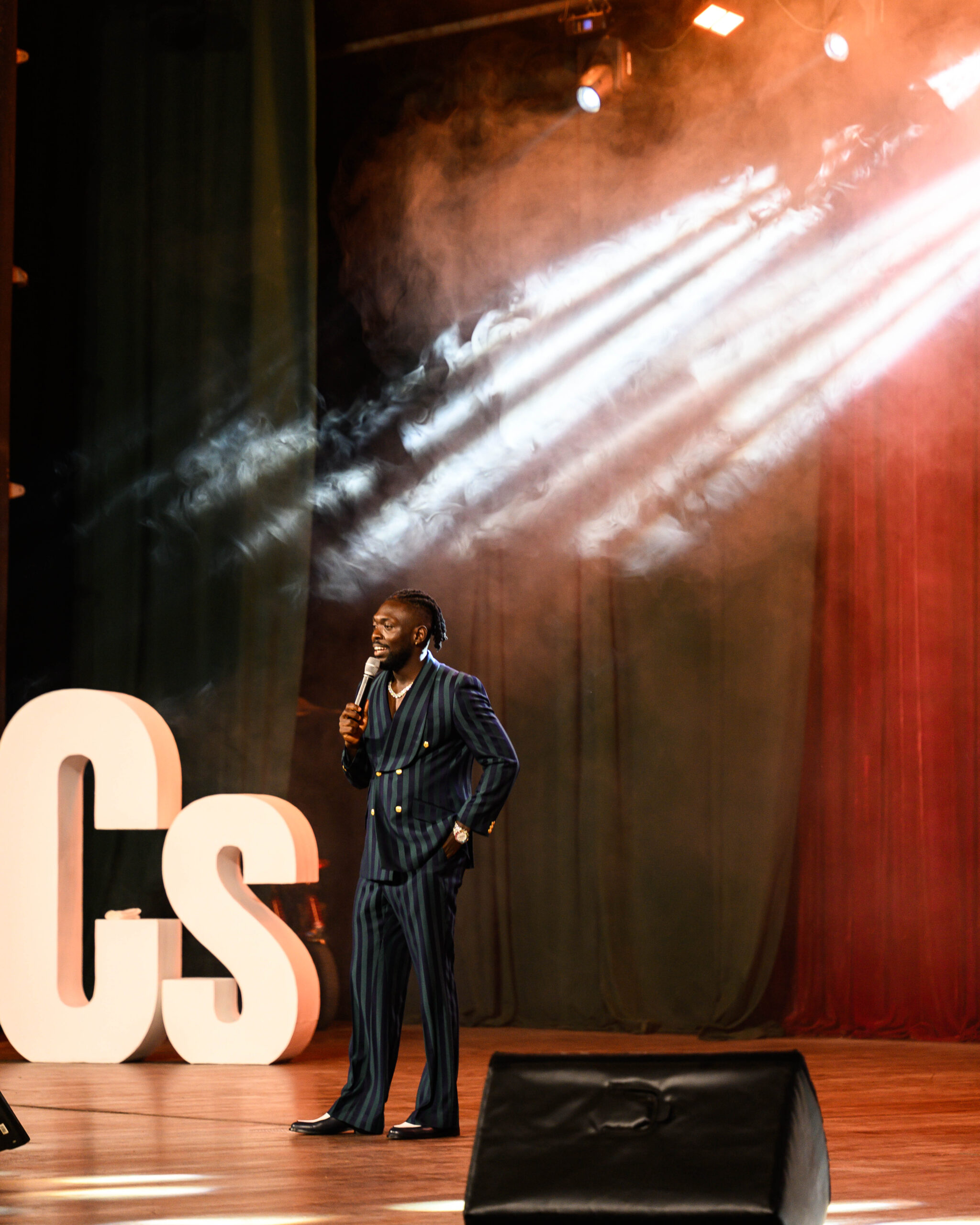
It was a night of fun and excitement as thousands converged at the National Theatre for Nana Osei Bonsu annual comedy special in Accra.
Themed: ‘Comfortably Struggling’, was built around his personal experiences, using humour to explore the realities, challenges and lessons that comes with everyday life.
The one-hour solid performance kept the audience engaged from start to finish, with his personal stories providing the foundation for a night of comedy and relatable storytelling.
Nana Osei Bonsu known in showbiz circles as MC Okokobioko told The Spectator Agoro that the show further cements his growing influence in Ghana’s comedy and entertainment space.
According to MC Okokobioko this years comedy show gives a summary about his personal life that even the struggles of life can become a reason for each and every one to laugh again.
The show featured an impressive line-up of Ghanaian and international comedians, including MJ The Comedian, Ranzy Ray, Talk Plenty, Parrot Mouth, Kweku Manu, Alphenomina, Jeneral Ntatia, Slim Saint from Nigeria and Papayaw Atamle who served as the MC for the night.
Best known as Africa’s Biggest Viral Wedding MC, he has successfully expanded that identity into stand-up comedy.
By Linda Abrefi Wadie
SKIP THE QUEUE, TAP THE NEWS
You can now read the Ghanaian Times and The Spectator newspapers from the comfort of your device via TimesNewsPlus.
Join our WhatsApp Channel: https://whatsapp.com/channel/0029VbBElzjInlqHhl1aTU27