News
Nii Ayi Tunma We Royal Stool Elders have traced their roots


- /home/u249204778/domains/spectator.com.gh/public_html/wp-content/plugins/mvp-social-buttons/mvp-social-buttons.php on line 27
https://spectator.com.gh/wp-content/uploads/2023/06/73ecb442-f5bf-4890-89cb-8e395d25736f.jpeg&description=Nii Ayi Tunma We Royal Stool Elders have traced their roots', 'pinterestShare', 'width=750,height=350'); return false;" title="Pin This Post">
- Share
- Tweet /home/u249204778/domains/spectator.com.gh/public_html/wp-content/plugins/mvp-social-buttons/mvp-social-buttons.php on line 72
https://spectator.com.gh/wp-content/uploads/2023/06/73ecb442-f5bf-4890-89cb-8e395d25736f.jpeg&description=Nii Ayi Tunma We Royal Stool Elders have traced their roots', 'pinterestShare', 'width=750,height=350'); return false;" title="Pin This Post">
Nii Ayi Tunma We Royal Stool Elders have traced their roots to Nii Ayi Frimpong We Royal Stool House, where, after the Odadao drumming (Lift ban on drumming), the two families converged at Frimpong We for a reunion.
The occasion was also to continue the tradition of symbolically reinforcing the lifting of the ban on. Oise making with Asere Mantse beating the irony in Frimpong We.
Amidst merry-making with adowafoi group performing their traditional songs and dances, the place was agog with pleasantries.
The pleasantness of the occasion reached a peak after Nii Teiko Ansah II collected the obonu sticks and started beating the drum with frenzy, with the crowd shouting his appellations in appreciation for once again conforming to the old-age tradition.
Addressing the people, he welcomed the delegation from the Nii Ayi Tunma Royal Family and said he was particularly happy that, at the time the Ga State was going through certain challenges, the Royal House had joined ranks with the Address clan to help resolve some of the issues.
He said the Asere Stool plays a very important role in the enstoolment of any GA Mantse by providing the official headgear (Adowa Faith) in the ceremony leading to his installation.
Nii Ansah assured people that, the reunion was very significant since the Nii Ayivi Tunma Royal Stool House is one of the Royal Houses from which a Ga Mantse is selected on a rotational basis.
King Ayi Tunma, the leader of the Nii Ayi Tunma Royal Stool House, accompanied by his principal elders, thanked Nii Ansah for welcoming them with such enthusiasm that, they already felt at home, promising to ensure that the new relationship developed fruitful results for the Ga State.
By Spectator Reporter


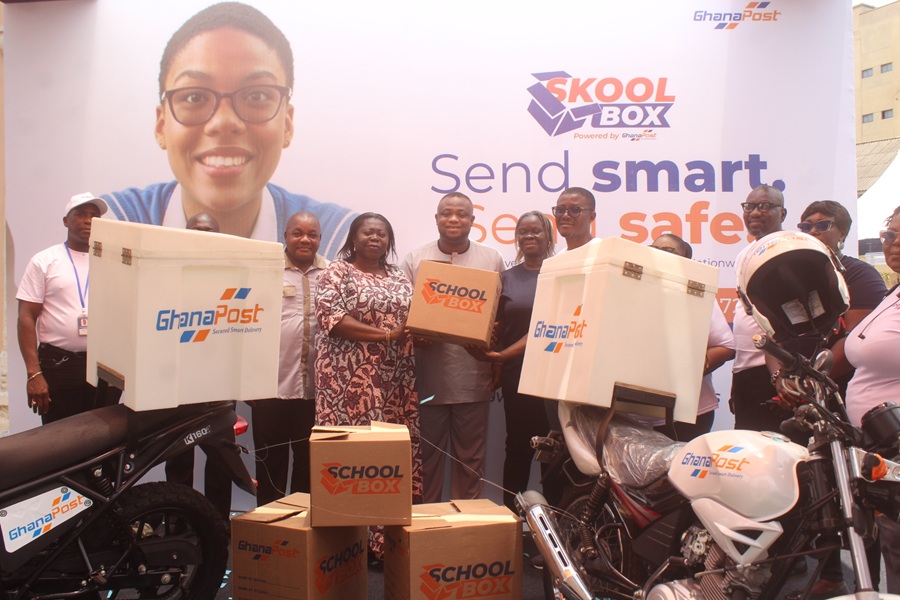
Ghana Post on Tuesday launched the ‘Skool Box’ initiative, one aimed at supporting education and delivery services to students in Accra.
The initiative forms part of Ghana Post’s broader transformation agenda to diversify its services and provide innovative solutions to everyday challenges faced by Ghanaians.
Launching the initiative, the Managing Director of the company, Mrs Rita Sraha, said the idea was inspired by the practical difficulties students and parents often faced in transporting school items, particularly at the beginning of the academic term.
According to her, the increasing space constraints in schools also makes it difficult for students to carry large quantities of belongings with them, creating the need for parents to find alternative ways of sending additional items to their children.
Mrs Sraha said the initiative aligns with the broader national agenda of using digital technology and innovation to expand opportunities, improve public services and strengthen Ghana’s economic capabilities.
The Managing Director however, stressed that the success of the initiative would depend on Ghana Post’s willingness to listen to users, learn from experience and continuously improve the service.
Mrs Sraha explained that Ghana Post was gradually expanding beyond its traditional postal operations through partnerships and services in areas including last-mile delivery, agency banking, logistics and insurance.
She said the School Box Service was another example of how the organisation was using its institutional capabilities to develop solutions to practical challenges within communities.
The Acting Chief Commercial Officer of Ghana Post, Mr Benard Yaw Atta-Sonno, said the service was designed to provide convenient and reliable delivery of school-related items while creating new business opportunities within the education sector.
According to him, the company was also strengthening its focus on digitalisation, customer experience, strategic partnerships and data-driven commercial decision-making.
“Our objective is clear: to build multiple sustainable revenue streams around the assets and capabilities that Ghana Post already possesses, while developing new capabilities for emerging markets,” he said.
He explained that, in the short term, the initiatives were expected to increase transaction volumes, improve the digitalisation of the company’s network, attract new customer segments and generate additional revenue from services that complemented its traditional postal operations.
He noted that the School Box, in particular, provided an opportunity for Ghana Post to develop recurring business around the annual school cycle, while creating opportunities to cross-sell other logistics and delivery services.
The launch forms part of Ghana Post’s wider efforts to modernise its operations and position the company as a diversified logistics and service provider beyond its traditional postal business.
By Linda Abrefi Wadie
SKIP THE QUEUE, TAP THE NEWS

You can now read the Ghanaian Times and The Spectator newspapers from the comfort of your device via TimesNewsPlus.
Join our WhatsApp Channel: https://whatsapp.com/channel/0029VbBElzjInlqHhl1aTU27
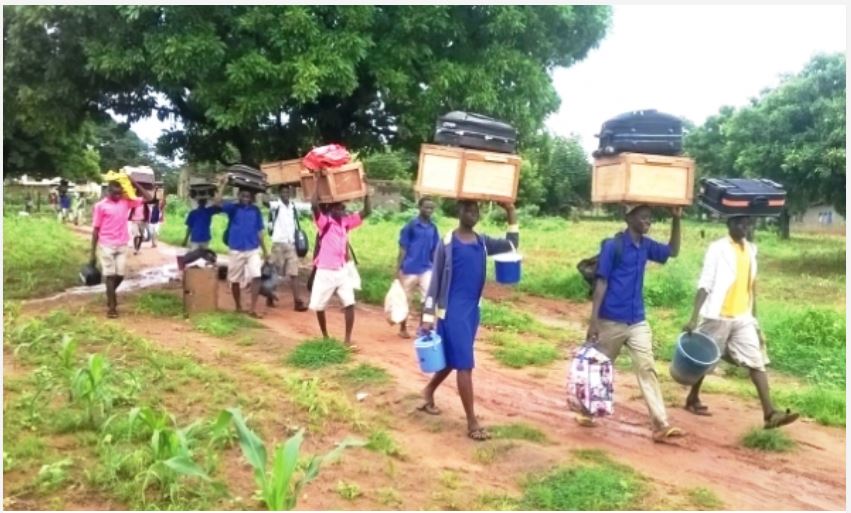
The Ghana Education Service (GES) has asked heads of schools not to turn away newly admitted students or refuse to accommodate them over metal trunks or wooden chop boxes.
“These practices may impose unnecessary financial burdens on parents and guardians who may be unable to afford alternative storage containers prescribed by individual schools,” the GES said in a statement.
“All students admitted to boarding accommodation should be treated fairly and accommodated without discrimination based on their economic circumstances or ability of their parents or guardians to purchase a particular brand or type of personal effects.”
The statement, signed by Professor Mrs Smile Dzisi, the Deputy GES Director-General, comes after Management of the Service received reports that some senior high schools and senior high technical schools (SHS/SHTS) were turning newly admitted students or refusing to accommodate them because they brought metal trunks, wooden chop boxes or other personal storage containers to school.
Consequently, the GES has asked regional directors to inform all heads to desist from turning away or refusing admissions to duly admitted students solely on the basis of the type of trunk, chop box, or personal storage container they bought to school.
Provided the item was reasonably sized, safe and did not pose risk to the health, safety or welfare of other students, those students must not be refused accommodation, it added.
The statement said: “Any reported case of a duly admitted student being denied accommodation or turned away solely because of the type of trunk, chop box or personal storage container brought to school should be investigated and same reported to management.”
“Any head of SHS/SHSTS who flouts this directive shall be dealt with in accordance with the applicable standards, regulation and laws of the service.” –GNA
SKIP THE QUEUE, TAP THE NEWS
You can now read the Ghanaian Times and The Spectator newspapers from the comfort of your device via TimesNewsPlus.
Join our WhatsApp Channel: https://whatsapp.com/channel/0029VbBElzjInlqHhl1aTU27