News
NETRIGHT launches gender mainstreaming standards policy

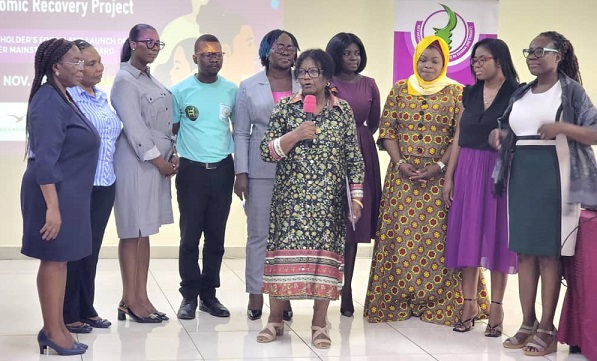
The Network for Women’s Right in Ghana (NETRIGHT), an economic, justice, advocacy network has launched a Gender Mainstreaming Standards (GMS) policy document aimed at ensuring that gender-based issues are well tackled during crisis.
The document which was launched at a stakeholders’ meeting in Accra was necessitated by the difficulties encountered by women, children and some marginalised groups during the Covid-19 pandemic in 2020 and will serve as a policy guideline for governments.
It will also help government to identify the needs of these critical groups of people in society during pandemics and offer guidance on how best to respond to their needs.
There was also a discussion on how to get 40 per cent of women to take up leadership roles in the financial sector.
The forum brought together diverse stakeholders including gender focused Civil Society Organisations (CSOs), women’s rights groups, trade associations, academia, private sector and development partners.
Mrs Bernice Sam (Esq), a Consultant, said the needs of women, children and some marginalised groups such as the disabled, were not catered for although there were interventions in place by the government in response to the pandemic in the areas of healthcare, education, social protection, formal and informal sector.
She said in the area of social protection, women who were abused could not report because of the lockdown during the COVID-19 pandemic.
On interventions in the informal sector, Mrs Sam applauded the government for the loans given out to small and medium scale businesses but indicated that the amount of loans granted to men-owned business were more.
She observed that communication during the pandemic was mostly online, a platform a lot of women were not familiar with.
Providing remedies to the challenges, Mrs Sam said during pandemics or any other crisis, there should be a budget specifically to tackle issues relating to gender.
She said special funds should be put aside to take care of women-owned businesses.
Mrs Sam also urged the government to ensure that there was digital literacy where women could use basic tools to communicate during crisis.
The Head of Secretariat at NETRIGHT, Mrs Patricia Blankson Akakpo, said there were a lot of women in the financial sector, but only 10 per cent held leadership positions.
She therefore, called on stakeholders in the gender mainstreaming to ensure that well-thought-out measures were put in place to get women to lead in the financial sector.
Sustainability Manager of ABANTU, Hamida Harrison (front) launching the policy with other stakeholders
By Jemima Esinam Kuatsinu



The State through the Attorney General (AG) has filed an appeal at the Supreme Court challenging the suspension of the trial in the case of The Republic v Hanan Aludiba and Faiza Seidu.
On Monday, the Court of Appeal suspended the trial in the case. But the prosecution says it has filed an appeal against the suspension order.
According to the update, the law does not allow a criminal trial to be suspended simply because an accused person has complained about some of the charges on the charge sheet, particularly when those complaints were dismissed as meritless.
It argues that if the Court of Appeal’s decision is allowed to stand, no prosecution will ever be possible, since all it would take for a trial to be suspended is an accused person complaining about anything on the charge sheet.
By Edem Mensah-Tsotorme

The Ministry of Health has announced enhanced surveillance and preparedness measures following reports of Ebola cases in the Democratic Republic of the Congo (DRC), Kenya and Nigeria.
In a press release signed by the Minister for Health, Kwabena Mintah Akandoh, the ministry indicated that Ghana had not recorded any Ebola case but was strengthening measures to prevent the virus from entering the country and ensure the early detection and management of suspected cases.
The measures include increased screening at points of entry, particularly the Accra International Airport, simulation exercises to assess emergency readiness, monitoring of travellers from high risk areas and improved laboratory preparedness.
The ministry is also working with relevant agencies and partners to strengthen coordination, sensitise healthcare workers and educate the public on Ebola prevention.
According to the release, Ebola symptoms may develop between two and 21 days after exposure. They include high fever, severe headache, extreme fatigue, sore throat and chills, with unexplained bleeding and confusion possible in later stages.
The ministry explained that the virus spreads through direct contact with the blood or body fluids of an infected person or contaminated materials, and is not airborne.
It urged anyone who develops symptoms after travelling to an affected area or coming into contact with a suspected or confirmed case to seek immediate medical attention and disclose their travel history to health workers.
Travellers from affected areas will have their health monitored for 21 days, while the public has been advised to practise good hand hygiene, avoid contact with people showing unexplained symptoms and rely on official health updates.
The Ministry of Health urged the public to remain calm and cooperate with health authorities as Ghana strengthens its preparedness and response measures.
By: Jacob Aggrey