News
NELEF 2026: Emerging leaders urged to take responsibility for Ghana’s development

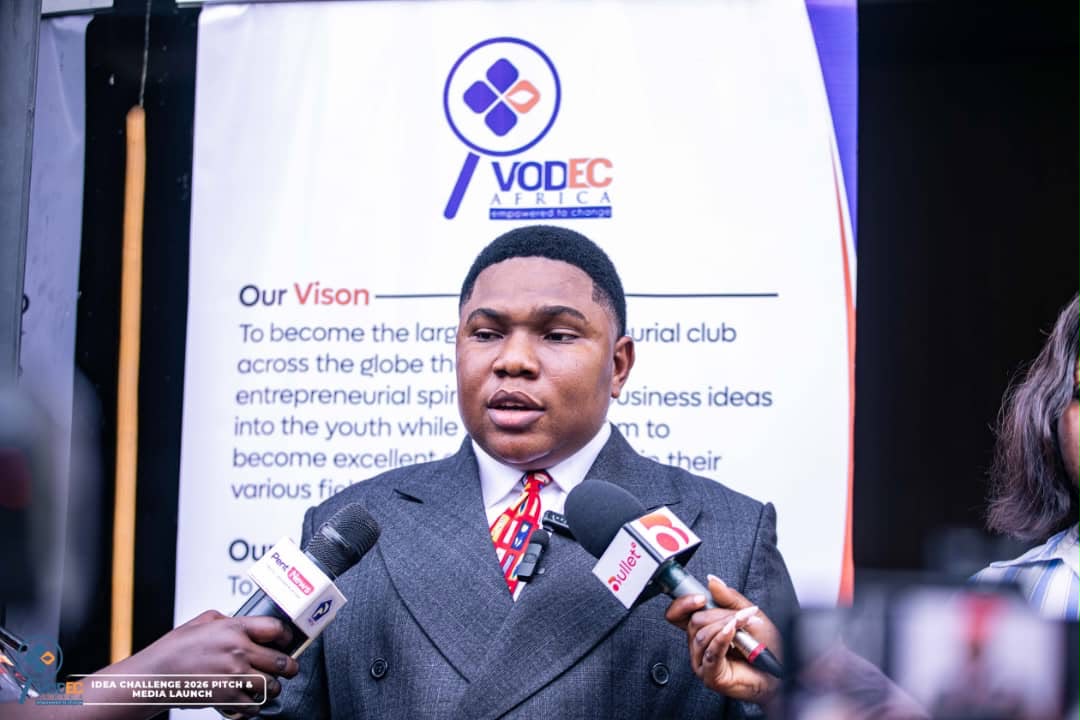
Founder and Chief Executive Officer of VODEC Africa and Convener of the National Emerging Leaders’ Economic Forum (NELEF), Daniel Asomani, has urged young Africans to take greater responsibility for the development of their communities and countries.
He made the call in his keynote address at the 2026 edition of NELEF, held at the University of Professional Studies, Accra (UPSA), on Monday, September 21, 2026, under the theme, “Building Africa’s Future: Emerging Leaders Driving Inclusive Growth and Regional Transformation.”
Mr Asomani said young people should not wait for political appointments, government positions or special opportunities before contributing to national development.
According to him, emerging leaders need courage, discipline, competence, integrity and the willingness to start solving problems within their communities with the resources available to them.
He said Africa had significant natural resources, a young population, growing markets, entrepreneurial talent and cultural creativity, but warned that these opportunities could not translate into development without effective systems.
Mr Asomani cited Africa’s projected economic growth of about 4.2 to 4.3 per cent in 2026, while noting that about 12 million young Africans enter the labour market each year, compared with only about three million formal jobs being created.
He said the gap represented millions of young people struggling to find opportunities and urged leaders to address the systems that prevented young people from turning their skills and ideas into productive ventures.
Mr Asomani traced the origins of the NELEF initiative to a question he posed to university students in 2017 about whether they intended to leave Ghana after graduation.
He said the large number of students who indicated that they planned to leave the country led him to question why young people were looking to escape rather than contribute to national development.
He explained that the experience contributed to the establishment of VODEC Africa, the NELEF platform and the VODEC Africa Idea Challenge, with a focus on connecting young people to capital, mentorship, networks and markets.
He said the inaugural NELEF in 2024 attracted about 2,500 people physically and reached about 4,500 online.
In 2025, he said, physical participation increased to more than 5,000, while about 6,000 people were reached online, bringing total engagement to more than 11,000.
According to him, the 2026 edition had expanded its focus to emerging leaders from across Africa because the continent’s challenges and solutions should not be limited by national borders.
Mr Asomani also called on citizens to complement the work of government by taking responsibility for their own actions and communities.
He said while governments must be held accountable, citizens must also examine what they were doing to contribute to national development.
He challenged participants to ask themselves what problems they were willing to take responsibility for, what value they were creating, whom they were mentoring and what dishonest practices they were prepared to reject.
He further urged young people to practise accountability and integrity in their workplaces, businesses, families, communities, professional associations and online spaces.
According to him, leaders who want to promote accountability in public office must first demonstrate those values in the smaller areas of influence available to them.
Mr Asomani criticised the practice of young people being asked to pay money in exchange for employment opportunities.
He questioned why people should be required to pay to obtain jobs to serve the country and urged emerging leaders to reject such practices.
He shared personal experiences in which he refused to approve the use of money or his name for purposes he considered improper.
In one instance, he recounted how his organisation had collaborated with another organisation on an international conference, where participants paid an administrative fee for assistance with travel-document processing.
He said he insisted that the money should not be used until the promised assistance had been provided and later demanded refunds when that did not happen.
According to him, some members of the organising team instead shared the money among themselves without his approval.
He recounted another occasion when an individual approached him to give verbal approval for money to be collected from people, with the intention of later claiming that the instruction had come “from above.”
Mr Asomani said he rejected the proposal because he believed a person’s name, reputation and integrity were among the most valuable things they possessed.
He therefore urged emerging leaders to protect those three values, stressing that integrity should be treated as a foundation for building strong institutions.
Mr Asomani called for stronger systems to address sanitation and healthcare challenges in Ghana.
He said sanitation in cities should be treated as both a public-health and economic issue rather than a problem addressed only when funding becomes available.
He cited the pollution of waterways such as the Odaw River and Korle Lagoon and called for long-term investment, clear responsibility and effective enforcement.
He called for stronger health systems, saying preventable weaknesses in healthcare could result in deaths that affected families, communities and the country.
Speaking about the VODEC Africa Idea Challenge, Mr Asomani said the initiative was intended to support young people whose ideas could contribute to job creation and economic development.
He said previous participants had developed ideas in areas including food preservation, agribusiness, renewable energy, recycling, assistive technology, urban farming, manufacturing, women-led value chains and environmentally friendly products.
He disclosed that the 2025 cohort included 10 emerging ventures operating in agriculture, agribusiness, technology, manufacturing and social enterprise, with estimated scale-up support of GH¢120,000.
He cited the example of an entrepreneur who developed a Kente-focused enterprise, saying it demonstrated how Ghanaian heritage could be transformed into a business that generates income and creates opportunities.
Mr Asomani urged participants in the 2026 challenge not to allow the outcome of the competition to determine their future.
He encouraged unsuccessful applicants to learn from the process, improve their ideas and continue developing them, while urging finalists and winners to use the funding and mentorship responsibly.
He said success should not end with individual beneficiaries but should create opportunities for other people.
In his closing charge, Mr Asomani asked emerging leaders to make three commitments: take responsibility for one problem, reject one act of corruption or dishonesty, and build one bridge beyond their immediate circle.
He encouraged participants to work with people from different regions, countries, professions, generations and backgrounds, saying Africa’s transformation would require cooperation across borders and disciplines.
He said young Africans should stop viewing themselves merely as future leaders and recognise their role in shaping the continent today.
“The Africa we want will not be delivered to us fully assembled. We must design it. We must finance it. We must govern it. We must defend it. And we must build it together,” he stated.
Mr Asomani urged the participants to leave NELEF 2026 with a problem to solve, a plan, a partner and a deadline.
He concluded by reminding the emerging leaders that their ability to contribute to Ghana and Africa was already within their hands and depended on their choices, character and willingness to act.
By: Jacob Aggrey





News
GES directs Ashanti Regional, Obuasi Municipal Education Directors to step aside over Obuasi SHTS scandal
The Management of the Ghana Education Service (GES) has directed the Ashanti Regional Director of Education, Dr. William Amankrah Appiah, and the Obuasi Municipal Director of Education, Mr. Kwamena Owusu-Nketiah, to step aside with immediate effect.
The directive forms part of ongoing investigations into allegations of sexual misconduct involving the headmaster of Obuasi Senior High Technical School (SHTS), Mr. Zakaria Abdulai.
According to GES, the decision is intended to ensure that the investigations proceed without potential interference, nor the perception of it.
The two directors are to hand over their offices and all state property in their possession to the Deputy Ashanti Regional Director of Education, Mr. Thomas Kwame Boateng.
Management added that the headmaster, Mr. Zakaria Abdulai, also remains interdicted and therefore urged the public to ignore any news circulating that he has been cleared.
Management is calling for calm, support and cooperation as thorough investigations into the matter continue.
By Edem Mensah-Tsotorme
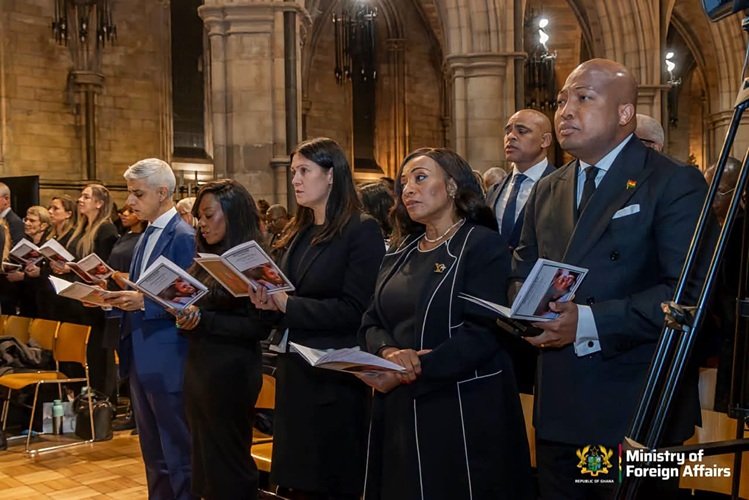
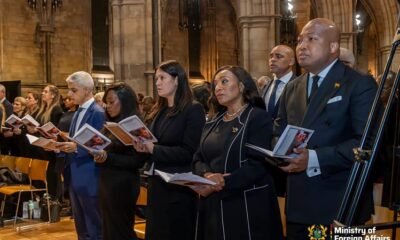
The Minister for Foreign Affairs, Samuel Okudzeto Ablakwa, has joined the family of the late Professor Jason Atta Kwei Arday, the Ghanaian community in the UK, and other dignitaries for a memorial service in Southwark, UK.
In a post, Mr. Ablakwa described the service as deeply moving and unforgettable, held in honour of the late professor’s memory.
According to him, in keeping with the government’s pledge, he joined the family, Ghana’s High Commissioner to London, British MPs, Ministers, the Mayor of London, Cambridge scholars, Prof. Arday’s students and loved ones to pay respects and honour his inspiring legacy.
Mr. Ablakwa noted that Prof. Arday’s accomplishments as the youngest Black professor appointed at the University of Cambridge and his widely appreciated charitable contributions will continue to inspire generations.
“The Government and People of Ghana will continue to stand by our compatriots everywhere they are in the world. As we do so, we profess our commitment to justice, equality and the creation of a new world,” he said.
He prayed for fortitude for the family in what he described as an extraordinarily difficult time.
“We shall always remember Prof. Arday for his response when asked what he will wish to do to change the world: ‘I would take a thread and a needle, and I’d interweave love into our society’,” Mr. Ablakwa added.
By Edem Mensah-Tsotorme