Hot!
‘Negative attitude of hospital staff affecting Adolescent Reproductive Healthcare’

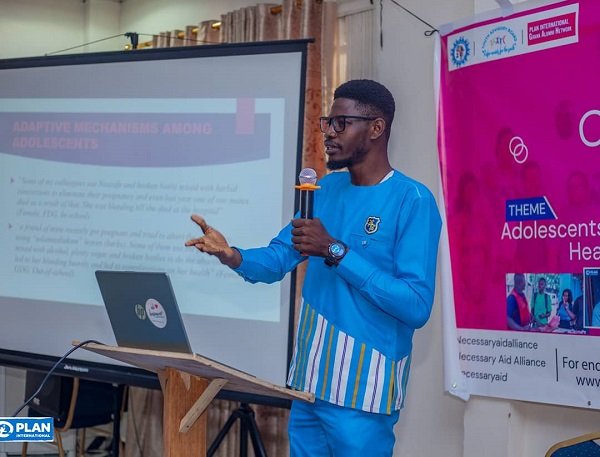
The attitude of some health staff at adolescent corners at some health centres in the Upper West Region has been identified as one of the barriers preventing adolescent girls from seeking information on reproductive health at the health centres.
The adolescents have said that they would rather speak to their peers than patronise adolescent corners to avoid jeering, insults and name calling from health workers.
This was revealed in a study by Necessary Aid Alliance, a non-governmental organisation in the Upper West Region with support from Plan International Ghana on “Access to Sexual and Reproductive Health Information and Services (SRHIS)” by adolescents.
Explaining the research findings to participants at a dissemination meeting at Wa, the Executive Director of the NGO, Mr Mulumba Songsore said the issue was a source of worry as 36 per cent of a total of 541 respondents attested to seeking for information from their peers as against 20 per cent who preferred to use the health centres and adolescent corners.
“According to our respondents, some of the nurses are impolite, especially to young clients. Apparently when they go there with issues on reproductive health, they are yelled at, insulted and called names like nasty and ‘spoilt’ and are discouraged from going there”, he said.
Mr Songsore indicated that even without the impolite attitude of health staff, it was difficult for a young person to visit a facility to seek SRHIS so if the environment was not conducive, they would choose to rather rely on friends who were as ignorant as them and were likely to provide them with unwholesome information.
“We were curious as researchers to know what exactly they discussed with their friends by way of information seeking and we identified that most of the discussion (36 per cent) centred on sex life and relationship” he said adding that it was worrying because most of their peers would share information about their mistakes.
He said the lack of professional sources of information for the adolescents had led to unprotected sex, unwanted pregnancies and unsafe abortions.
“Allow me to quote this response from a respondent: in this community, adolescents who inquire about sexual and reproductive matters are viewed as troublemakers so we are scared to go to the clinic for SRHIS”, he said.
He added that the lack of privacy and confidentiality at the health centres also discouraged the youth from seeking information at the centres such that once the adolescent visited the health facility, it became common knowledge in the community.
“Imagine a girl going to the hospital for medical abortion and the next moment everyone in the community is aware of the incident and people begin to call her names, in order to avoid a similar incident, other girls would prefer to speak to their friends for unorthodox methods instead of going to the health centre”, he said
The NGO wants civil society organsiations to support the Ghana Health Service to provide regular training for health staff at the various adolescent corners to ensure their professional conduct.
From Lydia Darlington Fordjour, Wa


The professor who spends his days exploring the intricacies of African languages found himself at the centre of a different kind of lesson on Friday, October 2, 2026. 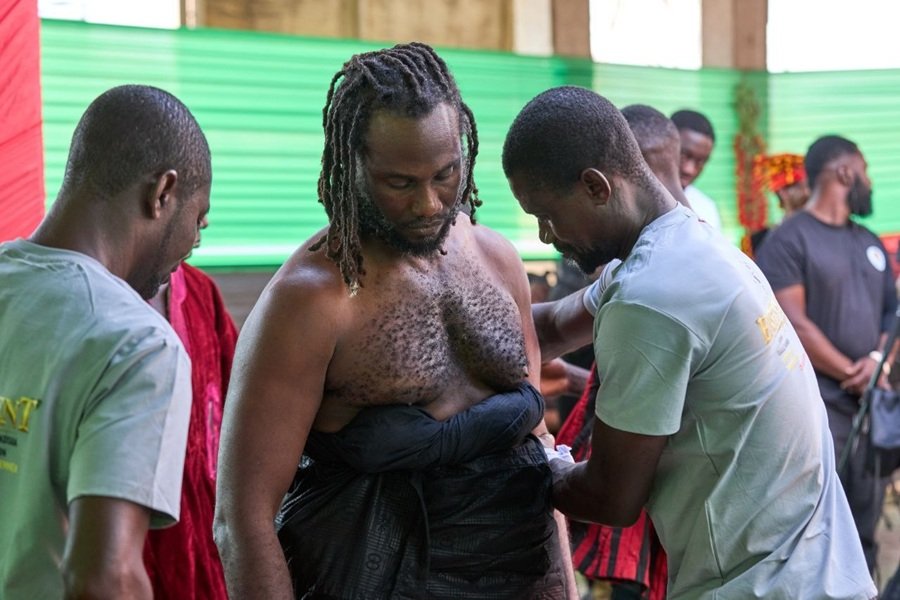
This time, there were no lecture notes, academic arguments or university classrooms. Instead, there was the weight of tradition, the rhythm of a community celebration and the solemnity of an oath at a royal palace.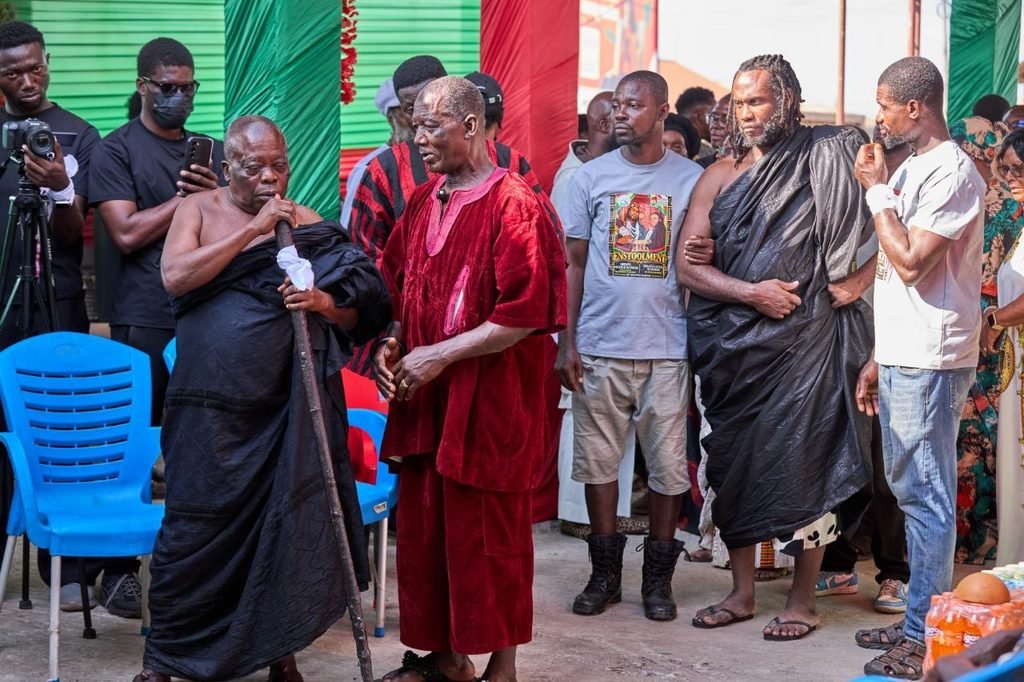
Professor Ọbádélé Kambon, a full Professor of African Linguistics at the University of Ghana, was enstooled as Apagyahene and Sunsum Ɔsahene of Akuapem Mampong in the Eastern Region in a ceremony that brought academia and traditional authority together.
For the professor, the occasion was more than a new title. It was a moment that connected his academic interests in African languages and indigenous knowledge with the living traditions of an Akan community.
The day’s events unfolded through a series of customary observances. Kambon was first taken to the compounds of the Ɔkyeamehene and Gyasehene, where the preparations for his installation continued.
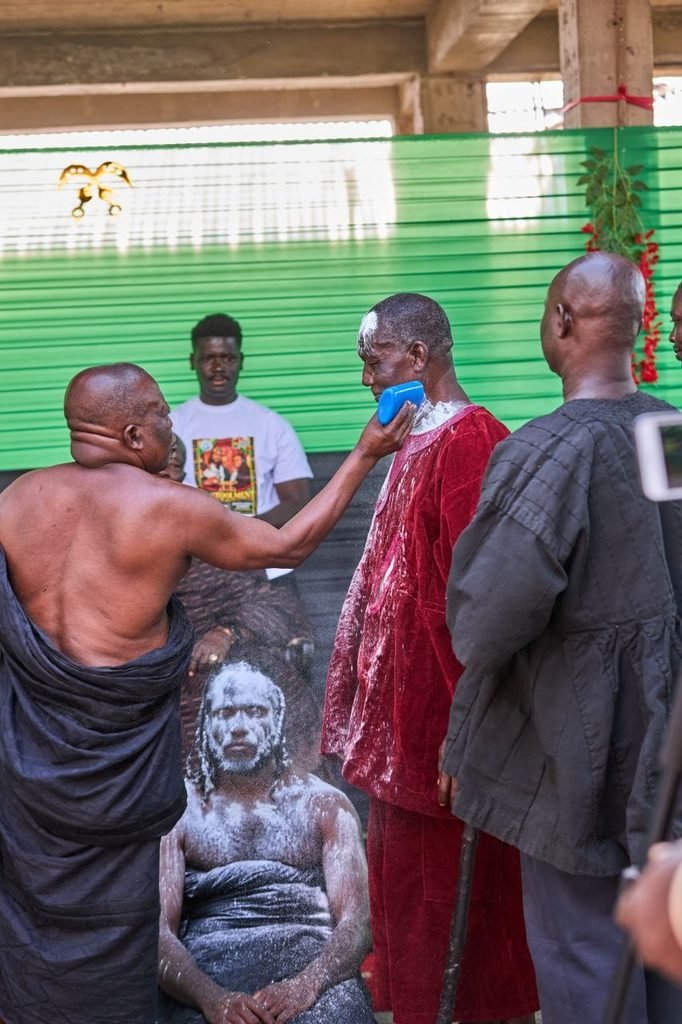
Then came the application of hyire, the white kaolin powder associated with traditional rites.
With the customary proceedings underway, the new chief was lifted onto the shoulders of celebrants and carried along the main thoroughfare of Akuapem Mampong.
The procession transformed the streets into a public stage for a ceremony rooted in the community’s traditional institutions.
There was something striking about the image, a university professor, accustomed to the measured language of academic discourse, being carried through the town in a display of traditional recognition.
Yet the celebration was not complete with the procession.
A ram was sacrificed at the Mamponghene’s compound before Kambon was taken to the palace, to swear the oath associated with his new offices.

The ceremony brought him formally into his roles as Apagyahene and Sunsum Ɔsahene.
Beyond the colourful proceedings, the titles themselves carry layers of historical meaning.
Kambon in his research explores the historical connections between Apagya and Akan political and military organisation.
Accounts cited in his work linked Apagya to an asafo, or military company, while historical writing traces an Apagya stool in Asante to the reign of Opoku Ware I in the eighteenth century.
These historical associations offer a glimpse into the institutions that have shaped Akan society over generations, although they do not automatically define the precise responsibilities of the office in Akuapem Mampong.
Kambon’s own professional life reflects a similar interest in preserving and examining African knowledge.
His work encompasses Akan language structure, naming practices across the Black world, proverbs and indigenous intellectual traditions.
Through Abibitumi, the platform he founded, he also promotes language learning, scholarship and cultural engagement.
But tradition was only one part of the story that day.
When the formal ceremony gave way to a reception, the occasion expanded into a celebration of three milestones: Kambon’s enstoolment, his promotion to full professor and his daughter Ama’s admission to the University of Ghana.
The gathering therefore carried a personal significance that went beyond the honours bestowed on one man. 
It celebrated professional advancement, the continuation of family aspirations and a connection to cultural heritage.
For a father, seeing a daughter gain admission to the same university where he holds a distinguished academic position offered another reason to celebrate.

For the professor, the moment placed family achievement alongside his own professional and traditional milestones.
Kambon had already established a place in the traditional life of Akuapem Mampɔn through an earlier installation as Banmuhene Kyidɔmhene, recorded in 2017.
His latest enstoolment adds another chapter to that relationship.
In Akuapem Mampɔn, the day brought together the university, the palace and the family table in one celebration. And for Kambon, the journey from the lecture room to the traditional procession showed how scholarship, cultural responsibility and family achievement could converge in a single memorable occasion.
By Enoch Ntiamoah Siaw
SKIP THE QUEUE, TAP THE NEWS
You can now read the Ghanaian Times and The Spectator newspapers from the comfort of your device via TimesNewsPlus.
Join our WhatsApp Channel: https://whatsapp.com/channel/0029VbBElzjInlqHhl1aTU27

Intercity STC Coaches Limited has interdicted a driver captured in a viral video allegedly hitting a Sprinter bus during an overtaking manoeuvre at Pokuase before driving away from the scene.
In a public notice, the company described the driver’s conduct as unacceptable, stressing that it did not reflect the safety standards and professionalism it upholds.
Management said it had commenced an immediate investigation into the incident and identified the driver, who has been interdicted pending the outcome of the disciplinary process.
The company added that it was awaiting an official report from the Pokuase Police Command to help establish the facts surrounding the incident.
STC reaffirmed its commitment to passenger safety and responsible road use, while thanking members of the public for bringing the incident to its attention.
Management assured the public that appropriate action would be taken following the investigation.
By: Jacob Aggrey