News
Nana Yaa Serwaa Sarpong advocates Bold educational reforms at the UK House of Lords during Global Education Summit.


On November 27 2025, global development leaders, policymakers, education experts and civil society organisations gathered at the UK Parliament’s House of Lords for the Global Education Summit hosted by The Baroness Verma of Leicester and organised by the African British Business Forum.
The high-level event focused on the global rise in out-of-school children and the urgent reforms required to deliver equitable, quality education for all.
Among the distinguished Speakers was Nana Yaa Serwaa Sarpong, Founder & President of Women in Sustainability Africa (WiSA) and General Manager of the EIB Network, who delivered a compelling address on the theme “Breaking Barriers: Empowering Out-of-School Children Through Education.”
In her remarks, Nana Yaa who is currently celebrating 26years of Service in the Media, emphasized that education must be viewed as essential national infrastructure, not charity.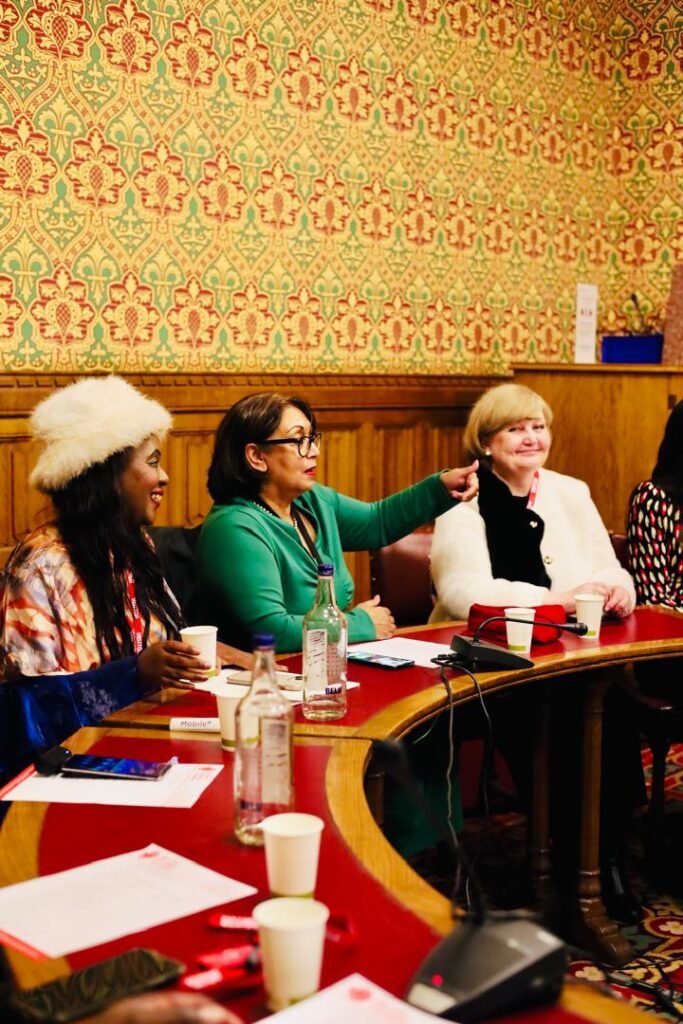
Borrowing experiences from her 18 years of empowering women and young people, she presented a strong case on how Africa’s poor educational systems tie into the poor state of its Gender Equality gap.
According to her, unlocking access to education is one of the most effective ways to strengthen economies, empower women and young girls, build resilient communities and drive sustainable development.
She highlighted that each child excluded from learning represents deferred innovation, delayed opportunity and a weakened society.
Nana Yaa noted that the barriers keeping millions of children out of school are complex and interconnected—ranging from poverty and cultural norms to geographical isolation and digital exclusion.
Addressing these challenges, she argued, requires solutions that are equally comprehensive and multi-layered.
Nana Yaa stressed that girls remain disproportionately affected, and investing in girls’ education has a transformative impact across several Sustainable Development Goals, including gender equality, poverty reduction, health outcomes and climate resilience.
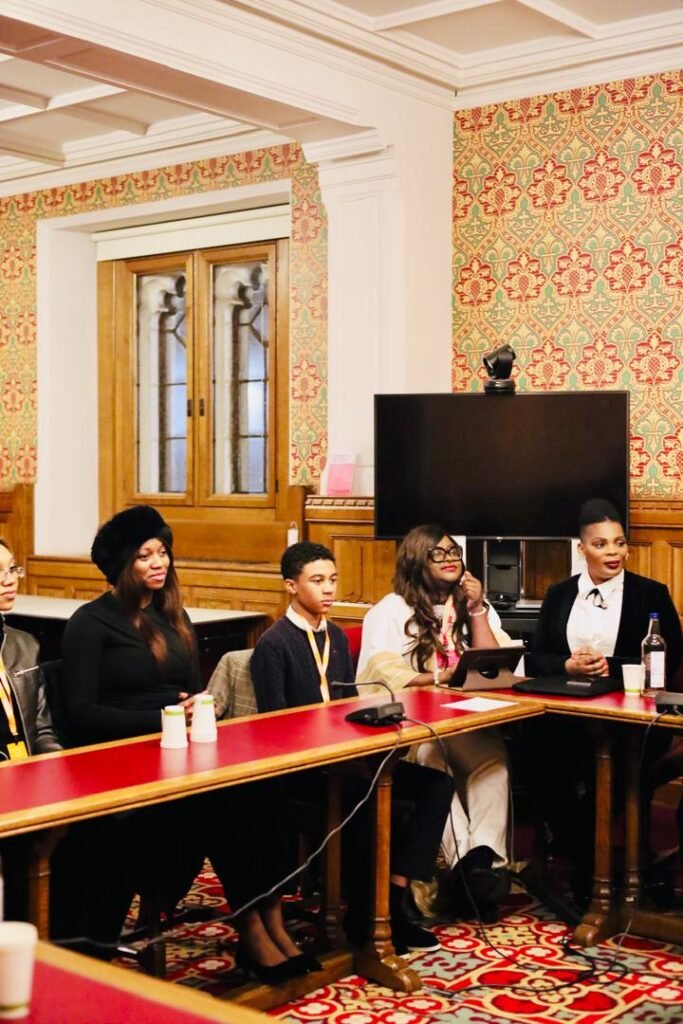
Nana Yaa advocated for the expansion of flexible, inclusive and community-responsive educational models, such as mobile classrooms for remote and nomadic communities, community learning hubs, after-hours programmes for working children, radio-based instruction for low-tech areas and digital platforms designed to reach learners regardless of connectivity challenges.
She warned that without deliberate action, the digital divide would continue to widen, pushing already vulnerable children further to the margins.
During her presentation, she introduced three major reforms WiSA is seeking Partners for, aimed at reshaping educational access across Africa and beyond.
These are the Digital Bridge for Out-of-School Children (DBOC), the Community Education Stewardship Hubs (CESH) involving local women educators and youth volunteers and the Teen-focused Global Skills Accelerator for Out-of-School Teens (GSA-OT).
She also underscored the need for education systems that support instruction, inclusivity and healing, particularly for children experiencing autism, trauma, displacement or conflict.
Nana Yaa emphasised that emotional and psychological support must be integrated into educational frameworks in order to restore confidence, stability and long-term learning capacity.
The summit concluded with strong commitments from stakeholders to adopt sustainable financing models, strengthen data-driven policies and expand cross-sector partnerships.
The African British Business Forum reaffirmed its commitment to championing innovative, scalable solutions to educational inclusion across the UK, Africa and the wider global community.






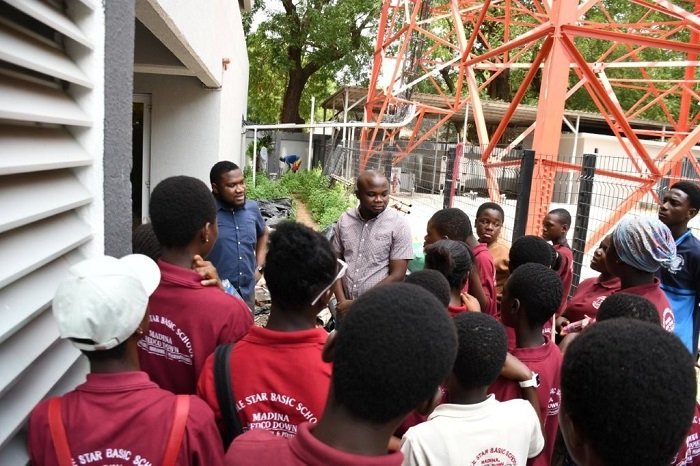
MTN Ghana has hosted more than 200 students from various educational institutions in Accra for an engaging, hands-on technology immersion at MTN House, bringing classroom theory to life and fueling interest in STEM and digital innovation.
Students from Ashesi University, Ghana International School, Cradle Star Academy, and Kinderland School explored MTN Ghana’s rich history, core values, customer-focused innovations, and digital transformation agenda.
They were introduced to the company’s sustainability and social impact initiatives, spanning education, youth empowerment and community development. A key highlight of the visits was a tour of MTN Ghana’s Network Operations Centre (NOC) and data centres.
The students gained first-hand exposure to the advanced technology, systems, and expertise powering seamless connectivity for millions daily – offering a rare look into how MTN ensures network performance, security, and resilience.
Speaking on the initiative, the Chief Corporate Services and Sustainability Officer at MTN Ghana, Adwoa Wiafe, noted, “Hosting students at MTN House reflects our commitment to shaping Ghana’s digital future. As we deliver our Ambition 2030 strategy, we are deepening investments in youth development through programmes like the Bright Scholarship, the MTN Digital Skills Academy, and collaborations on the One Million Coders Programme and the Girls in ICT initiative led by the Ministry of Communications, Digital Technology and Innovation.”
Paschal Paaga, Manager for IT Projects Implementation, emphasised the importance of experiential learning.
‘’By opening our doors, we are helping to bridge the gap between academia and industry. We want young people to see the real-world impact of technology and be inspired to pursue careers in STEM.”
For many participants, the experience was transformative. Maame Sapomaa, a Level 300 Information Systems student from Ashesi University, shared, “The visit was incredibly inspiring. Everything we have learned in the classroom came to life, and we were exposed to new concepts beyond our studies. It has motivated me even more to pursue a career in technology.”
As MTN Ghana advances its Ambition 2030 vision, the company remains committed to driving digital inclusion, platform-led innovation, and building strategic partnerships that support Ghana’s long-term socio-economic development.
The Ghana Education Service (GES) has expressed sorrow over the death of two Basic Education Certificate Examination (BECE) candidates in a road accident in the Upper West Region.
The deceased are Taufi Ibrahim and Abdul Khalid, both students at Chiana Roman Catholic Junior High School.
“Management of the Ghana Education Service has received with profound sorrow the tragic news of the untimely demise of two Basic Education Certificate Examination (BECE) candidates, Taufi Ibrahim and Abdul Khalid, students of Chiana Roman Catholic Junior High School in the Upper West Region,” a statement issued by Mr Daniel Fenyi, Head of Public Relations, GES, said.
It said preliminary reports indicated that the students died in a road traffic accident on Sunday, May 3, while travelling to Wa ahead of the commencement of the examination.
“We are deeply saddened that these young lives, full of promise and potential, have been cut short under such distressing circumstances.
“Management and staff of GES, and the entire education community, extend our heartfelt condolences to the bereaved families, the school, their classmates, and all who have been affected by this tragic incident. Our thoughts and prayers are with you during this difficult time.”
The statement said Management of the GES would continue to liaise with the appropriate authorities to ascertain full details of the incident and consider measures to prevent similar occurrences. –GNA