Bussiness
Let’s work to reduce interest rate

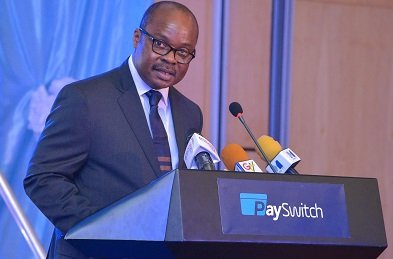
High interest rate, charged by banks on loans, remains a major challenge to businesses in the country, hampering their growth and profitability.
Interest rate also known as lending rate is the amount charged by lenders for a certain period as a percentage of the amount lent or deposited.
Interest rate is influenced by the Monetary Policy Rate, which is determined by Bank of Ghana.
The policy rate is the rate at which the universal banks borrow from the BoG, which is the mother of all banks in the country.
The current average interest rate charged by banks stands at 19.5 per cent.
This means if a business borrows GH¢1,000 from a bank to repay in a year, it will pay an additional GH¢195 per cent on the loan, bringing the total to GH¢1,195.
Elsewhere, in the developed economies, interest rate is below four per cent and, therefore, businesses can raise cheap capital to expand.
In Ghana, the private sector continues to reel under high interest rate.
Private sector business players complain that they cannot compete with their foreign counterparts, who borrow at a cheaper rate.
The high cost of credit accounts for the high cost of goods and services in the country.
Indeed, the President, Nana Addo Dankwa Akufo-Addo, has expressed concern about high interest rate charged by banks and called for its reduction.
However, the banks argue that the high interest rate regime is a reflection of the macroeconomic situation prevailing in the country.
Also, the banks argue that poor addressing system which makes it difficult to locate customers accounts for the high interest rate so they factor such risk in pricing their loans.
A “Country Competitiveness and Opportunity Assessment Report” published by Konfidant, an International Advisory firm supporting companies, governments and international organisations to achieve impact across Africa and other global regions, in April 2021, revealed that cost of Credit is the Ghana’s weakest point as far as private sector development competitiveness is concerned.
The report indicates that Ghana’s policy rate of 14.5 per cent has gone down and reduced to 13.5 per cent in September and back to 14.5 as of today, is still more than the African average of seven per cent.
It further reveals that Ghana’s policy rate compares favourably with 1.5 per cent in Morocco, 3.5 per cent in South Africa and 4.5 per cent in Cote d’Ivoire.
With the implementation of the African Continental Free Trade Area (AfCFTA), it has become important for interest rate to be reduced to enable the private sector to borrow and expand existing businesses and create new ones.
AfCFTA is expected to create a market of 1.2 billion customers with an estimated Gross Domestic Product of $3 trillion.
In an interview with a Banking Consultant, Nana Otuo Acheampong, he said the establishment of the Development Bank Ghana, which will lend at a reduced interest rate to the private sector and other financial institutions, would help push interest rates down.
According to him, the high interest rate could be put down to the macroeconomic factors in the country.
He said the budget deficit, high debt and level of borrowing affected credit to the private sector and the policy rate.
“The policy rate becomes the benchmark which the BoG lends to the banking sector,” he said.
Nana Otuo Acheampong said although operating banking business was expensive in the country, it did not account for the high cost of interest rate.
The Banking Consultant said the cost incurred in running banks was necessary cost, stressing there was nothing banks could do about rent, utility and fuel costs.
He, however, said, the banks could control cost such as salary, energy by deploying digital lights which could go off when not in use.
He said the salaries paid by banks were in line with market rates and that did not account for the high interest rates.
“Interest rates have come down. Interest rate is currently below what it used to be five years ago,” Nana Otuo Acheampong said.
Compared with other African countries, he said, Ghana was faring badly in terms of interest rate.
He said the operationalisation of the Ghana Card to identify borrowers would help push interest rates down.
Nana Otuo Acheampong said if people borrowed and paid, it would help interest rates to go down, adding that it would also push Non-Performing Loans down and suggested the Credit Reference Bureaux should be strengthened and up their game to help provide credible data on borrowers.
The Chief Executive Officer of the Association of Ghana Industries, Mr. Seth Twum-Akwaboah, in an interview for his perspective on the high interest rate conundrum, said the cost of borrowing was critical to business establishment, expansion, investment and decent job creation.
“Costs impact the final prices of products and make them less competitive. The higher the interest rate; the more you pay on loans,” he said, adding that “businesses often pushed their cost to consumers.”
The AGI CEO, however, acknowledged that interest rates in recent years had come down and attributed that to the reforms embarked upon by the BoG.
Asked about the cause of the high interest rate charged by banks and financial institutions, Mr Twum-Akwaboah mentioned high demand for loans, macroeconomic indicators of the country, high Non-Performing Loans, the policy rate, as well as the cost of the operations of the banks which were mostly pushed to customers.
“The high interest is a reflection of macroeconomic indicator of the economy,” the AGI CEO said.
Proffering solutions to help bring interest rate down, he said if more loanable funds should be made available through the establishment of the Development Bank Ghana, it would help bring interest rates down.
“The assumption is that the DBG will provide long and medium term funding to businesses at a competitive interest rates to banks and this will position the banks to provide loans to businesses at low interest rate,” Mr Twum-Akwaboah, said.
He opined that transparency and efficiency in the operation of the businesses would help drive interest rates down.
“That is the reason Association of Ghana Industries organised business development services to its members to enhance their operations,” he said, indicating that banks often risked premium factor in pricing their loans.
The Ghana Employers Association asserts that something needs to be done, as a matter of urgency, about the persistence of high lending rates in Ghana.
“While we commend the BoG and government for the efforts in bringing down the cost of borrowing, employers continue to look forward with hope for further reduction in the cost of capital, hopefully to a single digit, to stimulate greater investment to aid the recovery process,” GEA said recently at a forum in Accra.
While Ghana is positioning itself as the trading and financial hub in Africa, this writer urges government and all relevant stakeholders to come together and come out with measures to drive interest rate down to help businesses to raise cheap capital for their operations.
With the current interest rates it would be difficult for businesses in the country to compete with their foreign counterparts.
Writer’s email/whatsApp:
gbetomenyo81@gmail.com/(0246943864)
BY KINGSLEY ASARE


Ghanaian dancehall artiste Charles Nii Armah Mensah, known as Shatta Wale, has won two awards at the 43rd International Reggae and World Music Awards (IRAWMA) held in Florida over the weekend.
He picked up the Best African Dancehall Entertainer award as well as Concert of the Year for ShattaFest.
In a statement, Shatta Wale’s management expressed appreciation to the organisers and supporters of the awards.
“Management would like to sincerely appreciate the organisers of the IRAWMA awards for the recognition and continuous support for African music on the global stage.
“We also extend our deepest gratitude to fans across the world, especially the Shatta Movement fraternity, for their unwavering support, votes, and dedication throughout the years,” the statement said.
The statement added that the latest wins reaffirm the artiste’s position as one of Africa’s leading musical exports and a prominent figure in global dancehall culture.
The awards bring Shatta Wale’s total haul at the IRAWMA to 11, highlighting his continued presence on the international reggae and dancehall scene.
At last year’s edition, he won three awards: Best African Dancehall Entertainer, Best Music Video for “Killa Ji Mi”, and Best Crossover Song for “Commando” featuring Bounty Killer. -GNA
Bussiness
Global Market Volatility: Gov’t absorb GH¢2.00 per litre on diesel and GH¢0.36 per litre on petrol

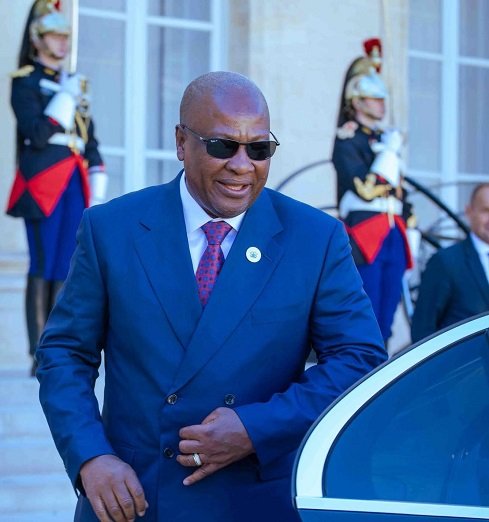
Effective Thursday, April 16, 2026, which is the next pricing window, the Government will absorb GH¢2.00 per litre on diesel and GH¢ 0.36 per litre on petrol.
This intervention is intended to cushion customers and ease the cost burden on households, transport operators, and businesses.
The measure, approved by Cabinet, is in response to rising prices of petroleum products on the international market, which have significantly impacted ex-pump prices in Ghana.
This temporary intervention will remain in force for a period of one (1) month.
During this period government will continue to closely monitor developments in the global oil market and assess the need for further policy adjustments.
A statement signed by Minister of Government Communications, Felix Ofosu Kwakye noted that they remain commited to maintaining price stability, protecting livelihoods, and supporting Ghana’s economic recovery in the face of external shocks.