Sports
Let’s get the tartan tracks back!

- /home/u249204778/domains/spectator.com.gh/public_html/wp-content/plugins/mvp-social-buttons/mvp-social-buttons.php on line 27
https://spectator.com.gh/wp-content/uploads/2023/06/Tracks.jpg&description=Let’s get the tartan tracks back!', 'pinterestShare', 'width=750,height=350'); return false;" title="Pin This Post">
- Share
- Tweet /home/u249204778/domains/spectator.com.gh/public_html/wp-content/plugins/mvp-social-buttons/mvp-social-buttons.php on line 72
https://spectator.com.gh/wp-content/uploads/2023/06/Tracks.jpg&description=Let’s get the tartan tracks back!', 'pinterestShare', 'width=750,height=350'); return false;" title="Pin This Post">
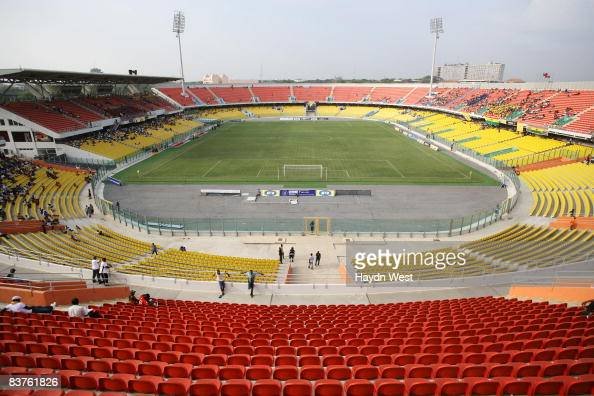
• The Accra Sports Stadium without the tracks
In August 2002, former Youth and Sports Minister – Edward Osei Kwaku, promised to replace the tartan tracks at the Accra Sports Stadium with an ultra-modern one. Many celebrated the move.
The tracks were last relayed in 1978 when Ghana hosted the African Cup of Nations that year.
The former sports minister had said a German company was expected in the country by the end of that month (August 2002) to firm up talks with the sector ministry to replace the tracks.
Sadly, that was not to be. The Minister’s assurance evaporated into thin air – and five years later, instead of being fixed, the tracks were rather removed to make way for the expansion of the stadium’s seating capacity ahead of the hosting of the 2008 Africa Cup of Nations (AFCON) tournament.
It was an unpopular decision as many Ghanaians bickered against it. But as it is always the case, the powers- that-be managed to bludgeon their way through. Mr Osei-Kwaku himself did not live (died in 2005) to work his dream out.
Today, twenty-one years on since that promise, the Accra stadium is still without tartan tracks, a pathetic state that has gravely affected the development of athletics in Ghana and ultimately the nation’s less-inspiring performances at major international games.
Truth is that our athletes have limited options to train and compete. The tracks at the El-Wak stadium, which athletes in Accra have depended on for some time now, is also in shambles.
On December 10, 2019, a former president of the Ghana Olympic Committee (GOC), B.T. Baba, asserted that removal of the tartan tracks from the Accra stadium was the beginning of the woes of athletics in the country. He cannot be far from right.
“The athletes that used to train at the Accra Sports Stadium do not train here again because there is no track at the stadium. The National Sports Authority’s idea of taking the track field from the stadium has really affected athletics because they don’t get a place to train,” he bewailed.
Decades back, one saw the likes of John and Leonard Myles Mills (Babylonia), Edwin Amugi, Michael Coffie (Akoo Yomo), Edwin Tagoe (Tee Gosh) blossom into revered house-hold names during the Inter Schools and Colleges (InterCo) athletics on the Accra tracks.
John Myles Mills would go ahead to represent Ghana at the 1988 Seoul Olympics in South Korea and the Barcelona 1992 Olympics, being the country’s flag-bearer on both occasions. His brother Leonard ran a personal best of 9.98 seconds for the event in 1998, becoming the first Ghanaian to break the 10-second barrier. His best of 6.45 seconds for the 60 metres is an African record. Leo twice represented his country at the Summer Olympics and also at the Commonwealth Games.
There were the likes of Grace Ofori, Doris Frema Wiredu, Veronica Bawuah, Martha Appiah, Emmanuel Tuffour and Albert Amonu – to name but a few, who made huge headlines in their heyday in the late 80s and 90s, especially.
Indeed, the InterCo was Ghana’s primary source of getting the best of athletes to represent the country in international competitions – and the removal of the tracks had hindered the success of the nation in athletics – and ultimately the cause of the country not amassing medals at major international events.
Are we saying we do not know that absence of the tracks is having a debilitating impact on the development of athletics in the country? For how long can we continue to play the ostrich?
During his recent visit to the country, former 100m world record holder, Asafa Powell, expressed disappointment in the lack of investment in athletics infrastructure in Ghana. He said Ghana had excellent sprinters in the past, and he was disappointed to see the absence of professional tracks.
“I’m very, very, very disappointed, honestly, coming here and not seeing real professional tracks is very disappointing because what if I wanted to go for a workout while being here? So I think that is where Ghana needs to improve,” Powell stormed.
It is a big shame for us to sit aloof all these years only to have the Jamaican sprinter come to tell us how bad it is for not having the tartan tracks fixed.
You expect the leadership of the present Ghana Athletics Association (GAA) to decant some pressure on government with regard to athletics infrastructure, but they do not seem bothered by the rot.
Had the plethora of calls to have the tracks replaced been heeded to, it was obviously going to minimise the headache we are going through at the moment as regards infrastructure with the impending Accra 2023 Games, next year.
The truth is that we have never been serious as a nation. We pretend to be a nation doing sports when we know the attention has been football, football and football. We give little or no attention to the other sport disciplines, yet we expect them to bring us haul of medals. How do we reap where we had not sown?
Our leaders have paid lip services to lots of things they knew they would not carry out. They know they are playing to the gallery, yet care less.
What kind of country is this? Let us be serious for once – and do the right thing.
By John Vigah


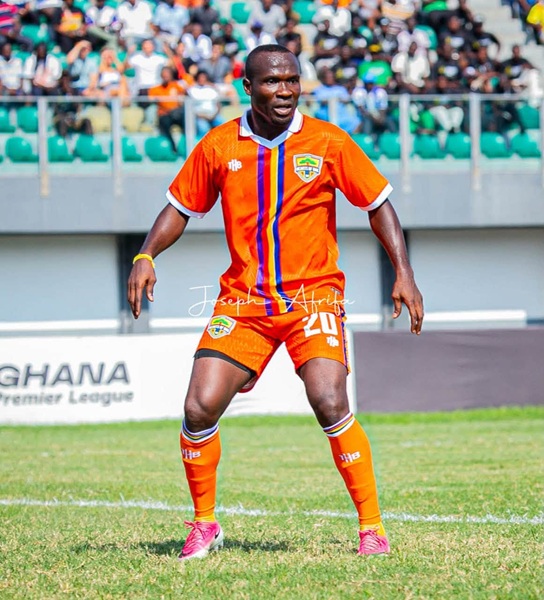
Accra Hearts of Oak and Dreams FC will headline Matchday 5 of the Ghana Premier League when the two sides meet at the University of Ghana Sports Stadium tomorrow, with both clubs seeking a result that could shape their early season campaign.
The encounter comes at a crucial moment for the two sides with the Phobians looking to recover from their first defeat of the campaign and Dreams still searching for their first victory after four matches.
The Rainbow lads started the season strongly but were beaten 1-0 by Karela United last weekend, while Dreams suffered a slim 1-0 defeat to Bechem United.
Hearts had earlier recorded impressive victories over Berekum Chelsea and Bibiani Gold Stars before drawing goalless with Bechem United, leaving the club with seven points from their opening four matches.
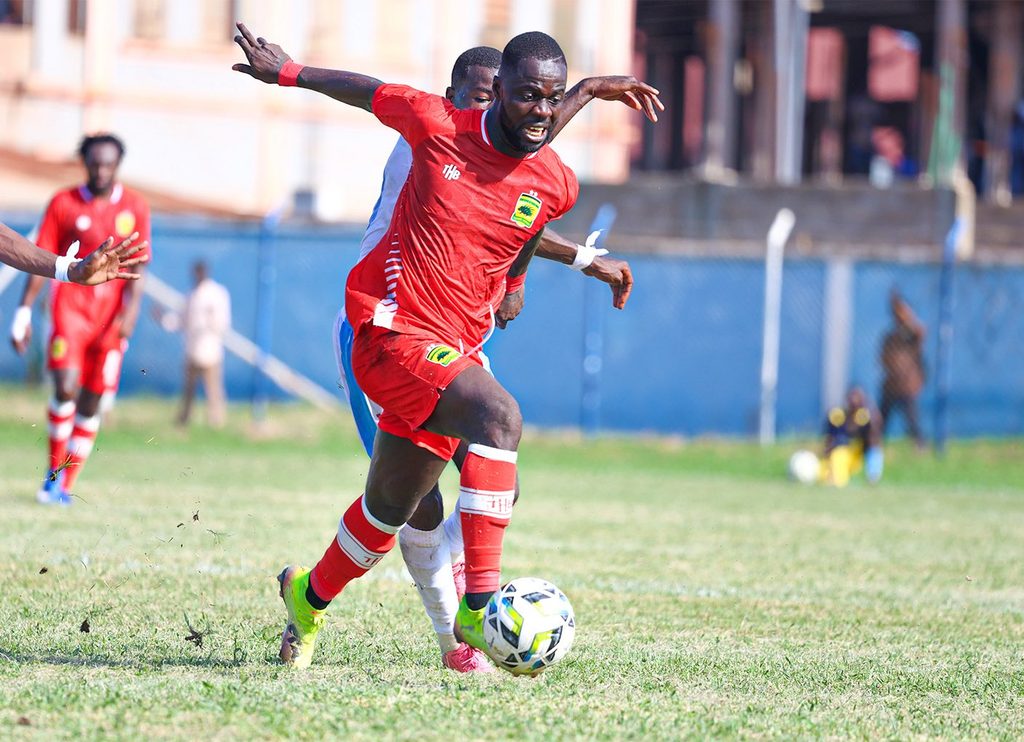
Their defeat at Karela United, however, means they will be under pressure to quickly return to winning ways against a Dreams side determined to make home advantage count.
Dreams, meanwhile, have endured a difficult beginning to the campaign and will see tomorrow’s fixture as an opportunity to change their fortunes.
The ‘Still Believe’ side have collected points from only their opening draws and are yet to register a victory, making the meeting with one of the country’s traditional giants an important test of their character.
Elsewhere, Vision FC will welcome Bibiani Gold Stars to the Nii Adjei Kraku II Sports Complex today, with both teams looking to strengthen their positions.
Vision have shown encouraging form in the early stages, while Gold Stars will be seeking a response after suffering a 2-0 home defeat to newcomers Port City FC.
At the Debibi Presby Park, newly promoted Debibi United will face defending champions Medeama SC tomorrow.
Medeama finally opened their account with a convincing 4-1 victory over Basake Holy Stars and will be hoping that the result marks the beginning of a stronger title defence.
Port City FC will continue their impressive debut campaign when they host Bechem United at the Daasebere Boamah Darko II Park.
Basake Holy Stars will attempt to recover from their heavy defeat to Medeama when they host Berekum Chelsea at the Ampain AAK II Sports Arena.
Aduana FC will welcome Swedru All Blacks to the Nana Agyemang Badu I Park after producing one of the weekend’s most notable results last Sunday.
At the Kpando Stadium, Heart of Lions will host FC AshantiGold ’04 in another meeting between sides coming off victories.
FC Samartex 1996 will meanwhile welcome Young Apostles FC to the Nsenkyire Sports Arena, with the home side seeking to maintain their unbeaten start to the campaign.
By Enoch Ntiamoah Siaw
SKIP THE QUEUE, TAP THE NEWS
You can now read the Ghanaian Times and The Spectator newspapers from the comfort of your device via TimesNewsPlus.
Join our WhatsApp Channel: https://whatsapp.com/channel/0029VbBElzjInlqHhl1aTU27
Tuesday, September 29, 2026 would go into the annals of Ghana football as one of the darkest days for the Black Stars.
In an AFCON 2027 qualifier against The Gambia, the Black Stars did not only break the hearts of the fans, but conceded a defeat that left followers with sleepless nights.
Coming from a Matchday 1 defeat to the Elephants of La Cote d’Ivoire in Bouake, the outcome of the second game against The Gambia was one that was non-negotiable.
It had the ability to spark a revival to contend for one of the slots for the next AFCON showpiece.
The Gambia is a formidable side but definitely, not one to have frustrated Ghanaians to watch in pain and awe the Black Stars lose a game from a winning position.
That is a possibility in the game of football but when the stakes are high in such cases, it becomes unacceptable to the fans.
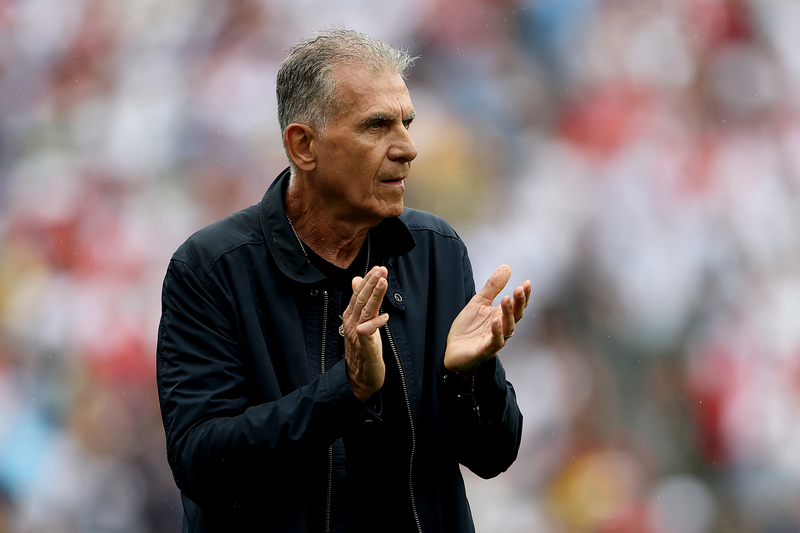
And grievously has Carlos Queiroz answered the massive call for his resignation.
At his post-match press conference, he made it clear that bowing out was the easiest decision but insisted that would not solve the myriad problems facing the Black Stars.
For the coach to be fired two days after that declaration raises a lot of concerns as he seem to be aware of existing problems the FA may even not know.
Unfortunately, coaches over the years have always been sacrificial lambs in situations of this nature but when he talks about particular problems affecting the team, his sack leaves much to be desired.
That aside, it is important to also take another look at the country’s pool of players, both local and foreign based.
Some of us have been advocates for forming the Black Stars around the ever-present local players who may lack the skill, finesse and flamboyance believed to give the foreign based players the edge over their local counterparts.
The locals, however, compensate that with their commitment and dedication.
Sadly, it appears this consistent call have fallen on deaf ears and no one wants to give any attention to that.
If the fear is that results would be poor, then that would be no excuse again following outcomes of the Stars in their last two games.
From what was witnessed in Bouake and Accra, one can confidently boast that there isn’t much difference between the foreign based players and the locals.
If there is any, it would probably be the treatment given to the two sets of players.
The call on the FA now is to give major consideration to the local players. Any coach that sees no good in the local players must have no business handling the national team.
That does not also shut the door on the ‘foreigners’. We witnessed how the early 90s teams were beautifully blended to have a formidable team.
It is time the FA goes back to the basics. With the locals, there can be more camps, leading to improved cohesion. Any foreign based player invited must settle into the team quickly and make a difference. That is the only way to rescue the Black Stars from its free fall.
By Andrew Nortey
SKIP THE QUEUE, TAP THE NEWS
You can now read the Ghanaian Times and The Spectator newspapers from the comfort of your device via TimesNewsPlus.
Join our WhatsApp Channel: https://whatsapp.com/channel/0029VbBElzjInlqHhl1aTU27