Editorial
Let’s all support victims of Akosombo and Kpong floods

- /home/u249204778/domains/spectator.com.gh/public_html/wp-content/plugins/mvp-social-buttons/mvp-social-buttons.php on line 27
https://spectator.com.gh/wp-content/uploads/2023/10/Editorial-Pix.jpg&description=Let’s all support victims of Akosombo and Kpong floods', 'pinterestShare', 'width=750,height=350'); return false;" title="Pin This Post">
- Share
- Tweet /home/u249204778/domains/spectator.com.gh/public_html/wp-content/plugins/mvp-social-buttons/mvp-social-buttons.php on line 72
https://spectator.com.gh/wp-content/uploads/2023/10/Editorial-Pix.jpg&description=Let’s all support victims of Akosombo and Kpong floods', 'pinterestShare', 'width=750,height=350'); return false;" title="Pin This Post">
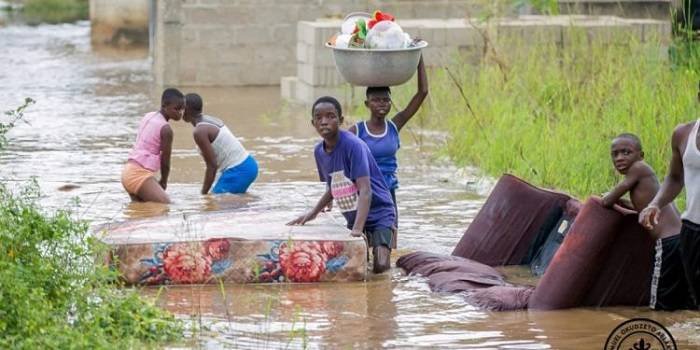
The recent spillage of the Akosombo and Kpong Dams resulted in the displacement of thousands of people living along the lower Volta River basin, making life extremely difficult for the victims.
According to reports, over 26,000 residents have been impacted, and more than 8,000 have been rescued.
In roughly nine different district assemblies in the Volta and Eastern Regions, including the North, Central, and South Tongu District assembly, Shai Osudoku, and Ada, among others, the spillage has forced the relocation of various settlements.
Homes have been submerged because of the spillage, leaving the residents homeless. Businesses like fishing have also been impacted.
People have also suffered physical harm. Schools have been closed indefinitely. Houses have collapsed, and property worth millions of Cedis has been destroyed.
The evacuated victims are now being housed in shelters and schools, while some are staying with friends and relatives.
The situation is critical, and immediate action is required to improve it and help the afflicted residents.
The Volta River Authority (VRA) claims that the spillage began as a result of a steady upstream rise in water levels brought on by prolonged rains, and that the measure was taken to safeguard the dam and avert potential calamities.
According to VRA, the goal is to preserve the dam’s integrity when the water input is excessive. Unfortunately, the spillage’s repercussions are a regrettable situation, but they are necessary to save the dam.
The Spectator is urging individuals, corporate entities, and religious organisations, among others, to ease the suffering of the affected residents by providing them with comforting supplies such as food, water, mattresses, toiletries, detergents, sanitary towels, medical supplies, blankets, and mosquito nets while they recover from their shock.
The National Disaster Management Organisation (NADMO) appears to be overburdened with the number of victims; as a result, despite the intervention, it lacks the resources to adequately carry out its purpose.
The numbers are overwhelming and as a result, everyone must come on board as soon as possible to aid the victims out of their affliction.
There are reports that more neighbourhoods will be impacted because the spillage is still ongoing and VRA is unsure of when the water will start to recede,
The Spectator applauds the government representatives and other individuals who have visited the victims to express their sympathies and provide them with help in various ways, but more has to be done to support their efforts.
Additionally, we beg pharmaceutical firms and medical professionals to step up their efforts immediately to help prevent the outbreak of cholera and other water-borne illnesses.
Because of the crowding and sanitation issues, nearby healthcare facilities must also be prepared in case a disease outbreak occurs.
In the future, the flooding catastrophe should serve as a reminder for the government to fully fund NADMO and make investments in early warning systems to avoid similar regrettable circumstances.
The government must also take the necessary steps to prepare for future compensation for the affected residents.
Let us all make a concerted effort to support victims of the Akosombo and Kpong floods.


Following the decision to reintroduce the Regional Diary, it has become necessary to provide clear editorial direction on the modalities and content focus for each edition.
To make the Regional Diary more compelling, engaging and reflective of developments in the regions, the Editorial Conference has agreed that the first edition for each region should feature an exclusive interview with the political head of the region—the Regional Minister.
To this end it is expected that the interview will be anchored on the broader government agenda of “Resetting,” with particular emphasis on the administration’s performance nearly two years into its tenure.
The interview should provide an opportunity to assess the government’s interventions in the region, while allowing the Regional Minister to articulate the administration’s successes, challenges and priorities for the years ahead.
Among other things, the interview should explore:
- Key achievements and major interventions since the administration assumed office;
- The impact of government policies and programmes on the people of the region;
- Major challenges confronting the region and how the Regional Coordinating Council is addressing them;
- The status of major development projects and initiatives; Job creation, investment and economic opportunities within the region;
- The Minister’s priorities for the remainder of the administration’s tenure; and Other pressing issues of interest to the people of the region.
Each correspondent is encouraged to approach the interviews with depth and journalistic excellence, asking direct and substantive questions that elicit specific responses and go beyond political rhetoric.
This initiative presents an important opportunity for us to strengthen the Ghanaian Times’ presence and relevance in the regions, reclaim our position as a leading national daily and deepen our relationship with regional authorities and other key stakeholders.
I am confident that, with our collective commitment and professionalism, the Regional Diary can become a distinctive and influential component of the Ghanaian Times’ coverage.
I remain available for further discussions and welcome ideas and suggestions that will help improve the initiative.
Counting on your cooperation.
Thank you.
ACTING NEWS EDITOR
SKIP THE QUEUE, TAP THE NEWS

You can now read the Ghanaian Times and The Spectator newspapers from the comfort of your device via TimesNewsPlus.
Join our WhatsApp Channel: https://whatsapp.com/channel/0029VbBElzjInlqHhl1aTU27
Dear Editor,
Going viral can make someone famous overnight, but fame alone cannot build a sustainable entertainment industry.
Ghana is blessed with talented musicians, actors, comedians, content creators and other creative professionals. Social media has also created opportunities for young people to showcase their talents to audiences beyond Ghana.
However, we must ask whether we are building lasting careers or simply celebrating the next person to trend online.
Today, a song, skit or video can become popular within hours and disappear from public attention just as quickly. This culture of virality can create the impression that numbers, followers and online attention are the only measures of success.
Our creative industry needs to go beyond that. Young creative need proper management, business knowledge, financial literacy, education and opportunities to develop their skills. They also need structures that can help them turn talent into sustainable careers.
Ghana has the talent to become a major force in Africa’s creative economy. But talent without investment, structure and professional development can easily be wasted
Let us therefore stop asking only, “Who is trending?”, and begin asking, “Who is building a lasting career?” Our creative deserves more than temporary applause, they deserve an industry capable of turning Ghanaian talent into sustainable success.
From Elijah Arkoh
Kaneshie.
SKIP THE QUEUE, TAP THE NEWS
You can now read the Ghanaian Times and The Spectator newspapers from the comfort of your device via TimesNewsPlus.
Join our WhatsApp Channel: https://whatsapp.com/channel/0029VbBElzjInlqHhl1aTU27