Hot!
‘Let professional counselor, law enforces deal with marital violence’


- /home/u249204778/domains/spectator.com.gh/public_html/wp-content/plugins/mvp-social-buttons/mvp-social-buttons.php on line 27
https://spectator.com.gh/wp-content/uploads/2022/04/Lady-Rev-Salome-Afua-Owusu-Afriyie.jpg&description=‘Let professional counselor, law enforces deal with marital violence’', 'pinterestShare', 'width=750,height=350'); return false;" title="Pin This Post">
- Share
- Tweet /home/u249204778/domains/spectator.com.gh/public_html/wp-content/plugins/mvp-social-buttons/mvp-social-buttons.php on line 72
https://spectator.com.gh/wp-content/uploads/2022/04/Lady-Rev-Salome-Afua-Owusu-Afriyie.jpg&description=‘Let professional counselor, law enforces deal with marital violence’', 'pinterestShare', 'width=750,height=350'); return false;" title="Pin This Post">
Religious organisations have been admonished to allow professional counsellors and law enforcement agencies to handle cases of Gender-Based Violence in marriages.
This is to reduce the level of emotions attached to such issues by unprofessionals that could aggravate the situation and in the end do more harm than good to both the perpetrators and victims.
In an interview with The Spectator on Wednesday, an Associate Pastor of the Salvation Prayer Missions World Wide Ghana, at Lapaz, in Accra, Lady Rev Salome Afua Owusu Afriyie said sometimes therapy, anger management, legal actions and activities that would lead to psychological transformation were necessary to help address such worrisome issues in marriage.
She observed that some religious bodies may not have the capacity to properly counsel the couple and resort to measures such as asking the victims to pray for their perpetrators to have a change of heart which might not be appropriate.
She said it was not misplaced to suggest separation if the situation was becoming worse because this gave both spouses the opportunity to step aside from each other to see whether the marriage could work again or “forever remain broken”.
The Associate Pastor said where it was needful to resort to necessary measures to keep the abuser away, for example a restraining order, this should be done by the use of the law court or other legal institutions of state.
She said where the situation became unbearable, the victims must be given the freehand to walk away from their abusive marriage and begin a new life.
“Let us also get professionals to teach and raise awareness to help prevent such issues in our various organisations” she stated.
Lady Rev Afriyie said that curbing Gender-Based Violence in marriages must be a shared responsibility.
She said it was important that families played a watch role in ensuring that their members were safe after marriage but should not take any changes they observed in them for granted.
She said “It is not easy to tell others that you are being abused so when people muster courage to say they are going through such a challenge, families must act swiftly because delays had led to the loss of lives in some homes”.
The Associate Pastor again advised persons who were yet to get married to look out for signs of abuse and should not take them for granted when they were identified.
She said signs such as “insecurity, a possessive partner or one who looks or talks down on you whether in private or public should be seen as a red flag and be treated with all the seriousness possible or such relationships should be brought to an end”.
From Dzifa Tetteh Tay, Tema.


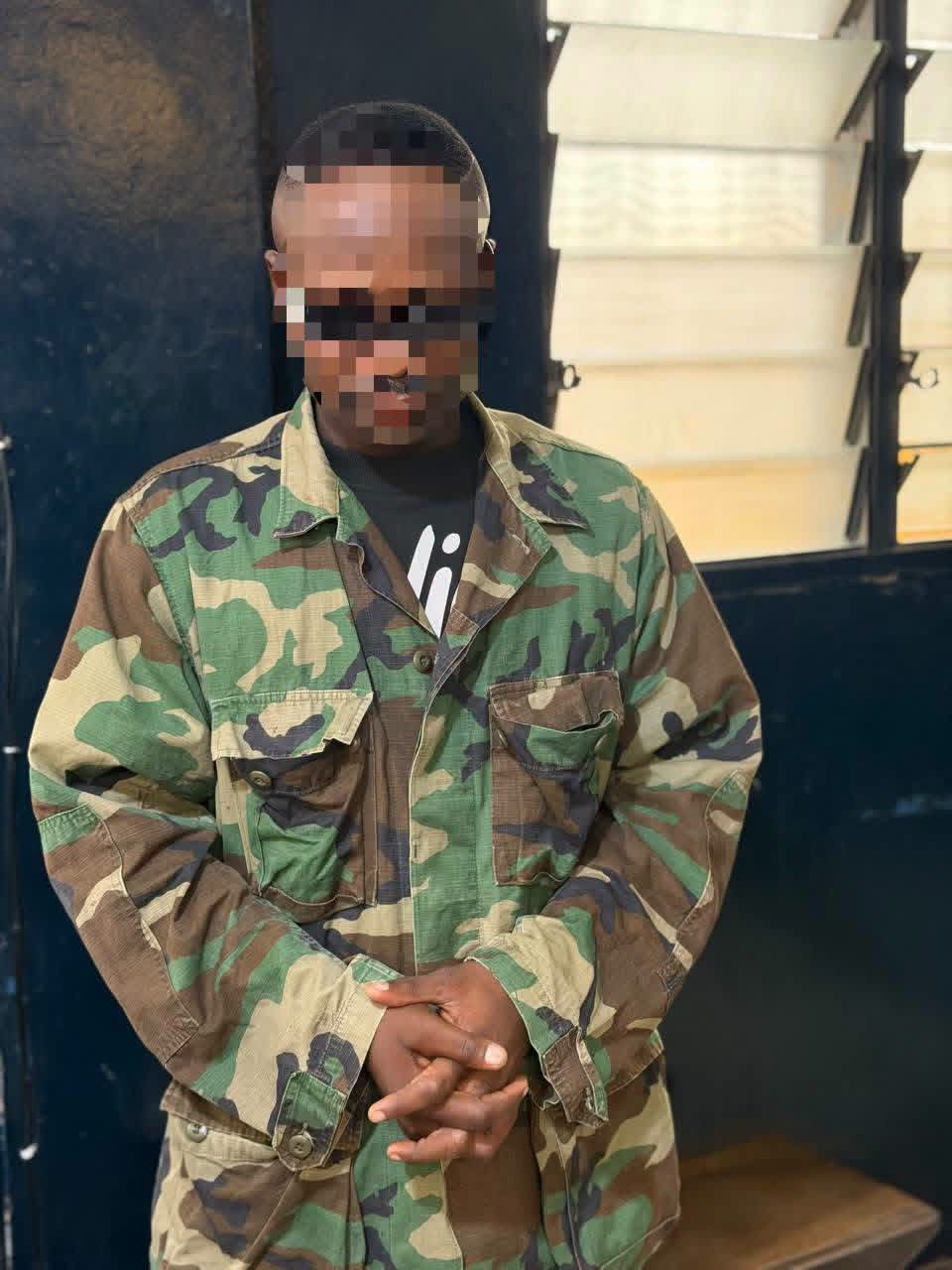
The Tema Regional Police Command has arrested a 32-year-old man for allegedly posing as a soldier and extorting money from unsuspecting members of the public at Ashaiman.
The suspect, identified as Bright Atsu Kudiabor, was arrested by the Ashaiman Police on Wednesday, September 16, 2026, at about 7:00 a.m.
According to the Police, he was arrested at an area known as “I Shall Return”, where he was allegedly parading himself as a soldier and demanding money from people.
The Police said Kudiabor, who is an ex-convict, was initially arrested by personnel of the Ghana National Fire Service in Ashaiman with assistance from other members of the public.
A search conducted on him after he was handed over to the Police reportedly led to the recovery of a set of military camouflage uniform.
The suspect is currently in Police custody and assisting with investigations.
The Tema Regional Police Command said he would be processed for court after investigations are completed.
The Police urged the public to remain vigilant and report anyone who falsely presents themselves as a soldier or a member of another security agency to deceive or extort money from the public.
By: Jacob Aggrey
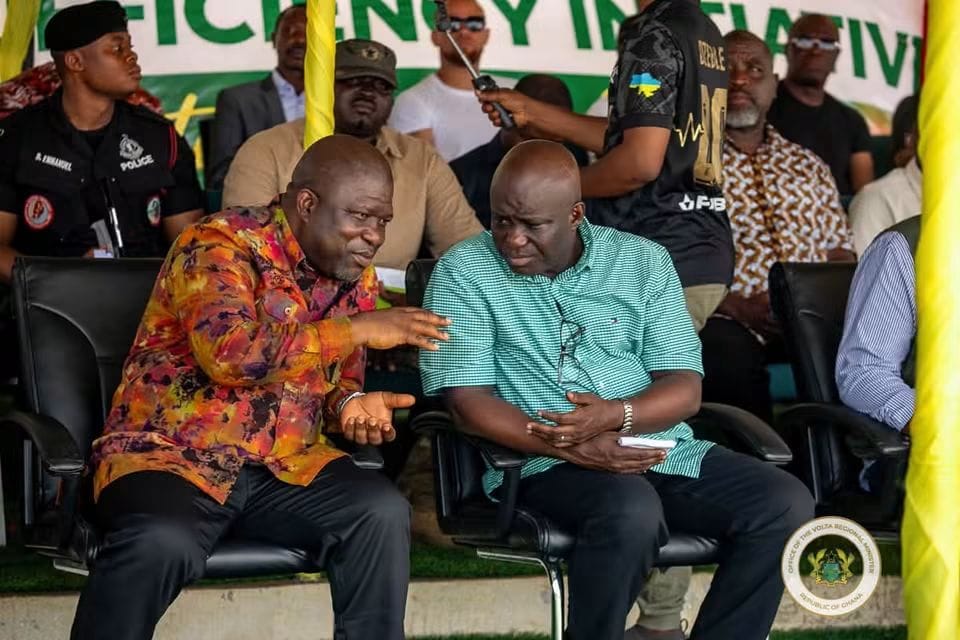
Volta Regional Minister, James Gunu, says the Volta Region holds enormous agricultural potential and efforts must be geared towards connecting farmers to the needed resources to unlock that potential.
He said focus must be on linking farmers to resources, technology, financing and markets to increase production, create jobs and build sustainable livelihoods.
Hon. Gunu made the remarks at the national launch of the Ghana Tomato Self-Sufficiency Initiative (GHATSI) held at Anloga in the Volta Region on Tuesday, September 15.
The initiative, under the theme “Produce at Home. Feed the Nation. Export the Surplus,” seeks to boost local tomato production, processing and marketing while reducing Ghana’s heavy reliance on imported tomatoes.
The launch was attended by the Minister for Food and Agriculture, Eric Opoku, his Deputy, John Setor Dumelo, Feed Ghana Coordinator, Bright Demordzi, Members of Parliament, traditional leaders, MMDCEs, farmers and other stakeholders.
Mr.Gunu expressed appreciation to the Minister for Food and Agriculture for the support announced for the region, including two excavators, 200 cartons of organic fertiliser, and GH¢200,000 for Ms. Kuatudzo Esther Dela, a tomato farmer and processor from Ziope.
He described the initiative as an important step towards making agriculture a stronger driver of food security, job creation and economic growth in the Volta Region.
By Edem Mensah-Tsotorme