News
‘Let children read from books, not digital devices’

Parents have been urged to encourage their children to read from books instead of digital devices to protect their eyes.
This, according to the Country Director of Cure Blindness Project, Dr James Addy, was because exposure of children to digital devices for extended periods puts them at risk of developing eye problems, since prolonged screen time affects eye development, potentially causing vision disorders.
“Parents should implement the World Health Organisation recommendation of zero screen time for children under two years and limited screen time for those above three years. Children’s eyes are sensitive, and prolonged exposure to digital devices can have devastating consequences,” he emphasised.
This came to light in an interview with The Spectator on eye health in Accra on Monday.
Dr Addy explained that excessive screen time can lead to eye strain, dryness, and increased risk of cataracts and refractive errors.
Dr Addy noted that eye problems have become prevalent in Ghana, particularly among children with access to eye care in rural areas limited, exacerbating the issue,” he said.
He recommended regular eye screening, especially in schools and communities, to identify potential issues early because “Early detection and intervention can significantly improve treatment outcomes,” Dr Addy stated.
In Dr Addy view, parents must prioritise personal interactions with children, limiting screen time and encouraging outdoor play while Pre-schools and Daycare Centers should promote toys and outdoor activities over screens.
Globally, over 500,000 people go blind every year, with a prevalence of 0.3 to 1.2 per thousand children. In Ghana, the prevalence is approximately 0.9 per cent, with 44.4 per cent of children requiring refractive services, primarily due to myopia.
The Ghana Blindness and Visual Impairment Study (2015) reported 230,000 people blind in Ghana, including children and adults.
Dr Addy attributed the rising refractive errors among children to lifestyle changes and reduced outdoor activity. “Increased screen time from phones, tablets, computers, and televisions is a significant contributor,” he added.
Consequences of refractive errors include eye strain, blurred vision, retinal detachment, glaucoma, and impaired vision. This can affect education, economic potential, and overall well-being.
Common signs of eye problems in children include squinting, frequent rubbing of the eyes, difficulty focusing on distance objects, and headaches.
Dr Addy recommended regular eye checks, at least once a year, and encouraged parents to prioritise eye health.
To address screen time, Dr Addy advised parents to adopt the 20-20-2 rule which requires that after every 20 minutes, one should look away from the screen and walk around for 2 minutes.
The primary harm from digital tools comes from the distance and light emission. “Prolonged focus on a screen exhausts eye muscles, leading to pain and potential long-term damage,” Dr Addy explained.
By Richmond Angel Mensah

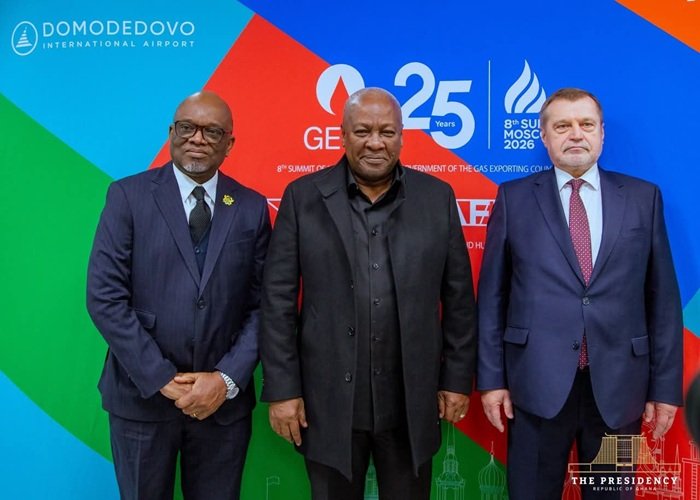
President John Mahama has arrived in Moscow, Russia, from Ethiopia to participate in the 3rd Russia-Africa Summit.
The summit is being hosted by Russian President Vladimir Putin.
During the visit, President Mahama will join fellow African leaders at the Economic and Humanitarian Forum and summit plenary sessions.
He is also scheduled to hold high-level bilateral talks with President Putin and attend a Kente exhibition organised by the Russia-Ghana Parliamentary Forum.
As part of the visit, the President will receive honorary doctorate degrees from the Russian University of Transport and the Peoples’ Friendship University of Russia.
He will also engage Russian businesses and state institutions to advance bilateral cooperation between Ghana and Russia.
By Edem Mensah-Tsotorme
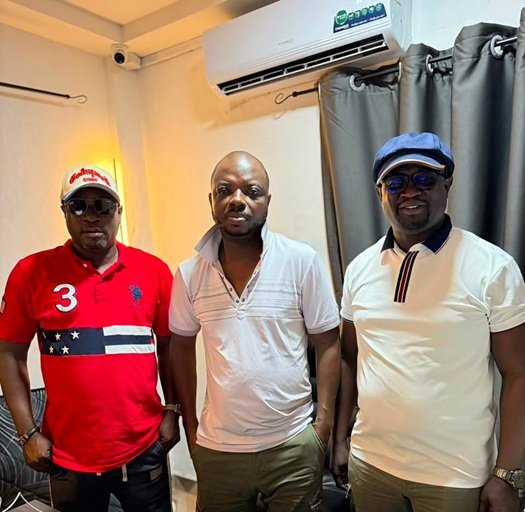
The Greater Accra Regional Organiser of the New Patriotic Party (NPP), Moses Abor, has met with the Bono Regional Chairman of the party, Kwame Baffoe, popularly known as Abronye DC, to address concerns arising from recent social media developments.
In a statement shared , Mr. Abor said he yesterday visited Chairman Baffoe over comments he made on his show, which had raised concern among some party activists.
According to him, he also engaged Charles Opoku Presidoo and ironed out grievances he had earlier held regarding the matter.
Mr. Abor said he was pleased that in the spirit of unity and the party’s shared commitment to return to power in 2028, they had a constructive conversation and addressed the concerns amicably.
“With the matter now resolved, I encourage all Party activists to let the matter rest and redirect our energy toward holding the NDC accountable for its failures and misleading claims,” he said.
He urged party members to continue making the case to Ghanaians on why Dr. Mahamudu Bawumia is the right person to lead the country in 2028.
By Edem Mensah-Tsotorme