News
Korle-Bu operating under constant pressure, emergency units often operating beyond full capacity- Doctors Association chairman

- /home/u249204778/domains/spectator.com.gh/public_html/wp-content/plugins/mvp-social-buttons/mvp-social-buttons.php on line 27
https://spectator.com.gh/wp-content/uploads/2026/03/WhatsApp-Image-2026-03-24-at-12.06.20.jpeg&description=Korle-Bu operating under constant pressure, emergency units often operating beyond full capacity- Doctors Association chairman', 'pinterestShare', 'width=750,height=350'); return false;" title="Pin This Post">
- Share
- Tweet /home/u249204778/domains/spectator.com.gh/public_html/wp-content/plugins/mvp-social-buttons/mvp-social-buttons.php on line 72
https://spectator.com.gh/wp-content/uploads/2026/03/WhatsApp-Image-2026-03-24-at-12.06.20.jpeg&description=Korle-Bu operating under constant pressure, emergency units often operating beyond full capacity- Doctors Association chairman', 'pinterestShare', 'width=750,height=350'); return false;" title="Pin This Post">
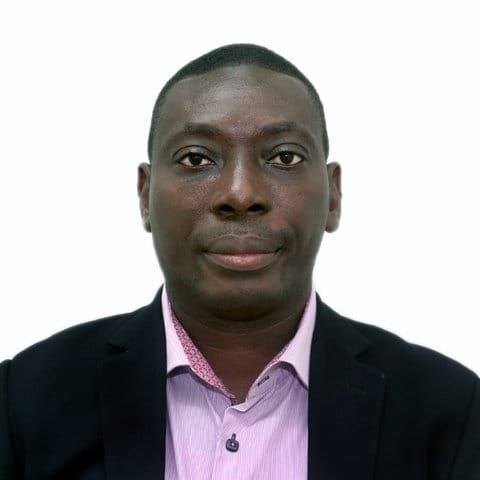
The Chairman of the Korle-Bu Doctors Association, Dr. Asare Offei, has highlighted the daily challenges faced by health workers at the Korle-Bu Teaching Hospital, describing the “no-bed syndrome” as a long-standing problem.
His comments follow recent public debate after the hospital’s Chief Executive Officer dismissed a viral video showing patients lying on the floor.
Dr Offei speaking in an interview onJoy news, he explained that the situation at the facility is one of constant pressure, with emergency units often operating beyond full capacity.
According to him, patients used to be redirected to other facilities when there was no space. However, with directives to stop turning patients away, all cases are now kept at the hospital, worsening congestion.
He noted that when beds are full, some patients are made to sit on chairs while receiving treatment, while others who are too weak end up lying on the floor.
“They are still given the best care possible under the circumstances,” he indicated, adding that the situation is not new but has gained attention due to recent media reports.
He urged the public to understand that the issue has existed for years and should not be treated as a sudden development.
Dr Offei called for a collective approach to address the problem rather than assigning blame, stressing that acknowledging the reality is the first step toward finding solutions.
He spoke about the impact of the situation on healthcare workers, explaining that treating patients in such conditions makes it difficult to carry out proper medical examinations.
He said examining a patient in a sitting position or on the floor limits the ability of doctors to gather accurate information for diagnosis.
Dr Offei further described the situation as unprofessional and below standard, warning that it could expose doctors and nurses to legal risks if questioned about their methods of care.
He added that the physical strain on health workers is another concern, as bending or squatting to treat patients on the floor could lead to long-term health problems.
He therefore called for urgent steps to reduce congestion and improve conditions at the hospital, noting that healthcare workers should not be forced to operate under such circumstances as a routine.
By: Jacob Aggrey

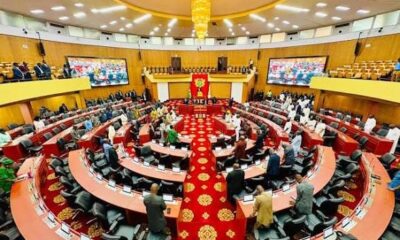




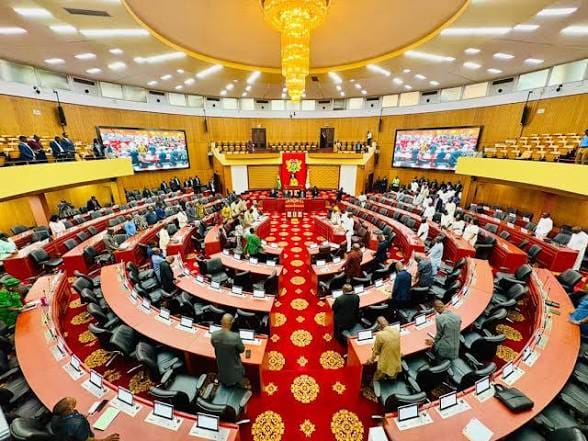
Parliament has clarified public commentary on social media regarding a notice on its notice board that read “No Vacancy for National Service Personnel 2026/2027. Kindly go for reposting.”
In a statement, signed by the Director of Media Relations, David Sebastian Damoah, Parliament said the notice has been misconstrued and was not a policy statement, a freeze on national service placements, or a change in its support for the National Service Scheme.
According to Parliament, the notice was a routine administrative message to prospective personnel who reported to the House, informing them that it has received more personnel than it can accommodate for the 2026/2027 service year and that they should seek reposting to other institutions.
It said it remains committed to the National Service Scheme and values the contribution of service personnel to its work, and regrets any confusion or inconvenience the wording may have caused.
By Edem Mensah-Tsotorme
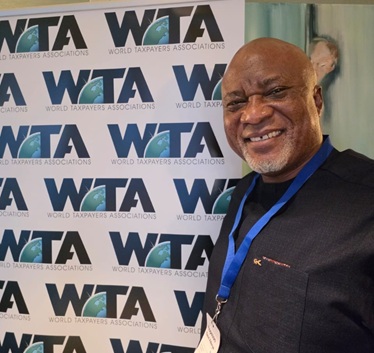
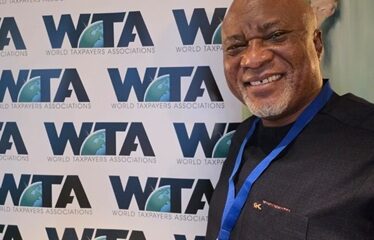
Ghanaian public advocate Hopeson Yaovi Adorye has been elected to the Board of Directors of the World Taxpayers Association (WTA).
The election took place on Sunday, October 5, 2026, during the Association’s conference in Kraków, Poland.
His election marks a significant addition to his international leadership portfolio and provides a platform for Ghanaian and African perspectives to contribute to global discussions on taxpayer rights, responsible taxation, transparency and prudent management of public resources.
Reacting to his election, Mr. Adorye expressed appreciation to the leadership and members of the WTA for the confidence reposed in him.
“I am deeply honoured by this confidence and conscious of the responsibility that comes with it. Taxpayers are at the heart of every economy, and they deserve fairness, transparency, accountability and value for the taxes they pay. I look forward to working with colleagues from across the world to strengthen the voice of taxpayers and promote responsible fiscal governance,” he said.
According to him, taxation should not be viewed solely as a mechanism for raising government revenue, but also as an important component of the social contract between citizens and the state.
Mr. Adorye said governments have a responsibility to ensure taxes are collected fairly and public resources are utilised efficiently to deliver quality infrastructure, healthcare, education, security and other essential services.
His election also creates an opportunity to bring African experiences into international conversations on taxation and public expenditure.
Mr. Adorye, who is Executive Director of Taxpayers League Ghana, has previously served as Global Board Chairman of the International Youth Network for UN Security Council Resolution 2250, an NGO associated with the United Nations Economic and Social Council (ECOSOC).
He is expected to use his new role to champion fiscal accountability, taxpayer education, good governance and stronger citizen participation in public financial management.