News
Live holy lives no matter the cost …WAD Treasurer charges Adventists

The Treasurer of the West Central African Division of the Seventh Day Adventist Church (WAD) based in Abidjan, Pastor Dr Dickson Sarfo Marfo, has called on Christians, especially members of the SDA Church, to set themselves apart and live holy lives in a culture of compromise.
Speaking at the 2026 Annual Camp Meeting Consecration Service organised by the New Life District of the SDA Church at the Valley View University, Oyibi, Dr Marfo said devotion to God, holiness and consistent study of the Bible are the only ways believers can “stand the test of time.”
The four-day camp meeting was held under the theme: ‘Integrated for Mission: Grounded in the Bible and Focused on the Mission.”
“Out of all the people, you will be blessed,” Dr Marfo told the congregation. “Take time to be holy and spend time to read God’s word. That is the only way that you can stand the test of time.”
The WAD Treasurer cautioned that merely attending church without surrendering one’s life to the will of Christ does not guarantee a person as a true Christian who is waiting for the second coming of God.
“God will never disappoint anyone who sincerely loves Him and His work no matter what,” he said.
Dr Marfo noted that these were times when true Christians must live godly lives that the world can emulate. According to him, the line between the church and the world has become blurred.
“Set apart after this camp meeting and let your life change to attract God’s blessings. Never dilute your convictions, live holy no matter the cost,” he said.
He further urged the congregation to let their lives reflect that of a true Adventist so that people can see Christ in them and return to Jesus.
He observed that today’s society does what is pleasant in its eyes, but the character of Christians must be a true reflection of what God expects of us as Christians.
For his part, the President of the East Ghana Conference of the SDA Church, Pastor Dr Ernest Kwaku Ofosu, in a sermon encouraged the congregation to allow the Word of God to correct them from negative behavior.
“Be convicted by the word of God to be grounded in the Bible,” Dr Ofosu said.
He urged members to invest time in learning the Scriptures, warning that the enemy was seeking to destroy the people of God.
The New Life District Pastor, who also serves as the Eastern Regional Manager for SDA Schools, pastor Asante Amaniampong Danso, advised members to remain faithful and steadfast as they await the second coming of God.
The occasion was graced by several dignitaries including the Registrar of Valley View University, pastor Dr Samuel Amankwah; the Communication and Legal Affairs Director of the EGC, Pastor Patrick Nyarnor; and Former President of the MGC, Pastor E.D. Poakwah, among other guests.
As part of the occasion, 19 souls were baptised into the Seventh Day Adventist Church.
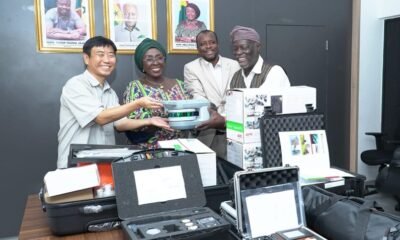
Caption: Pastor Emmanuel Yeboah (second right) flanked by other ministers after the ordination ceremony
By Samuel Opare Lartey
SKIP THE QUEUE, TAP THE NEWS
You can now read the Ghanaian Times and The Spectator newspapers from the comfort of your device via TimesNewsPlus.
Join our WhatsApp Channel: https://whatsapp.com/channel/0029VbBElzjInlqHhl1aTU27







The Minister of Finance, Dr. Cassiel Ato Forson, has recalled the severe economic hardship Ghanaians went through under the previous NPP government, describing it as an economic meltdown with a heavy human cost.
Presenting the 2027 Budget, Dr. Forson painted a grim picture of the state of the economy by the end of 2022.
He said inflation reached 54.1 percent, the primary balance stood at a deficit of 4.3 percent of GDP, the IMF debt sustainability analysis put Ghana’s debt at over 100 percent of GDP, and gross international reserves had fallen to less than three weeks of import cover.
He said although the numbers describe the scale of the meltdown, they do not fully capture the human cost.
According to the Minister, the crisis affected every household and business.
He said it imposed severe hardship on families, made food too expensive, raised transport fares and the cost of medicine, diminished pensions and savings, and collapsed businesses through high interest rates and rapid cedi depreciation.
“Families were forced to make impossible choices: postpone education, housing and healthcare,” Dr. Forson said.
He added that the debt restructuring imposed painful and crude haircuts on households, pension funds, banks, businesses and investors.
By Edem Mensah-Tsotorme
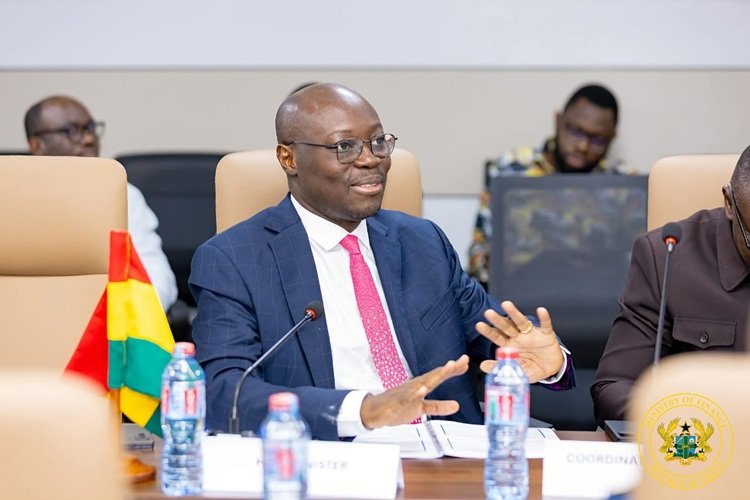
The Minister of Finance, Dr. Cassiel Ato Forson, has announced a US$3 billion investment in commercial agriculture under Pillar two of the New Economy Programme.
Presenting the 2027 Budget, Dr. Forson said agriculture will be a key driver of jobs, food security and industrial growth.
A key plank of the strategy is the construction of the Pwalugu Multipurpose Dam at a cost of $1 billion.
The dam will irrigate 25,000 hectares of farmland, provide facilities for 1,000 fish cages within the reservoir, support year-round vegetable production, ensure flood protection and water security, and generate 70 MW of hydropower.
The first phase is expected to be ready by early 2029, with full completion in 2030.
Government will also develop eight integrated agricultural industries and establish Rice Development Hubs in the Afram Plains, Volta Basin, Western Ghana and Northern Ghana.
The hubs will introduce irrigation, mechanisation, silos, modern mills, packaging and logistics.
An additional 100,000 hectares will be brought under rice cultivation, targeting yields of 5 to 6 metric tonnes per hectare and creating approximately 125,000 jobs.
He added that public procurement laws will be amended to ensure public institutions purchase only Ghana-grown rice and other staple foods using public funds.
Additionally, the government aims to achieve self-sufficiency in sugar production by 2030 through locally grown sugarcane, irrigated production zones and nucleus estates.
It will organise out-growers and establish commercially viable sugar mills, while introducing import permits and quotas to restrict sugar imports as local production increases.
For those in the poultry industry,
government will develop the entire poultry value chain, including breeder farms and hatcheries, day-old chicks, animal feed, vaccines and veterinary laboratories, modern poultry houses, processing plants, cold storage and retail distribution.
It will also develop commercial maize and soya bean production to reduce feed costs, which currently account for 60 to 70 percent of poultry production costs.
Furthermore, government will address Ghana’s estimated annual fish supply gap of 500,000 metric tonnes by making aquaculture the main source of new fish supply while restoring marine and inland fisheries.
It will support commercial and smallholder fish farmers with quality broodstock and fingerlings, fish feed, cages, ponds and tanks, aquatic health laboratories, disease surveillance and water-quality management systems.
Touching on oil plan, Dr.Ato Forson said, government will develop 100,000 hectares of new oil palm plantations across the Western, Central, Eastern, Volta and Ashanti regions.
Nurseries, nucleus estates and smallholder farmers will be connected to modern mills, refineries and manufacturing facilities.
He noted that US$500 million World Bank financing arrangement has been secured for consideration by Parliament. The programme has the potential to create more than 250,000 jobs, with a target of self-sufficiency and export capacity by 2032.
Approximately 100,000 hectares of suitable land have been identified, with acquisition processes underway.
The Finance Minister revealed that government will develop the vegetable industry around the Pwalugu Multipurpose Dam, with US$1 billion invested in the dam.
Dr.Ato Forson finally noted that government will process at least 50 percent of Ghana’s cocoa locally by 2028 and increase local processing to 100 percent by 2030, completing the transition towards ending raw cocoa exports.
Production will be expanded beyond primary grinding into cocoa liquor, cocoa butter, cocoa cake, cocoa powder, chocolate, cosmetics and other finished products.
By Edem Mensah-Tsotorme