Kevin Beutler on Why You Should Never Overlook Self-Care


The pandemic pushed the importance of taking better care of your health to the forefront. Those who could work from home did so to isolate themselves. Those who did not have that option had to be alert and focus on ensuring all safety and preventive measures. However, even before COVID-19 struck, Kevin always focused on his health and encouraged his team to do the same. He shares three reasons why one shouldn’t compromise on health: the financial cost of major illnesses, the impact on the workplace, and the impact on families.
“In both a personal and professional sense, a person should never compromise their health,” says Kevin. “Illnesses can lead to a multitude of problems that might have lifelong effects on a person. When it comes to the workplace, this means reduced productivity across the board. Since the sick person cannot work or can only do so in a limited capacity, their work is reallocated to others who already have full schedules. As a result, lines of communication break down when phone calls and emails go unanswered. And as for mental and emotional health, other people’s work performances might suffer due to the concern over a colleague.”
Kevin knows self-care can be pushed to the back burner in the pursuit of success. He personally went through the same and is determined to never compromise on health again. By getting enough rest, eating as well as p possible, taking breaks when necessary, and asking sick employees to take paid leaves, Kevin has created a health standard for himself and his coworkers. For those who still neglect their health, Kevin tries to lead by example and gently remind them that pushing themselves too hard can derail their work and cause problems.
Even for the healthiest of people, burning the candle at both ends can lead to conditions like depression, anxiety, high blood pressure, heart attacks, and strokes. It is imperative to find a balance between hard work and well-being. Kevin also considers the personal impact illnesses can have on an employee and their family. He puts across a simple question for those who do not prioritize their health even today: what good is success if you cannot enjoy it?

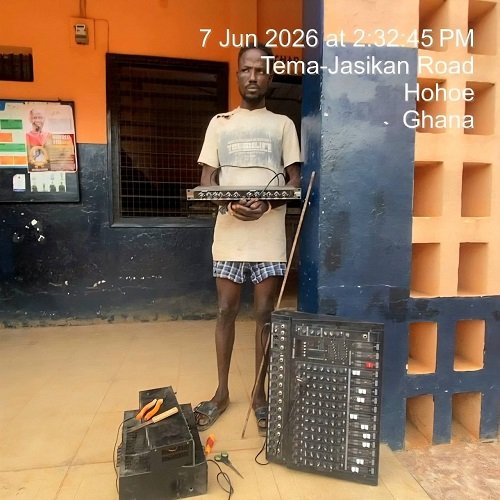
The Volta North Regional Police Command has secured a conviction of a 27 year old man Mohammed Rafiu for making unlawful entry and stealing church musical instruments at Hohoe in the Volta Region.
On June 5, 2026 the accused was observed near the Faith International Ministry Church carrying a sack containing various items rushing to hail a car.
The witnesses suspected his action and approached to check the content in the sack. The following items were found, One (1) Amplifier, One (1) equalizer, One (1) mixer and
Cross-over Machine all belonging to the church.
The accused was arrested and brought to the Hohoe Police District where he admitted to police to the charges leveled against him.
On Monday June 8, 2026 the accused was put before the Hohoe circuit cout where he pleaded guilty on two counts and was convicted and sentenced to three (3) years for unlawful entry and four (4) years of stealing.
Both sentences are to run concurrently.
The Volta North Regional Police Command has urged the general public to immediately report any suspected criminal activities to the Police for action.
News
Dome-Kwabenya MP, Ga East MCE tour flood-prone areas in the constituency, assure victims of support

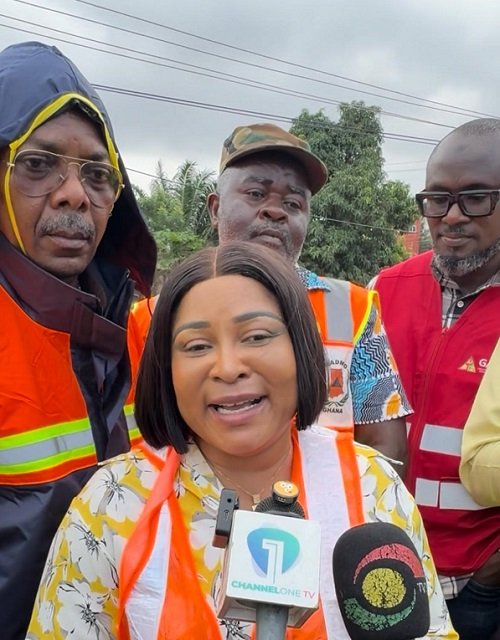
The Member of Parliament (MP) for Dome-Kwabenya, Elikplim Akurugu, together with the Municipal Chief Executive for the Ga East Municipal Assembly, Edmund Agboh, and officials of the assembly, have toured several flood-prone communities in the constituency to identify the causes of recent flooding and inspect structures obstructing waterways.
The inspection made on the Monday, 8th June, 2026 formed part of efforts to assess the extent of the flooding, identify structures built on waterways, and develop plans for their demolition to prevent future occurrences.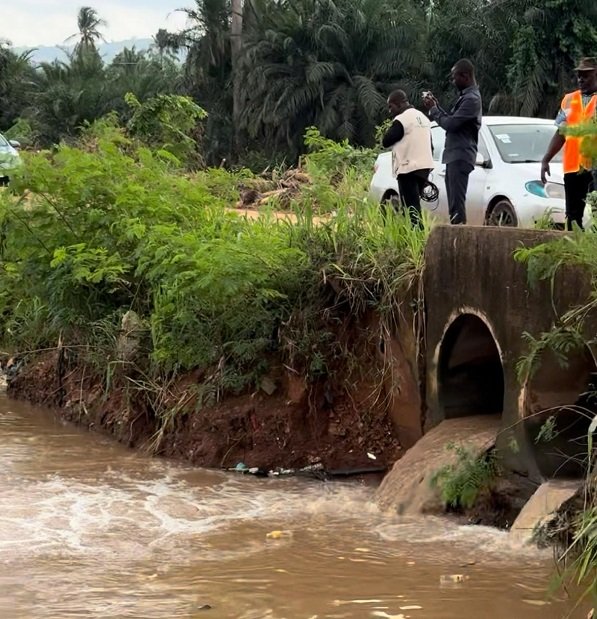
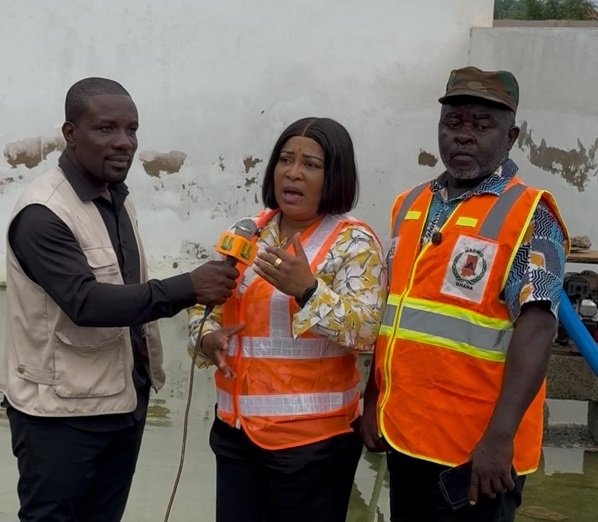
Some areas visited during the tour included Christian Village, Sesemi, Abokobi Station, Falaku and the Pure Water area, all of which were affected by the recent floods that hit parts of the constituency.
Speaking to the media after the inspection, the MP expressed sadness over the destruction caused by the floods, noting that although no lives were lost, many residents had suffered significant property damage.
She attributed much of the flooding to human activities such as indiscriminate dumping of refuse into drains and the construction of buildings on waterways and drainage channels.
The MP appealed to residents to change their attitudes towards sanitation and environmental management, stressing that the country did not have a deficit of prayers but rather an attitude deficit.
She assured residents that the assembly and its technical team would immediately begin work to address some of the drainage challenges identified during the tour.
Ms. Akurugu sympathised with residents whose homes and businesses were affected by the floods and assured them that efforts were being made to secure relief items to support them.
The Municipal Chief Executive of the Ga East Municipal Assembly, Edmund Agboh, said the inspection was intended to take stock of the causes of the recent flooding, which he described as unprecedented.
According to him, the assembly wants to be proactive by identifying and addressing the factors responsible for the flooding before the next rainy season.
Mr. Agboh blamed part of the problem on the increasing number of structures being erected on waterways and drainage paths, as well as the failure of some residents to comply with building regulations.
He disclosed that many of the structures identified during the inspection would be marked for demolition after the necessary procedures had been completed.
The MCE further announced plans to intensify inspections, particularly on weekends, explaining that some developers often undertake unauthorised construction works on Saturdays and Sundays when assembly officials are not at work.
He said the assembly would collaborate with neighbouring jurisdictions and deploy additional resources to improve drainage systems and reduce flooding in the municipality.
The MCE assured that the assembly will use the findings from the inspection to implement immediate and long-term measures aimed at reducing flooding and protecting lives and property in Dome-Kwabenya.
The Director of Works at the Ga East Municipal Assembly, Engineer Justine Glover, said the team inspected several critical locations along the Dakobi River and other flood-prone areas.
He explained that at Pantang Village, officials directed contractors to excavate and open blocked culvert outlets to allow the free flow of water during rainfall.
At Sesemi, he said the team observed extensive damage caused by upstream developments and the absence of proper drainage infrastructure.
Engineer Glover added that officials recommended dredging drainage channels at Abokobi Station to improve the performance of existing culverts.
He further revealed that some structures identified on waterways at Falaku had been earmarked for demolition as part of efforts to restore the natural flow of water.
In addition to the inspection, the MP and the MCE visited residents affected by the floods in the Pure Water area to offer words of encouragement and assure them of support.
The tour also revealed that many residents had constructed buildings on waterways, while several structures lacked the required building permits, a situation officials said had contributed significantly to the flooding experienced in the constituency.
By: Jacob Aggrey